Britain's longest-running live art festival is back, bringing together more than 15 productions from 10 countries to venues across Birmingham. The 2026 edition of Fierce takes over conventional theatres alongside unconventional spaces, particularly in the ex-industrial Digbeth area, which is rapidly establishing itself as a creative hub. Expect late-night artist dinners, performances in swimming pools, and a six-hour performance jam at a grand gothic hall that reportedly inspired the board game Cluedo.
The phrase "two things can be true" frequently surfaces in discussions of live art, and it applies equally here. Is a performance confusingly self-indulgent or utterly profound? The answer is often both. What matters most in live art is the subjective experience in the moment—presence and connection between performer and audience, which shifts with every person in the room.
Since its launch in 1998, Fierce has established itself as Britain's most enduring live art festival. Under artistic director Clayton Lee and executive director Ethan Hudson, the 2026 programme brings together work from 10 countries, with the festival now operating on a biennial schedule rather than annually. The focus throughout is on the sensuous and sensory—the physical body as the primary medium of expression.
What does the VR experience reveal?
The first piece encountered is actually in virtual reality: Traversing the Mist, by Taiwanese artist Tung-Yen Chou. The setting is a gay sauna, and the VR technology is genuinely impressive. Visitors walk through grey concrete corridors, locker rooms, showers and cubicles, pushing aside curtains they know aren't physically there. Doors can be opened, objects picked up, lift buttons pressed. The experience positions you as an observer of an uncanny scene populated by identical blank-faced men; a pervasive sense of searching dominates, yet zero joy or pleasure emerges.
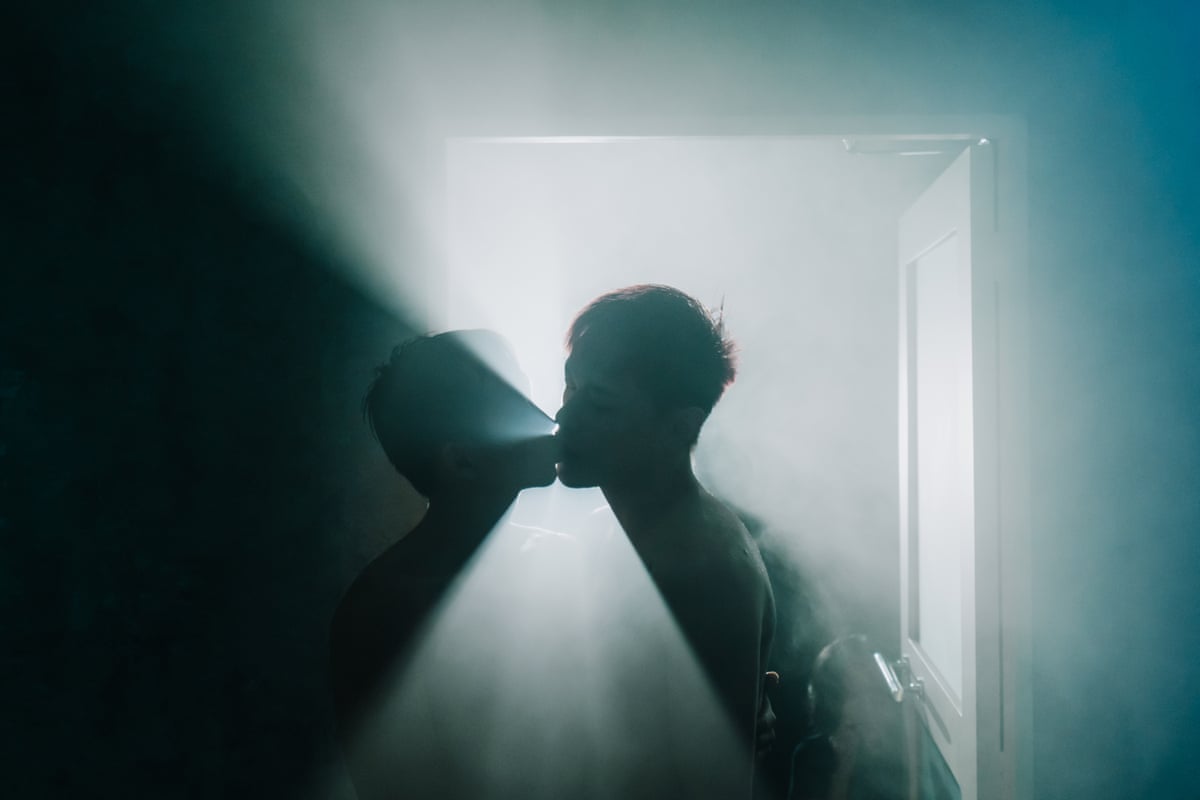
The piece achieves a paradoxical effect: simultaneously immersive and detached, engaging yet eerily lonely. The experience becomes actively unnerving when the floor falls away, disrupting your own sense of balance and spatial awareness. You feel precisely the absence of connection. Chou also presents a shorter, sit-down VR work called In the Mist, which served as a precursor to the longer installation and functions as a melancholic meditation on desire.
What virtual reality cannot deliver are the smells, the heat, the sweat of a real space. These sensory elements appear abundantly elsewhere in the festival programme.
How does the body become a site of reclamation?
Wojciech Grudziński's solo work Threesome places his sweaty, hairy, unmistakably human body at the centre of the performance. His buttocks remain exposed as he executes upside-down pliés in shoulder stands and other yogic positions, all while wearing bottomless frilly knickers. Through voiceover, he recounts the stories of three Polish ballet dancers who faced public shaming for their homosexuality. Threesome represents his attempt to reclaim their true identities and reconcile himself with his own "ghastly" body.
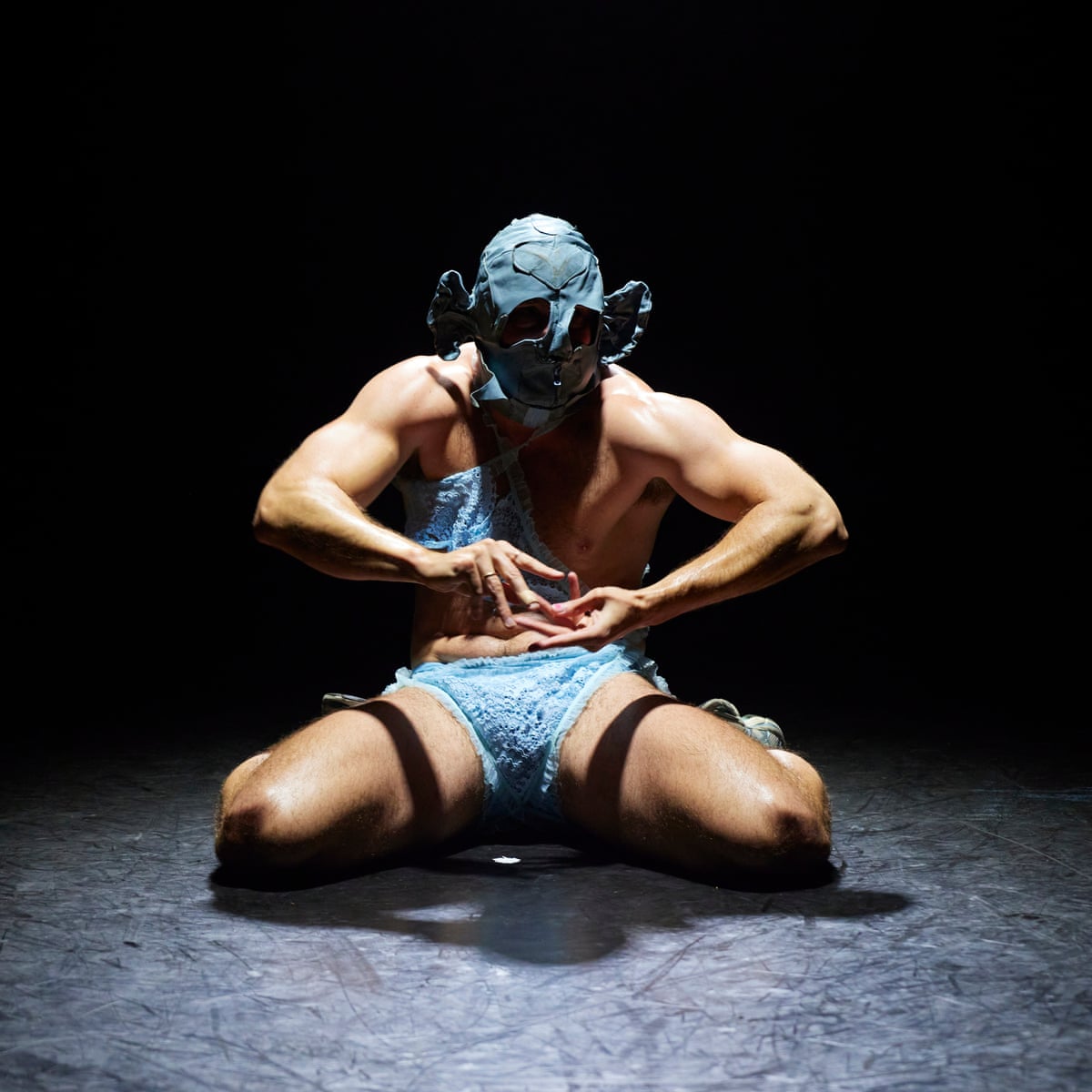
Does a series of bum-bearing contortions followed by a raucous, repetitive dance constitute the most effective approach to this goal? It is Grudziński's approach, and it proves strangely compelling. The piece builds toward a kind of catharsis, amplified by lighting and music that conveys defiance and acceptance.
What rituals explore colonial histories?
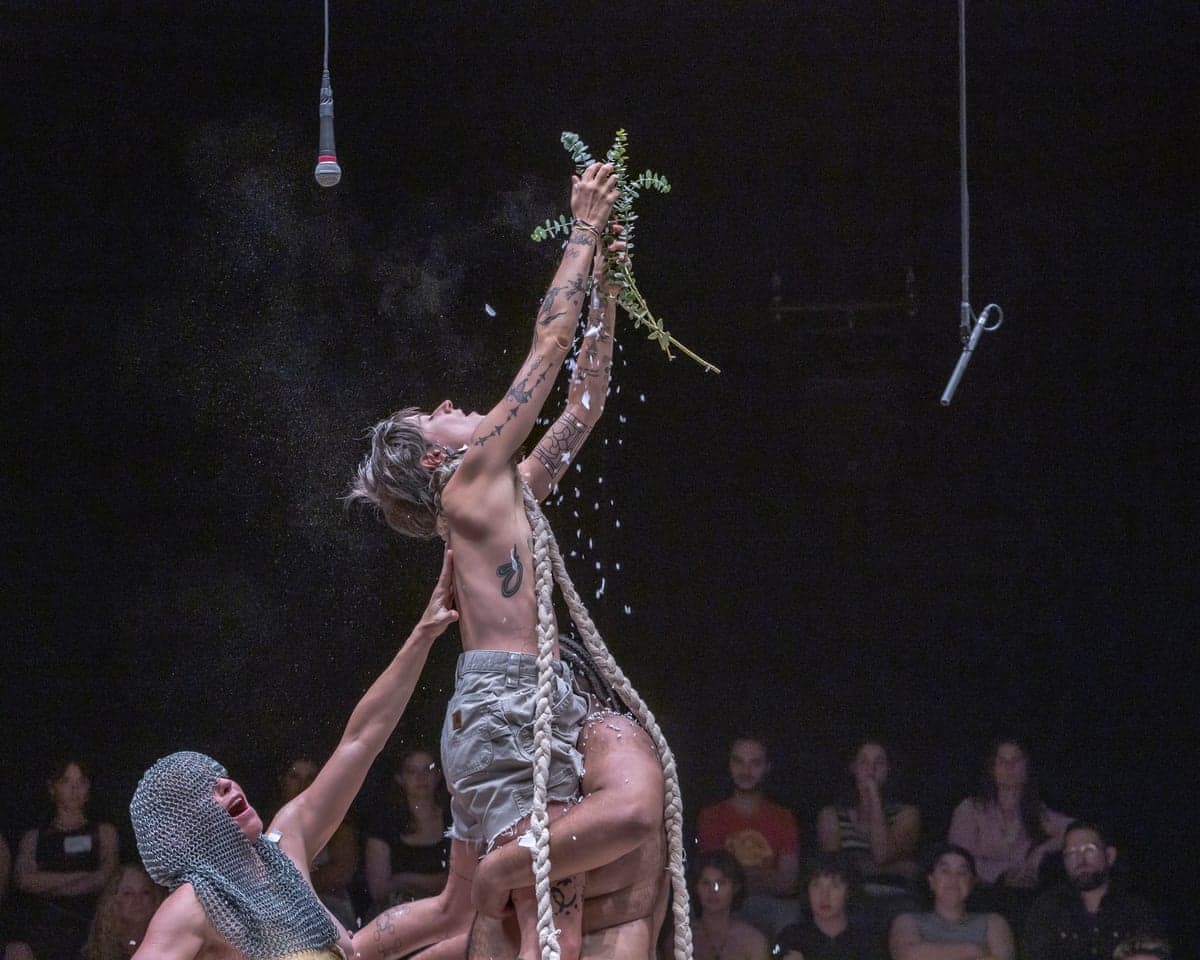
Artist Melissandre Varin, known professionally as n:u, describes themself as an "atmosphere-maker"—branding that intriguingly recalibrates audience expectations. Though Fierce maintains a thoroughly international character, n:u was previously based in Birmingham and creates work rooted in Congolese, Guadeloupean and Beninese heritage. Their piece FREE(HOLD) functions as an opaque ritual in which performers drag ropes around their ankles while keening toward the sky. The imagery immediately evokes endurance, suffering, slavery and colonialism—histories that demand witnessing and reckoning.
What makes Faye Driscoll's work exceptional?
American choreographer Faye Driscoll's acclaimed, award-winning piece Weathering receives its UK premiere at Fierce and operates on a distinctly different scale from other festival offerings. The 65-minute work features 10 dancers, singers and crew members positioned on a mobile raft-like stage. Driscoll's concept, commitment, execution and ambition exceed those of her peers in this programme.
Weathering functions as a tableau vivant, though one that continuously distorts, decays and collapses under the accumulated weight of life's pressures or simply the relentless passage of time. The rotating platform becomes a metaphor for transformation and deterioration, a visual essay on how bodies and structures inevitably yield to forces beyond their control. The work is scheduled for 7:30 pm on 15 and 16 October at Midlands Arts Centre.
Which other international artists are making debuts?
Polish artists Ewa Dziarnowska and Hana Umeda make their UK debuts with two works: This resting, patience, presented at Eastside Projects on 17–18 October, and RAPEFLOWER, at Midlands Arts Centre on 17–18 October. These additions underscore Fierce's commitment to presenting work from emerging and established international practitioners alongside established figures.
Key Facts
- Fierce is Britain's longest-running live art festival, launched in 1998
- The 2026 edition features more than 15 productions from 10 countries across Birmingham venues
- The festival now operates on a biennial schedule rather than annually
- Faye Driscoll's Weathering features 10 performers on a rotating platform and marks the work's UK premiere
- The festival runs through 18 October 2026