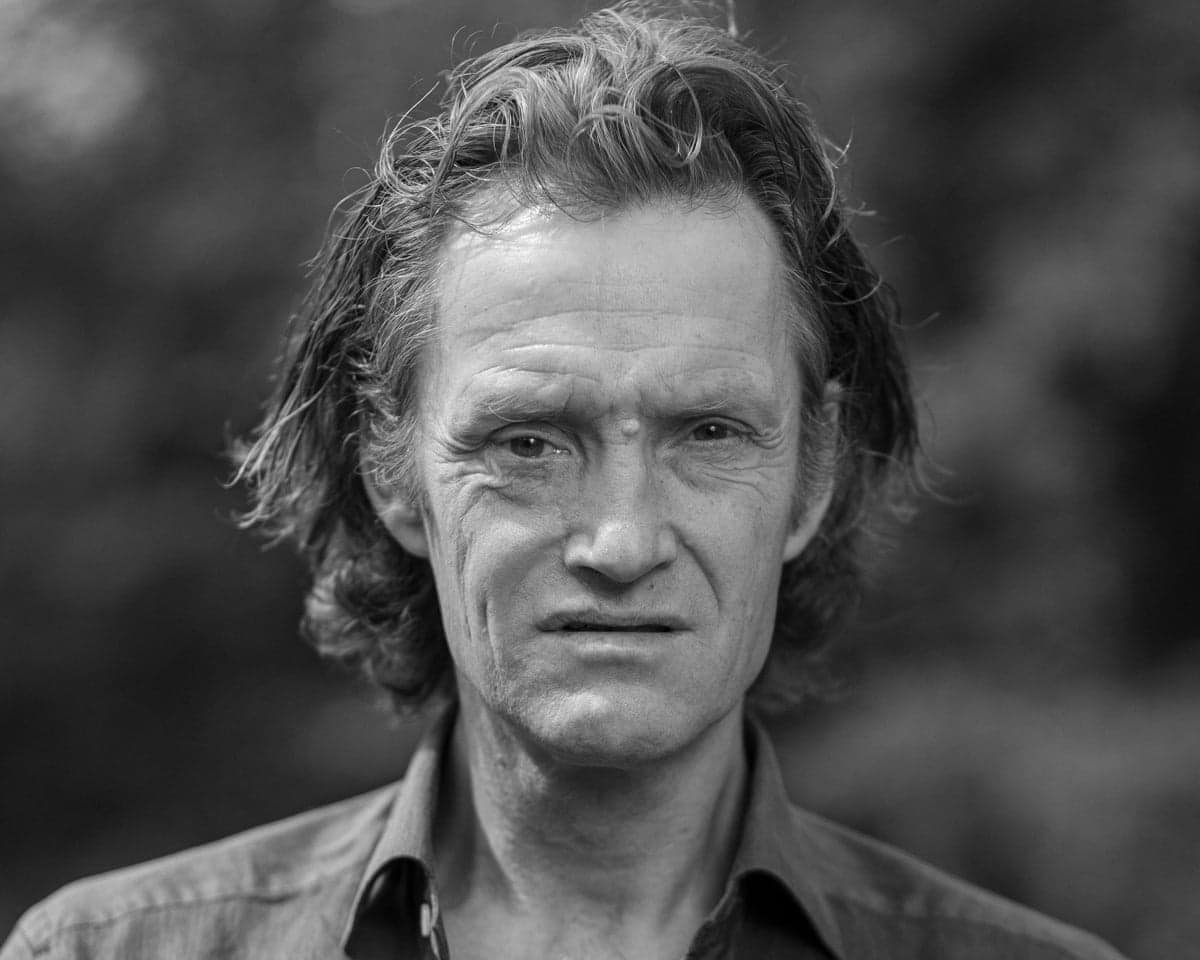
Thure Erik Lund's The Mystery of What Befell in the Ditch has finally reached English readers, arriving as a paperback on 20 October 2026. Originally published in Norwegian in 1999, this novel introduces Tomas Olsen Myrbråten, a man approaching 38 who embodies a particular kind of existential despair—one rooted in revulsion at contemporary society and a yearning to reconnect with the natural world. According to The Guardian, the work is brimming with what might be called Nordic weltschmerz—a melancholic sensibility that borders on the absurd.
The protagonist's initials spell out T-O-M, which in Norwegian forms the word for "empty"—a detail that encapsulates his condition. Tomas spends his days at the kitchen table or gazing from windows, convinced the ceiling will collapse upon him. He weeps about his own state and that of the world, declaring:
It is no longer me who cries, but the world, the world crying, in me.Karl Ove Knausgård has called Lund the "greatest Norwegian contemporary writer," and this English translation, published by And Other Stories and translated by David M. Smith, marks his first work to reach an English-language audience.
This novel forms the opening volume of a four-novel Thomas Olsen Myrbråten cycle published between 1999 and 2005, with the final volume, Uranophilia, winning Norway's Critics' Prize in 2005. Lund himself received the 2025 Bonnier Norwegian Publishers' Literary Prize, which carries a 100,000-kroner award, cementing his status within Scandinavian letters.
Who is Tomas Olsen Myrbråten?
Throughout the narrative, Tomas repeatedly describes himself as a "life-of-the-mind individual"—a designation that carries both curse and blessing. Such individuals possess an acute, unsettling awareness of human wretchedness and their own inevitable decline. Tomas articulates this with characteristic bleakness, envisioning himself and his kind ground down into mud and mire until, millions of years hence, they become
oil, life-of-the-mind oil, at the very bottom of life itself.Whether Lund intends this as self-mockery or prophecy remains ambiguous, though in 2026 the narrator reads less as a figure of fun and more as an ecological visionary.
How does Tomas's background shape his worldview?
Tomas descends from poor, largely illiterate farmworkers in eastern Norway. After leaving for university, he adopted a casual, almost dismissive tone when discussing his rural origins. Over time, particularly as he travels throughout the country, he begins to interrogate his own snobbery. He becomes horrified by the transformation of history into heritage—the repackaging of ancient folk traditions for tourist consumption, the reduction of culture from lived experience and human connection to mere commodity. Wildness vanishes. Even mountain roads no longer wind as they once did. His meditations echo Henry David Thoreau's invocations of
children getting lost in the woods, in a world without human signifiers, without signage or trails, only celestial bodies and natural forms, and they recall John Berger's Pig Earth in their examination of how machinery has altered peasant speech and mutual engagement.
What makes this a specifically Norwegian story?
While the novel addresses universal anxieties about modernity, Lund insists on grounding it in Norwegian particularity. Like Thomas Bernhard's cantankerous narrators railing against Austrian absurdity, Tomas launches broadsides against his nation's governing class—
a gang of boasting sanctimonious humanistoid individuals—who have constructed
a thoroughly criminal, narcotised shopping-mall world, a
Norwegian global hellpopulated by
pale, withered souls who seek solace in cinemas and fitness studios.His catalogue of contemporary false prophets—
computer engineers, course facilitators, business commissioners—suggests someone steeped in critiques of technological society and consumer capitalism.
What triggers Tomas's catastrophic fall?
The novel's darkest comedy emerges when Tomas attempts to air these grievances not in a private journal but in a think piece commissioned by the Royal Norwegian Ministry of Culture, which he then delivers directly to the culture minister herself. She proves unmoved, particularly when he utters an obscenity. Security guards physically remove him from her office. His reputation and social standing evaporate. He is branded a nationalist, even a Nazi, becomes unemployable, and descends into homelessness.
Matters deteriorate further in a nightmarish middle section that hovers between the grotesque visions of Hieronymus Bosch and the aesthetic brutality of Lars von Trier. Tomas returns to his parents' farm, hoping to renounce urban decadence and recover an authentic Norwegian existence. Instead, he discovers no Arcadian refuge but rather a landscape in advanced decomposition. He digs ditches, cohabits with his alcoholic wife Helena, whose gaze he describes as a
pustulated mongrel-eyed leer, confines his mentally disabled brother, and abandons him in a remote Swedish village. The countryside he has idealized reveals itself as a realm of slime, moonshine, blood, vomit, and grease—hardly the natural redemption he sought.
How does Lund's language function as a narrative force?
Language itself becomes a protagonist in this work. Passages frequently extend across multiple clauses that circle back upon themselves, studded with neologisms that Smith renders as
enfletted,
enhammered, and
vocabulation. Conversely, when Tomas abandons his urban refinements, sentences become slangy and visceral. The novel demonstrates prescient awareness of the linguistic forms demanded by digital capitalism—the reduction of meaning to data and information, the
demonic and inhumanscientism that colonizes thought, the fear of allegory itself.
What does the novel's conclusion suggest?
The astonishing final section finds Tomas alone in a forest, listening intently. He hears himself, his surroundings, the past, the future. He becomes attuned to his kinship with excrement, steel wire, dead plant matter, bacterial cultures. In a moment of recognition, he realizes:
That's what I was. A kind of pulverised form of language which, by chance, had been imbued with natural substances, here and there.This vision—neither redemptive nor despairing but rather a kind of acceptance—transforms Nordic weltschmerz into something approaching wonder. The man who began by weeping at existence's emptiness ends by recognizing himself as a dispersed, material form of language itself, connected to all that decays and regenerates in the natural world.
Key Facts
- The English edition arrived on 20 October 2026, published by And Other Stories with a translation by David M. Smith
- This is the first novel in a four-book cycle featuring Thomas Olsen Myrbråten, originally published between 1999 and 2005
- Lund won the 2025 Bonnier Norwegian Publishers' Literary Prize, a 100,000-kroner award
- Karl Ove Knausgård has identified Lund as the greatest living Norwegian writer
- The novel combines philosophical critique of modernity with grotesque pastoral imagery and linguistic experimentation