Tate Modern in London is presenting an ambitious exhibition that traces the international pictorialism movement through more than 200 rare prints by over 80 artists, many of them unseen by British audiences before. According to The Guardian, the show opens a window onto how photographers across continents—from Singapore construction sites to Sri Lankan studios—pursued epic beauty in ordinary moments, fundamentally reshaping how we understand both art history and the human impulse to create images.
The exhibition, which opened on 14 October 2026 in Tate Modern's Eyal Ofer Galleries, represents the first major international retelling of pictorialism as a pluralistic movement rather than a European phenomenon. Roughly half of the works displayed have never been exhibited in the United Kingdom, creating opportunities for fresh encounters with artists and images largely absent from British art discourse. The curatorial approach avoids condescension, instead allowing the quality and diversity of the works themselves to make an unapologetic case for the movement's global reach and enduring significance.
The exhibition's scope creates striking juxtapositions across geography and time. Three-colour carbon prints of flowers from a 1920s London garden sit alongside photographs born from the salons, circles and clubs of Sydney, Hong Kong and Brazil. A man rows across the Norfolk Broads; another labours on a construction site in Singapore. These scenes coexist without jarring, each belonging to a unified vision of beauty extracted from the everyday. The effect is almost ecclesiastical in its reverence for the ordinary transformed into the transcendent.
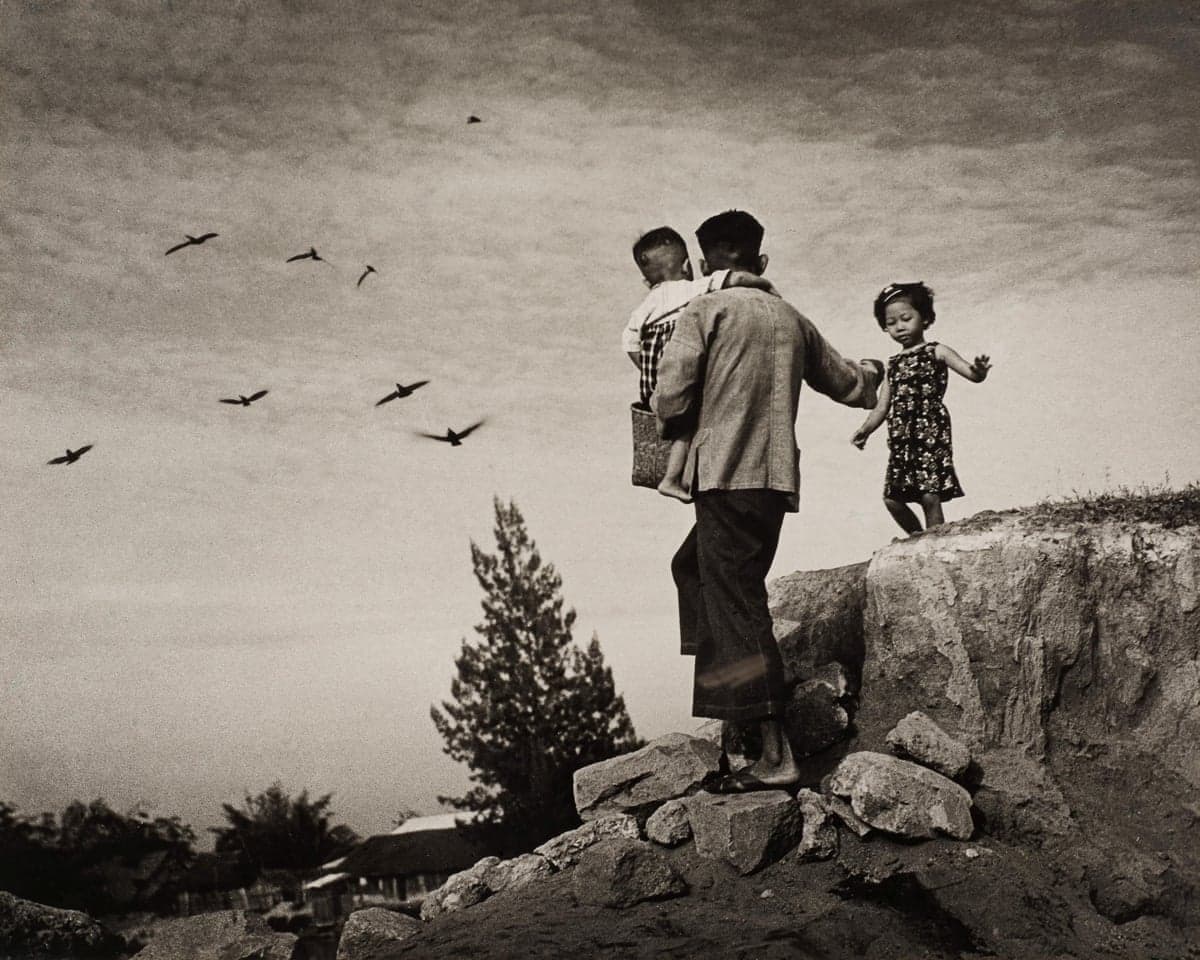
Yip Cheong Fun's 1940 work Father's Care exemplifies this sensibility. The cinematic composition shows a man holding one child while extending his hand to another descending a rocky crag, the figures set against an open rural landscape. The image distils parenthood and the passage of time into a single gesture, embodying the exhibition's preference for restraint over melodrama. This restraint becomes a form of eloquence, allowing viewers to project their own understanding onto carefully composed moments.
The exhibition also explores more ambiguous emotional terrain. Lionel Wendt's study of a young Sri Lankan man's loincloth-clad body in his Colombo studio creates an excruciatingly charged atmosphere, revealing hidden desires and truths that the camera simultaneously exposes and conceals. Here, beauty becomes a kind of torture—the same medium capable of anthropological scrutiny transforms the act of looking into something far more psychologically complicated, collapsing the distance between observer and observed.
How do these photographs invite interpretation?
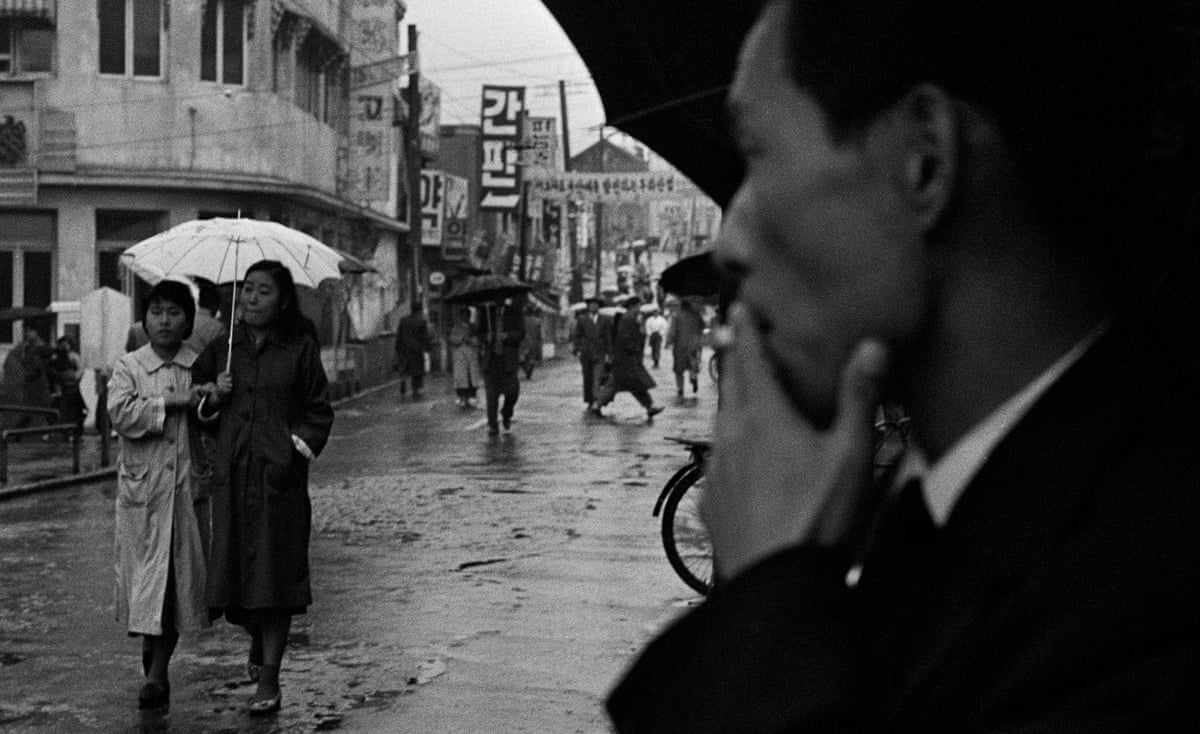
Many works in the exhibition deliberately leave room for viewer interpretation, hovering between the visible and the imagined. Han Youngsoo's 1955 series presents small, noirish photographs of Korean street scenes that seem to demand narrative completion from the viewer, their compressed compositions suggesting stories just beyond the frame.
Kate Smith's two 1925 bromide prints depict a woman in flowing, pre-Raphaelite style, pausing in a field dense with vegetation. The title The Listener draws closer inspection: what is she listening to, and what does the photograph want viewers to hear? The image's silence and stillness charge the space between visibility and imagination with possibility.
Limb Eung-sik's Feet 2 achieves a similarly ethereal quality through different means. Diaphanous material folds around a dancer's feet, dissolving them into light and shadow. Nostalgia and sentimentality reach heightened registers here, yet the effect remains irresistible. The work suggests that anything—shells, shadows, a faucet, a wilting flower, a fishing net—can become magic when seen through the pictorialist lens, and these photographers teach viewers how to perceive the world with such enchanted attention.
What is the historical context for pictorialism?
Pictorialism emerged in the late 19th century as photographers sought to establish photography as an art form rather than merely a tool of observation. The movement represented a deliberate rejection of photography's documentary potential in favour of aesthetic and emotional expression. By the early 20th century, pictorialist salons and clubs had spread across the globe, creating networks of practitioners who shared aesthetic principles while developing distinct regional approaches. This exhibition positions pictorialism not as a European movement that spread outward, but as a genuinely international phenomenon in which photographers from Asia, the Americas and beyond contributed equally to its evolution.
What are the exhibition's limitations?
The show does not attempt a critical examination of pictorialism's ideological foundations or aesthetic blind spots. Mysteries remain intact; politics largely stay at the door. There is no effort to interrogate the reductionist pitfalls inherent in pursuing a fantasy of beauty divorced from historical context. Some educational elements feel unnecessary—a timeline of photographic techniques, while helpful and interesting, risks repositioning art photography within the realm of craft rather than fine art. A full-scale recreation of a darkroom that visitors cannot enter similarly misses an opportunity; the magic of the darkroom lies not in its physical appearance but in the strange alchemy of chemistry and light that already manifests abundantly in the photographs themselves.
Yet these reservations fade against the exhibition's genuine care and sense of awe. The show functions as a reminder that seeking moments of magic and breathtaking beauty represents a fundamental human instinct, one to which all people have a right. The works on display address universal themes and eternally human concerns—parenthood, desire, labour, solitude, beauty—that transcend the politics of any particular time or place. These images survive and thrive precisely because they tap into something permanent beneath the surface of historical change. Light and Magic achieves an unusual balance: it is as intelligent as it is beautiful, as whimsical as it is informative, as rhapsodic as it is grounded in material reality.
When can visitors see the exhibition?
The exhibition is scheduled to run through 21 February 2027. Tate's "The Art of the Darkroom" sessions are scheduled on various dates through February 2027, including 31 October 2026 and 6 February 2027, offering visitors the chance to explore the technical and aesthetic dimensions of pictorialist practice in greater depth.