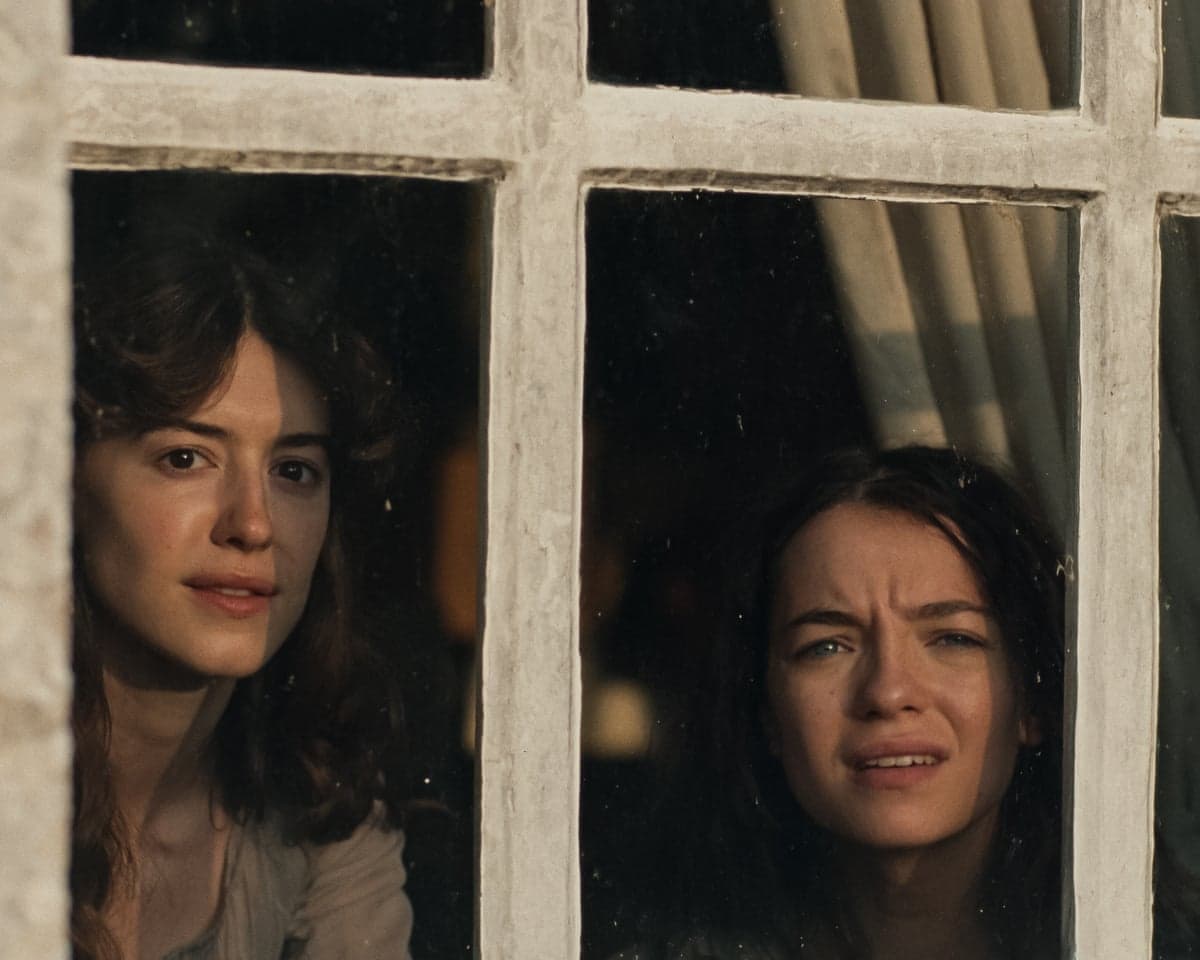
A fresh adaptation of Jane Austen's Sense and Sensibility has arrived with a younger cast and a markedly different sensibility from its celebrated 1995 predecessor. Directed by Georgia Oakley and written by Diana Reid, this reimagining stars Daisy Edgar-Jones and Esmé Creed-Miles as the Dashwood sisters, trading the romantic warmth of Ang Lee's film for a cooler, more introspective tone that reflects contemporary storytelling approaches to period drama.
Those tasked with creating a new version of Austen's beloved novel need not feel constrained by the shadow of Lee's direction or Emma Thompson's Oscar-winning screenplay, nor indeed by Austen's original text. Artistic reinvention of established works remains a vital creative endeavour. The choice to mount a next-generation Sense and Sensibility with fresh young talent—rather than adapting another Austen work—may initially surprise viewers, much as the prospect of a Love Actually remake with different stars might. Yet this iteration distinguishes itself through its downbeat, contemplative approach, unfolding beneath greyer skies than its 1995 counterpart and eschewing the sugar-rush finale of wedding celebrations. The overall mood proves cooler, austere and thoughtful, though some casting choices prove unconventional.
The two central sisters, Elinor and Marianne Dashwood, were embodied in 1995 by Emma Thompson and Kate Winslet. Edgar-Jones and Creed-Miles inhabit these roles with a distinctly different energy, presenting themselves less as sisters bound by blood and more as young women who knew each other casually at university and now share a London flat. The narrative hinges on financial hardship and romantic disappointment. After the death of their father, Mrs Dashwood and her three daughters are forced to vacate their handsome Sussex estate when the property passes to Mrs Dashwood's stepson, John Dashwood, who effectively removes them from their home. They relocate to the modest Barton Cottage in Devon.
Before this displacement occurs, Elinor encounters and develops feelings for Edward Ferrars, a reserved and principled young man from a prosperous family, portrayed with restraint in the film. Oakley's direction and Reid's script place particular emphasis on a detail the 1995 version underplayed: Mrs Dashwood (Caitríona Balfe) deliberately insists on removing her family to the west country to shield her daughter from the appearance of pursuing a wealthy husband—a concern about social perception that drives the family's exile.
In the rural reaches of Devon, Elinor finds herself brooding over Edward's reluctance to propose, while the impulsive and romantic Marianne sustains an ankle injury during a country walk. She is rescued and carried back to the cottage by the charming but morally questionable Mr Willoughby, rendered by Frank Dillane with seductive appeal tinged by an unsettling, Uriah Heep-like smirk. Marianne overlooks the integrity and genuine devotion of Colonel Brandon, a former soldier who harbours deep affection for her. Herbert Nordrum, a Norwegian actor of genuine talent in other contexts, inhabits this role beneath heavy facial hair and delivers the performance with a peculiar detachment; his line readings lack engagement and he conveys little romantic ardour or enthusiasm for the proceedings.

No performer could easily follow Alan Rickman's nuanced portrayal of Colonel Brandon in 1995. Yet Nordrum emerges as an uncomfortable outlier in this ensemble, his stolid presence at odds with the character's essential yearning. The film does pursue worthwhile intentions in challenging conventional casting and stereotypes—the gender-fluid casting of Eliot Sumner as the acerbic Mr Palmer proves icily effective. Brandon's characterisation, however, feels misaligned with the narrative's emotional architecture.
The film's most magnetic presence arrives in the form of Mrs Jennings, the gossipy, mischievous and forthright widow portrayed with infectious energy by Fiona Shaw. Her performance elevates every scene she graces, expanding the role far beyond the supporting function it held when Elizabeth Spriggs played the character in 1995. Shaw's Mrs Jennings becomes a vital comedic and emotional anchor for the ensemble.
The production maintains a polished visual and sonic presentation throughout. According to production details, the film runs two hours and eleven minutes and features a cast that includes George MacKay, Stacy Martin, Tom Brooke and Ceara Coveney alongside the principals. Yet despite its technical competence, the film occasionally sacrifices the emotional sensibility that makes Austen's narrative resonate across centuries.
What the cast has said about the film
In promotional interviews tied to the film's rollout, the lead actors have emphasised the adaptation's focus on sisterhood as its thematic centre. According to reporting from a major news agency, Edgar-Jones and Creed-Miles have highlighted how the bond between Elinor and Marianne drives the narrative forward, positioning their relationship as the emotional core rather than romantic entanglements alone. Edgar-Jones has described herself as sharing qualities with her character Elinor, suggesting a personal connection to the role's restraint and emotional intelligence.
Release schedule and upcoming dates
The film's global theatrical rollout commenced on 23 September 2026. The United Kingdom cinema release followed on 25 September 2026, while the United States theatrical debut is scheduled for 16 October 2026. A London premiere took place at Odeon Luxe Leicester Square on 15 September 2026, preceding the wider release schedule. The film was produced by Focus Features and Working Title, marking a significant investment in bringing Austen's enduring narrative to contemporary audiences.