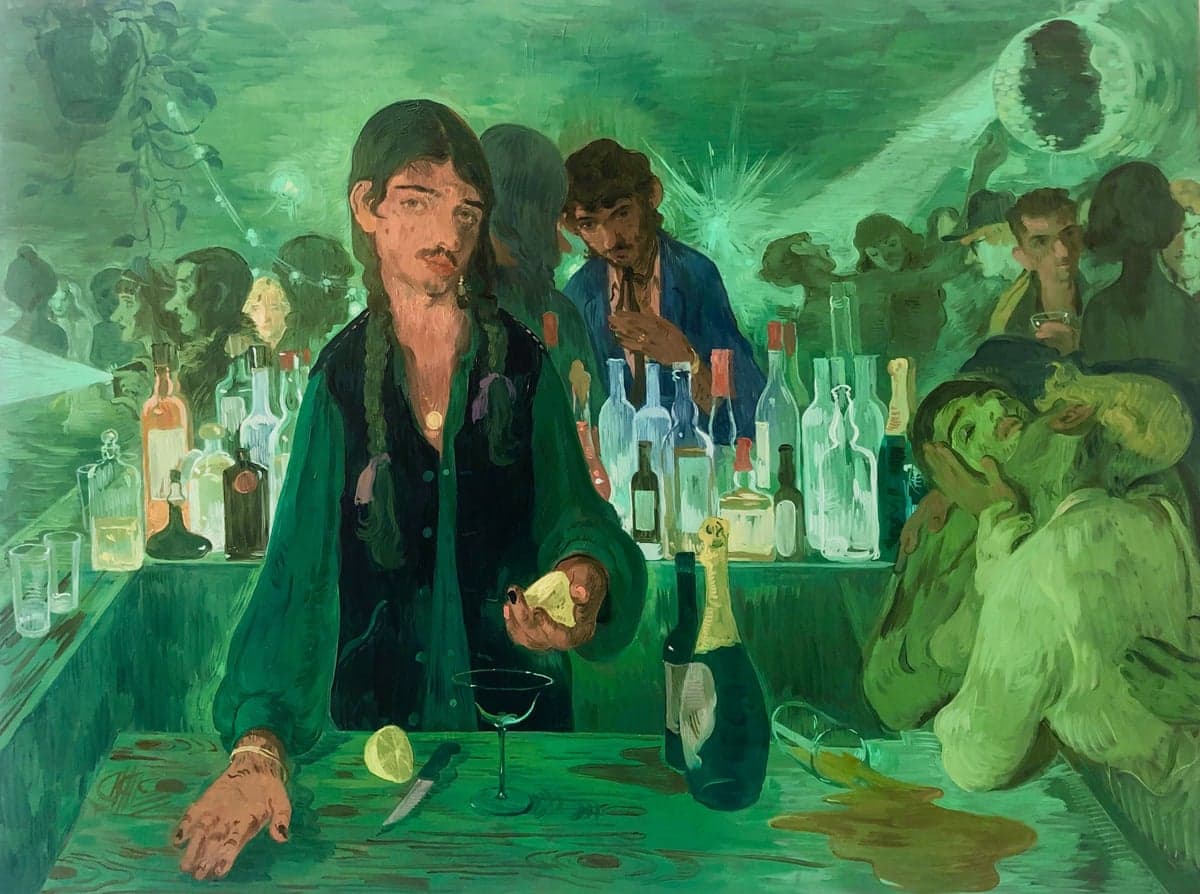
Tice Cin's philosophical and poetic sophomore novel traces the interior world of a young Turkish-Cypriot songwriter and music producer navigating love, loss and creative survival in contemporary London. This inventive work—part spoken-word poem, part journalistic meditation, part songbook—extends the thematic preoccupations of her prizewinning 2021 debut, weaving together stories of friendship, precarity and community into a tender exploration of how we endure when the world darkens.
The novel follows an unnamed narrator whose life is fractured by multiple forms of hurt. Childhood wounds from her father's abandonment layer beneath the sexism she encounters in the creative scene and the grinding precarity of surviving on universal credit in short-lived flatshares. She calculates her existence by doorways,
"walking past each one"without a clear roadmap for either personal or professional direction. Her struggle mirrors the wider travails of London's working-class inner-city diaspora communities, mapping individual grief onto collective vulnerability.
The emotional core of the novel is the death of the narrator's closest confidante, referred to only as "My Favourite Person." As his passing becomes the subject of gossip and speculation, she confronts those who treat his death as information to be extracted.
"You're asking for information but to me it's the loop, the scaffolding, never comes down, this con of process, all dying to know how he died."Against this invasive curiosity, she holds private memories: their late-night phone calls, the voicemails she continues to leave him unheard.
"Don't want to do it all without you on my team."The novel becomes an extended meditation on how to survive when loss is both personal and inescapable.
How does the narrator process grief and displacement?
Through a series of interconnected scenes—therapy sessions, beauty parlours, DJ booths, dancefloors at local raves, and brief romantic entanglements—the grieving narrator attempts to articulate herself creatively and emotionally. She describes memory as something unwieldy and persistent:
"Memories are a bit like a messy laundry cupboard. Whenever you brush past the door, all the items inside are falling out… Jamming the door doesn't help because everything is still messy inside."Her internal landscape becomes a metaphor for the city itself.
"Sometimes my head feels like the city, ambulances going past 24/7 but we still hear nothing. In a way it's a type of growth, to feel the wrong things less."This paradoxical vision—growth through numbness, survival through disconnection—captures the emotional logic of precarious life in an alienating metropolis.

What formal innovations shape the novel's structure?
Cin employs a dexterous formal strategy that mirrors the novel's thematic concerns. Told in the first person without fixed character names, most vignettes are prefaced with clarifications of perspective and address:
"The 'you' is reading me. The 'me' is still me."
"The 'she' is all of us, me."
"I am 'her' and 'you'."These shape-shifting pronouns create the impression of a DJ spinning tracks, layering voices and perspectives in kaleidoscopic patterns. According to the publisher's description, the work functions simultaneously as a songbook, a found poem of place, a therapy transcript and a community journal—a hybrid form that resists conventional narrative categorisation.
The novel's formal inventiveness serves its emotional content. In her own safe space, the narrator imagines herself as
"a marshmallow gravity genie who sleeps facefront on a soft cloud"—floating away from earthly human concerns into a space of weightlessness and refuge. This tender vision of escape anchors a novel fundamentally concerned with finding footholds in an alienating world, with creating moments of safety and community amid precarity and loss.
What is the novel's wider literary context?
Safe Spaces arrives within a broader contemporary moment in which writers are exploring grief, displacement and female intimacy through formally inventive means. The novel's preoccupations with loss and creative survival align with recent works examining how trauma shapes artistic practice. The review was published in a major national newspaper's fiction coverage on 16 September 2026, positioning Cin's work within contemporary literary discourse. The novel's exploration of how place—specifically London and Newark—shapes identity and memory resonates with other recent fiction examining urban precarity and community bonds.
Early reader responses have begun circulating, with advance copies and early reviews appearing online from late July 2026 onwards, suggesting the novel has already begun generating conversation among readers and critics. The work's hybrid formal approach—combining elements of songwriting, journalism, therapy and poetry—marks it as a significant contribution to contemporary fiction's ongoing formal experimentation with how narrative can hold grief, precarity and community together.