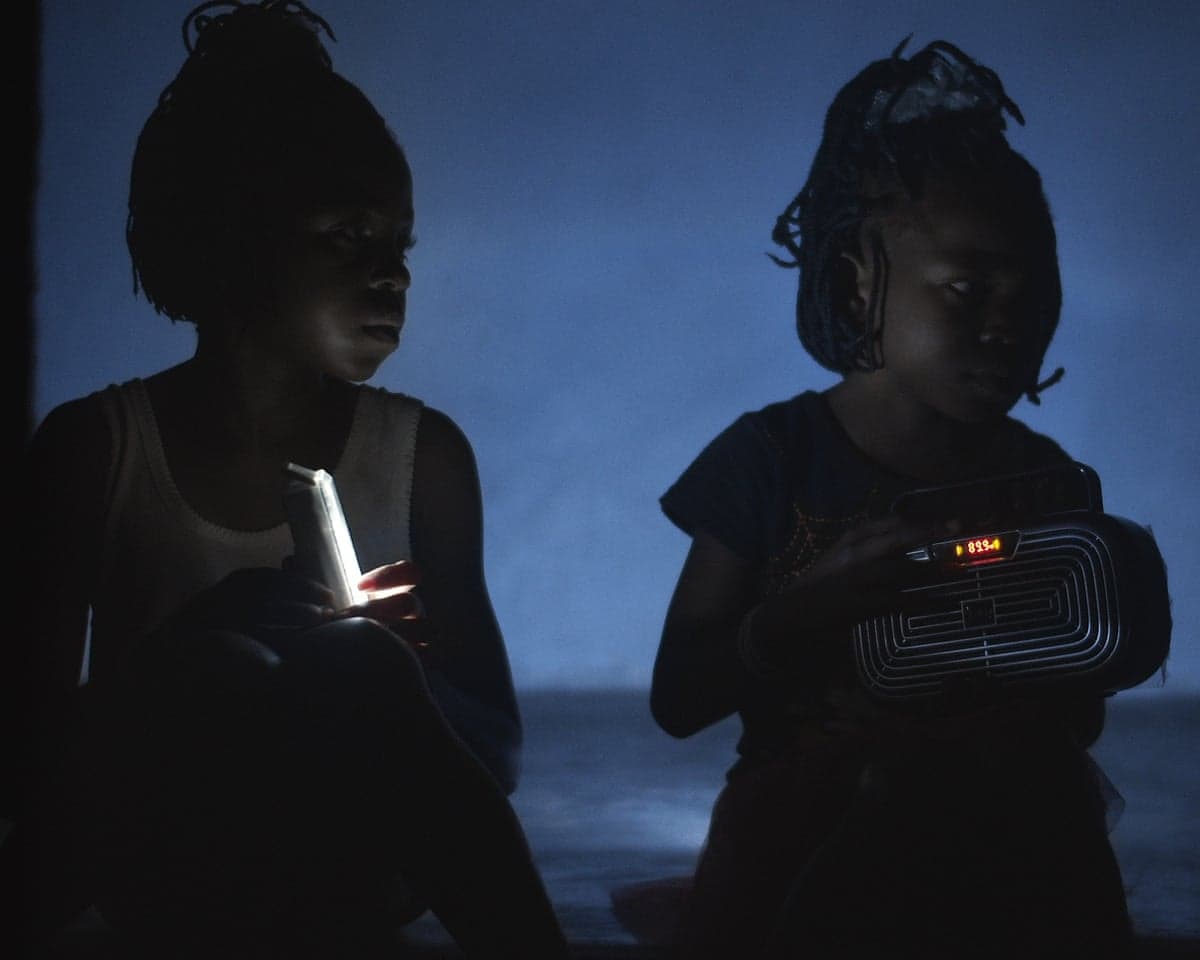
Nelson Makengo's feature documentary debut unfolds in perpetual darkness. The film begins with a black screen—a void of nothingness—while a fervent sermon recording rumbles like distant thunder. In Kinshasa, the capital of the Democratic Republic of the Congo, chronic electricity shortages have forced residents to turn to religion as their primary source of spiritual sustenance and hope. The situation has been compounded by climate-related disasters that have triggered severe flooding throughout the region. Through Makengo's cinematography, the nocturnal existence of the city acquires an unsettling, almost supernatural quality, transforming everyday survival into something both haunting and profound.
The documentary, originally titled Tongo Saa and running 96 minutes, was first presented in Berlinale's Panorama section before winning the Special Jury Prize at Visions du Réel. This recognition marks a significant achievement for Makengo, whose earlier short film Up at Night earned an award at IDFA in 2019.
How do residents survive without electricity?
Filmed predominantly in Makengo's neighbourhood of Kisenso within Kinshasa, a city of approximately 17 million people, the documentary captures how inhabitants navigate existence in perpetual darkness. Families consume their meals illuminated only by candlelight, while worshippers attending church services wear light-up medallions to read their prayer books during services. These adaptive strategies reveal a profound collective determination to endure, yet simultaneously render ordinary activities disturbingly dystopian. Community elders voice their concerns about escalating crime and sexual violence that flourish in the absence of street lighting, while younger residents have organised fundraising efforts to recover stolen electrical cables and restore power to their neighbourhood. Without assistance from government institutions, the bonds of community solidarity represent the sole force capable of sustaining people through periods of acute hardship.

What role does faith play in the narrative?
Religion emerges as the emotional and spiritual core of the film's exploration. Makengo constructs intricate visual compositions layered with a complex audio landscape that alternates between ambient urban sounds, intense religious chanting, and melancholic broadcasts of news reports. The spiritual dimension of community life provides both comfort and structure in an environment stripped of basic infrastructure. Repeatedly, the soundtrack features announcements regarding plans for a hydroelectric facility financed by a major Chinese corporation—a multi-billion-dollar initiative that has experienced repeated postponements and delays. For the residents of Kisenso, this unfulfilled promise represents both a glimmer of potential change and a symbol of their continued abandonment by larger systems of power.
What is the broader context of Kinshasa's electricity crisis?
Kinshasa was left largely without electricity following severe flooding in late 2022, an event that transformed the daily existence of millions. The documentary captures the aftermath of this environmental catastrophe, documenting how ordinary people have reconstructed their lives in response to infrastructure collapse. The film's focus on Kisenso's residents pooling resources to replace a stolen power cable illustrates the practical ingenuity and mutual aid that have become essential survival mechanisms.
What happens next?
The documentary is scheduled to begin streaming on True Story from 25 September 2026, making the film accessible to a broader international audience. Despite the uncertainty that characterises the future for Kisenso's residents, their remarkable solidarity and mutual support continue to radiate with quiet strength amid overwhelming adversity.