
Hollywood has long been captivated by the ticking clock – particularly when a delivery is at stake. For generations, dangerous cargo has fallen to familiar action archetypes: espionage agents, military operatives, assassins, and Jason Statham. Yet in 2026, the industry's focus has shifted toward an unexpected protagonist and an even more unexpected payload. Human organs have emerged as the narrative device of choice, transforming medical professionals into improbable heroes racing against biological deadlines.
The trend crystallises in Runner, helmed by Scott Waugh, which opened theatrically on September 11, 2026. The film casts Alan Ritchson as Hank Malone, a former soldier and recovering alcoholic, opposite Owen Wilson as Ben Bishop, a medical courier transporting a liver destined for a Gold Coast hospital. The organ is meant to save a young girl named Ellie, creating immediate stakes.
"If she doesn't get this today," Wilson's character warns, "she's not going to make it."The 98-minute PG-13 action film, distributed through Angel Studios, pits the protagonists against Damian Zaldívar, the son of a drug lord who also requires the liver to survive, introducing a moral complexity beyond simple good-versus-evil conflict.
The organ-as-MacGuffin proves narratively ingenious. Suspense is embedded in the biology itself: a literal ticking clock sealed inside a cooler. This device unlocks an entirely new taxonomy of medical action sequences – ambulance pursuits through city streets, surgical confrontations, hospital firefights. Runner delivers the full spectrum. Co-writer Miles Hubley explains the creative impulse:
"Neither of us had ever seen a movie where the precious cargo everyone wants was a fragile, life-saving piece of tissue."The pair sought
"a device that wasn't just about money."
Director Waugh recognises that organs furnish the narrative with
"emotional urgency."He elaborates:
"It's the idea of a protagonist being driven not by revenge or saving the world, but simply by an obligation to deliver something on time. You've got a deadline and someone whose life depends on you arriving."
How do organs compare to other time-sensitive cargo in action cinema?
Filmmakers have long exploited temporal pressure as a narrative engine. Bike-courier thrillers and the Safdie brothers' work have generated tension through time-sensitive scenarios, while Statham's The Transporter franchise built an entire series around a courier confronting impossible odds. Yet the medical dimension intensifies the stakes considerably: organs render the peril visceral and intimate rather than abstract.
Crank 2: High Voltage, also featuring Statham, pushed the concept further by making the protagonist's own stolen heart the object of pursuit.

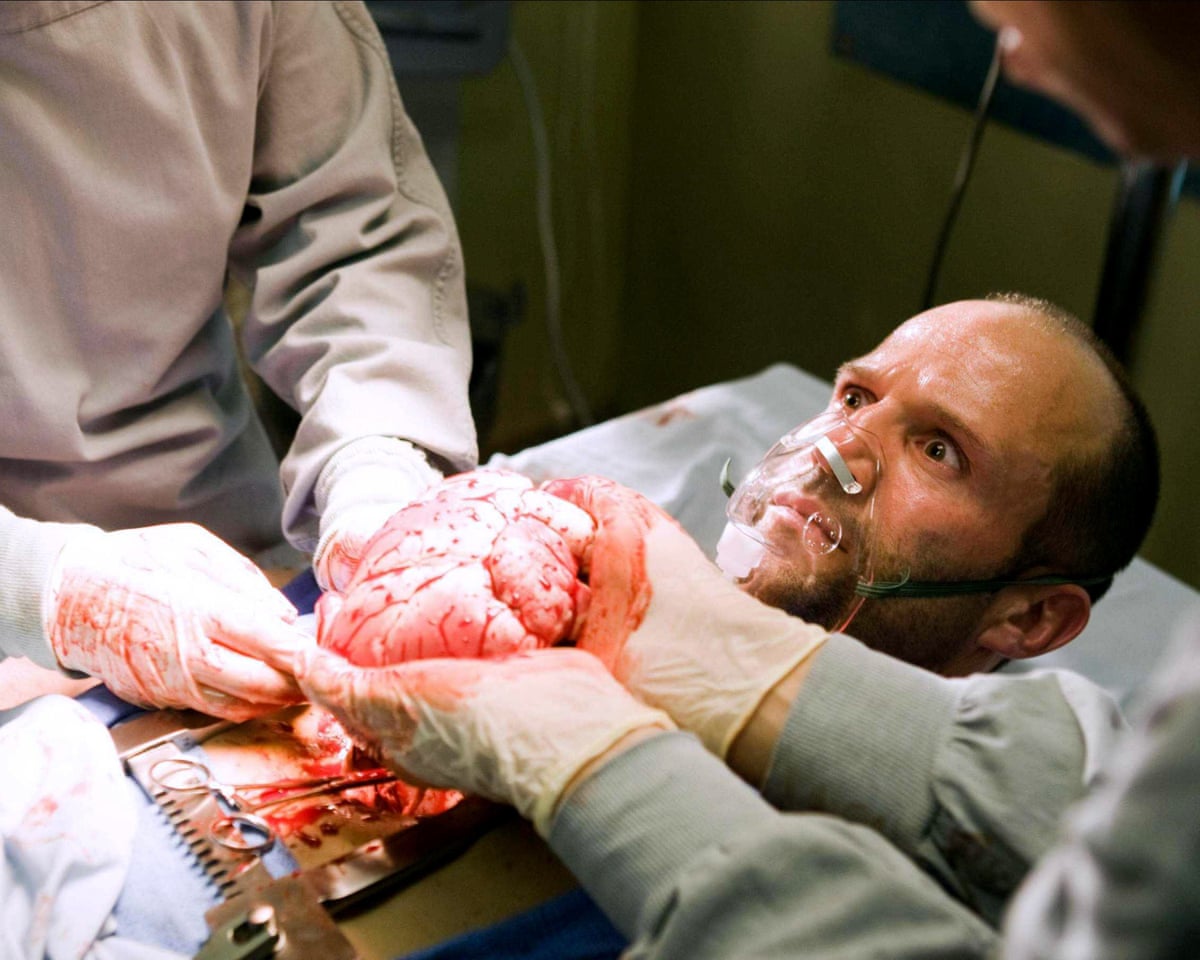
Repo Men inverted the formula, casting Jude Law as a fugitive attempting to evade reclamation of his artificial heart. The organ-chase motif has proven fertile ground for cinema, yet positioning medical couriers as protagonists rather than antagonists marks a significant departure for 2026.
Why are organ couriers suddenly heroic?
Historically, characters entangled in the organ trade occupied morally ambiguous or outright villainous territory. Dramas such as Dirty Pretty Things and horror films like The Harvest depicted organ trafficking as criminal enterprise. A new horror film arriving a week after Runner inverts this archetype, positioning Resident Evil, which opened worldwide on September 18, 2026, as a story centred on an out-of-his-depth medical courier confronting a zombie pandemic. Austin Abrams portrays the courier, carrying cargo of profound symbolic weight.
"This could be some eight-year-old boy's heart or someone's mom's brain,"his character observes. Beyond the literal organs, he transports hope and humanity itself in a medical bag.

The symbolic resonance has proven so potent that the US cinema chain Regal has created promotional merchandise featuring fake bloodstains, amplifying the organ's cultural penetration.
Several explanations account for this sudden elevation of medical couriers. The pandemic may have prompted a cultural reckoning with frontline workers, offering them belated recognition through action-hero status. Hubley articulates another dimension:
"In a world with so much abstract digital noise, there's something about how physical, vital and undeniably real an organ is. It's a living thing that can't be copied, faked or altered. It decays. It can't be sent over email, or stored on a hard drive. It's profoundly human."He also sought
"grounded heroes, who you could imagine bumping into at the grocery store."
What deeper symbolism do organs carry?
Director Camille Delamarre, who helms the forthcoming Heartless with Jason Isaacs, perceives a post-pandemic consciousness shift.
"We're more conscious of how fragile and irreplaceable the human body is,"he reflects.
"For me, an organ is the ultimate cargo because it's not really cargo at all: it's someone's life. With a heart, you don't need to explain the danger. Everyone in the cinema has one beating inside them."
The heart operates on multiple registers simultaneously.
"A heart works on two levels. It's literally keeping someone alive, but it's also the universal symbol of life, love and mortality. You immediately understand why it matters,"Delamarre adds. This dual resonance – biological and metaphorical – grants organs narrative power that abstract cargo cannot match.
Is this a lasting trend or a passing phenomenon?
The human body contains numerous organs awaiting their cinematic moment. Whether audiences will witness Tom Cruise piloting kidneys through a tornado or Statham sprinting across London with a bag of gallbladders remains uncertain. Heartless, arriving in 2027 with Delamarre directing, will test whether this represents a durable action-movie staple or a fleeting phenomenon. Yet if the organ-delivery cycle currently unfolding proves anything, the most compelling clock in contemporary cinema no longer ticks – it beats.