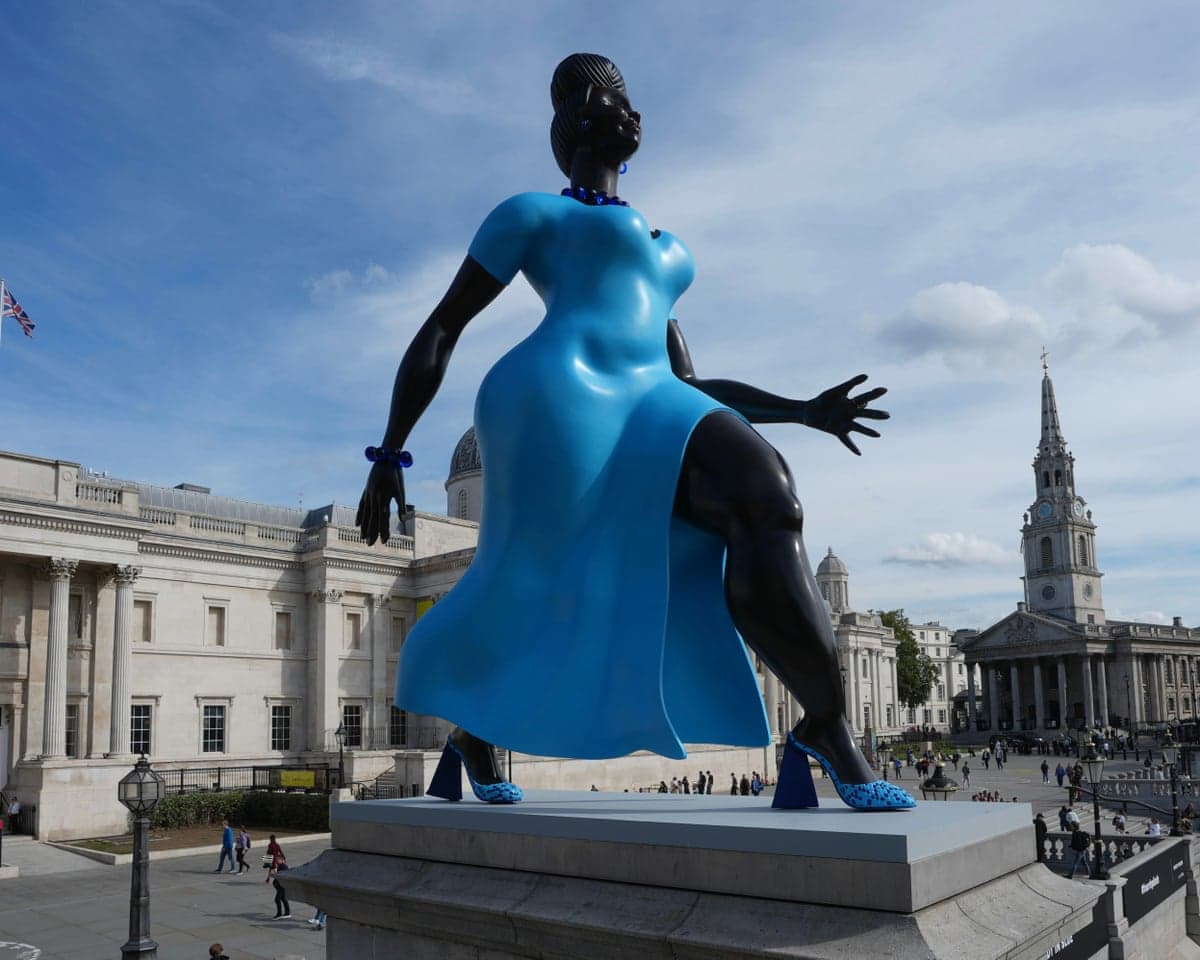
Trafalgar Square in London has acquired a striking new focal point with the unveiling of Tschabalala Self's bronze sculpture on the Fourth Plinth. The work, which was unveiled on 10 September 2026, represents a dramatic departure from the formal speeches that preceded its installation—remarks so laden with sociopolitical messaging they risked sounding like ideological doctrine. Yet the moment the covering fell away, the sculpture's commanding presence transformed scepticism into admiration.
Self has delivered one of the most visually arresting works ever to occupy Trafalgar Square's empty plinth, and not merely in a detached, formalist sense. The sculpture's generous proportions, elongated stride in platform shoes, and intensely physical, assured presence create a genuine risk that passing drivers might linger too long in their gaze, distracted by the figure's sheer vitality.
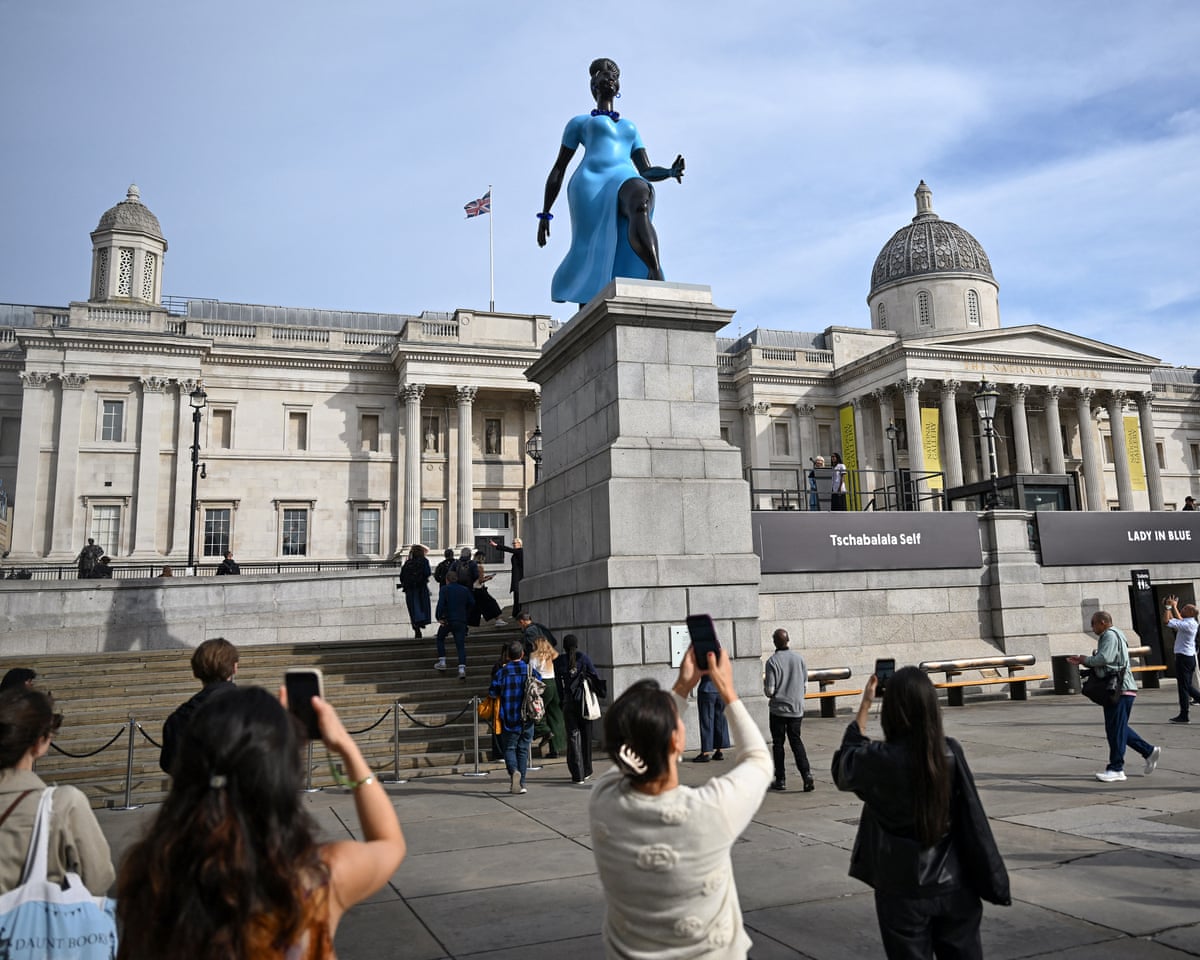
How does the sculpture use its space?
The rectangular plinth, constructed in 1841 for an equestrian monument that never materialised, finds its ideal purpose in Self's work. The composition captures a lolloping human gait that stretches the full length of the platform, with the figure's massive curved leg thrusting forward from beneath her draping blue skirt, her head held high but proportionate. This design pays homage to walking itself and echoes Umberto Boccioni's futurist strider, yet Self's figure emerges upward from her wide, rapid stride in a way that feels rooted in the present rather than historical pastiche.
The sculpture derives its scale and vitality from dialogue with the surrounding cityscape rather than from monumental grandeur. Since the Fourth Plinth became a site for temporary artworks in 1999, the most memorable installations have typically featured human figures. Self's Lady now joins that lineage as evidence that what viewers genuinely seek on a plinth is the human form rendered alive, profound and unashamed in its physicality.
What makes the sculpture's surface so striking?
The initial impact comes from the work's lustrous finish. Sunlight catches the polished, plastic-like surface as though the entire figure were coated in nail varnish, creating a dazzling glare. As the eye adjusts, the true richness emerges: a sumptuous interplay between brown flesh tones and a heavenly blue that recalls lapis lazuli, the rare mineral mined in Afghanistan and prized for millennia in jewellery and, later, as the source of ultramarine—the most ethereal and costly blue pigment available to painters.

This chromatic choice connects the sculpture directly to the National Gallery's collection behind it, many works of which employ ultramarine. The connection feels particularly resonant with Bronzino's brazenly erotic paintings, which set hard flesh against silky blue fabric. Self's statue channels that same provocatively fetishistic power, yet inverts its traditional power dynamics.
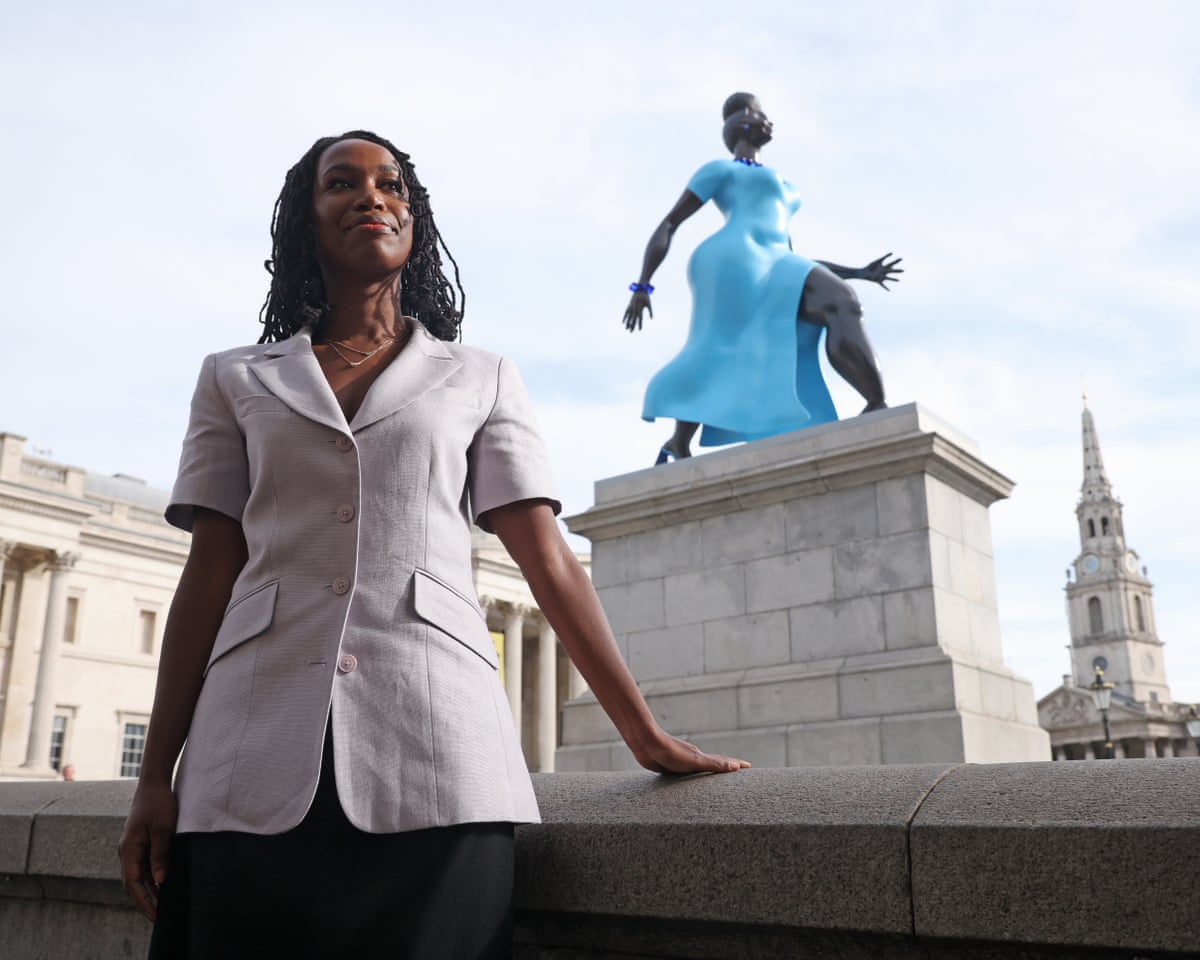
What does the sculpture's posture convey?
This Lady does not present herself as a passive object awaiting the viewer's approval. Instead, she swaggers through space with commanding presence, her posterior facing the National Gallery with flamboyant self-assurance. The work rejects the smooth refinement of classical sculpture and the artificial perfection of high fashion. In fact, it may represent a deliberate departure from traditional Western sculptural conventions altogether. Beneath its apparent simplicity lies a formal vocabulary rooted in African wood carving traditions, with their uninhibited transformations of the human body. Layered atop this foundation is a head whose beauty and composure recall the bronze faces of medieval Ife queens.
What is the sculpture's cultural significance?
Lady in Blue arrives in a London where white nationalist movements have mobilised publicly, making the unveiling speeches' insistence on diversity and equality feel urgent rather than merely rhetorical. The question remains whether art can meaningfully intervene in such polarised discourse. Simply presenting a positive image of a Black woman will not silence those committed to racist ideology, and may even provide them with fresh ammunition for culture-war arguments. Yet Self's achievement transcends good intentions alone.
The sculpture functions as both a seductive and humorous meditation on the expansive, beautiful, multicultural world many inhabit and cherish. Viewed purely as aesthetic object, it stands as a formidable work that synthesises multiple art historical traditions to infuse the Fourth Plinth with humour, exuberance and genuine life force. This is carnival made permanent. In an era marked by anxiety and division, it offers something fundamentally human to grasp—a figure striding forward with uncompromising confidence.
What happens next for the sculpture?
Self's work is scheduled to remain on the Fourth Plinth until 2028, making it the 16th artwork in the programme that began in 1998 and 1999. Following its two-year London tenure, the sculpture will relocate permanently to Fornebu, Norway. London's deputy mayor for culture and the creative industries, Justine Simons, characterised the piece as a tribute to everyday women. The sculpture will be featured as part of London Sculpture Week, running from 19 to 27 September 2026. Andra Ursuța's Untitled is scheduled to follow as the next Fourth Plinth commission in 2028.