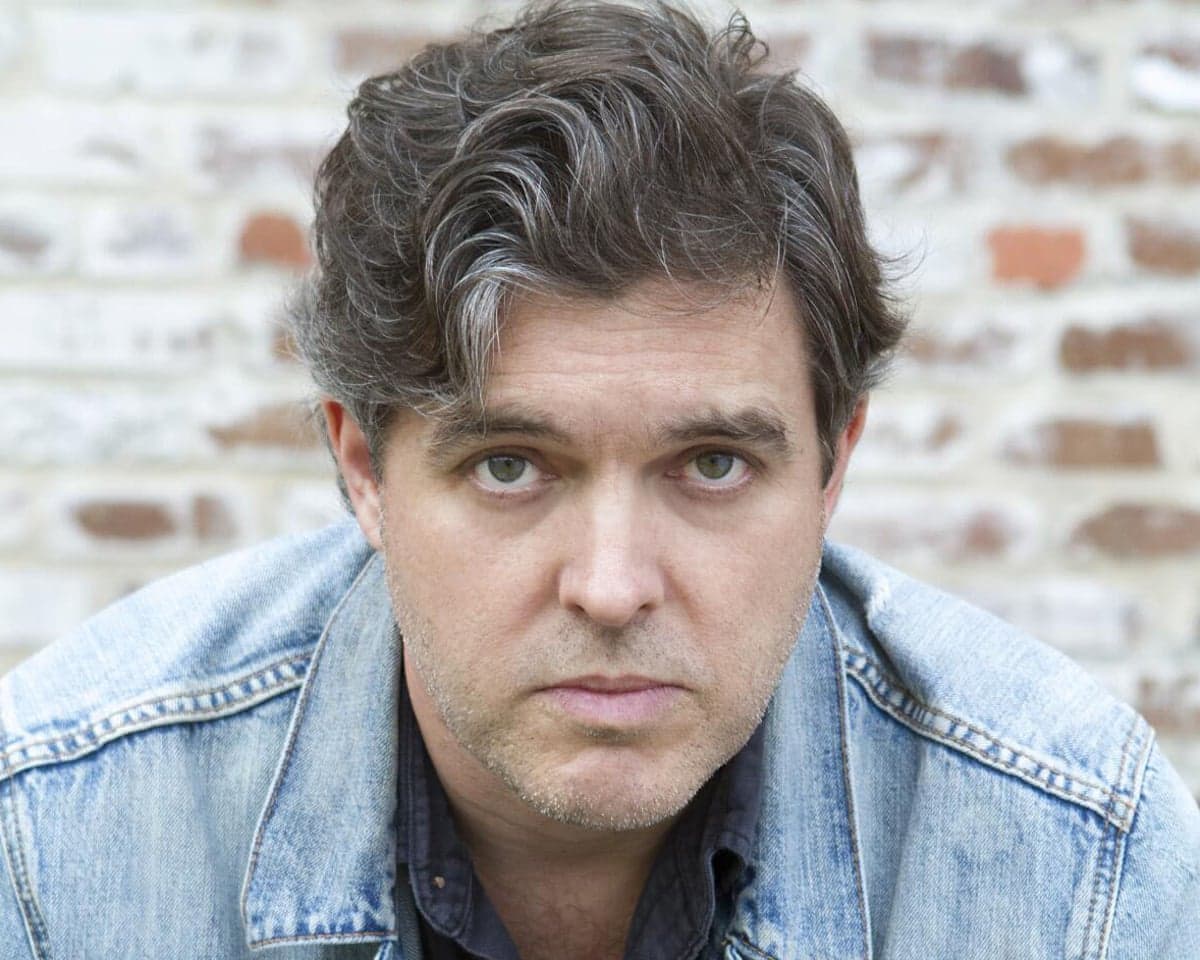
American author Kevin Powers has built a literary career exploring the weight of conflict and human connection, informed by his service in the United States Army. His debut novel, The Yellow Birds, won both First Book Award and the PEN/Hemingway Award, establishing him as a significant voice in contemporary fiction. Now, with his latest work Children of the Wild arriving in June 2026, Powers reflects on the books and writers who shaped his path to becoming an author.
Powers's earliest reading memory centres on a moment of profound emotional impact. The deaths of Old Dan and Little Ann in Wilson Rawls's Where the Red Fern Grows left an indelible mark on him as a first grader in Chesterfield County, Virginia. That early encounter with loss through literature would prove formative, establishing a pattern of seeking out stories that moved him deeply.
Which books shaped his teenage years?
Two works proved transformative during Powers's adolescence. Stephen King's The Stand captivated him completely—he lost himself entirely in the narrative in a way he later came to recognise as a rare gift. But it was F Scott Fitzgerald's The Great Gatsby, encountered at school when he was 15 or 16, that crystallised his ambition to become a writer. His love for the novel ran so deep that he undertook an exercise that he now finds somewhat embarrassing to admit: he would type out sentences from it on his family's old desktop computer simply to experience the sensation of recreating Fitzgerald's prose.
Around the same age, Powers wandered into the modest poetry section of his local used bookstore and discovered Dylan Thomas's Collected Poems. Opening the volume, he encountered the opening line:
Now as I was young and easy under the apple boughs …Though he was not yet a sophisticated reader of poetry, the musical quality of the language was undeniable. That same night, he wrote his first attempt at poetry and recognised in that moment that he would spend his life pursuing that particular music.
What intellectual influences shaped his thinking?
In his early twenties, Powers read G.K. Chesterton's Orthodoxy, which challenged his assumptions about belief and tradition. Chesterton's framing of tradition as democracy extended to the dead—a concept that had never occurred to Powers before—proved persuasive. While his politics did not shift, the experience taught him something more valuable: the necessity of having one's ideas tested, and the foolishness of assuming one's opinions are correct simply because one holds them.

How did he finally conquer Infinite Jest?
David Foster Wallace's Infinite Jest nearly defeated Powers. A friend in graduate school served as an evangelist for the massive novel, offering encouragement each of the thousand times Powers was ready to abandon it. The turning point came when he reached Don Gately's section of the narrative—suddenly, the book opened up to him entirely. Powers now deeply admires the work, a testament to the value of persistence with challenging literature. His own recent fiction continues to explore complex emotional and moral terrain, echoing Wallace's commitment to unflinching examination of human experience.
Which books does he return to repeatedly?
When Powers moved to Texas in his twenties, a friend recommended John Graves's Goodbye to a River, a memoir documenting a final canoe journey down the Brazos River before its planned damming. The writing struck him as exquisite—the platonic ideal of a book as a record of a mind at work. He has reread it every year or two since that first encounter, making it his most revisited text.
More recently, Powers discovered Pär Lagerkvist's Barabbas only a few years ago, and it has become a touchstone for clarity in his own writing. The novel contains scenes that rank among the most deeply moving he has encountered, yet they are told with remarkable plainness and directness.
What about books he will not revisit?
Thomas Wolfe's Look Homeward, Angel was another transformative work Powers encountered as a teenager. Yet he has made a deliberate choice never to reread it. He fears that a second encounter might diminish his appreciation, and he prefers to preserve the joy that his 16-year-old self experienced rather than risk tarnishing that memory with a mature perspective that might find fault.
What is his current reading?
Powers has recently finished Foster by Claire Keegan and immediately ordered everything she has published, suggesting an author whose work has captured his attention completely. When asked about comfort reading, Powers offers a revealing answer: he reads to be made uncomfortable. This philosophy aligns with his own literary project—his new novel Children of the Wild, published in June 2026, is described as a love story set in Virginia and World War I France, continuing his long-standing engagement with how conflict shapes human lives.
What is Powers working on now?
Children of the Wild marks Powers's return to fiction after A Line in the Sand in 2023. The novel has been framed as a love story set before, during, and after the First World War, with its narrative spanning the Virginia mountains and the battlefields of France. The work follows three young people—Roy Young, Samantha Hatton, and Ennis Duke—as they navigate the transformations wrought by war. The novel was named one of PEOPLE magazine's Best Books of June 2026, affirming Powers's continued significance as a writer exploring the reverberations of conflict across generations.