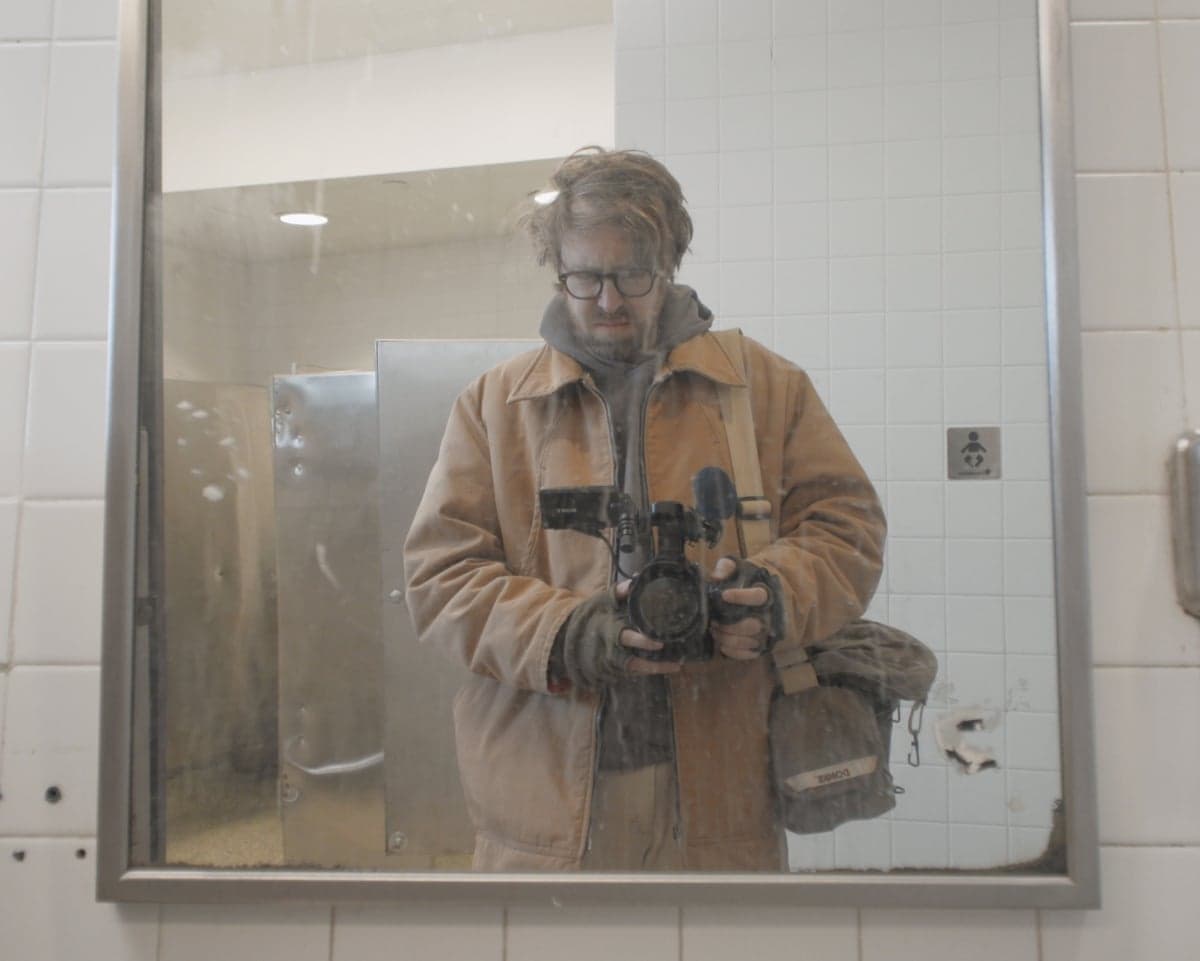
John Wilson, the creator of the cult-beloved HBO series How To with John Wilson, has completed his first feature film—a documentary that explores both the material substance of concrete and the far more fragile architecture of artistic ambition, self-doubt, and the struggle to bring an unmarketable idea to life.
The 101-minute film, which opened in theaters on 18 September 2026 through Magnolia Pictures, plays as an extended episode of How To, blending Wilson's signature digressive style with meditations on urban decay, human motivation, and the peculiar challenge of making a feature-length documentary about a material nobody wants to think about. The film premiered at the 2026 Sundance Film Festival in January before circulating through the festival circuit, including a May screening at DocsBarcelona.
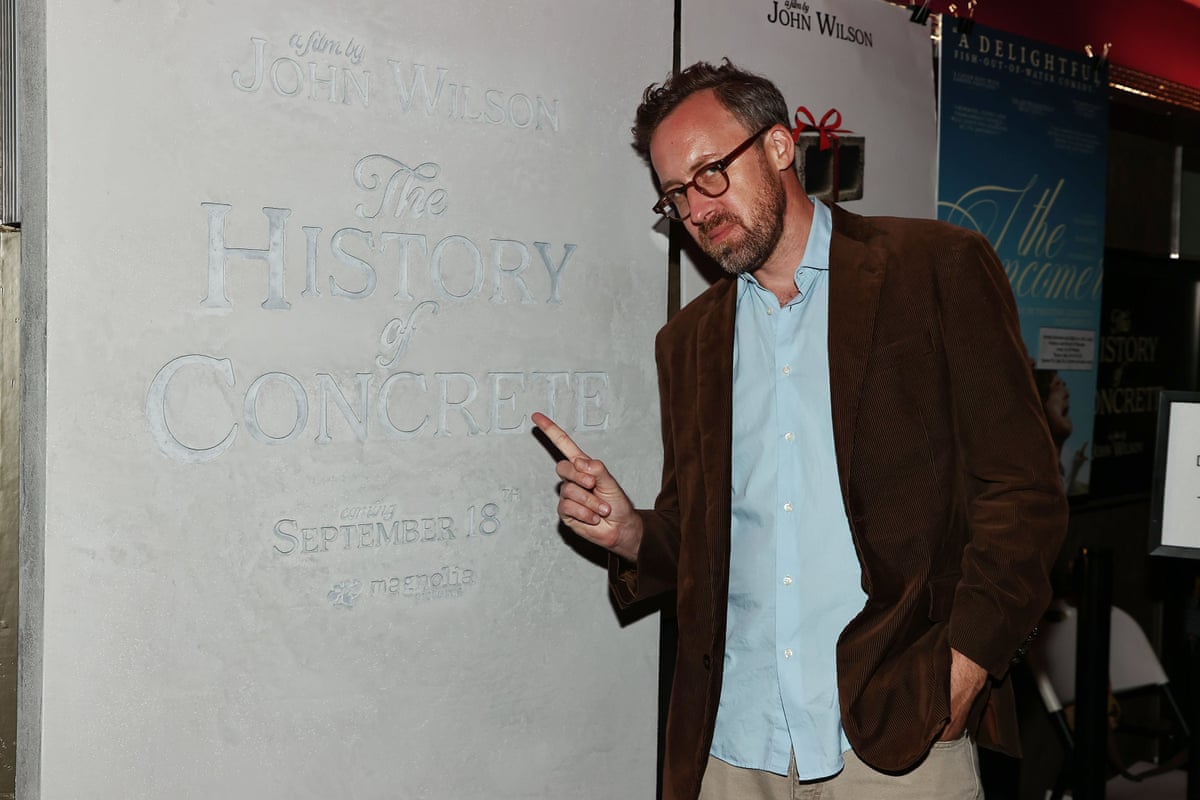
Why concrete? And why was nobody interested?
The genesis of the project lay in a mundane domestic crisis. While attempting a DIY repair to the cracked foundation of his Queens apartment, Wilson found himself struck by a peculiar realization: he knew almost nothing about concrete, despite its omnipresence in the visual landscape of New York City. The material is, by any measure, consequential—a mixture of cement, water, sand and crushed stone; arguably ancient Rome's greatest invention; the second-most used substance on earth, behind water; and the foundation of buildings, bridges, and, as Wilson notes,
everything I've done before. Yet when he began pitching the idea to financiers and producers, the response was, in his words,
an absolute emotional flatline. The general sentiment from potential backers amounted to a polite refusal:
I don't want to think about this.
The timing compounded the difficulty. Wilson found himself adrift after the conclusion of How To's third season in 2023, without the structural support of an HBO contract or a writer's room. His initial pitch attempted to frame the project as an environmental documentary, a meditation on the deterioration of American infrastructure. That approach failed spectacularly.
It's hard to say that I don't want to make that movie I just told you about either. I want to try, and then experiment and get lost along the way as I usually do, he explained, describing the creative paralysis that followed rejection.
How did Wilson find a way forward?
The breakthrough came from an unexpected source: a Writer's Guild of America workshop held during the 2023 strike on how to write and sell a Hallmark movie. The workshop offered a deceptively simple formula—
trauma is FINE, if it ends on a high note—and posed a provocative question: if Hallmark could make movies about property developers, why not concrete? The absurdity of the premise, combined with the pressure to move forward without waiting for institutional permission, liberated Wilson from the need to pitch something marketable. Instead, he returned to the method that had always worked: pick up a camera, leave the house, and follow his curiosity wherever it led.
I was just caught in this trap again, of thinking that I needed permission, he reflected.
So I just went out to try to make it, and then I decided to incorporate all of these voices that were trying to get me to change and do whatever the market would reward. The resistance he encountered—suggestions to make it sexy, to frame it as a rock-umentary, to add celebrity proximity, to emphasize topical urgency—became the skeleton of the finished film rather than obstacles to overcome.

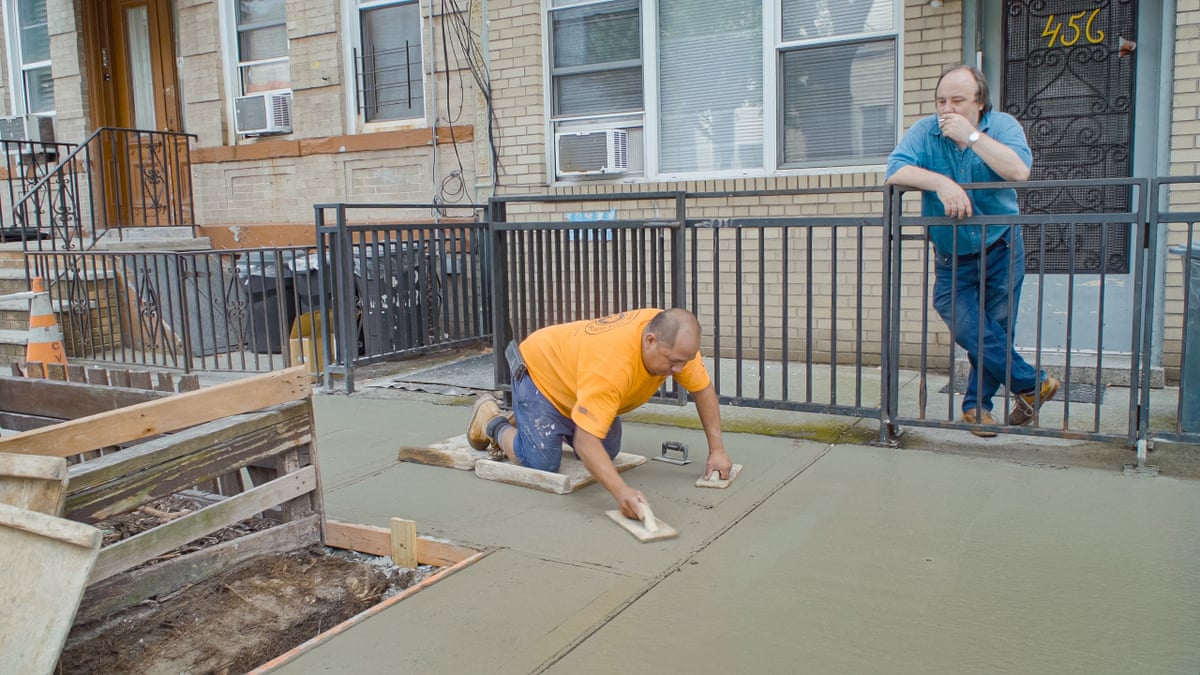
What does the finished film actually contain?
The documentary wanders far from any conventional history of concrete. Wilson attends a brick-laying competition where the winner receives a sleek blue truck. He meets and follows an aging rocker at a liquor store. He visits a science lab and, naturally, a corporate gathering for
the women of concrete. He travels to Rome, observes the Sri Chinmoy Self-Transcendence race in Queens—an event in which runners loop around a single city block for an entire month—visits an Ohio driver's education class, and spends time on the set of Marty Supreme, whose director Josh Safdie served as an executive producer on Wilson's documentary.
Each digression becomes an avenue for exploring material far less solid than concrete itself: the struggle to find motivation, cyclical self-doubt, the tension between the desire to move forward and the impulse to make something that endures. The film functions simultaneously as a portrait of a material and a portrait of artistic paralysis, creative resilience, and the peculiar vulnerability required to make something nobody asked for.
The project emerged from a period of genuine psychological difficulty.
I was having a lot of strange thoughts, crazy problems with self-esteem, especially when nobody wanted to take a chance with something like this, at least at first, Wilson recalled. The pressure to follow How To without simply repeating it created a creative dead end.
There was a lot of frustration when I started to pitch this idea because everyone seemed to want something different than How To, and that just felt like an arbitrary requirement to me, he explained. His insistence on maintaining his digressive, essayistic approach—
This is how I think. I just think this is the right way to do things. I like essay films, I like shooting things from my perspective—meant rejecting the market's implicit demand that he reinvent himself.
What does Wilson say about the final result?
Reflecting on the uphill climb to completion, Wilson acknowledged the psychological toll of the endeavor:
There might be a kind of sickness in shooting things this way. Yet he stood by the choice, driven by a conviction that the imagery he wanted to create existed nowhere else.
It's the kind of imagery that I want to see, because I don't see it anywhere else.
He expressed gratitude for the very resistance that had nearly derailed the project.
I'm thankful for the resistance that I got, because the very thing that you are resisting, or that's resisting you, ends up becoming the skeletal system or the spine of your work in certain ways, if you let it. The observation, delivered in the second-person voice characteristic of both How To and the new film, reframes obstruction as material—the substance from which art is built.
The film's emergence also reflects a broader cultural moment in which seemingly unmarketable subjects have found audiences through persistence and formal innovation. Earlier documentary work has demonstrated that audiences will engage with unconventional premises when filmmakers commit fully to their vision and refuse to compromise on style for the sake of commercial appeal.
Where can audiences see the film?
The History of Concrete continues its theatrical run at venues including IFC Center in New York, with additional screenings scheduled at other independent cinemas. A screening is listed for 22 September 2026 at 7:00 PM at the American Cinematheque. The film will premiere at the London Film Festival next month, with an Australian release planned for 9 October 2026.
Key Facts
- The History of Concrete is Wilson's feature directorial debut, running 101 minutes
- The film premiered at the 2026 Sundance Film Festival in January before opening theatrically on 18 September 2026
- Wilson developed the project after the conclusion of How To with John Wilson's third season in 2023, initially struggling to secure financing for an unmarketable premise
- The documentary incorporates Wilson's signature digressive style, wandering from concrete science to brick-laying competitions, street racing, and philosophical reflections on artistic ambition
- Magnolia Pictures is distributing the film, which will expand to additional markets including the United Kingdom and Australia in October 2026