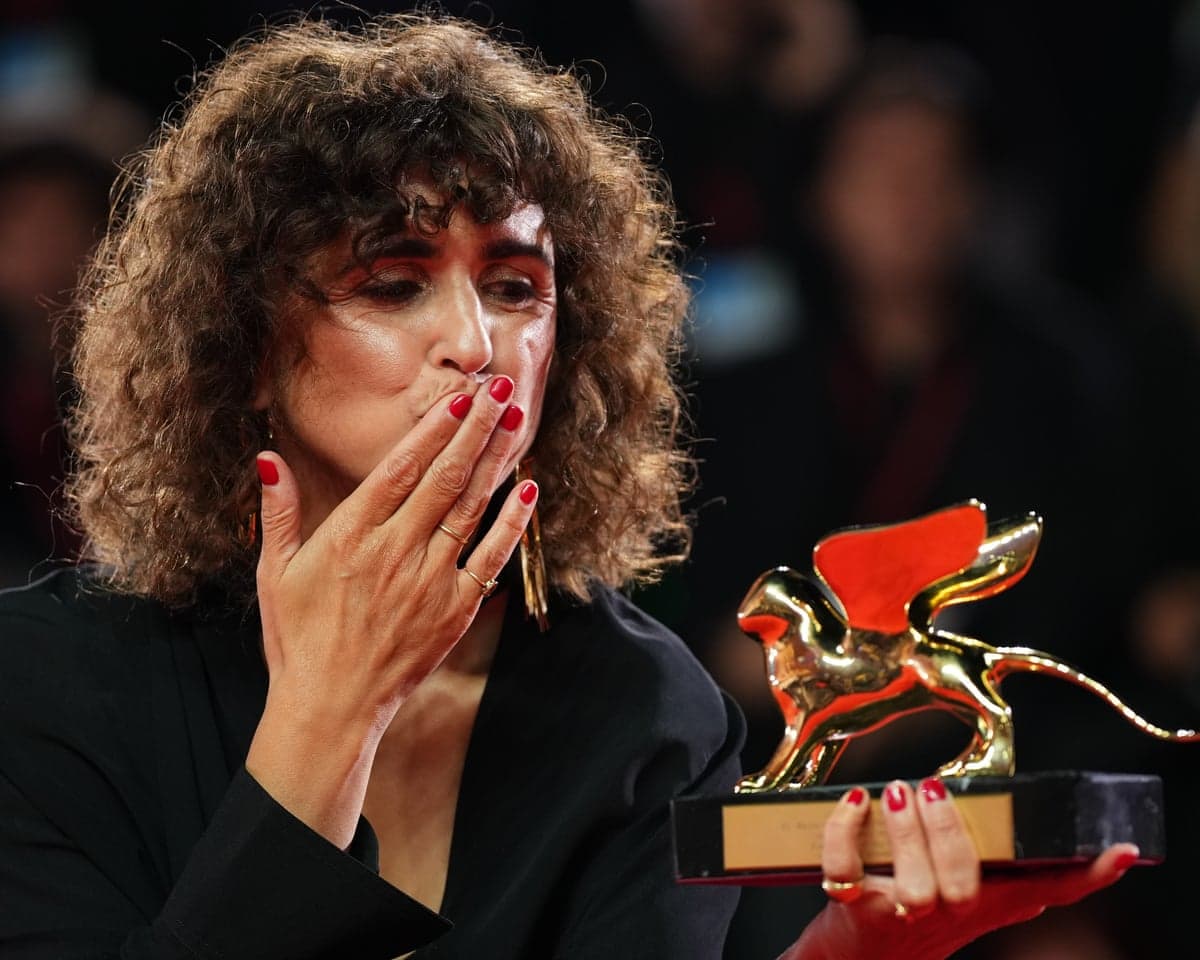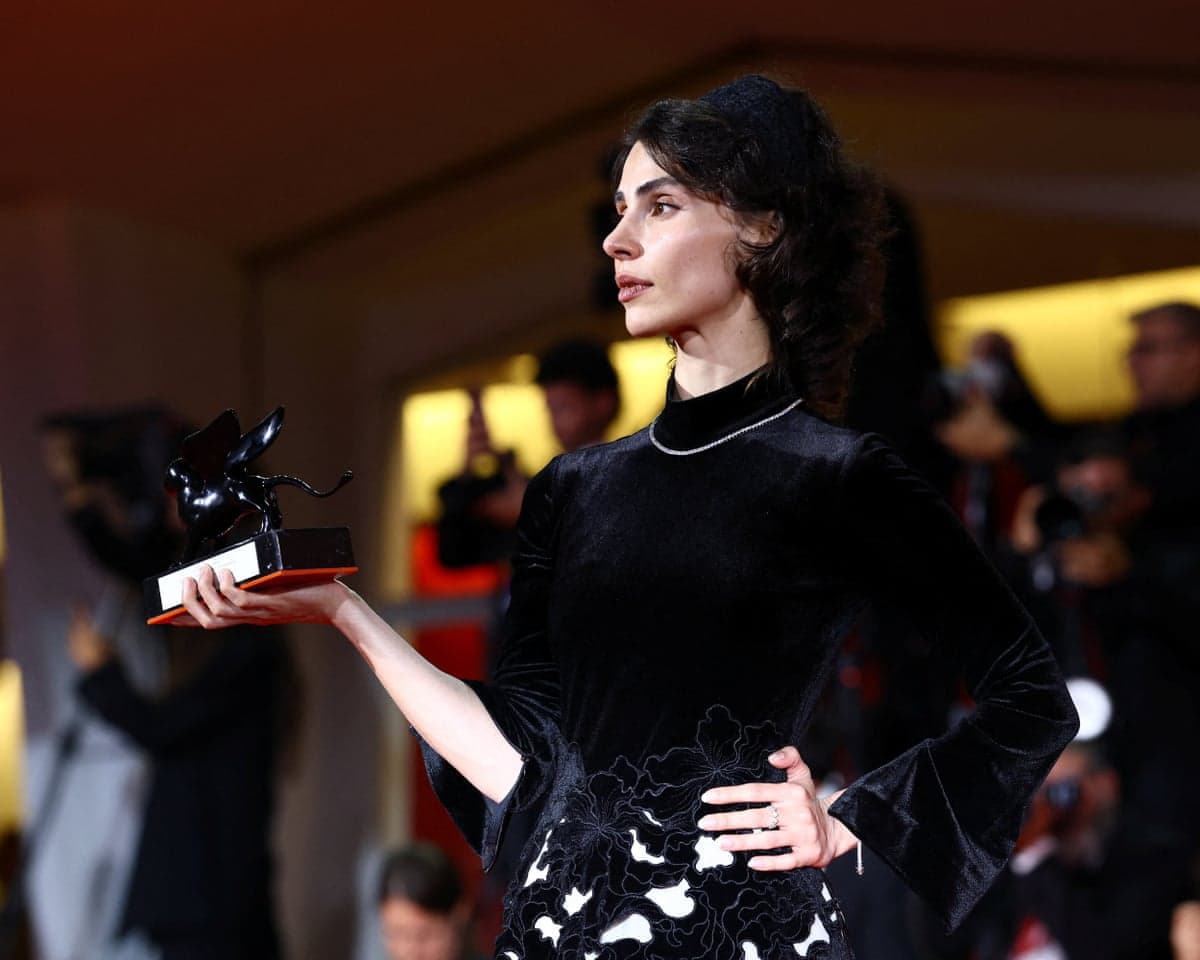
Laleh Marzban, an Iranian performer who secured the best actress award at the Venice International Film Festival, has faced intense condemnation from government bodies and state-controlled media following remarks in which she dedicated her prize to the women of Iran.
On 12 September 2026, Marzban won the Orizzonti Best Actress award at the 83rd Venice International Film Festival for her role in Falling House, a drama exploring the experiences of three generations of women confined within their home by the family patriarch. According to Iran International, the film was directed by Mohsen Gharaei and co-written by Amir Mohammad Abdi, with a cast including Rima Raminfar, Farhad Aslani and Elena Khakbazan alongside Marzban.
During the awards ceremony, Marzban used her acceptance speech to address the situation facing women in her country. She dedicated her honour to "the women of my country who have paid the highest price for even the smallest measure of freedom". Speaking in Farsi, she expressed concern about the difficulties Iranians were enduring but urged audiences not to abandon hope for change.
What triggered the official response?
The Iranian government's reaction came swiftly. On Thursday, the Supreme Council of the Cultural Revolution, a body dominated by conservative figures and appointed by Iran's supreme leader, released a statement attacking Marzban's remarks as "presenting a one-sided narrative of Iran's proud society". The council objected to what it characterised as a reduction of Iranian women to "the stereotypes desired by western circles", arguing that such a portrayal contradicted art's responsibility to raise awareness and demonstrate social commitment.
The official condemnation reflected a broader pattern of pressure on Iranian cinema. According to industry reporting, director Gharaei had navigated significant obstacles imposed by censors to complete the film, which premiered in Venice's Orizzonti section on 3 September 2026 as a story about women living under patriarchal control and pressure to leave their home.

How has state media responded?
State-affiliated outlets have amplified the government's criticism with increasingly harsh language. Zahra Chekhmaghi, a journalist and presenter connected to the Islamic Republic of Iran Broadcasting (IRIB), described Marzban as "a two-faced person, [...] self-interested, hypocritical, despicable and miserable". Another IRIB-affiliated media figure, actress Zhila Sadeghi, took a different approach by criticising Marzban for failing to dedicate her speech instead to children killed in a United States missile strike on an elementary school in Minab on 28 February.
On state television IRIB, a Qur'an scholar claimed the actress had been "deceived by the enemy" and urged the government to prevent her from working within Iran. The Student News Network (SNN), another state news agency, called on the ministry of culture to bar Marzban from re-entering the country.
What is the broader context for this dispute?
The film itself explores themes central to contemporary Iranian society. Falling House, also known as Moragheb, centres on the breakdown of traditional patriarchal family structures in Iran and men's attempts to preserve them through force. Marzban portrays Ensi, a woman in her twenties who announces her intention to leave the country and pursue a modelling career in Turkey. Her father, Rashid, played by Farhad Aslani, responds by locking Ensi and other female family members in their rooms to assert his authority.
The Iranian government's reaction to Gharaei's film mirrors its response to another Venice premiere this year that drew official criticism. The pattern reflects broader tensions between Iranian authorities and artists who address sensitive social issues on international platforms.
When asked after the Venice premiere how the film would be received in Iran, Marzban offered a measured perspective on the challenges facing women in her country. She acknowledged the significance of the question for herself as an actress and for all Iranian women, regardless of their profession. "We can only make one step at a time, one step towards our objective," she explained. "I have made my small part. I have given my contribution. I really hope many other people can make small steps towards our common objective."
Key Facts
- Marzban won the Orizzonti Best Actress award on 12 September 2026 for her performance in Falling House, a film about women confined by patriarchal control
- Her acceptance speech, in which she dedicated the award to Iranian women, prompted immediate condemnation from the Supreme Council of the Cultural Revolution
- State media outlets have called for the actress to be disciplined and prevented from working or returning to Iran
- The film explores the collapse of traditional family structures and men's efforts to maintain authority through force
- The controversy reflects broader tensions between Iranian authorities and artists addressing women's rights on international stages