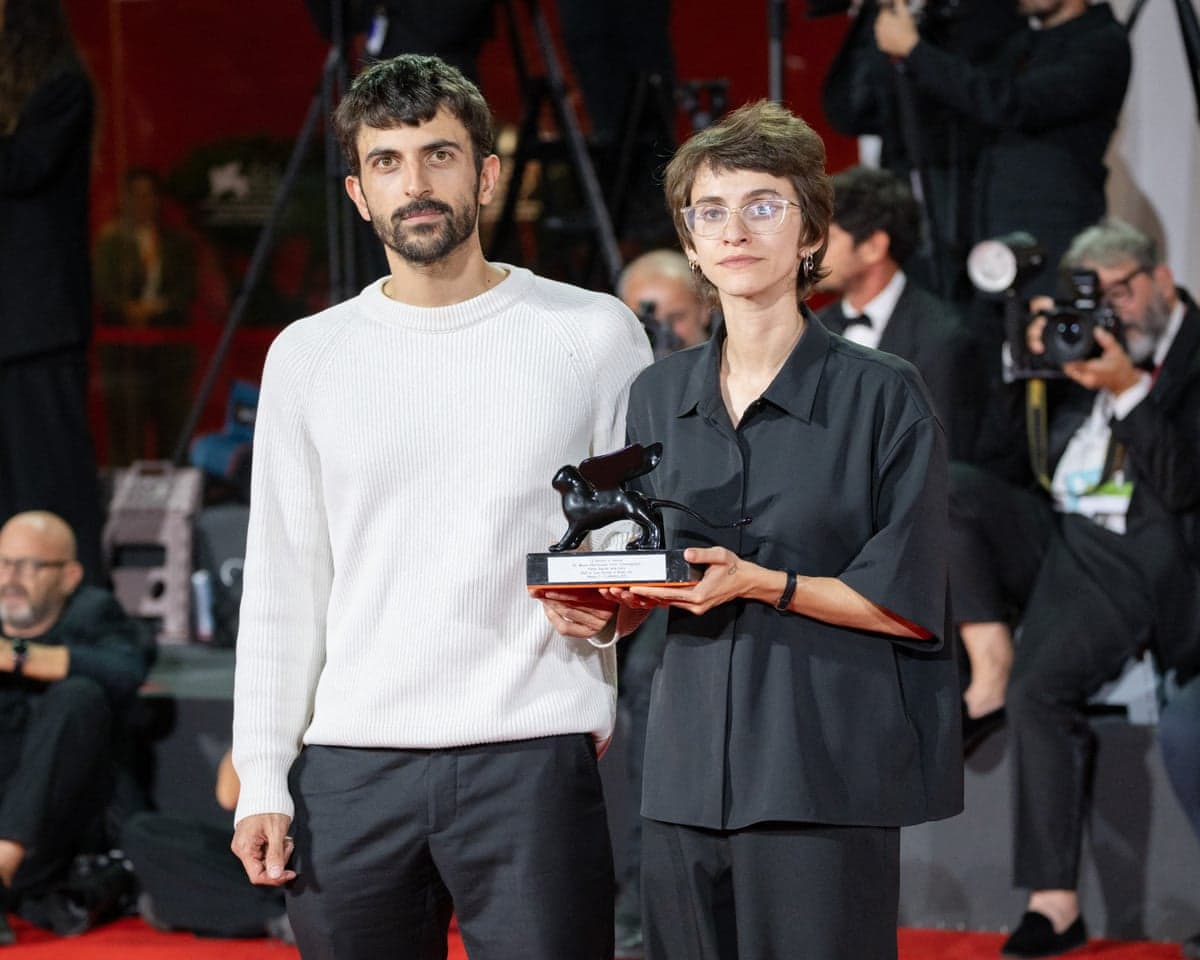
A documentary examining how Israeli military personnel select targets for airstrikes has triggered starkly contrasting reactions across the globe: a 25-minute standing ovation at the Venice Film Festival and, in Israel, accusations of treason, calls for violence, and threats to revoke the filmmakers' citizenship.
The film, titled NAZA—an acronym derived from an Israeli military term used euphemistically to describe anticipated civilian casualties in military operations—premiered in the Sala Grande, the main screening hall of the Palazzo del Cinema in Venice. The documentary, which runs 80 minutes, was produced in collaboration with international media partners and presents testimony from 24 anonymised Israeli military insiders, many from elite units, discussing their involvement in target selection processes.
The filmmakers, Oscar-winning Israeli directors Yuval Abraham and Rachel Szor, have become the focal point of a fierce political backlash in their home country. Within days of the Venice premiere, Israeli political figures across the right-wing spectrum denounced them, with Prime Minister Benjamin Netanyahu announcing plans to promote legislation aimed at criminalising what he characterised as defamation of Israeli soldiers and the state.
What does the documentary reveal?
The film presents a range of perspectives from Israeli military personnel involved in targeting operations, all converging on a central finding: participation in what the documentary characterises as a programme of mass killing with blurred boundaries between combatant and civilian. According to the film's account, more than 73,000 Palestinians have been killed in the conflict. The documentary captures diverse attitudes among those interviewed—some express shame about their involvement, others remain neutral, and some describe excitement and a sense of enjoyment while justifying their actions. The film unfolds against the backdrop of Tel Aviv at night, depicting how artificial intelligence systems and human operators collaborate to select thousands of individuals for strikes, frequently conducted at night when families are present.
How has the Israeli political establishment responded?
The reaction from Israel's rightwing political figures has been swift and severe. Netanyahu declared on Wednesday that he would pursue legislative measures against those he accused of smearing Israeli soldiers. Culture Minister Miki Zohar, according to the Committee to Protect Journalists, threatened to seek revocation of the filmmakers' citizenship under Israel's Citizenship Law. The prime minister announced two bills designed to legislate against what he termed defamation of Israeli soldiers and the state, stating:
We will revoke citizenship for anyone who defames IDF soldiers around the world – he will be deeply hurt in his pocket.
Ofer Winter, a controversial former rightwing army officer turned politician, addressed an election rally for his People of Israel party in Rishon LeZion with inflammatory language directed at the filmmakers:
An Israeli citizen, a Jew, receives thunderous applause for going out and smearing and defaming his own people. I understand that you are afraid to return to Israel. You are right. You have nothing to return to. It is a disgrace and a shame to return after you spat in the faces of your own people.
Yehuda Schlesinger, a rightwing journalist at Channel 14—a station widely regarded as aligned with Netanyahu's messaging—escalated the rhetoric further, calling for Abraham and Szor to be
pursuedand
hunted, prevented from returning to Israel, and describing the Venice ovation as
25 minutes of antisemitic applause.
Have threats of violence been carried out?
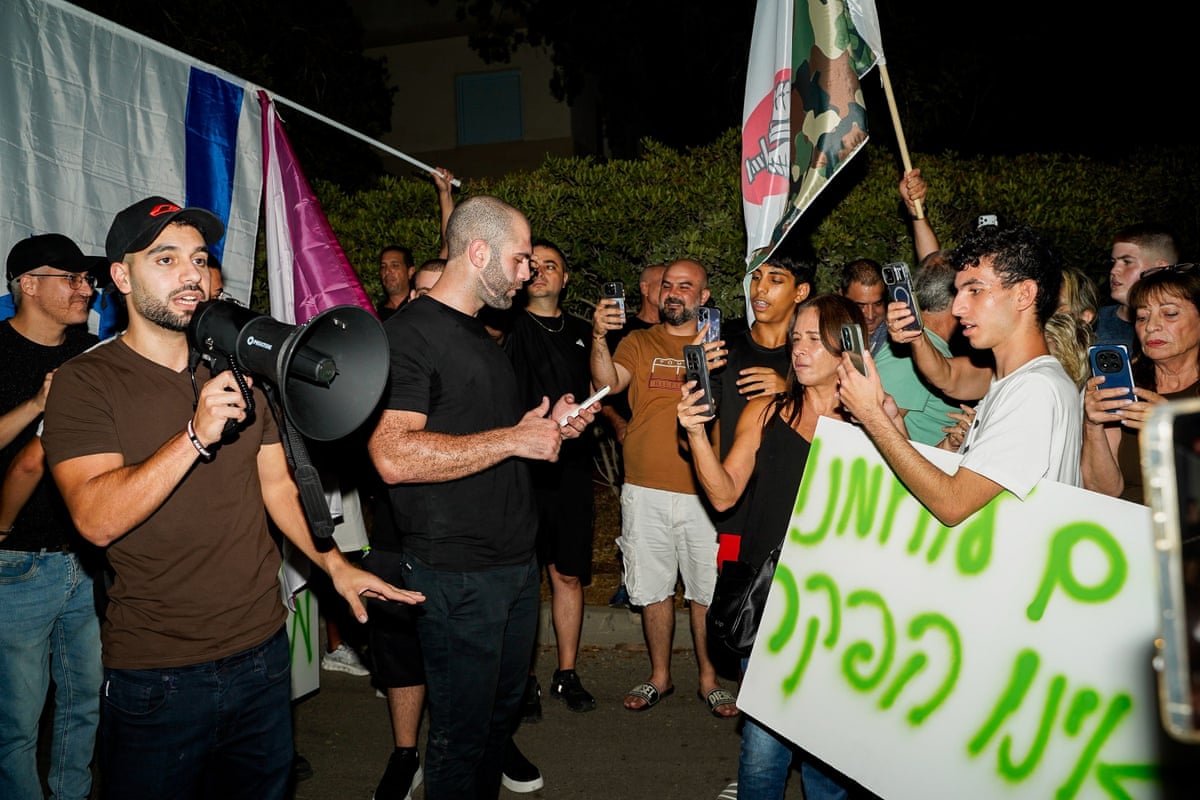
Beyond political denunciations, the filmmakers have faced concrete threats. Demonstrators and members of far-right groups have called for violence against the pair and the destruction of their homes. Outside Rachel Szor's parents' house in central Israel, protesters demanded the
death penalty for traitors.An editorial in the left-leaning newspaper Haaretz warned that their lives were credibly endangered.
On Wednesday, Haggai Matar, a director of the left-leaning independent publication +972 Magazine and Sicha Mekomit (Local Call)—where Abraham's initial reporting on the allegations appeared in collaboration with international media partners—disclosed that their offices had been broken into by rightwing activists who filmed the intrusion. Abraham's first reporting on these allegations had been published through this outlet in partnership with international news organisations.

What is the broader political context?
The ferocity of the response, even within the context of a heated election campaign where Israeli attitudes toward the Gaza conflict are a central issue, has surprised observers across Israel's leftwing and human rights communities. The backlash reflects a broader pattern in which the Israeli right has weaponised criticism of the film—which remains unseen by most Israelis—to attack not only the filmmakers but a wider ecosystem of critics, journalists, and human rights advocates.
Dahlia Scheindlin, an Israeli political analyst and polling expert who writes for Haaretz, observed that the discussion surrounding the film has dominated the political landscape far more prominently than other major developments.
The discussion about NAZA has been a million times more prominent than the UK sanctions announcement,she said, noting that the right was exploiting the current inability of Israelis to view the film and form independent judgments.
While it is unseen, it can be turned into something electorally potent that at present Israelis aren't able to demystify.
The film's emergence coincides with a markedly deteriorating atmosphere toward critical voices in Israel, particularly acute since Hamas's deadly attack on southern Israel on 7 October 2023. The documentary challenges a longstanding expectation that Israeli media will self-censor during periods of conflict. As Israel has faced increasing international isolation over both the Gaza conflict and escalating settler violence in the occupied West Bank, the film appears to have touched a deeper nerve in Israel's collective consciousness.
Israel's forthcoming elections in October have accelerated the country's rightward political shift, with Netanyahu's far-right coalition partners adopting increasingly hardline rhetoric. Human rights activists, critical journalists, the broader left, and even the concept of an independent judiciary have been consistently framed as enemies within by far-right figures, who appear intent on weaponising the film against the entire community of Israel's critics and military dissenters.
What have critics of the backlash said?
The extreme response from Netanyahu and his allies has itself drawn condemnation from within Israel's establishment. Nahum Barnea, a columnist for Yedioth Ahronoth, described the calls to strip the filmmakers of citizenship as
delusional.Yaakov Katz, former editor-in-chief of the Jerusalem Post, argued that such measures are counterproductive:
Not only does such a move not make Israel look stronger, but it creates the impression that we have something to hide and are afraid of criticism. It makes it seem like we fear to stand up for our truth and what we believe in.
Etan Nechin, a Haaretz columnist who attended a press screening of the film in New York earlier in the week, characterised the reaction as symptomatic of a deeper democratic crisis. In a healthy democracy, he argued,
NAZA would be shown on the evening news, its allegations would cause a public outrage and the state would promise a thorough investigation. Instead, following the film's Venice premiere, Abraham and Szor have effectively been pushed into exile.
Dozens of human rights and peace organisations within Israel have rallied to defend the filmmakers. According to reports on the response, 43 Israeli human rights groups and NGOs issued a statement backing the filmmakers and urging authorities to cease threats and reject citizenship-revocation calls.
What is the military's position?
The Israel Defense Forces has not accepted the documentary's allegations. According to the Committee to Protect Journalists, the IDF's chief of staff said military lawyers were examining
possible legal measuresregarding the film and those involved in its production. The military's rejection of the film's claims has widened the dispute beyond the initial festival response, transforming it into a broader confrontation over accountability and military conduct.
When will audiences outside Israel see the film?
The documentary is scheduled for its North American premiere at the New York Film Festival on 26 September 2026, followed by a theatrical release in United States cinemas beginning 30 September 2026, with a Los Angeles rollout on 9 October 2026, according to distribution announcements. International distribution plans are expected to be announced shortly. The rapid timeline for the film's North American release means that international audiences will gain access to the documentary well before most Israelis, a circumstance that has further inflamed the political controversy surrounding it.
Key Facts
- The documentary features testimony from 24 anonymised Israeli military insiders, many from elite units, discussing target selection processes in military operations.
- The film won the Special Jury Prize at the Venice Film Festival before triggering accusations of treason, incitement, and antisemitism from Israeli political figures.
- Israeli Prime Minister Benjamin Netanyahu announced plans to promote legislation enabling citizenship revocation for those he characterises as defaming Israeli soldiers.
- The documentary is scheduled for theatrical release in the United States beginning 30 September 2026, with a North American premiere at the New York Film Festival on 26 September 2026.
- Forty-three Israeli human rights groups and NGOs have issued statements defending the filmmakers and opposing citizenship-revocation threats.