The Back to Black singer's personal collection, a malfunctioning brutalist landmark, and works exploring artificial light are among the standout exhibitions opening in London galleries this week, all available to view without charge.
What does it mean to display a dead celebrity's private possessions?
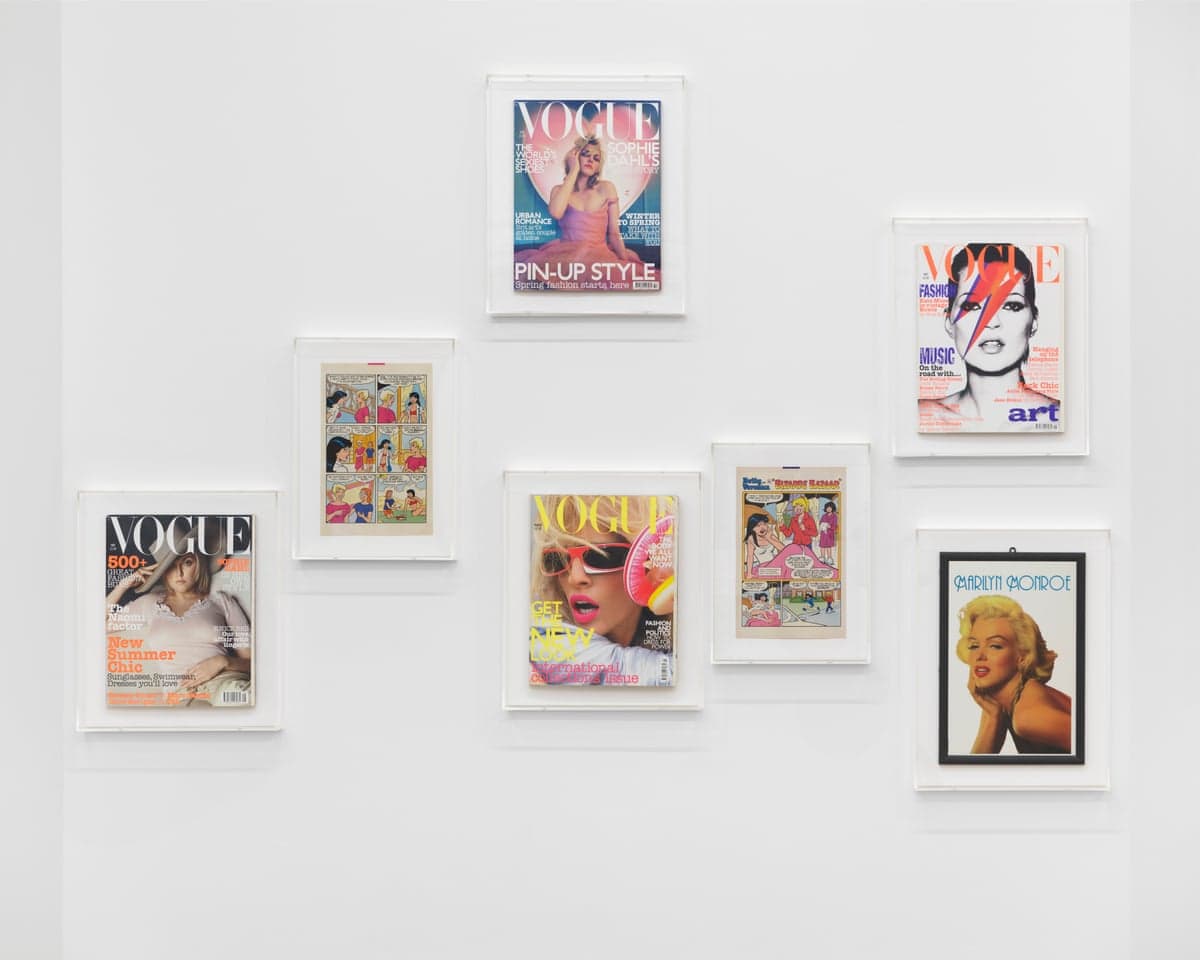
Artist Alex Margo Arden has assembled an exhibition titled Nothing Personal that forces viewers to confront their own relationship with celebrity culture. Working from archive material and auction records, Arden has acquired duplicates of items once owned by Amy Winehouse—her makeup, copies of Vogue magazine, board games, and books—and arranged them in display cases and on shelves within a Chelsea flat.
The collection invites visitors to imagine Winehouse's daily life: reading biographies of jazz musicians and celebrities, consulting Claudia Roden's book of Jewish food, or working through a 1,000-piece Cadbury jigsaw puzzle. Among the objects are ballet pumps signed by fans and left at her doorstep after her death, and a birthday card from Mark Ronson and Adele that she never opened.
The exhibition operates on two levels simultaneously. It constructs a portrait of an icon through the ephemera and objects of her existence, while simultaneously interrogating the uncomfortable fetishisation of celebrity culture. Arden creates an act of devotion and critical self-reflection at once, generating a tension between admiration and intrusion that makes viewers feel complicit in a form of emotional voyeurism. The result is conceptual art that provokes discomfort alongside appreciation.
How can a building's structural failures become art?
The Barbican Centre has endured persistent water damage, prompting significant investment in repairs to the brutalist structure. In Yuko Mohri's installation In Concert, these leaks transform from maintenance problems into creative collaborators. Water drips from sinks and pipes throughout the Curve gallery space, collecting in buckets and tarpaulins before being channelled through tubes and pumps. Each water droplet triggers percussion instruments—cymbals, triangles, mallets striking drums—turning the building's deterioration into an unintended musical composition.
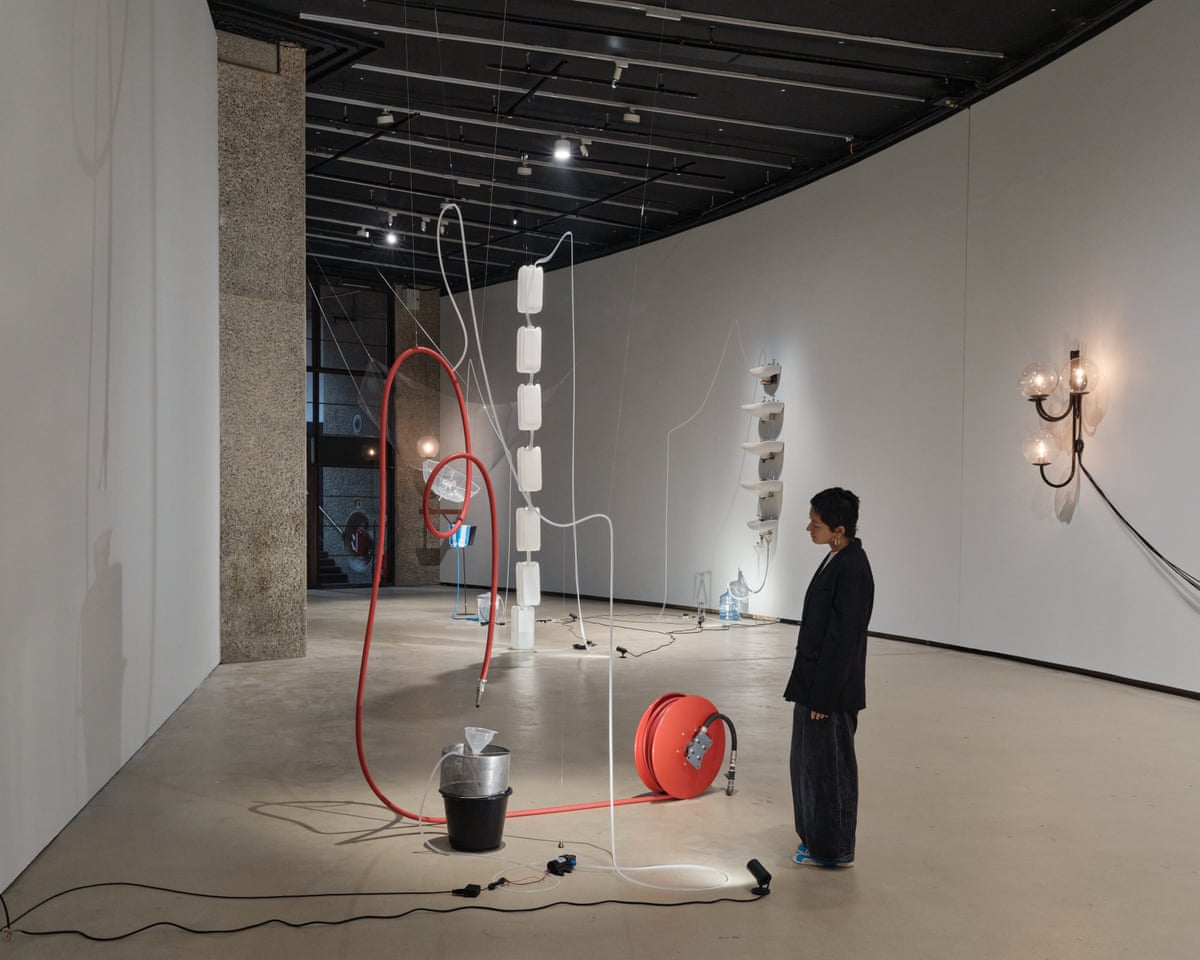
The installation extends this logic further. Repurposed Barbican lamps flicker on and off under the control of sensors measuring moisture levels in rotting fruit, while other lights respond to breezes flowing through the building's draughty walls. Mouldy fruit and crumbling concrete become the conductors of a symphony. According to the Barbican's exhibition guide, Mohri's approach was shaped by her residency at the venue, allowing her to develop a site-responsive work that transforms the building's vulnerabilities into aesthetic experience. The exhibition achieves what few installations manage: it converts architectural decay and infrastructure failure into an instrument of survival and strange beauty. The show remains open through January 24, 2027, and Mohri performed alongside musician Christian Marclay during a Barbican public programme event on October 8, 2026.
What happens when artificial light replaces darkness?
Chinese artist Yuyan Wang's new film work Pilgrims interrogates the cultural assumption that light represents goodness and progress. The work begins with a troubling premise: plans to launch artificial moons capable of providing continuous daylight, eliminating night entirely.
The exhibition unfolds across multiple spaces. Downstairs, moths and insects flutter across the screen, drawn to a lamp and deceived by artificial illumination that triggers their natural instincts. Upstairs, found footage cycles through images of industrial infrastructure—drills, mines, LEDs, fireworks, lasers, rockets, torches and neon strip lights—accompanied by synthesiser choir chords that assault the senses. Wang poses a question about the cost of perpetual productivity: what does it mean to exist without darkness, without rest, without escape from constant visibility and labour?
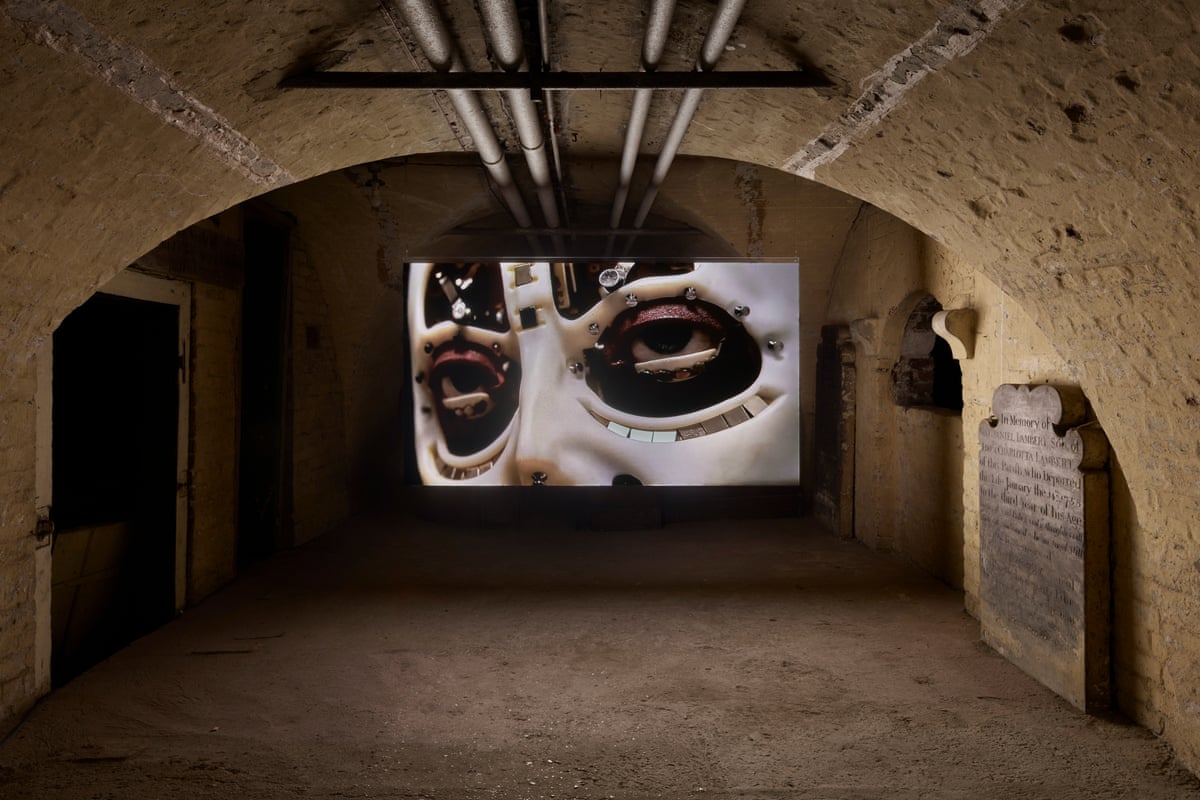
The metaphor becomes clear: viewers are the moths, fooled by the artificial lights of a world that treats human beings like insects to be manipulated. In the crypt of the adjacent Shoreditch church, a second video depicts the construction of humanoid robots, suggesting that Wang anticipates a future in which human obsolescence will simply add to the mounting pile of forgotten industrial waste. This is the strength of art cinema at its best: non-narrative, visually compelling, and deeply unsettling.
Can rough, unfired clay compete with polished modernism?
Sculptor Rebecca Warren returns to London for her first solo exhibition in the capital in 16 years, two decades after her Turner Prize nomination. Her practice remains defined by angular, gritty, deliberately imperfect forms that reject the smoothness and refinement associated with traditional sculpture.
The smaller works present a post-apocalyptic reimagining of decorative rococo ceramics. Rather than glistening perfection and flowing ornamental robes, Warren offers rough, gloopy, brittle nudes stretched across rocks—funny, ugly, deliberately ungainly objects. The proliferation of faux-amateur, deliberately crude ceramics in contemporary art may owe something to Warren's decades-long insistence on imperfection as a form of honesty.
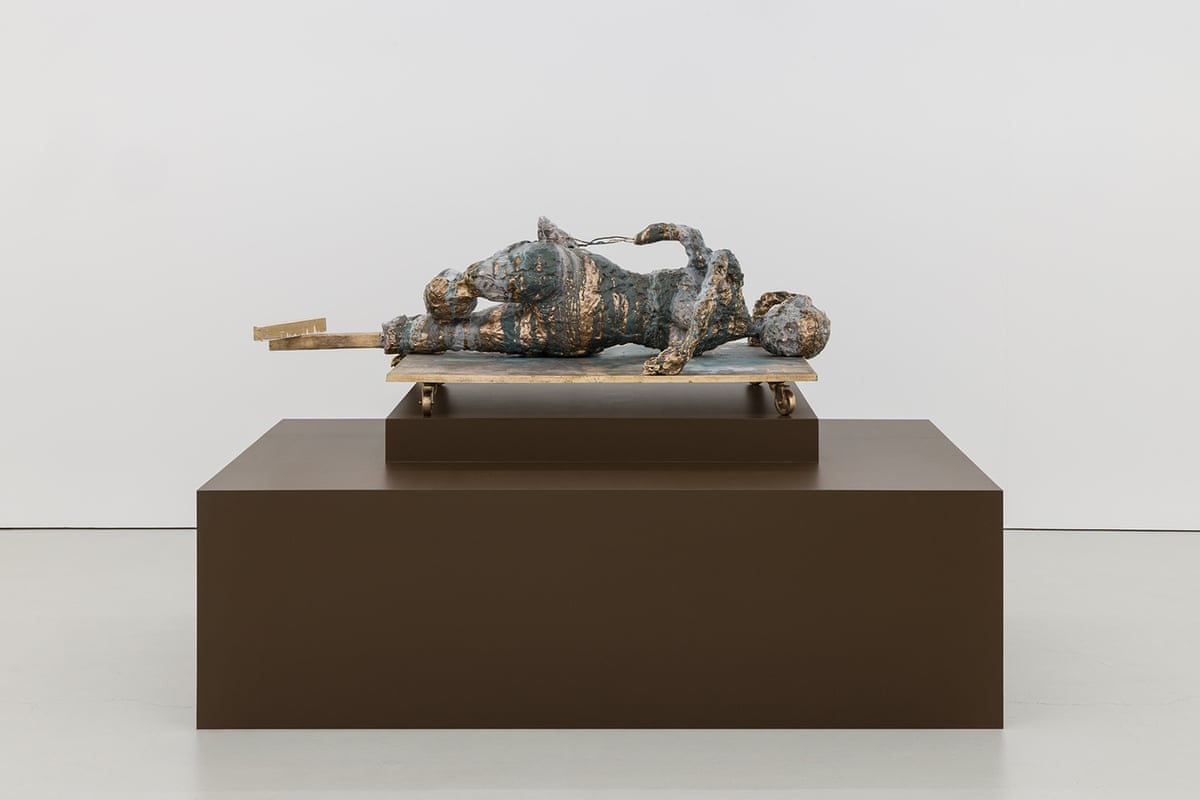
The large-scale bronzes in the main gallery space represent the exhibition's strongest work. Life-size nudes with grotesquely enlarged hands and feet occupy the space between Henry Moore's organic abstraction, Alberto Giacometti's attenuated figures, and Robert Crumb's bawdy grotesquerie. The effect is as if modernism's greatest sculptors had melted together into a single lumpy but visually intoxicating form—crude, exuberant, and impossible to ignore.
How does an artist respond to his city's decline?
South African artist William Kentridge has spent decades creating animated films about Johannesburg's trajectory. His major exhibition at the Royal Academy in 2022 marked a significant moment in his career, but the latest iteration of his work reveals a shift in mood. The optimism detectable in earlier pieces has evaporated entirely.
The new animated films depict a city in advanced stages of collapse. A gas explosion has destroyed a building. Trees succumb to fungal blight. Women clutch terrified children. Protesters flood the streets. All rendered in Kentridge's signature filthy charcoal technique, the images accumulate into a portrait of urban catastrophe. The character of Soho Eckstein, a major industrialist who inhabits a modernist mansion, reappears—but now functions as a stand-in for the artist himself, an ageing man isolated in his house, watching everything disintegrate beyond his windows.
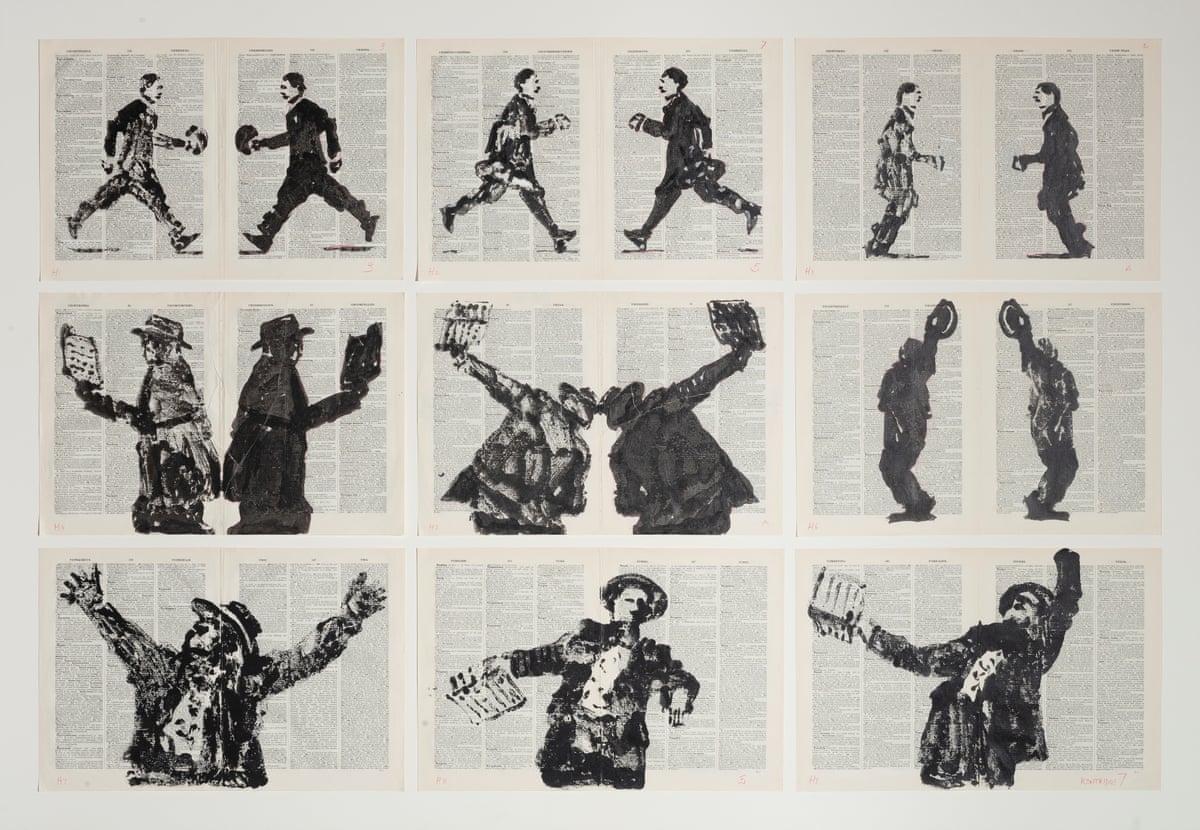
The exhibition combines drawings and sculptures in a small, museum-quality presentation that will delight Kentridge's existing admirers. His approach remains experimental and theatrical, addressing deeply emotional subject matter with formal innovation. Yet the work's whimsy sits uneasily with its subject matter—the fate of a major African city. For those already committed to Kentridge's vision, the exhibition offers much to contemplate. For newcomers, the gap between the artist's formal playfulness and the gravity of his themes may prove difficult to bridge.