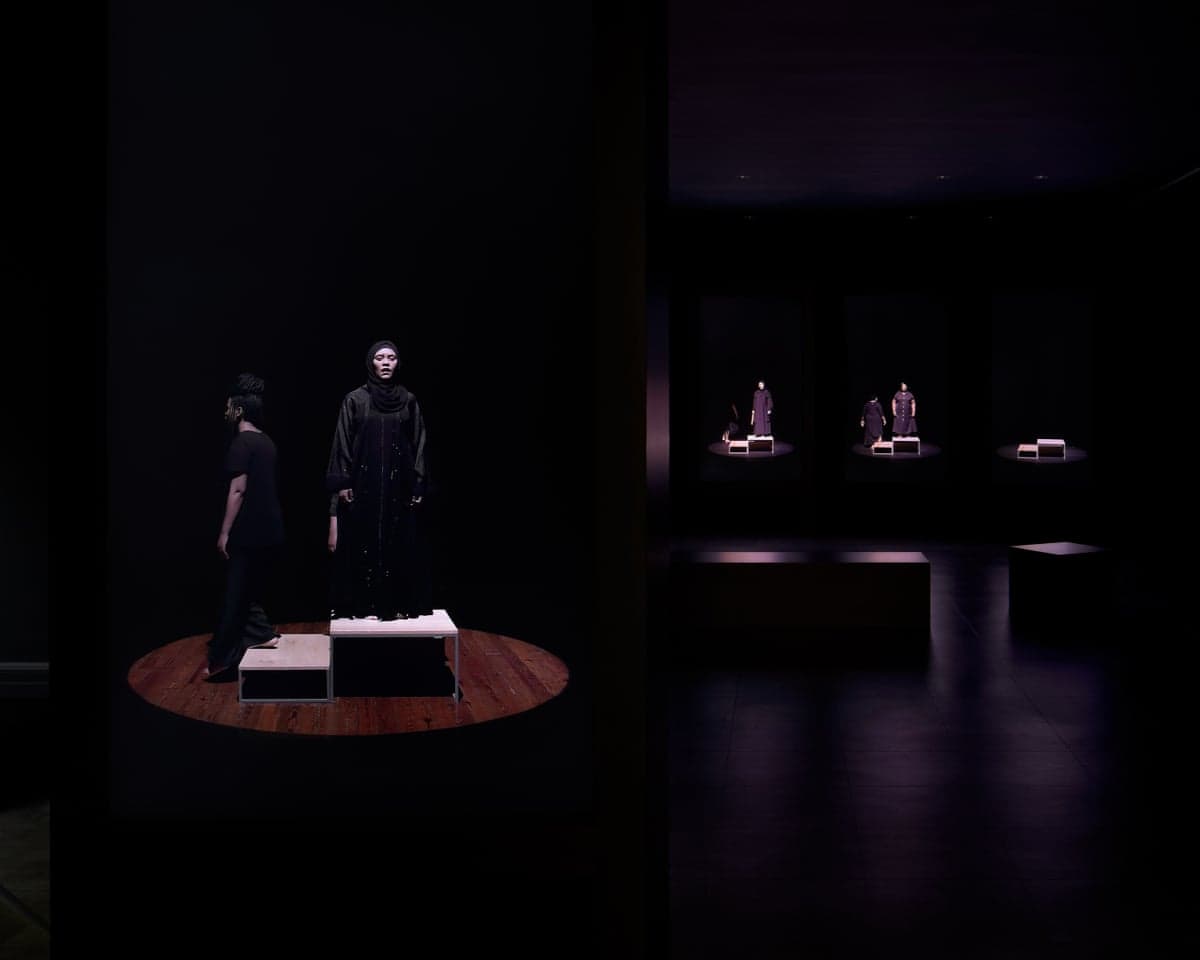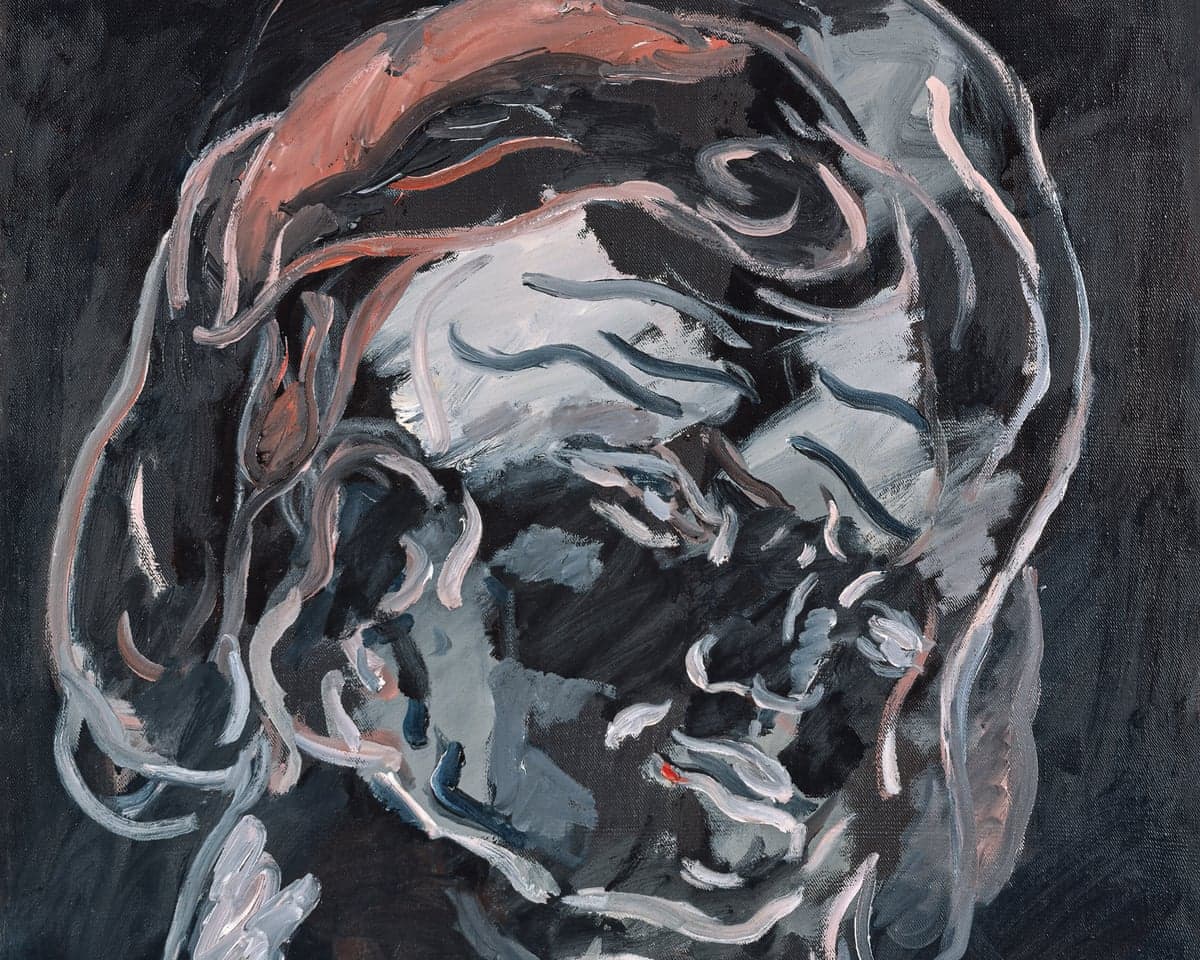
Georg Baselitz's death this year marked the loss of a singular artistic voice and a living witness to Europe's darkest chapters. Born in 1938, the German painter experienced Hitler's Germany and the Second World War as a young child, then endured his formative years in communist East Germany before escaping to West Berlin in 1958, before the Berlin Wall was constructed. He went on to become one of Europe's most unflinching artistic commentators on historical trauma. His final gift to the world is an exhibition in London he helped orchestrate: The Heroes, a collection of his most extraordinary paintings confronting modern history with unsparing intensity.
The show, which opened on 13 October 2026 at Thaddaeus Ropac's Ely House, presents a merciless vision saturated with horror, disgust and irreparable guilt. Yet there exists within it a terrible exhilaration—the liberation of speaking forbidden truths. The series, which Baselitz initiated in 1965, radiates explosive rage and nihilism. The title itself functions as a scathing indictment, delivered with such corrosive irony that encountering these colossal imaginary portraits feels like being struck across the face.
How do these paintings weaponise historical memory?
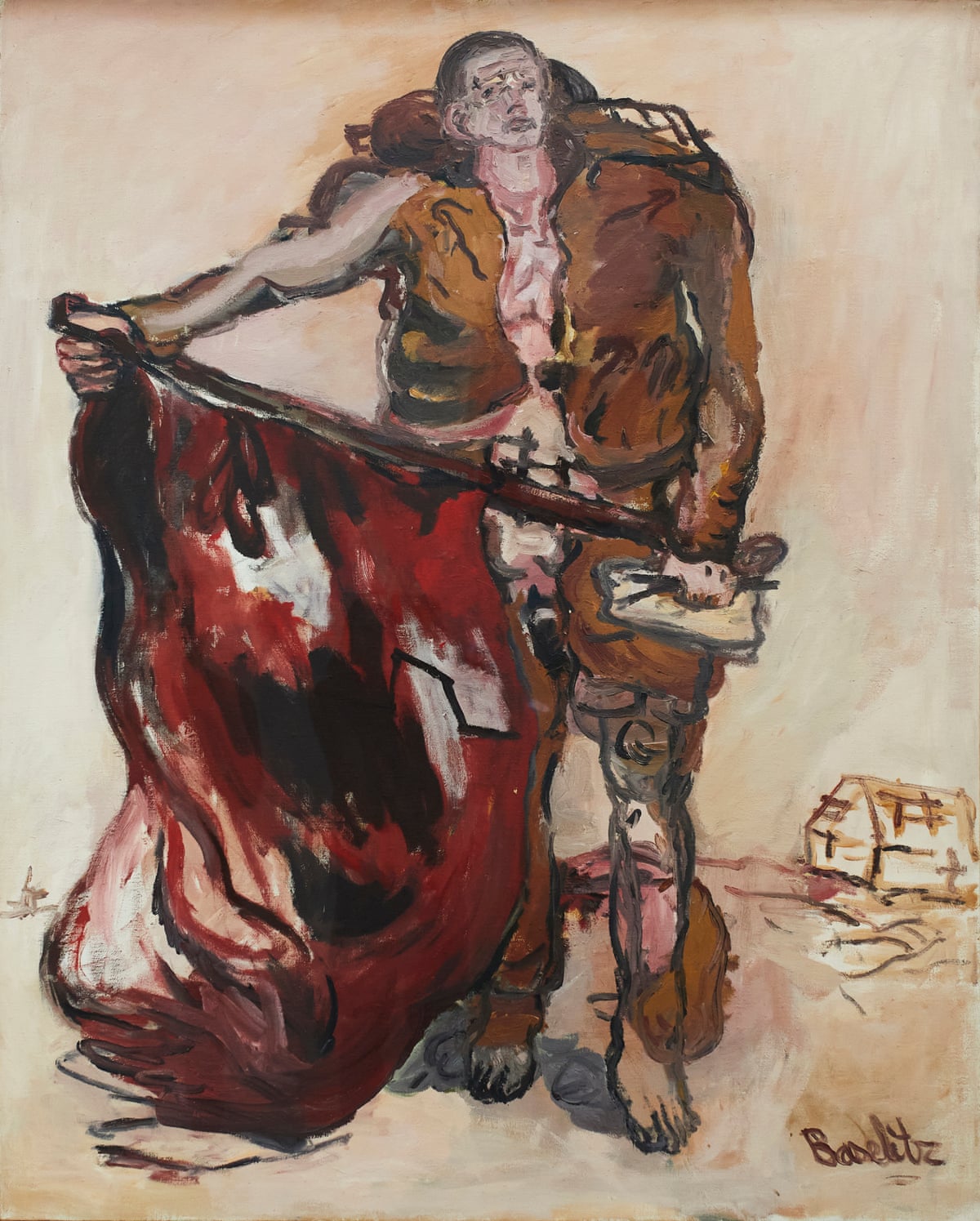
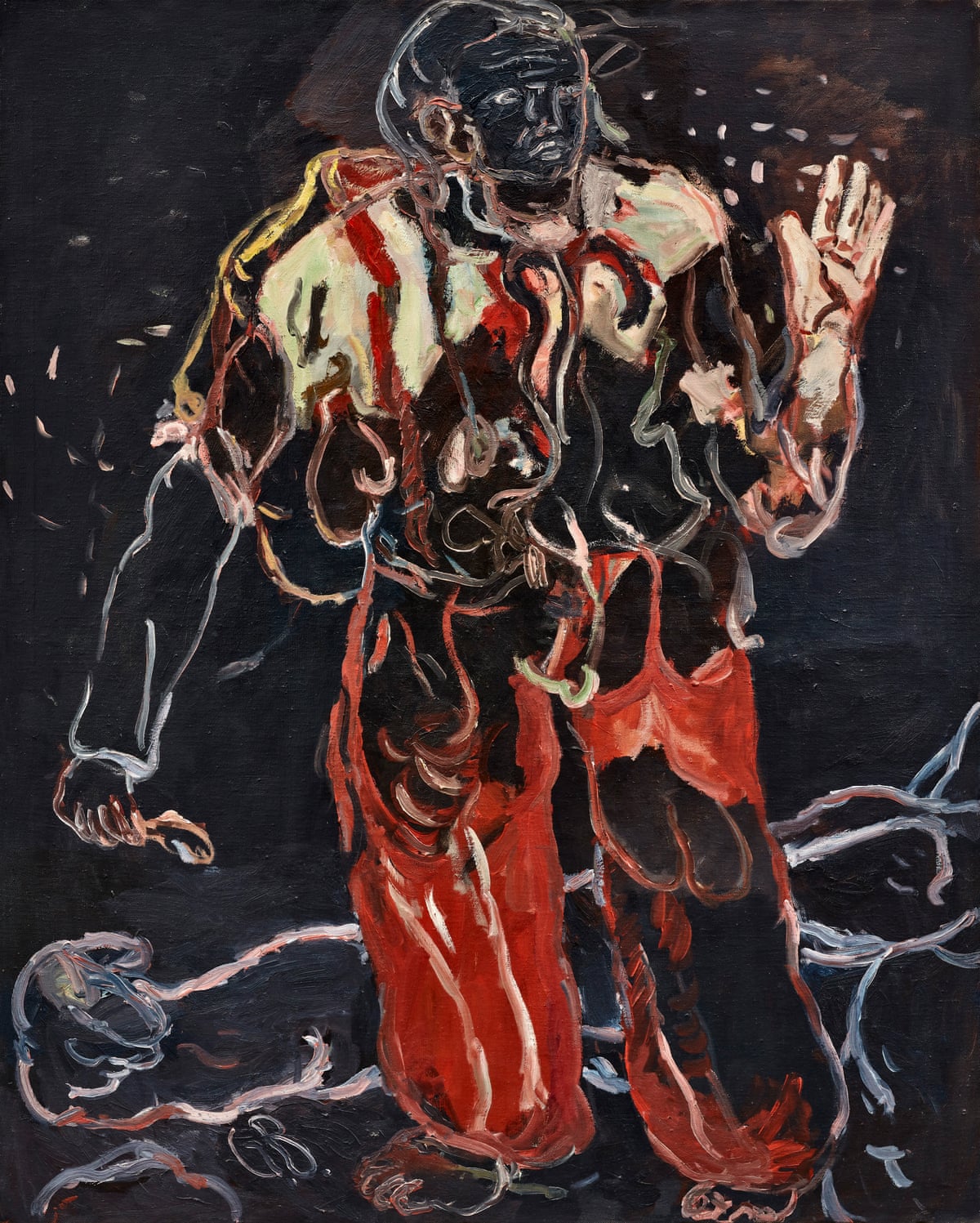
Mit Rote Fahne—With the Red Banner—presents a massive, square-shouldered yet visibly exhausted soldier clutching a half-lowered flag rendered as a smear of red and black. The banner becomes a symbol of bloodshed, the redness congealing into black scabs that evoke the shadow of the swastika. Wasteland surrounds this figure. The painting poses a question: does this man deserve compassion? The answer is brutal. He showed none. The devastated world beneath his feet was obliterated by Germany's celebrated war heroes. When Baselitz executed these furious homages in the mid-1960s, these very men occupied positions of power in West Germany's financial institutions and automotive manufacturers.
Another Hero, long-haired and dressed in a uniform with shorts, occupies a trashed, blood-stained terrain. This vacant-faced character balances two crimson mittens, seemingly preparing to release them and proceed through life with clean hands, unburdened by guilt.
What was Baselitz responding to in postwar German society?
Baselitz appears to have wandered the increasingly prosperous streets of West Germany, observing healthy, confident faces, and recoiling in revulsion at how effortlessly the atrocities of the Second World War could be consigned to oblivion. These paintings scream a singular message: the Holocaust concluded merely two decades prior, when Allied armies liberated the sites where six million Jews were systematically exterminated. How could Germans hold their heads high and stride forward with such ease?
The question extends beyond national shame to artistic responsibility itself. Baselitz and his contemporaries Joseph Beuys and Anselm Kiefer, all of whom confronted German history directly, faced accusations from critics of either glorifying it or exploiting it for aesthetic effect. Yet these works contain no trace of Teutonic grandeur or romantic nationalism.
How does Baselitz depict the artist's complicity?
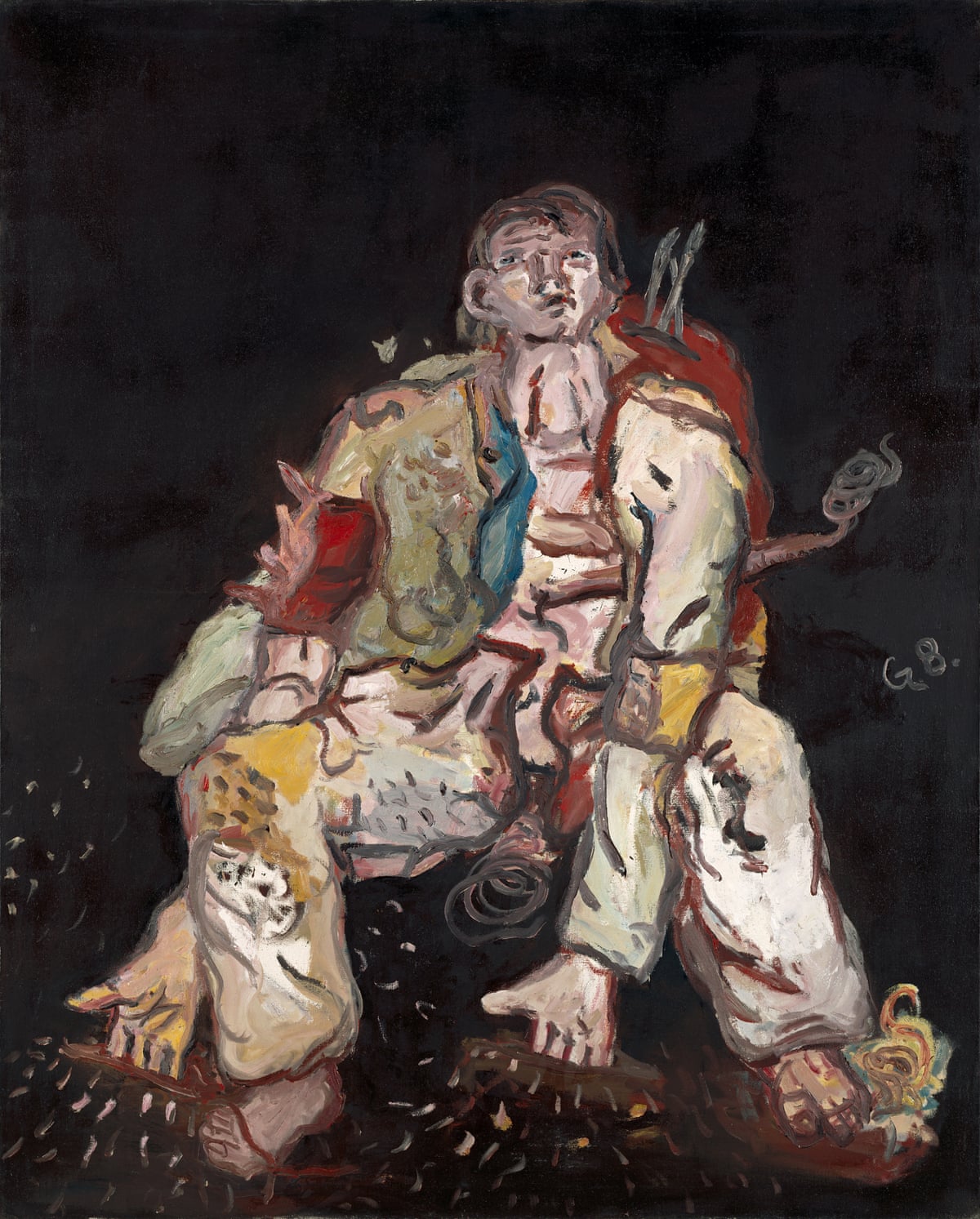
In Ein Moderner Maler—A Modern Painter—Baselitz portrays an artist rendered incapable of creation, both hands ensnared in man-traps. He sits defeated on the ground in military-style garments bearing armbands, as culpable and deranged as every other Hero in the series. He literally disgorges his inner contents in a grotesque parody of artistic angst: intestines coil between his legs while additional bowel tissue emerges from his torso, spiralling into a pig's tail. This is what the German artist's vaunted inner life has become. The figure's flattened hair and hint of a square moustache deliberately evoke Hitler, reminding viewers that the dictator, too, harboured artistic pretensions.
Baselitz reserves his most corrosive contempt for his own mastery as a painter. These brilliant works declare that painting itself has been destroyed, that artistic creation is no longer tenable. The uncoordinated, lumpen figures resemble Frankensteinian constructs, assembled from fragments of mud and flesh crudely stitched together. One soldier, positioned beneath trees, sports a cubic head atop a slumped, cubic body as blood drips from branches above. He exists as a phantom within his own clothing, simultaneously present and absent.
What distinguishes Baselitz's approach to the human form?
This method of rendering the human figure establishes Baselitz as singular among postwar artists. He shares little common ground with British figurative painters such as Bacon and Freud, for whom a tangible, vital body always remains the subject of artistic investigation. Baselitz's bodies function as abstractions, constructed through irony and dark humour, their anguish rendered absurd. Another Hero stands with his flies undone, grey spurts of semen ejecting from his black trousers as he towers over a devastated landscape. His expression conveys ecstasy—he is aroused by destruction itself—while at his feet crouches a Disneyish duck, perhaps symbolising the innocence he will later feign in the postwar era.
What is the scale and scope of this exhibition?
The exhibition assembles approximately 35 works, including significant museum loans, from a series that was initially widely rejected before eventually being recognised as among Baselitz's greatest achievements. Loans originate from Tate, Berlinische Galerie, Museum Frieder Burda and Museum Küppersmühle Duisburg, underscoring the international significance of these works.
What does this art reveal about contemporary memory and politics?
The question of how historical memory functions in art becomes urgent when confronted with present political realities. Despite decades of artistic reckoning, historical scholarship and Holocaust memorials, Germany's far-right AfD party continues winning successive elections. For contemporary extremists across the spectrum, outright Holocaust denial has become unnecessary; instead, they shrug it aside, trivialise it, dismiss it as ancient history. The Heroes walk again. Baselitz paints one of them waving—or saluting—in blood-soaked trousers, his face a ghostly shadow. Around him in the European night, white flecks descend slowly, ambiguous as snow or ashes.
When does the exhibition close?
The exhibition runs through 18 December 2026, offering an extended opportunity to encounter these uncompromising works and their unflinching interrogation of historical responsibility.
Key Facts
- Baselitz initiated The Heroes series in 1965, creating colossal imaginary portraits that weaponise irony as a tool of historical critique
- The exhibition brings together approximately 35 works from major international museums, including Tate and Berlinische Galerie
- Baselitz experienced Nazi Germany as a child, communist East Germany as a youth, and escaped to West Berlin in 1958 before the Wall's construction
- The series was initially rejected by critics before being reassessed as among the artist's most significant achievements
- The works confront the paradox of postwar German prosperity built by former Nazi functionaries, while the Holocaust remained only two decades in the past