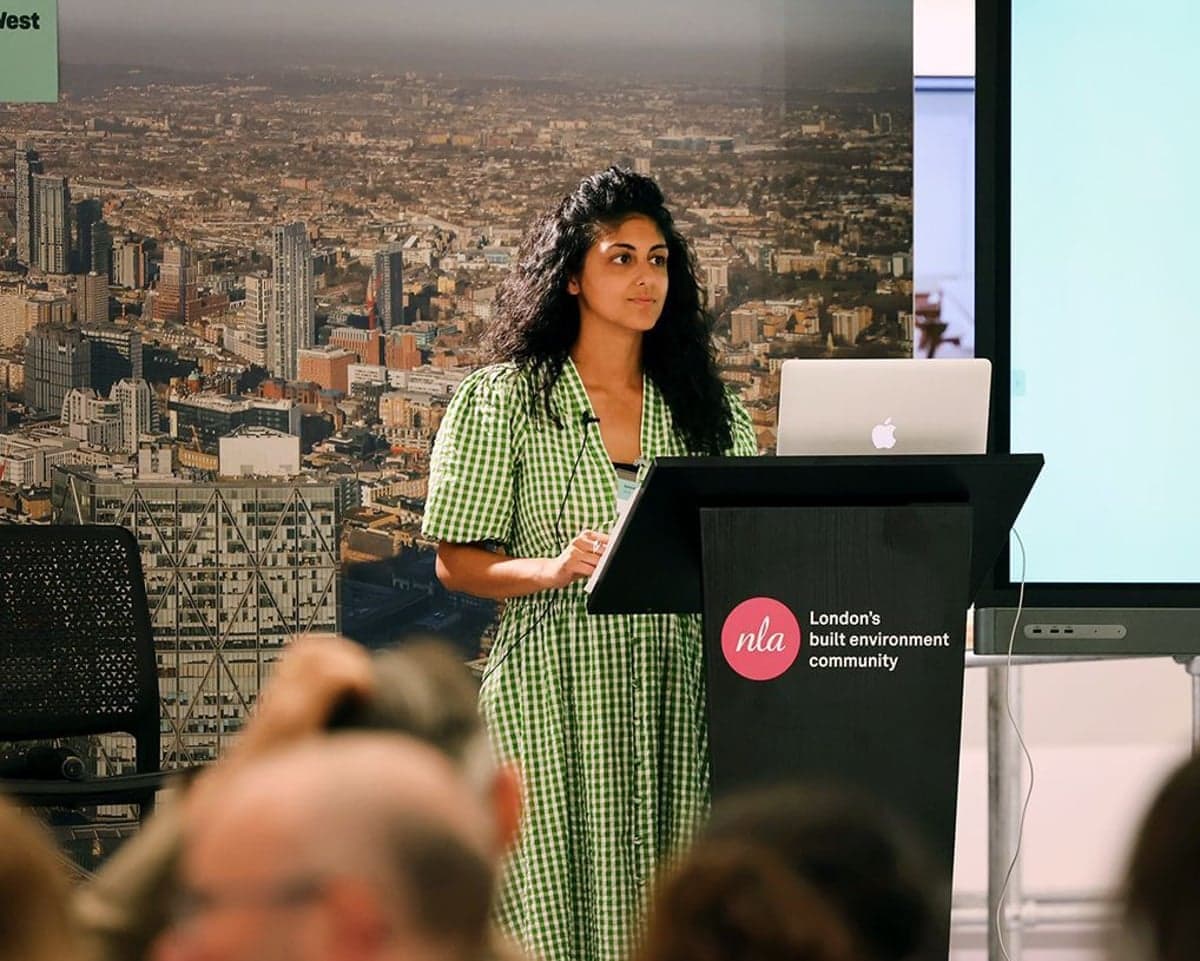
In the United Kingdom, 18 million people experience hearing loss, yet the Deaf community has never had a dedicated national centre of its own. Urban planner and activist Amanprit Arnold is determined to change that. She has launched the DeafCity Hub campaign to create a purpose-built space celebrating Deaf culture, arts and identity—and on 21 September 2026, just ahead of the International Day of Sign Languages on 23 September 2026, the project secured a year-long temporary home in Westminster.
Arnold, who was born deaf and used hearing aids before receiving cochlear implants at age 21, understands intimately why such a space matters. When we meet at a cafe terrace, she explains that indoor venues often present acoustic challenges that make communication difficult. "Nowhere in the UK is specifically designed for me," she says. "Inside a cafe, the acoustics can be so bad. It's much easier for me to hear out here."
The Deaf community—Deaf with a capital D denotes membership of a unique cultural and linguistic minority—has gained greater visibility in recent years. Actor John Lithgow won the glitterball trophy on Strictly Come Dancing in 2021, and Fury appeared on the Gladiators reboot. Critically acclaimed films such as CODA and The Quiet Girl, which won the best picture Oscar in 2022, showcased the talents of deaf actors and writers, and sign language interpreters at rap performances regularly attract viral attention. Yet despite this cultural momentum, no dedicated centre for Deaf arts exists anywhere in the UK.
Arnold's campaign aims to establish DeafCity Hub as a national centre and meeting place, not merely a social venue. The project secured a year-long meanwhile space—a building awaiting redevelopment—through a partnership with Westminster city council and the Oxford Street Development Corporation, giving Arnold the opportunity to demonstrate that such a facility is genuinely needed.
"There is greater visibility of deaf people in the media," Arnold explains, "but when it comes to property and place-making for them, there's nothing. We have a really strong cultural identity element and we need somewhere to celebrate that, somewhere made for us."
Who is driving this vision?
Arnold's background combines urban planning expertise with activism. Her father served as race relations director for Birmingham city council in the 1990s, and activism runs through her family. She founded her own design agency specialising in accessibility, helping city planners and real estate developers create welcoming environments for people with disabilities. Arnold serves as Chair of SignHealth and former Co-Chair of the GLA Disability Network, positions that have deepened her understanding of the barriers facing disabled communities across London.
Arnold conceived the DeafCity Hub idea in May 2023 after identifying a significant gap in London for a dedicated space serving the deaf community. The campaign has gained support from deaf charities and organisations, many of whom value that Arnold is herself deaf and understands their needs from lived experience rather than external perspective.
What happened to the 1980s vision?
Arnold sees DeafCity Hub as a revival of an ambitious 1986 plan for an International Deaf Cultural Centre in London that ultimately failed to materialise. The 1980s represented a transformative period for deaf activism, particularly in the United States, where Deaf civil rights protests took place, the first Oscar for a deaf actor was awarded for Children of a Lesser God, Gallaudet University was established specifically for deaf people, and the university appointed its first deaf president.
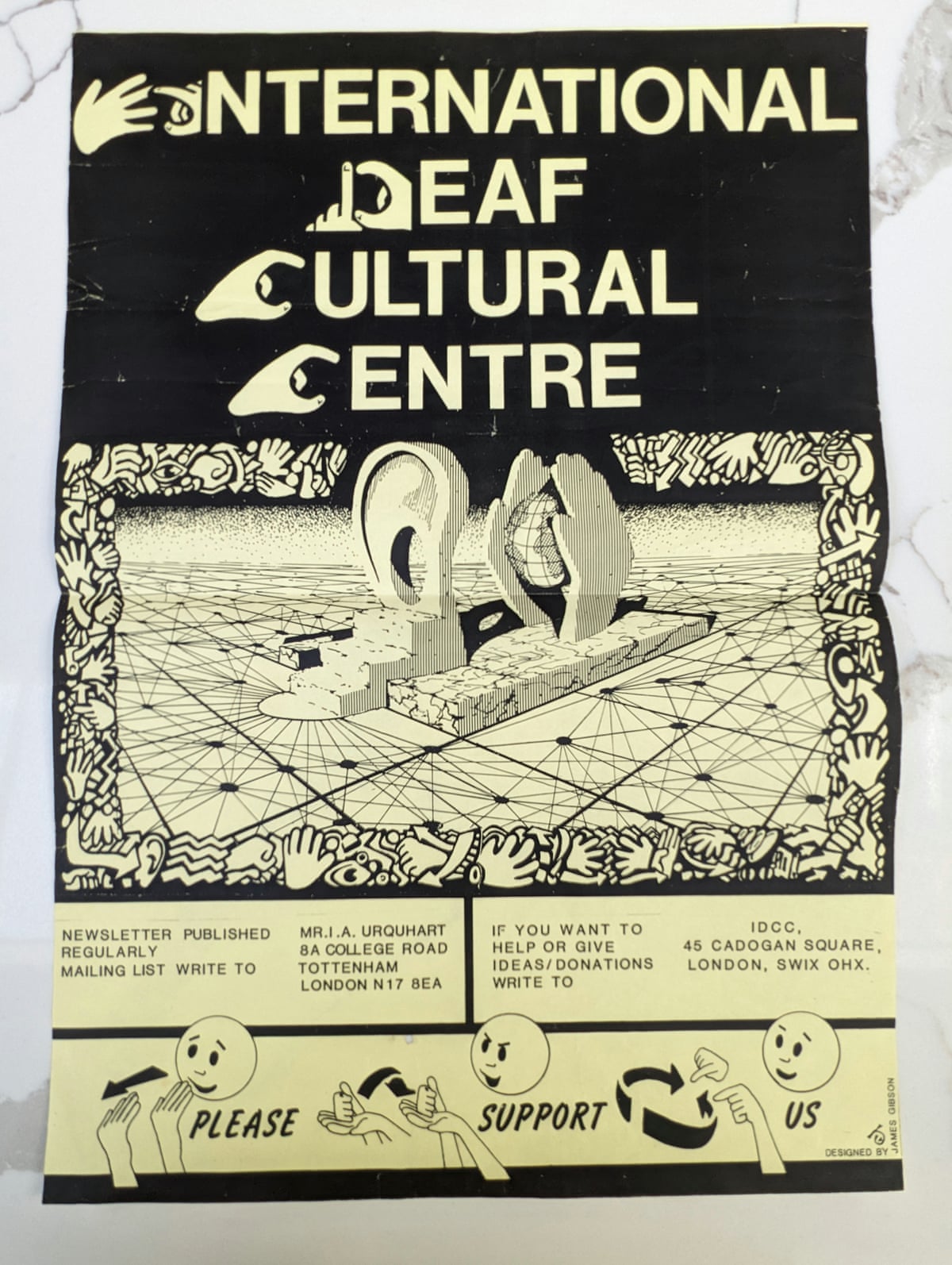
In the UK, the BBC launched See Hear, a current affairs programme for deaf people, and television subtitle provision improved significantly. However, progress has been uneven. The British Sign Language Act only received royal assent in 2022, legally recognising BSL as a British language of England, Scotland and Wales. Even now, students cannot take a GCSE in BSL; the expected launch date for this qualification is 2028. Meanwhile, Northern Ireland has become the first UK region to offer free sign language classes to deaf children and families under the new Sign Language Bill 2025, granting official recognition to both BSL and Irish Sign Language.
Arnold possesses the original 1980s material for the International Deaf Cultural Centre, including plans, optimistic posters and the architect's blueprints. These designs feature a Deaf history archive, theatre and exhibition space, bar, quiet room and hostel. Looking through them, she recalls a quote connected to Gallaudet University's founding that has become a mantra for many activists:
"We travel the world to learn about cultures and people. We go into their country to visit them. We now have a country."

What makes DeafCity Hub different?
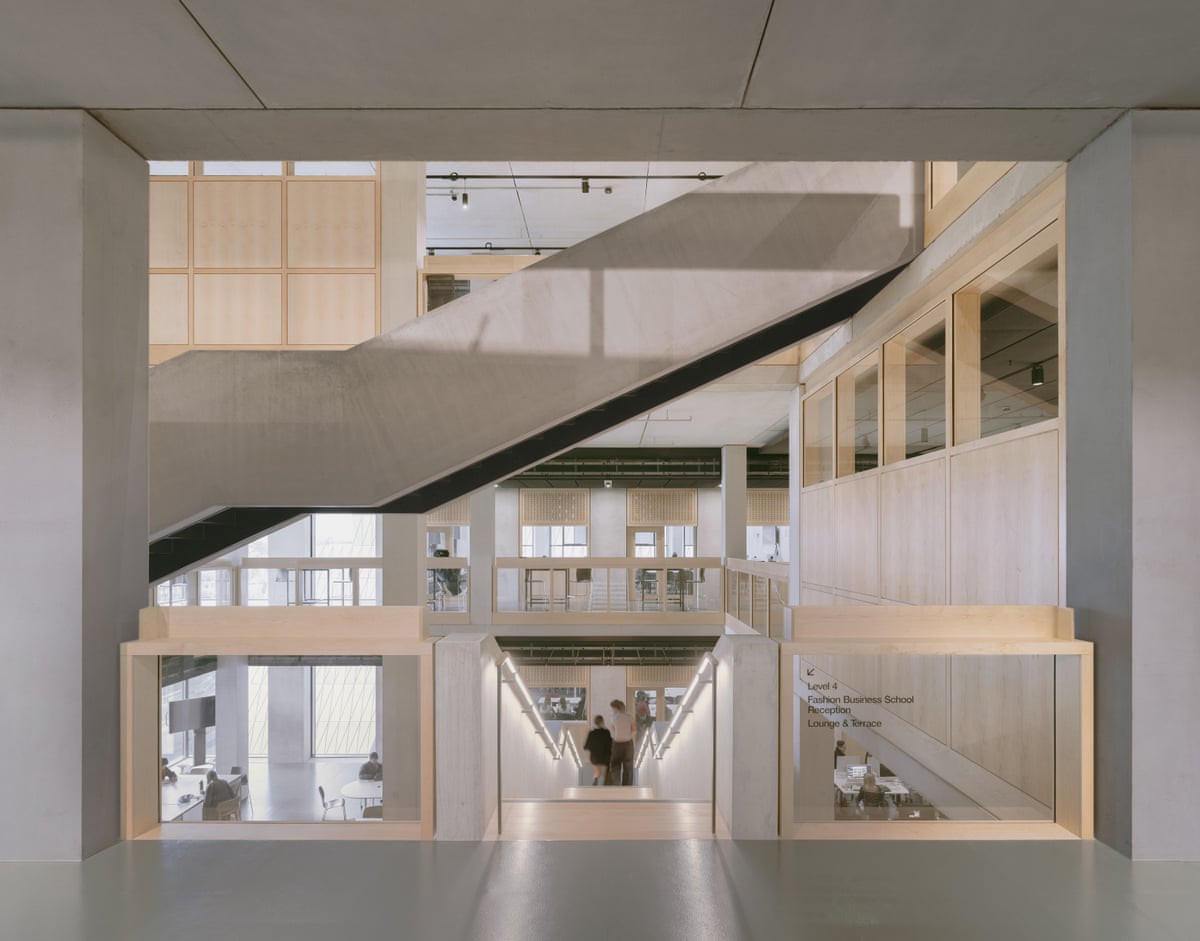
The crucial difference between the 1980s plans and DeafCity Hub is adherence to DeafSpace guidelines—architectural principles designed specifically for deaf people and their spatial needs.
"Sign language is not just spoken word translated into hands: it's a rich, spatial language rooted in visual geography, 3D space and facial syntax,"Arnold explains.
"It needs space."
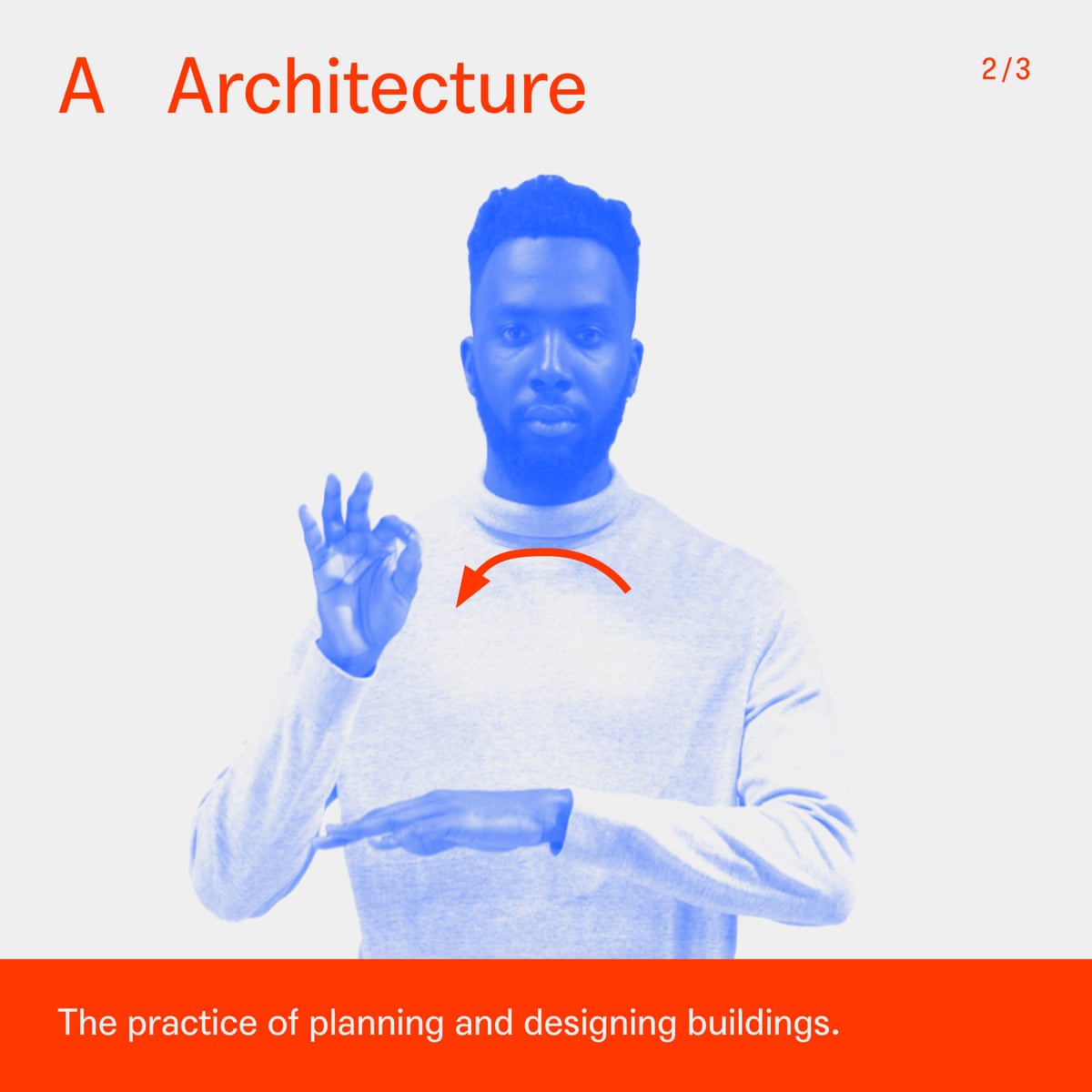
DeafSpace principles include wide corridors and staircases allowing people to walk abreast while signing in BSL; natural light and soft colours to reduce eye strain; strategic use of glass and mirrors to improve sightlines; and circular seating arrangements enabling large groups to see each other's hands and faces clearly while signing. The London College of Fashion's East Bank campus, designed by Allies & Morrison, represents one of the few public buildings in the UK built to these ideals.
DeafCity Hub's logo uses shapes inspired by hand movements in British Sign Language, with Arnold describing its "movement, 3D spatial language, and visual rhythm" as central to deaf culture. The campaign intends DeafCity Hub as a mixed-use cultural and co-working space for the global deaf community, incorporating a conference centre, theatre and co-working facilities.
Arnold also envisions Deaf sector charities having a home at DeafCity Hub, using boardrooms without rectangular tables—a simple change that demonstrates how thoughtful design can significantly benefit the community.
"Being in an environment that's built for you is so important. I went to deaf school as a teenager and that meant I had a wonderful secondary school experience. I was opened up to Deaf culture and I want to be able to share what that was like with other deaf people."
Why is cultural preservation urgent?
Arnold's positive experience at deaf school is increasingly difficult for deaf children to access today. The number of specialist deaf schools in the UK has fallen dramatically to just 13, down from 75 in the early 1980s. This decline stems partly from funding cuts and local government policy, but also from the growing uptake of cochlear implants—electrical devices that relay sound to the brain and enable speech development. Arnold believes that the possibility of medical intervention makes it even more important to preserve and celebrate Deaf culture.
"Deaf Gain is a celebrated term in our community, where we frame ourselves as contributors to society. People think it's important to protect endangered ecosystems and oral dialects, so why would we treat a thriving visual culture and spatial language as something to be eliminated?"
Access to cultural performances remains another barrier. Theatres and cinemas may list accessibility options on their websites, but performances with interpreters are rare.
"You have to go to one specific show – and that's normally set for noon on a Tuesday when most of us are at work."DeafCity Hub would address this by making spoken language culture accessible as standard rather than as an afterthought.
"Most communities have their own spaces,"Arnold observes.
"I know that if I go to Soho I'll be in an LGBTQ+ community space, for example. I think creating DeafCity Hub as a deaf-owned and deaf-led arts space would assert that our culture is also rich."
What happens next?
The year-long meanwhile space gives the campaign time to demonstrate demand for a permanent centre and to refine the concept. To secure a permanent home, DeafCity Hub will need funding and a developer partner willing to embrace DeafSpace principles from the outset. Arnold hopes the London space will act as a pilot for an international network of hubs, but that ambition requires significant investment.
"We need to design and shape accessibility and inclusivity from the start. A meanwhile space won't be perfect, but it will act as an incubator to develop this idea further."She has much to prove in the next 12 months, but she is ready for the challenge. As she gathers her plans and blueprints from the cafe table, they represent something she has long sought: a space finally designed for her community, by her community.
Key Facts
- The UK has 18 million people with hearing loss but no dedicated national centre for the Deaf community
- DeafCity Hub launched on 21 September 2026, coinciding with the International Day of Sign Languages on 23 September
- The campaign secured a one-year temporary space in Westminster through partnerships with Westminster city council and the Oxford Street Development Corporation
- Only 13 specialist deaf schools remain in the UK, down from 75 in the early 1980s
- The British Sign Language Act received royal assent in 2022, but GCSE qualification in BSL is not expected until 2028