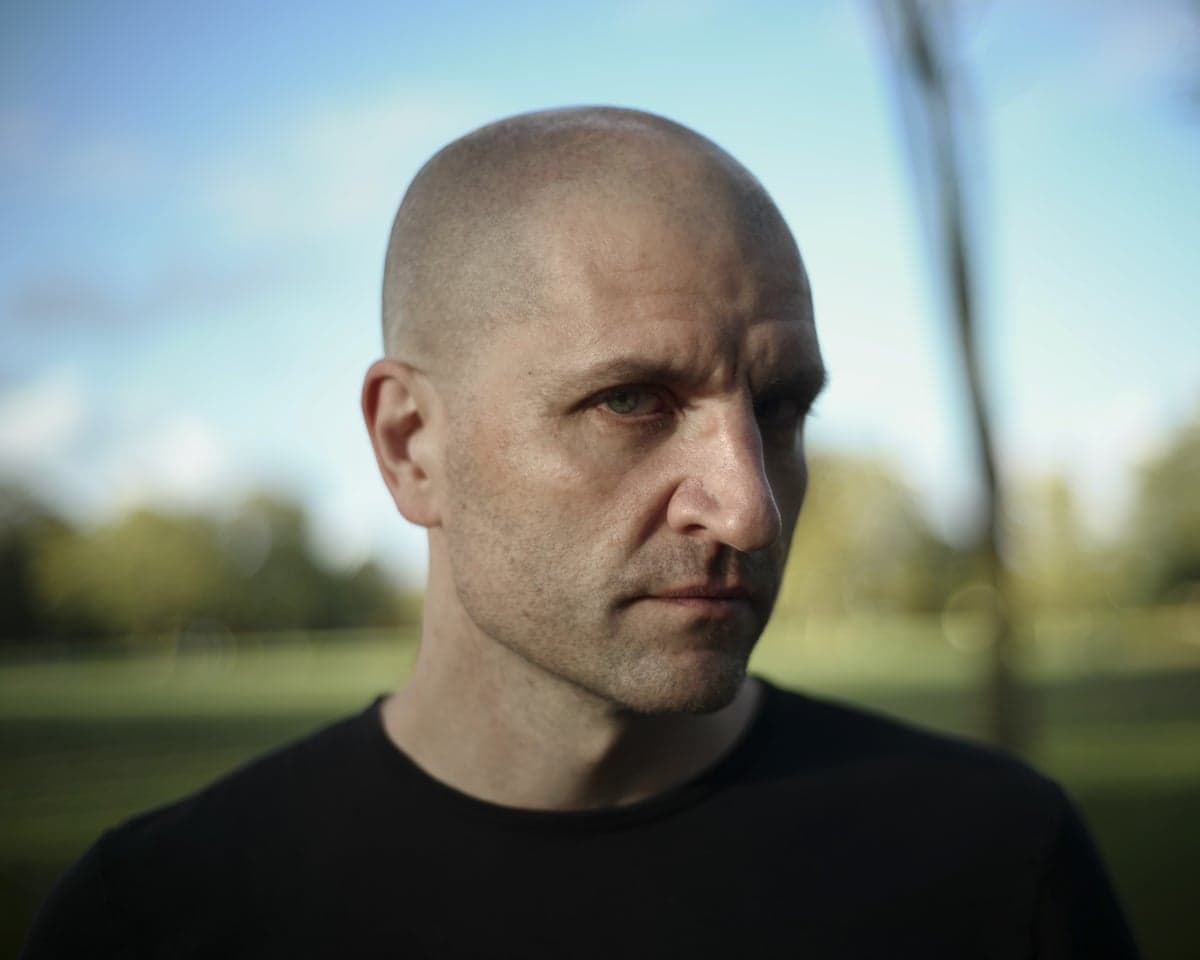
After two decades of development, China Miéville has delivered a work that represents a significant departure from his earlier output. The Rouse, described as his first solo novel in 10 years, stands as a quantum leap in ambition, moral seriousness and stylistic bravado. This sprawling narrative of grief, espionage and supernatural conspiracy marks a maturation that invites comparison not to genre labels like "new weird" but to maximalist literary figures such as Roberto Bolaño and Mircea Cărtărescu.
The gestation period of The Rouse is remarkable given Miéville's prolific output during those two decades. While developing this novel, he completed six other novels—including works co-written with Keanu Reeves—two novellas, two graphic novel series, a children's book, a collection of short stories, and two works of nonfiction examining topics ranging from political philosophy to communist theory. Yet The Rouse occupies a different register entirely from these earlier works, which, though substantial, operated within more clearly defined generic boundaries.
How does the novel begin?
The opening hundred pages will surprise readers familiar with Miéville's previous work. Rather than plunging immediately into the uncanny, these chapters unfold as social realism set in 1970s London. Maureen—called Maur—becomes pregnant and chooses to raise her son Ewan alone. The boy grows up consuming period-appropriate cultural touchstones: Rupert Bear comics, Starlord, the television series Steptoe and Son and Rentaghost, Chinese takeaways accompanied by casual racism. A peculiar cameo from 1980s comedian Roy Jay performing his unsettling "slither-spook" routine—possibly on The Bob Monkhouse Show—provides the only genuine uncanniness in these early pages. Eventually, adrift and without direction, Ewan enlists in the army.
Then Miéville executes a devastating narrative pivot. Just before page 100, Ewan dies at Shackingham Barracks, officially ruled a suicide. Maur's internal monologue shifts: "Now everything is codas." The words "THE END" appear in capital letters. What follows is not conclusion but commencement—the novel proper unfolds across more than a thousand subsequent pages as extended epilogue.
What is the emotional core of the narrative?
Miéville's portrayal of Maur's grief achieves phenomenal depth. Her internal struggle captures the impossible mathematics of loss:
After a long time she came to believe what she knew, which was that this would never unhappen. So she did the bargaining. Just for a moment. I understand he won't come back but I need everything to stop for just a second … What I need is I just need a moment when this isn't all there is. That's all I'm asking. To have anything else, or nothing, in my head. All I'm asking is just let me have one single minute ever again when he isn't dead.
Maur discovers she is not alone in her bereavement. Other parents have lost children at the same barracks under similarly suspicious circumstances. A pattern emerges—a cluster of deaths presented as suicides, reminiscent of historical military cover-ups. She assembles an unlikely coalition: Jock, an investigative journalist; Cybill, another bereaved parent; and eventually Stallo, a renegade former soldier. Her father's early warning to "stay out of the dead's business" takes on sinister new meaning.
What supernatural elements drive the plot?
The Rouse—the military bugle call summoning soldiers to duty and sounded after the Last Post—becomes a code for something far darker. The stirrings are genuinely paranormal. Maur's investigation peels back layers of institutional secrecy to reveal the deep state's systematic interest in the supernatural. The novel's central revelation concerns the military's weaponization of death itself: the dead and the afterlife function simultaneously as exploitable resource and radical alternative, yet even the "freed" dead fall prey to capitalist commodification and exploitation.

This investigation runs in counterpoint to the parallel narrative of Allardyce, a soldier steeped in the military's occult operations. His experiences span continents and decades—Malaya, Kenya, Akhalkalaki, the Falkland Islands—and involve entanglement with both untrustworthy American allies and hostile Soviet and Chinese operatives. Miéville's geopolitical scope is not mere exoticism but integral to his exploration of what he terms the "radical democracy of death" and the "revolutionariness of death." The connections between Allardyce's schemes and Maur's quest unfold with deliberate cunning, culminating in a final twist that achieves genuine brilliance.
How does Miéville's language shape the reading experience?
Linguistically, The Rouse operates as controlled chaos. Character names carry etymological weight: Cybill echoes Sibyl, the Greek prophetess; Maur resonates with the French word for death. Miéville's prose—always baroque and esoteric—here merges with period-specific slang and vernacular detail into a distinctive idiolect. Dr Croome, a prickly scientist working in the barracks' hidden laboratories, coins the neologism "inodus" as an opposite to "exodus," arguing that "the efficacy of words is wildly overstated, most especially by those who work with them." She reflects on the near-unsayability of certain terms:
I always found gast, gæst, and particularly gōst to be so close to the dread unsayable as to be ridiculous.
Rather than providing explicit exposition, Miéville allows readers to intuit meaning from context. Soldiers' nicknames for paranormal phenomena—such as "lesprys," derived from l'esprit de corps but evoking something almost fey—maintain the novel's shimmer of ambiguity. The prefix "un" functions as a recurring motif: unsee, unwritten, undone, unopened. Negation operates at the sentence level, creating a linguistic texture that mirrors the novel's thematic preoccupations with absence and erasure.
What literary influences shape the work?
Miéville offers sly acknowledgment of John le Carré, whose espionage fiction shares The Rouse's shabby Cold War atmosphere and exploration of shifting allegiances and questionable trustworthiness. Yet where le Carré's world remains grounded in tradecraft and institutional politics, Miéville's incorporates the paranormal as operational reality. The novel demonstrates capacious knowledge of the weird literary canon, referencing works obscure enough that few readers will recognize allusions to texts like Lord Kilmarnock's 1903 Ferelith. Found texts and concrete poems punctuate chapter endings, offering additional layers for engaged readers to excavate.
How does the novel compare to contemporary literary fiction?
The Rouse demands comparison to maximalist contemporary literature rather than genre categorization. Critical reception has framed it as a "decade- and continent-spanning epic of grief, global tumult, and grim conspiracy"—a description that captures both its scope and its emotional architecture. The novel achieves what ambitious fiction aspires to: it is simultaneously affecting and intelligent, tender and terrifying. Passages generate genuine dread. The work's central meditation—that "life is just a prologue to a ghost story"—encapsulates Miéville's vision of existence as perpetually haunted by what has been lost, what might have been, and what persists beyond death.
At approximately 1,260 pages, The Rouse demands sustained engagement from readers, yet its density and ambition justify the commitment. This is a novel destined for enduring critical attention and a rich afterlife in literary discourse.
What comes next for readers and the author?
Miéville is scheduled to present The Rouse at a British Library online event on 19 September 2026, offering an opportunity for readers to engage directly with the author's intentions and reflections on the novel's two-decade development. The book's publication on 17 September 2026 marks a significant moment in contemporary speculative fiction, establishing Miéville as a writer operating at the intersection of genre innovation and literary ambition.