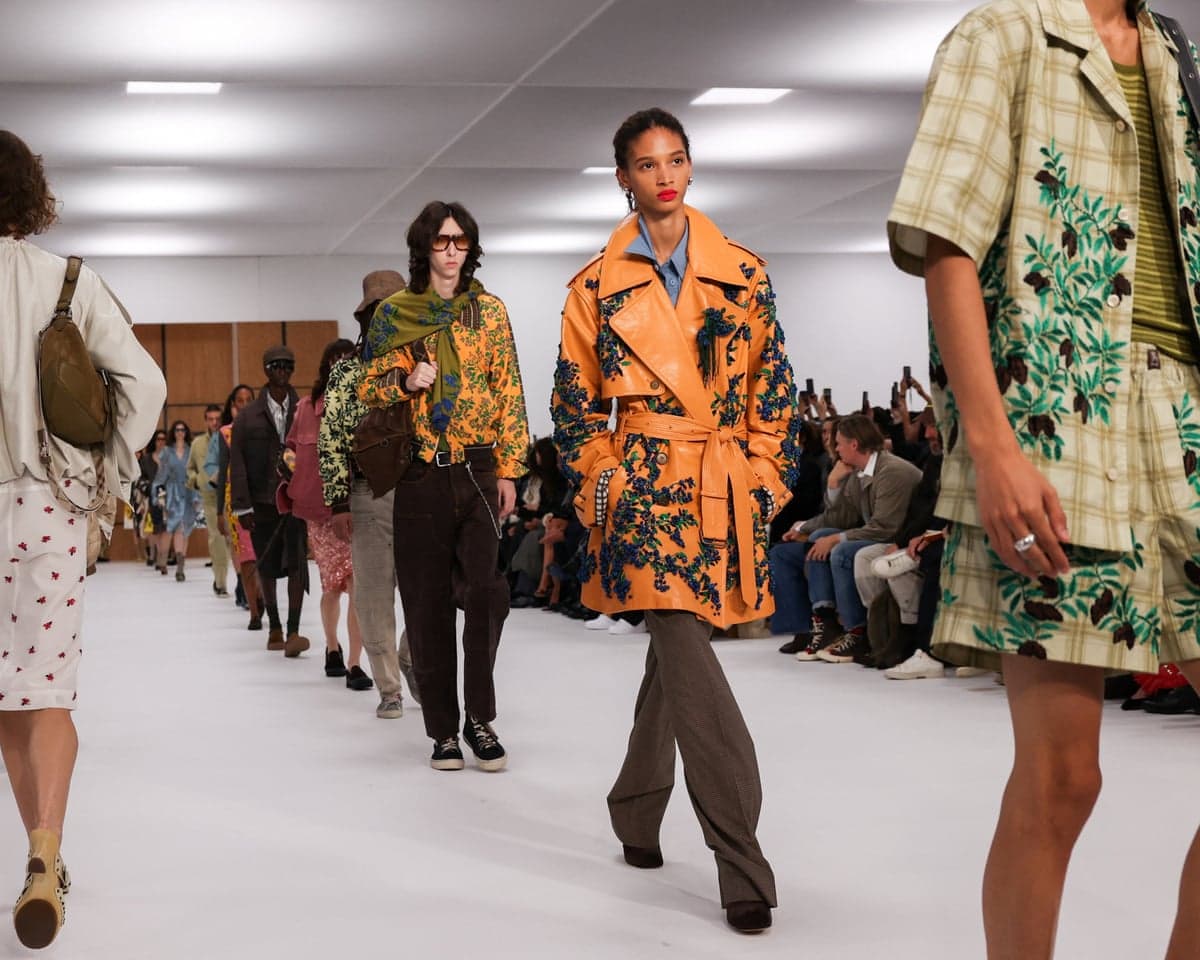
Textile designer Celia Birtwell and Burberry represent two pillars of British cultural heritage. Birtwell's hand-painted florals and psychedelic vines defined bohemian 1960s London and secured her place in art history as David Hockney's celebrated muse, while Burberry stands as the nation's most recognisable luxury house. When the two creative forces converged this autumn, the result was a one-off collection that closed London Fashion Week's spring-summer 2027 calendar on Monday 21 September 2026 at Chelsea College of Arts.
Burberry's creative director Daniel Lee has long admired Birtwell's distinctive aesthetic. During their meeting in spring, he was captivated by what he described as
her energy, and her zest for life. That encounter sparked the genesis of a limited collaboration that would transform the brand's most recognisable symbol—its graphic check pattern—through Birtwell's unmistakable artistic lens.
The creative challenge was substantial. Burberry's check is visually commanding and instantly identifiable; Birtwell's vocabulary consists of exuberant hand-drawn florals and undulating botanical forms.
The check is so dominant and so brilliant that at first I thought: what can I do here?Birtwell reflected before the presentation. Her solution involved hand-painting a more organic, less rigid interpretation of the check itself, which Lee embraced immediately.
She made the check more human. If you are buying a luxury product it's not a necessity, it's an emotional purchase, so it needs to feel human.
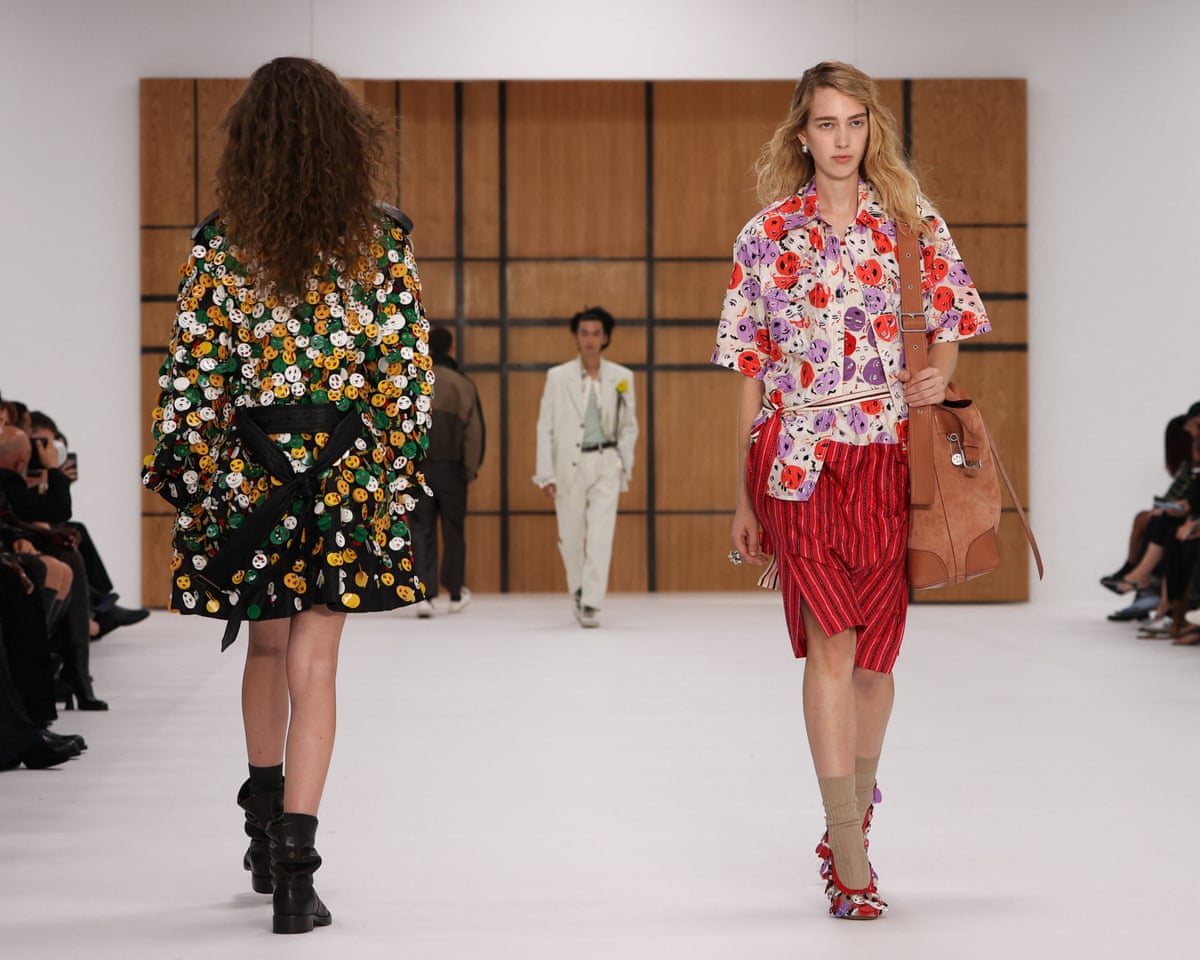
Beyond the reimagined check, Birtwell contributed a second signature print: cheerful, round-faced doodles rendered in bright, candy-coloured tones. These designs originated in her archive from two decades earlier but had never been manufactured until now, giving them fresh relevance within the collection.

How did the show capture Burberry's brand identity?
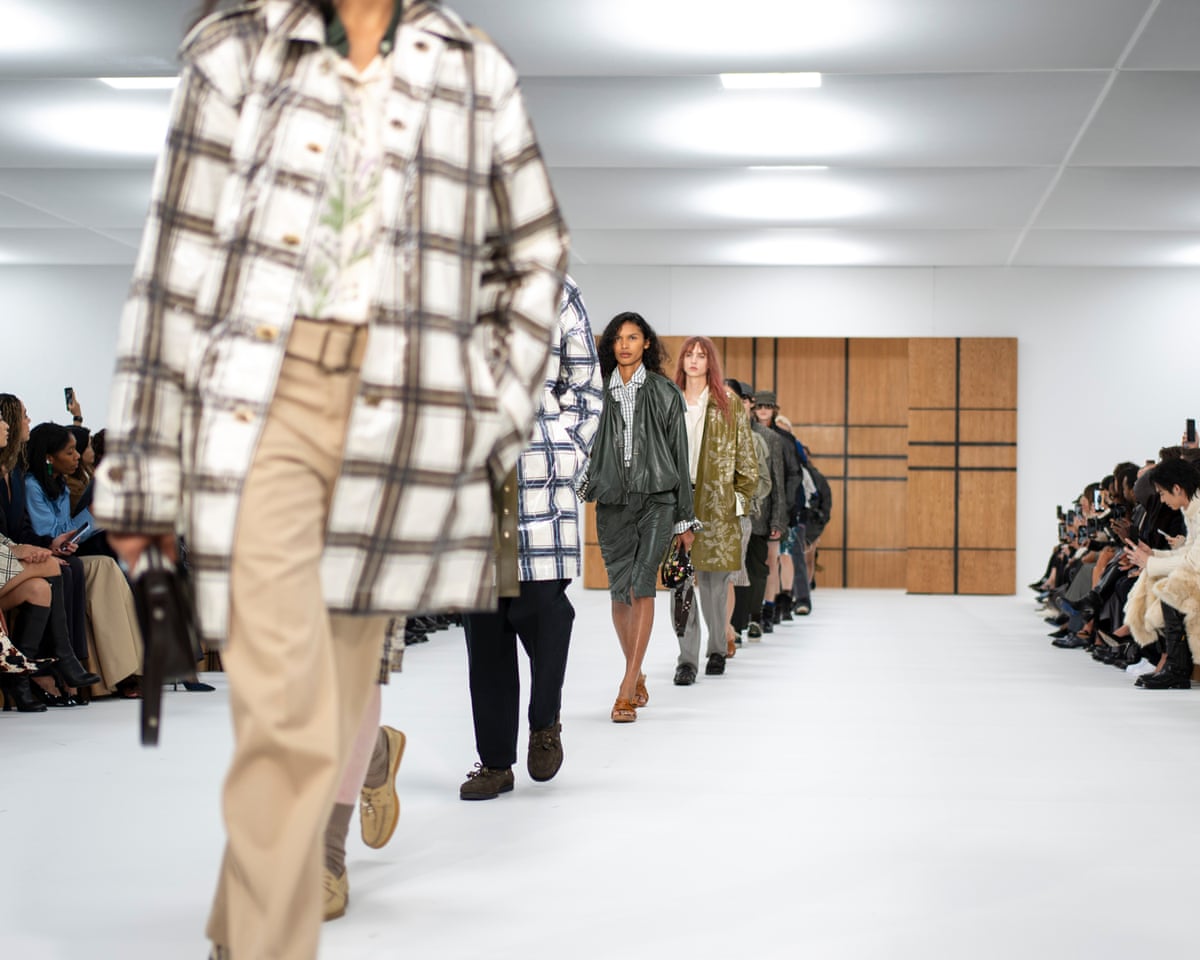
The presentation maintained the energy and eclecticism that have become hallmarks of Burberry's recent shows. Held at Chelsea College of Arts, just steps from Burberry's headquarters, the event featured soft, fluid silhouettes paired with Birtwell's charming prints. The soundtrack drew on David Bowie's catalogue, anchoring the collection within another layer of British cultural reference. The front row reflected Burberry's signature approach to guest lists: actor Fiona Shaw and footballer Djed Spence sat alongside the catwalk, while rapper Central Cee made a runway appearance, blending high fashion with contemporary cultural figures.
What is driving Burberry's recent commercial recovery?
Burberry's turnaround has been steered by chief executive Jonathan Akeroyd and designer Lee, with measurable results. The brand reported its first revenue growth in three years during summer 2026, with retail sales climbing 5 per cent year-on-year in the second quarter. The strategy underpinning this recovery centres on delivering
value for money in a luxury context—a deliberate shift away from an earlier, unsuccessful attempt to position Burberry handbags at price points comparable to Hermès. Lee has infused the brand's traditional Britishness with a youthful sensibility that resonates with generation Z consumers.
Outerwear has emerged as a particular strength in this revival. Burberry's heritage in coat-making—rooted in its appeal to everyone from arctic explorers to football supporters—gives it competitive advantages that few other luxury names can claim. For the spring-summer 2027 collection, trenches were reimagined in unexpected fabrics: slinky silk taffeta was tailored with exaggerated puffball hems and deeply ruched collars. One model carried an embroidered umbrella, a playful nod to the unpredictability of British summer weather.
How is Burberry contextualising this collection beyond the runway?
To extend the narrative of the Birtwell collaboration and reinforce Burberry's heritage credentials, the brand is mounting a dedicated display at the V&A Museum in South Kensington. The exhibition, titled The Burberry Trench: Crafting an Icon, will remain open to the public until 3 January 2027. The display spans nearly a century of the brand's most iconic silhouette, featuring a military overcoat worn by a British army lieutenant colonel in 1939, designer Hardy Amies' personal Burberry trench, and contemporary runway pieces in unexpected materials including metallic leather and gold snakeskin.
This curatorial approach positions the Birtwell collaboration within a longer continuum of Burberry innovation. By pairing a contemporary artist's vision with archival pieces and recent designs, the museum presentation demonstrates how the brand has evolved while maintaining its core identity. The exhibition underscores that Burberry's strength lies not in rigid adherence to its heritage, but in its capacity to reinterpret and humanise its most recognisable codes—precisely what Birtwell accomplished with the check.
Key Facts
- Celia Birtwell's collaboration with Burberry closed London Fashion Week's spring-summer 2027 calendar on 21 September 2026 at Chelsea College of Arts.
- Birtwell hand-painted a more organic version of Burberry's signature check and contributed previously unproduced doodles from her archive, drawn 20 years ago.
- Burberry reported its first revenue growth in three years, with retail sales rising 5 per cent year-on-year in the second quarter of 2026.
- The Burberry Trench: Crafting an Icon exhibition at the V&A Museum runs until 3 January 2027 and includes pieces spanning from 1939 to the present day.
- Designer Daniel Lee has brought a generation Z sensibility to Burberry's traditional British identity, contributing to the brand's commercial recovery.