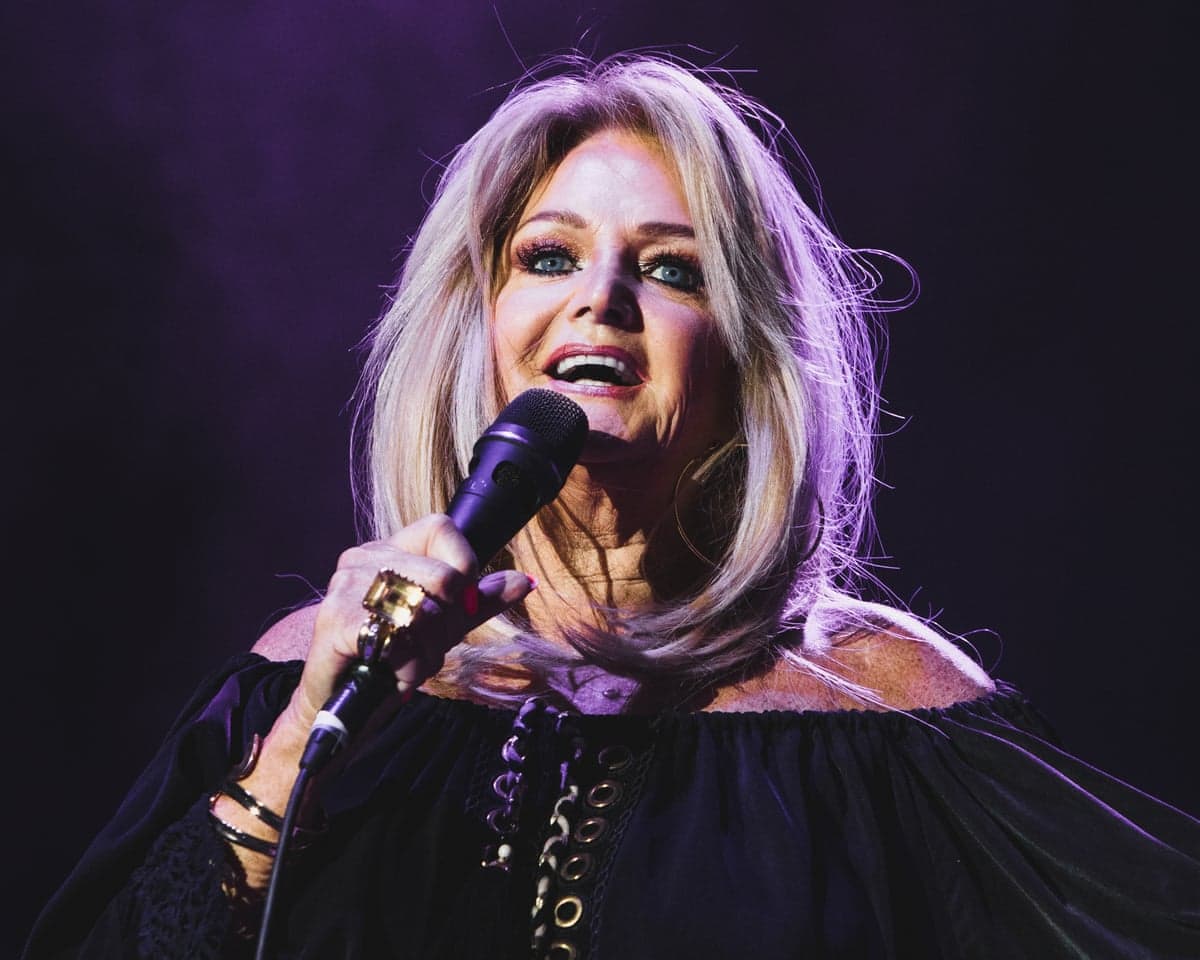
Bonnie Tyler, the Welsh singer whose husky contralto became synonymous with 1980s power ballads, died on 8 July 2026 in a hospital in Portugal. She was 75. According to , she had been undergoing treatment for an illness, with her family confirming she "unexpectedly passed away" while receiving care. Earlier in 2026, she had undergone emergency intestinal surgery in Faro, Portugal, before her condition deteriorated.
Tyler's career trajectory defied easy categorisation. She experienced two distinct waves of global prominence that appeared almost unrelated except for the name on the records. Her initial British chart success arrived with 1976's Lost in France and 1977's It's a Heartache—exemplars of what music writer Pete Paphides would later term "medium wave pop," the largely overlooked material that actually dominated the charts and Radio One playlists during an era when simplified rock histories suggest the nation was consumed entirely by punk. These songs blended soft rock sensibilities with country influences, echoing the reliable mid-1970s formula of acts like Smokie, and possessed such infectious melodies that few listeners noticed the dramatic transformation in Tyler's voice between the two releases. A nodule removal operation on her vocal cords had replaced her initially sweet tone with a striking, husky quality reminiscent of Rod Stewart.
It's a Heartache appeared poised to establish Tyler as a superstar: the single achieved 6 million sales, and its accompanying album reached the Top 3 on the US country chart. Yet sustaining that momentum proved elusive, complicated by her record label's apparent confusion about her artistic direction. They positioned her across disparate genres—covering Tom Petty and the Heartbreakers on Louisiana Rain, targeting the easy listening demographic with Sometimes When We Touch, and steering her toward disco with the campy (The World is Full of) Married Men. None of these strategies gained traction, and her commercial fortunes seemed destined to fade.
The turning point came when Tyler took creative control. Though she considered approaching Phil Collins or Jeff Lynne, she ultimately connected with Jim Steinman at a pivotal moment in his career. Steinman's partnership with Meat Loaf had fractured following 1981's Dead Ringer, which failed to match the multi-platinum success of Bat Out of Hell, and his solo venture Bad for Good had definitively demonstrated that audiences had no appetite for Steinman's own vocals. Facing two consecutive failures, Steinman possessed something to reclaim, and his strategy was characteristically maximalist: the compositions he offered Tyler were grandiose even by his standards, rendering Bat Out of Hell austere by comparison.
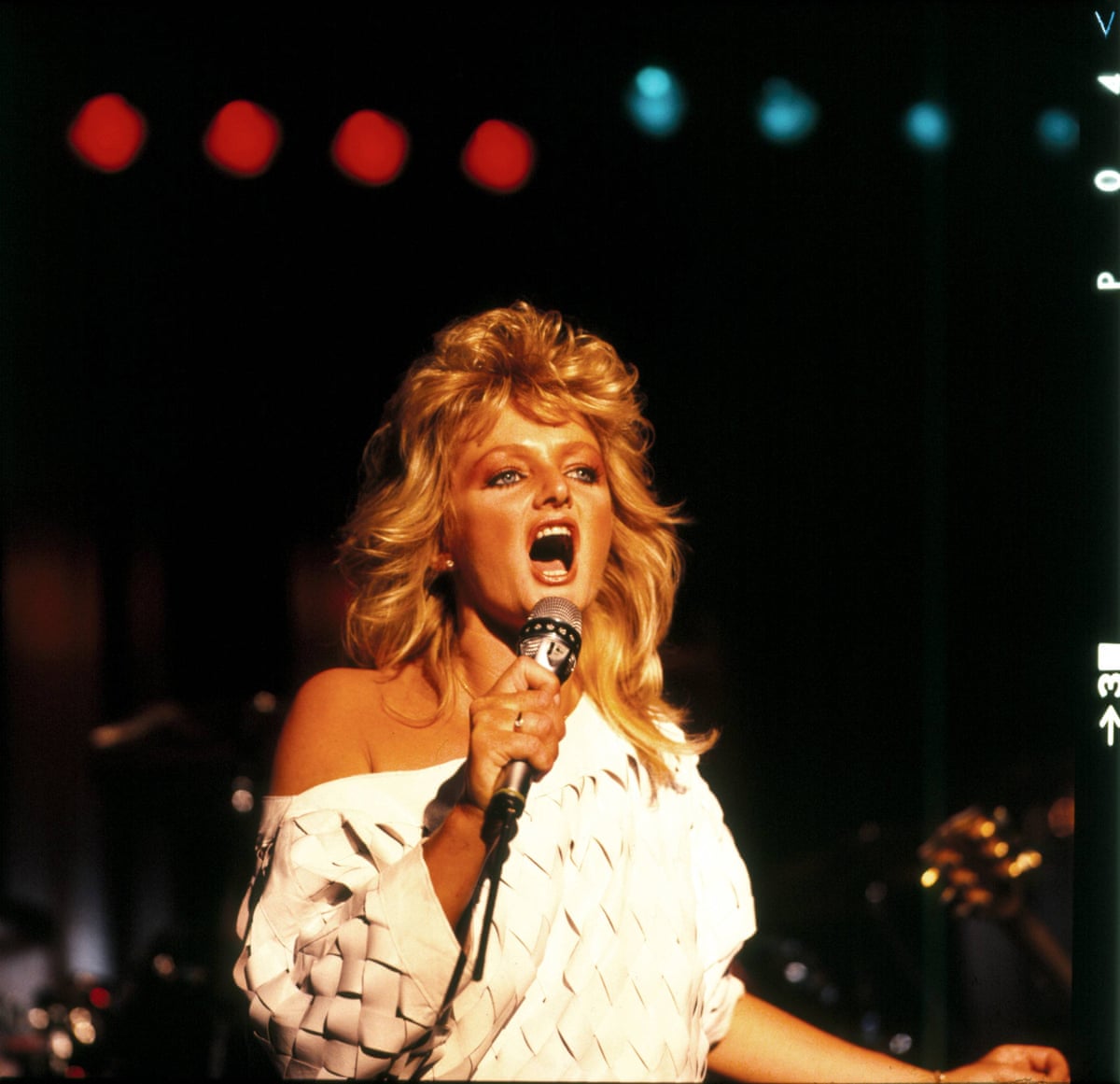
Recognising Tyler's voice as reminiscent of John Fogerty's, Steinman proposed a cover of Creedence Clearwater Revival's Have You Ever Seen the Rain? His arrangement transmuted the rootsy acoustic original into an elaborate construction of mock-classical piano and metal-tinged guitar solos, complete with castanets. This proved merely preliminary to what followed.
How did Total Eclipse of the Heart become a global phenomenon?
Total Eclipse of the Heart extended beyond seven minutes, incorporating a pipe organ solo that evoked Count Dracula and punctuated by explosions intended to simulate nuclear detonations—Steinman attributed the composition to Wagnerian influence. The arrangement should have sounded absurd, yet Tyler's vocal performance conveyed absolute conviction in the material's gravity. She sang with such commitment that her voice became the composition's focal point rather than being submerged beneath the surrounding chaos. At the three-and-a-half-minute mark, after the organ solo concludes and backing vocalists urge the listener to turn around amid simulated nuclear blasts, Tyler's reappearance—"EVERY NOW AND THEN I FALL APART!"—commands complete attention, eclipsing every other element.

The finished product bore no resemblance to It's a Heartache. The single achieved platinum status across nine nations, reached number one on both sides of the Atlantic, and propelled her album Faster Than the Speed of Night to 3 million sales. The composition proved remarkably resistant to changing fashions: throughout the 21st century, it repeatedly re-entered charts in Britain, America, Canada, France, Denmark, Belgium and Hungary. In 2026, it surpassed one billion streams on Spotify, cementing its status as a cultural artefact that transcended its era.
Tyler approached this level of success again with Holding Out for a Hero, another Steinman composition sourced from the Footloose soundtrack. Featuring additional explosions, another vocally committed performance from Tyler, and Giorgio Moroder-influenced synthesiser arrangements, it achieved substantial commercial success, though it never quite matched the phenomenon of Total Eclipse.
Why did her partnership with Steinman diminish?
Paradoxically, Total Eclipse's triumph may have undermined the Tyler-Steinman collaboration. With his career revitalised, Steinman found himself sought after by major artists including Barbra Streisand, Def Leppard and even wrestler Hulk Hogan. On 1986's Secret Dreams and Forbidden Fire, Steinman's presence felt diluted: he executive produced and composed four of nine tracks—those favouring his maximalist sensibility, including Rebel Without a Clue—while other contributors achieved mixed results. The album's cover of Freda Payne's 1970 soul standard Band of Gold, despite reportedly being the song that initially attracted a talent scout's attention when Tyler performed it in a Swansea club during the 1970s, struggled as a Steinman-style reimagining.
Her commercial fortunes in the UK and US subsequently declined. She narrowly missed a career resurgence with the lead single from 1988's Hide Your Heart, a composition whose commercial underperformance remains puzzling given that Tina Turner's cover the following year achieved multi-million sales and became her signature composition. Tyler, characteristically modest, suggested Turner had "done it much better than me." Even the ambitious 1995 album Free Spirit—which briefly reunited her with Steinman and incorporated collaborations with Jeff Lynne, guest appearances by Lenny Kravitz and dance remixes by Ralphi Rosario—failed to restore her to the charts.
Did her career end after the 1980s?
Despite chart decline in Anglo-American markets, Tyler maintained platinum album sales throughout Europe into the 1990s, and her touring schedule consistently filled arenas. Her musical palette remained remarkably expansive: she recorded progressive rock material with Rick Wakeman and former Genesis guitarist Steve Hackett, performed as Britain's 2013 Eurovision entry, and collaborated with contemporary electronic producers including David Guetta. In 2025, she rerecorded her vocal from Total Eclipse of the Heart for Guetta's single Together, delivering the performance with the same absolute conviction that had defined the original.
Tyler's legacy extended beyond music into broader cultural recognition. She received an MBE in 2023 in recognition of her contributions to the arts. Following her death, a celebration of life service was scheduled for 17 August 2026 at St Mary's Church in Swansea, with provisions for a livestream enabling fans worldwide to participate. Thousands gathered in Mumbles and Swansea to pay respects, with attendees including German fans who travelled specifically for the memorial events, underscoring her status as a major Welsh cultural figure whose influence extended far beyond her native country.
Key Facts
- Tyler achieved initial chart success with 1976's Lost in France and 1977's It's a Heartache before a vocal cord operation transformed her voice into a distinctive husky tone
- Total Eclipse of the Heart, released in 1982 and produced by Jim Steinman, became a global phenomenon, reaching number one on both sides of the Atlantic and surpassing one billion Spotify streams by 2026
- Her partnership with Steinman produced two major hits—Total Eclipse of the Heart and Holding Out for a Hero—before diminishing as Steinman's career expanded to work with other major artists
- Despite declining chart presence in Anglo-American markets after the 1980s, Tyler maintained platinum album sales in Europe and continued touring arenas throughout her career
- She received an MBE in 2023 and was recognised as a significant Welsh cultural figure, with her death prompting tributes from fellow Welsh celebrities and thousands of fans gathering for memorial events in August 2026