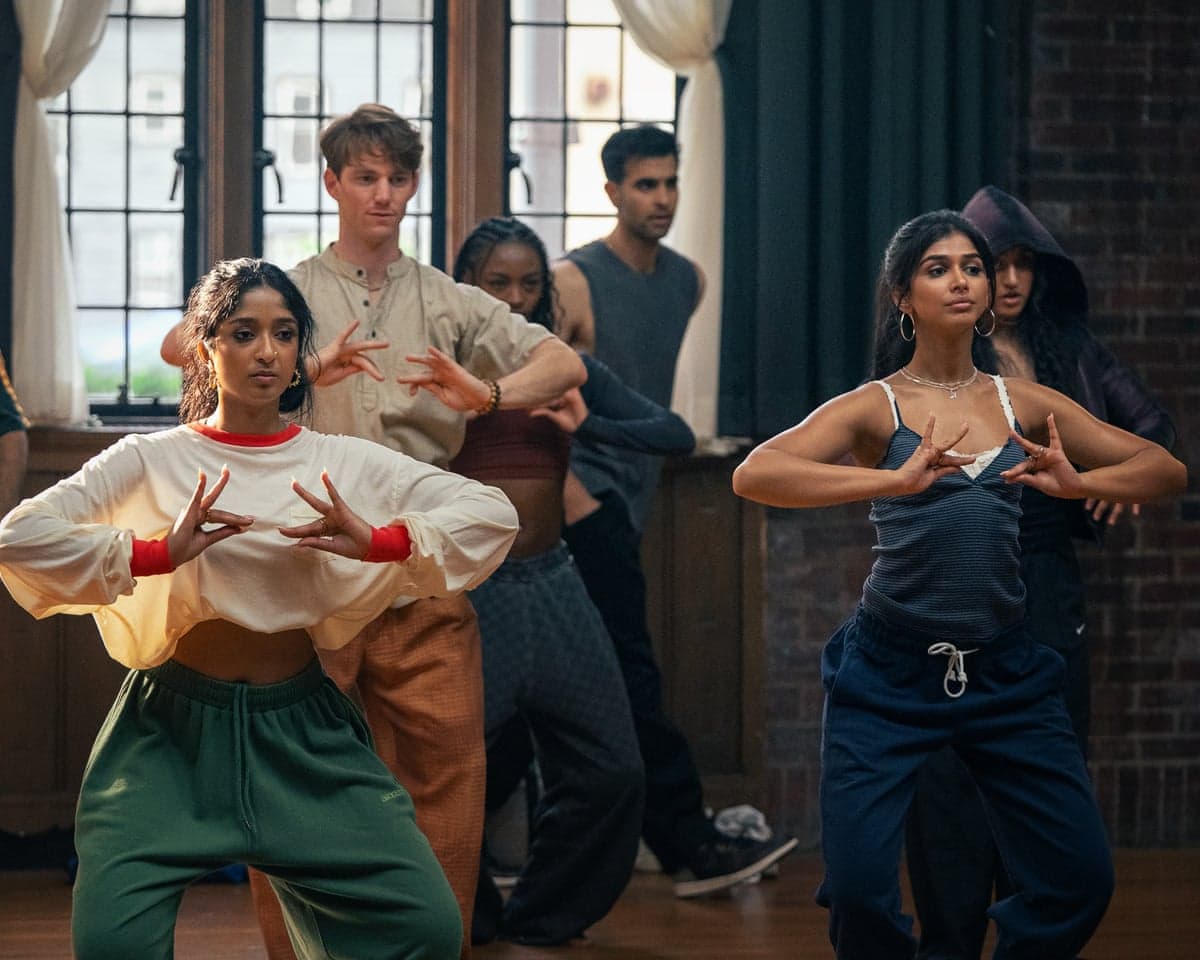
Netflix's latest comedy, which premiered on September 9, 2026, and became available for streaming on September 18, 2026, takes the well-worn template of the college rivalry film and reimagines it through the lens of competitive Bollywood-fusion dance. While the narrative beats follow a predictable path—rival teams, personality clashes, a climactic performance—the film succeeds through its rapid-fire comedic timing, inventive choreography, and the assured direction of Lena Khan, a notable Muslim female filmmaker working in Hollywood.
The story centres on Maya (Maitreyi Ramakrishnan) and Anjali (Priyanka Kedia), childhood companions who enrol together at UCLA and join the university's Bollywood dance club during their first week. Maya embodies the sharp, challenging archetype; Anjali represents the approachable, conventionally attractive counterpart. When Maya clashes with the club's leader Ronak (Ankur Rathee) over creative direction, the conflict becomes the engine of the plot. Ronak advocates for a routine rooted in traditional Bollywood wedding aesthetics, while Maya pushes for something contemporary and distinctive. The supporting cast, according to Variety, includes Lilly Singh, Nihar Duvvuri, Nico Greetham, Amryn Khurana, Tanishq Joshi, Saara Chaudry, and Sasha Bhasin.

The screenplay was crafted by Hasan Minhaj and Prashanth Venkataramanujam, a pair of millennial comedians whose research into Generation Z culture appears thorough enough to support academic study. According to Rotten Tomatoes, Minhaj serves as actor, screenwriter, and producer, while Venkataramanujam contributes as screenwriter and producer. The film, which runs 1 hour 52 minutes and carries a PG-13 rating, frames the central narrative as two childhood best friends pursuing the U.S. championship on UCLA's competitive dance team.
What Makes the Comedy Land?
The film's strength lies not in originality of plot but in the velocity and sharpness of its execution. The comedy mines second-generation immigrant experience for authentic humour. When Anjali's mother delivers a public slap in the dormitory, Maya observes that the white students appeared ready to contact law enforcement—a joke that captures the cultural dissonance of the diaspora experience. Khan's direction maintains infectious momentum throughout, refusing to linger on predictable moments and instead propelling the narrative forward with energy.
How Does the Final Performance Stand Out?
The climactic choreography sequence transcends the formula by embedding a narrative within the dance itself. The routine imagines a heist of the Koh-i-Noor diamond, now housed in the British Crown Jewels. This finale accomplishes something the rest of the film hints at but doesn't fully explore: it articulates something meaningful about young, forward-thinking South Asians and diaspora identity while simultaneously honouring traditional dance forms. The sequence manages to be both playful and substantive, suggesting that the film's ultimate ambition extends beyond comedy into cultural commentary.
Key Facts
- The film premiered on September 9, 2026, and began streaming on Netflix on September 18, 2026
- Director Lena Khan brings a distinctive perspective as one of few Muslim female filmmakers in Hollywood
- The screenplay by Hasan Minhaj and Prashanth Venkataramanujam demonstrates detailed knowledge of contemporary youth culture
- The runtime is 1 hour 52 minutes with a PG-13 rating
- The climactic dance sequence uses a Koh-i-Noor heist narrative to explore diaspora identity and cultural tradition