In January 1971, art historian Linda Nochlin published a landmark essay that reverberated through the arts establishment as both provocation and rallying cry. Ce Roser, now reflecting on that moment more than half a century later, recognised immediately that the problem extended far beyond individual artists. Her circle of accomplished female painters, poets and writers found themselves unable to secure exhibitions or establish sustainable careers, despite their proven talent and prior success.
"My older friends could not get shows, although they had had brilliant careers before, and that happened also to all of my friends who were poets or writers. Nobody seemed to be able to establish themselves as career artists. So we got together, we complained, and I decided we should have a meeting and really talk seriously about it."
That conversation at Roser's New York residence catalysed the founding of the Women in the Arts Foundation. According to the organisation's own history, it emerged from a 1971 meeting in lower Manhattan during a period of "great unrest and creative ferment" and quickly grew into a national organisation dedicated to overcoming discrimination against women artists. The foundation would take direct action in the streets to force systemic change. Today, at 101 years old, Roser is making her own history as the first American artist to debut in a European solo exhibition as a centenarian, with her retrospective opening at a London gallery this month.
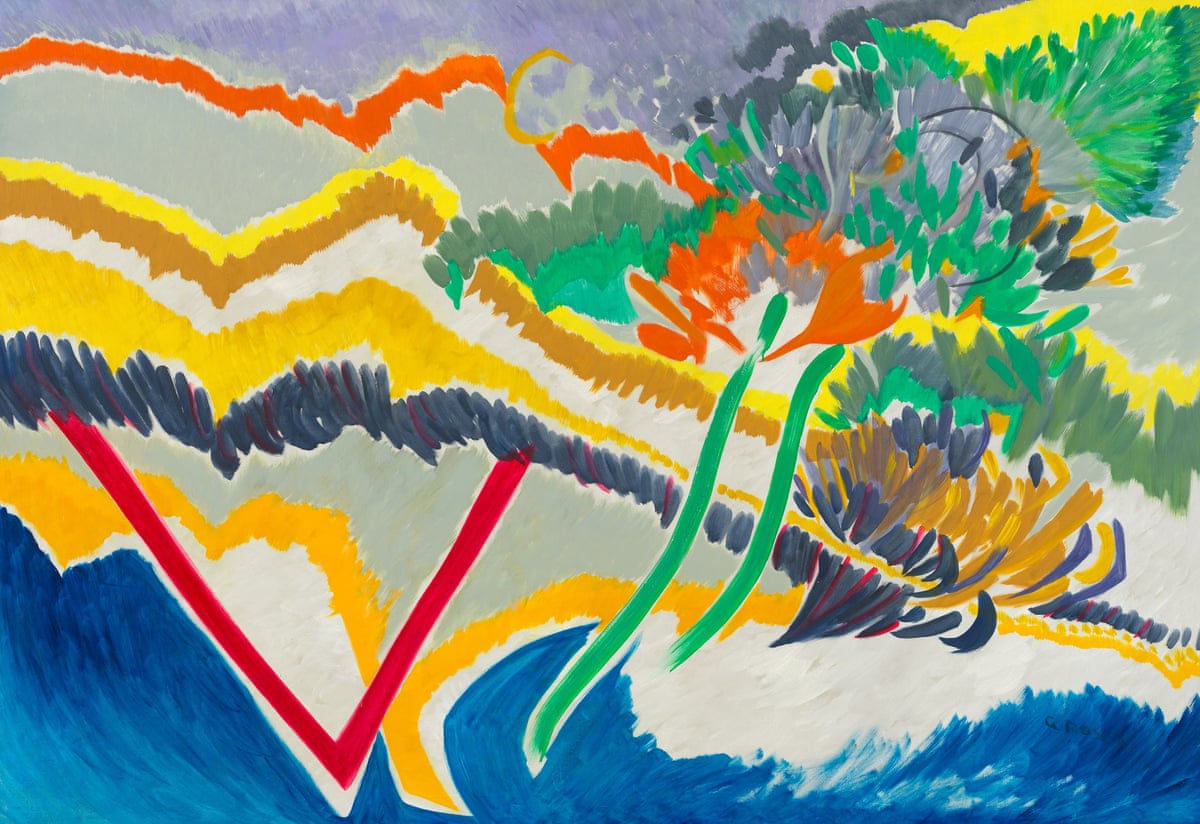
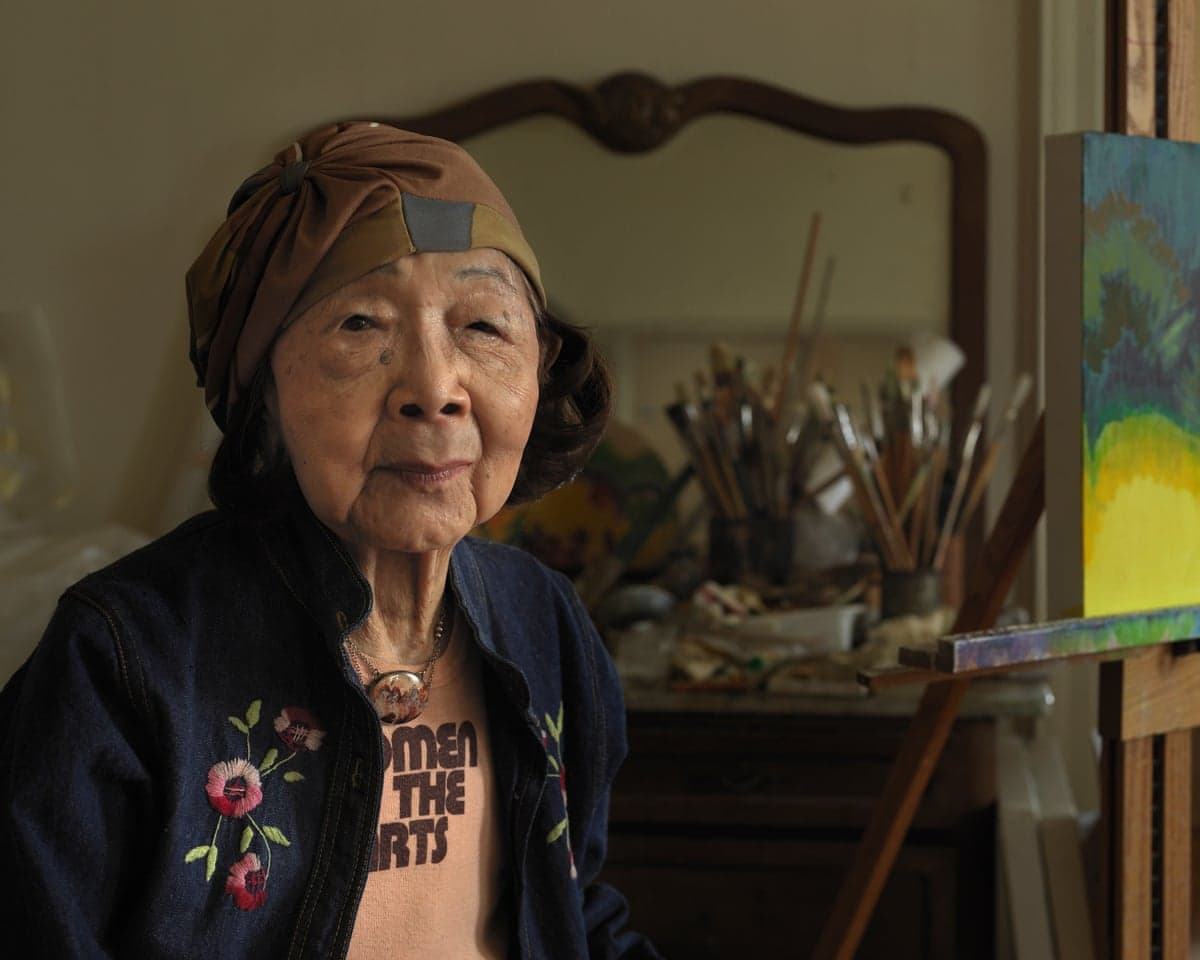
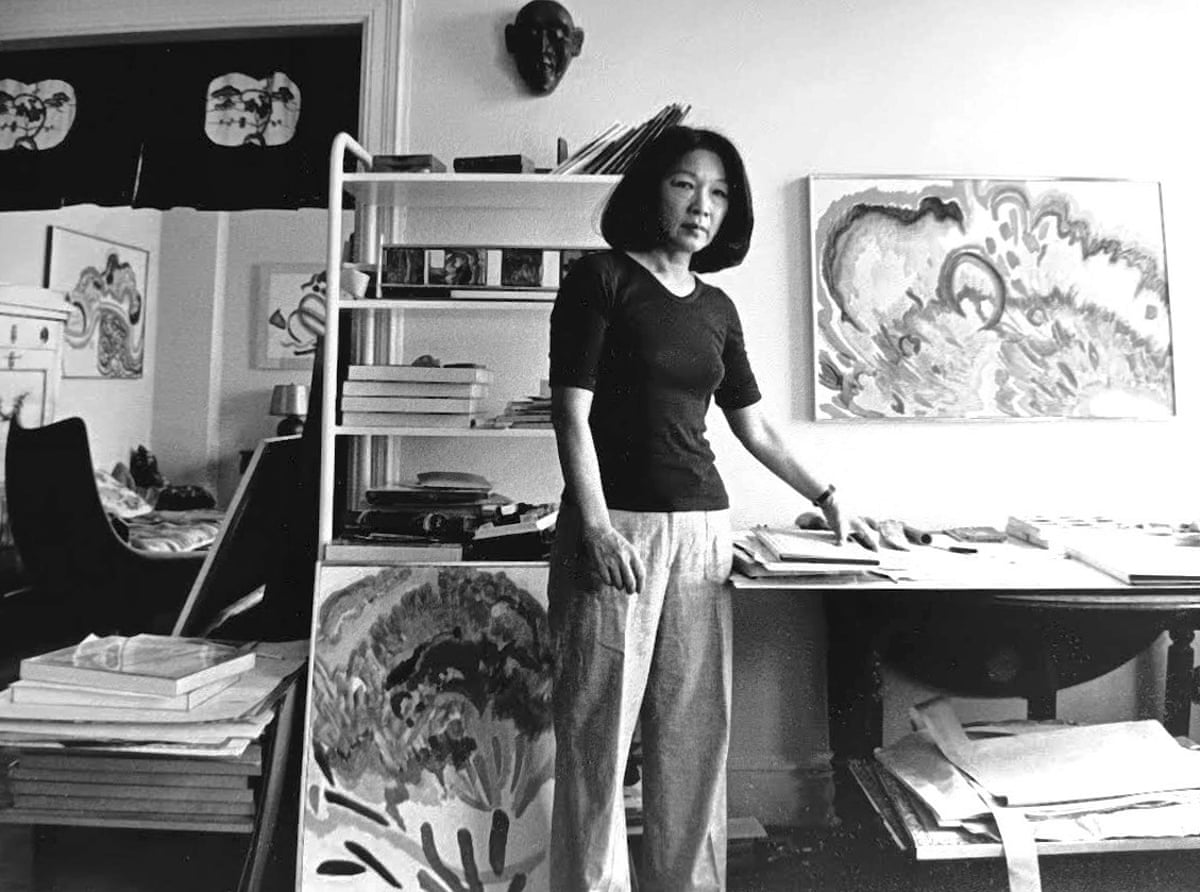
Meeting Roser via video from her New York home reveals a figure full of surprises. At 101, she appears decades younger. Born in the United States to Chinese immigrant parents, she maintains she never encountered racial discrimination. She resists the contemporary narrative that female artists face perpetual erasure, as they did in her era. Her recollection remains crystalline, and the work she continues to produce in the studio where she has laboured for over seven decades demonstrates undiminished creative vitality.
How did the Women in the Arts movement begin?
Roser recalls the initial resistance to their organising efforts.
"There was a school of thought that we're middle-class women, and we are afraid to assert ourselves."The first gathering drew only a handful of participants, but by the third meeting, artist Elaine de Kooning had offered her studio as a venue. Word spread rapidly—people came simply to see de Kooning's workspace—and attendance swelled. The group resolved to stage a public demonstration.
The breakthrough came through an unexpected connection: the father of one artist worked as a police officer and offered to close 53rd Street in front of the Museum of Modern Art. Roser and her fellow organisers seized the opportunity.
"We decided we were going to have a joyous demonstration. We were not going to be like the men and be fierce and aggressive. Of course, we were aggressive, but we weren't fierce."
The protesters assembled represented the full spectrum of art history as it would later be written. Artists arrived from abroad; some stood before MoMA holding placards with stark declarations.
"We made a lot of noise. We danced in the street. We closed it off,"Roser recalls. According to WIA's documented history, the organisation staged protests at the Whitney Museum of American Art in 1971 and 1977, and at the Museum of Modern Art in 1972 and 1984, establishing a pattern of sustained activism.
What tangible results did the movement achieve?
The demonstrations bore fruit in 1973 when the New York Cultural Center offered to host an exhibition curated by and featuring female artists. Roser served as one of seven selectors who implemented a radical departure from curatorial tradition: a democratic system in which artists nominated one another. The resulting show, "Women Choose Women," presented 111 artists and promised women "a large and permanent share of the art world action." The exhibition simultaneously validated the artistic contributions of female creators and demonstrated the viability and effectiveness of new, democratic curatorial models.
What shaped Roser's own artistic journey?
By the time of the protests, Roser was in her 40s, the well-travelled spouse of a United States diplomat who had relocated to America so their son could attend school.
"He was speaking Urdu, Tagalog, German, and no English for him to become an American,"she explains. Roser herself represented the third generation of her family born in America—granddaughter of Chinese immigrant farmers who had settled in California, where one grandfather operated a hop farm. Her parents had met at university; her father studied law while her mother pursued mathematics and history. She was the second of six children born after they established themselves in Philadelphia.

"I didn't feel Chinese because I grew up in a culture where there were very few Chinese. My parents ate American food for breakfast, and you can tell a lot by what people eat for breakfast."
Her mother introduced her to the arts through an ingenious incentive system, paying her children five cents for each poem memorised while keeping them occupied at the dining table with "lots of crayons and watercolours and paper." Yet Roser harboured no early ambition toward an artistic career. By age 19, she was working in the information department at the United States embassy, where she met her future husband. Marriage followed at 21, and foreign service postings abroad exposed her to restrictions placed on diplomatic wives.
A turning point arrived during their third posting, to Manila in the Philippines. A sympathetic friend lent her a paint set.
"I did a painting from a photograph, and when my husband went to frame it, somebody wanted to buy it, so I decided it must be good."This modest transaction sparked a creative awakening.
How did her time in postwar Germany influence her practice?
In the late 1940s, the couple relocated to Berlin, where Roser enrolled at the Berlin Art Academy and studied under German sculptor and Holocaust survivor Gerhard Uhlmann. She dismisses suggestions that postwar Germany represented a cultural shock, noting that nothing compared to her teenage experience during wartime in China. When her family became trapped in Shanghai, she endured a harrowing journey.
"We rode on a boxcar for 40 days. My mother and my grandmother – no men – and my brothers and sisters, and four cousins she insisted upon bringing with us. So I was used to war-torn and bombed-out places."
Uhlmann's teaching methodology proved transformative.
"He would make us draw a thing from reality and turn it into an abstraction, and take an abstraction and turn it into reality on paper."One piece of his counsel remained with her throughout her career:
"When you paint, be very definite. Do not hesitate. Just do it."
Where did Roser establish her artistic home?
Upon returning to New York, Roser discovered the studio overlooking the Hudson River that would become her creative sanctuary for decades to come.
"When I went into my studio, I felt like a hand going into a glove. It wiped out the domestic. I didn't cook, I didn't clean. I was there to paint and do nothing else, though I would always also read. I restricted myself to art criticism, art history, or poetry. Nothing else."
The luminous abstract paintings featured in her retrospective synthesise the cadences of poetry with the precision of calligraphic brushwork, disciplines she studied under Japanese master Takao Hidai. Where Hidai taught her to paint in expansive gestures,
"to use my arms instead of my wrists,"poetry remains a wellspring of creative inspiration.
"You mention a line and I see a painting,"she observes.
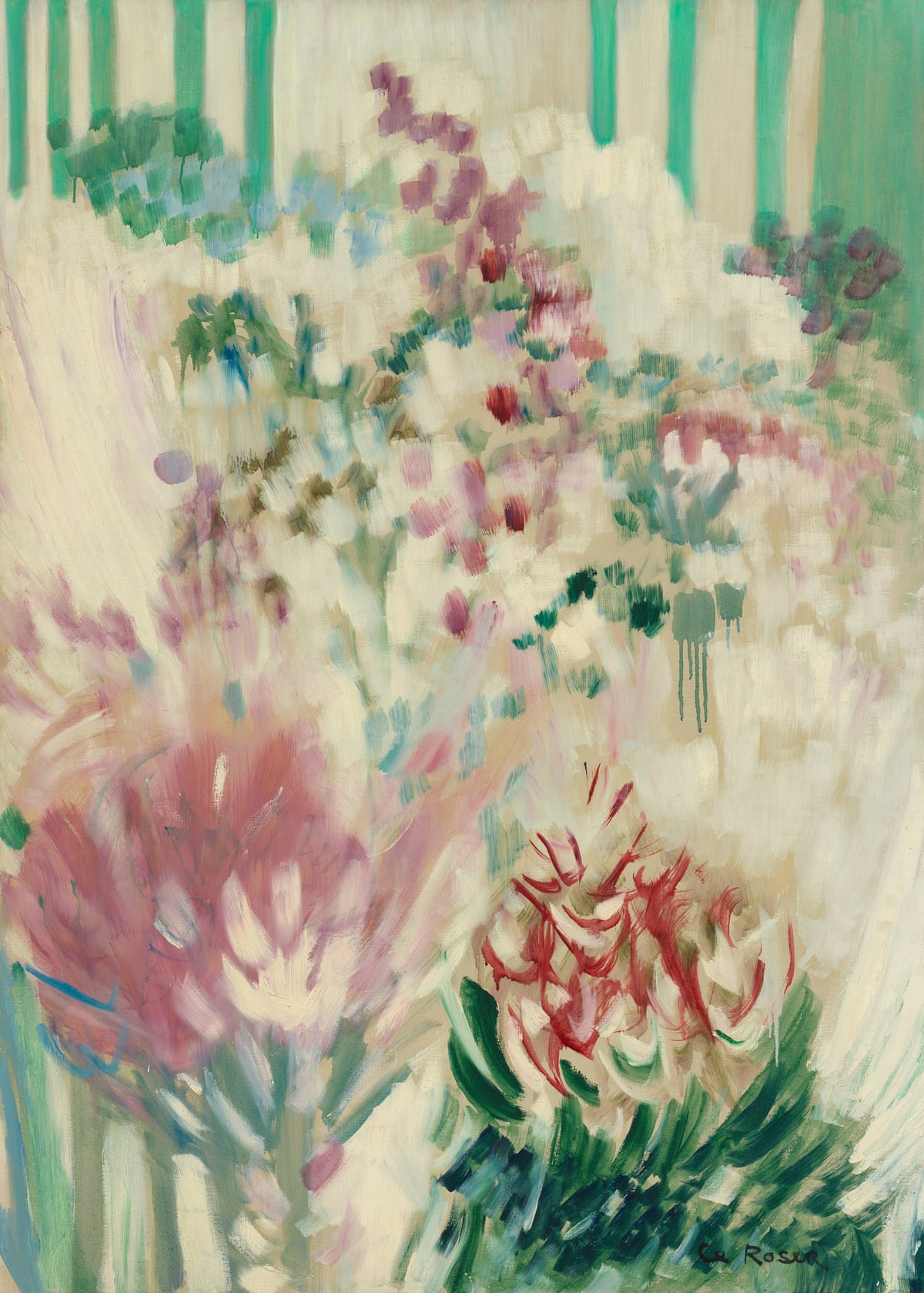
Though her name has faded from some public consciousness, Roser continues to work in her aerie above the Hudson River, often completing two or three paintings daily. She maintains confidence that her body of work has secured a place in the very New York institutions she once protested against, with pieces held in their permanent collections.
What is Roser's upcoming exhibition?
Roser's London retrospective, Running with the Sun, Works 1961–2014, opens on 18 September 2026 and runs through 5 December 2026 at VeneKlasen in London. The exhibition marks her first solo show outside the United States in over six decades and her first in Europe, underscoring the significance of this retrospective spanning more than five decades of artistic production. Her debut as a centenarian artist in a major European venue places her alongside other late-career artists who continue to command attention and respect in the contemporary art world.
Key Facts
- Ce Roser co-founded the Women in the Arts Foundation in 1971 following Linda Nochlin's landmark essay on female artists' exclusion from the art establishment.
- The organisation staged public demonstrations at major museums, including the Museum of Modern Art in 1972, forcing institutional recognition of female artists' contributions.
- In 1973, the "Women Choose Women" exhibition at the New York Cultural Center featured 111 artists selected through a democratic nomination process devised by Roser and six other female curators.
- Roser studied under German sculptor Gerhard Uhlmann in postwar Berlin and Japanese calligrapher Takao Hidai, influences evident in her abstract paintings.
- At 101, Roser continues to paint two or three works daily in her New York studio overlooking the Hudson River, where she has worked for over 70 years.