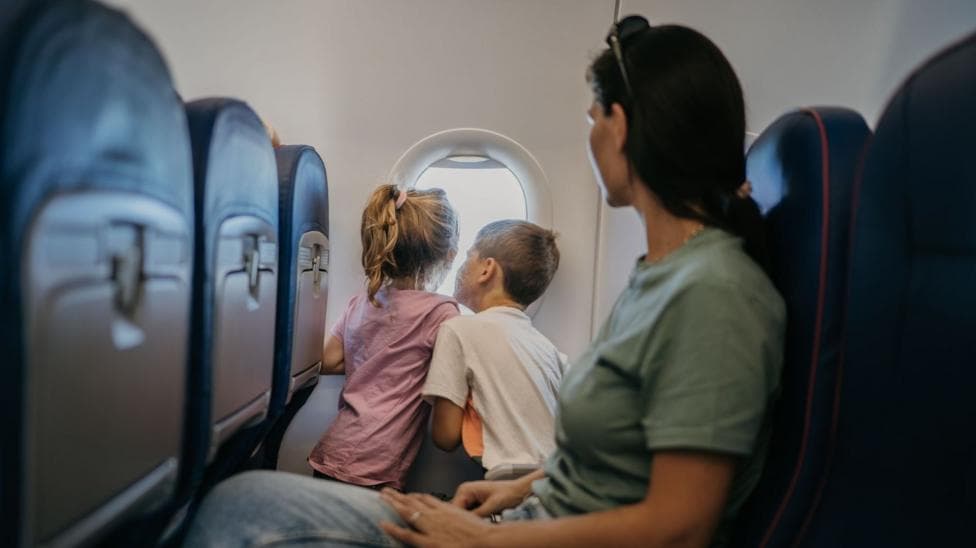
The government has announced plans to prohibit UK airlines from charging parents to sit adjacent to their children on flights, provided the Civil Aviation Bill receives parliamentary approval. According to the Department for Transport, the new rules would take effect from 2 October 2026 following Royal Assent of the legislation.
The proposed reforms would eliminate charges for seating arrangements between parents and children under 14, as well as waive fees for correcting minor administrative errors on flight bookings. The Department for Transport notes that such seating arrangements currently cost families up to £104 on a return journey, while booking corrections can incur charges of up to £40.
UK airlines have stated they already comply with existing regulations. Airlines UK, the industry trade body, expressed surprise at the announcement, noting that member carriers already permit minor name corrections at no cost and follow the regulator's current guidance on keeping children under 12 seated with their accompanying adult.
What would the new rules actually allow?
The proposed change would not prevent families from paying to reserve particular seats of their choice. Parents could still elect to pay for premium seat selection, with the child seated alongside them at no additional charge. This distinction means the rules target mandatory fees for basic family seating rather than optional premium seat choices.
The Department for Transport acknowledged that most UK airlines already offer protections against hidden costs, but argued that statutory rules would ensure greater consistency across all carriers operating within the country.
Why is the government taking action?
Prime Minister Andy Burnham characterised the proposed reforms as part of a broader effort to eliminate
"little charges that add up"when families organise holiday travel.
"Charging parents just to sit with their children is a rip-off, plain and simple,"he stated, and
"being hit with a hefty fee for a simple spelling mistake on a booking form isn't right either".
Transport Secretary Heidi Alexander reinforced this position, stating that
"parents should not have to feel the pinch just to sit next to their child on a flight, or for amending a simple booking error".The Department for Transport described the initiative as the
"latest example of the Prime Minister's series of 'everyday fixes' to tackle the irritations that make life difficult and hit people's wallets".
What do consumer advocates say?
Rory Boland, editor of consumer magazine Which? Travel, characterised the practice as
"clearly unfair to force parents and children as young as three to pay an extra fee just to sit together".He further observed that
"airlines that have separated families are putting profit ahead of passenger peace of mind".
What is the regulatory background?
The Civil Aviation Authority's guidance recommends that airlines aim to seat children under 12 in the same row as, or no more than one row or aisle away from, their accompanying adult. However, this guidance carries no legal force and remains voluntary. The Competition and Markets Authority opened an investigation into Ryanair on 11 June 2026, examining its requirement that at least one parent sit with children aged 2–11. According to reporting on the CMA investigation, Ryanair's policy typically resulted in a fee of £8 each way, though the airline maintains that an adult pays one reserved-seat fee and can select seats beside them for up to four children on the same booking at no extra charge.
What other changes are included in the Civil Aviation Bill?
The government's reforms extend beyond seating charges. The legislation would establish a new system for sharing information on persistently disruptive passengers, to be developed in collaboration with airlines and trade unions. The Department for Transport reports that in 2025 more than 1,000 serious disruptive passenger incidents were logged by airlines, including a mid-air brawl that resulted in a flight being diverted.
Transport Secretary Alexander stated that
"everyone deserved to travel knowing their flight would not be disrupted by 'bad behaviour from a small minority'".Airlines UK indicated its support for measures targeting disruptive passengers.
When will these changes take effect?
The reforms are scheduled to be implemented following Royal Assent of the Civil Aviation Bill. According to government sources, ministers are aiming to introduce the changes before the start of the 2027 summer holidays season. The Civil Aviation Bill is currently progressing through Parliament.
Key Facts
- Parents currently pay up to £104 on return journeys to sit next to children; booking corrections cost up to £40
- The new rules would apply to children under 14 and take effect from 2 October 2026 following Royal Assent
- Families would still be permitted to pay for premium seat selection, with children seated alongside them free of charge
- More than 1,000 serious disruptive passenger incidents were recorded by airlines in 2025
- The government aims to implement the changes before summer 2027 holidays begin