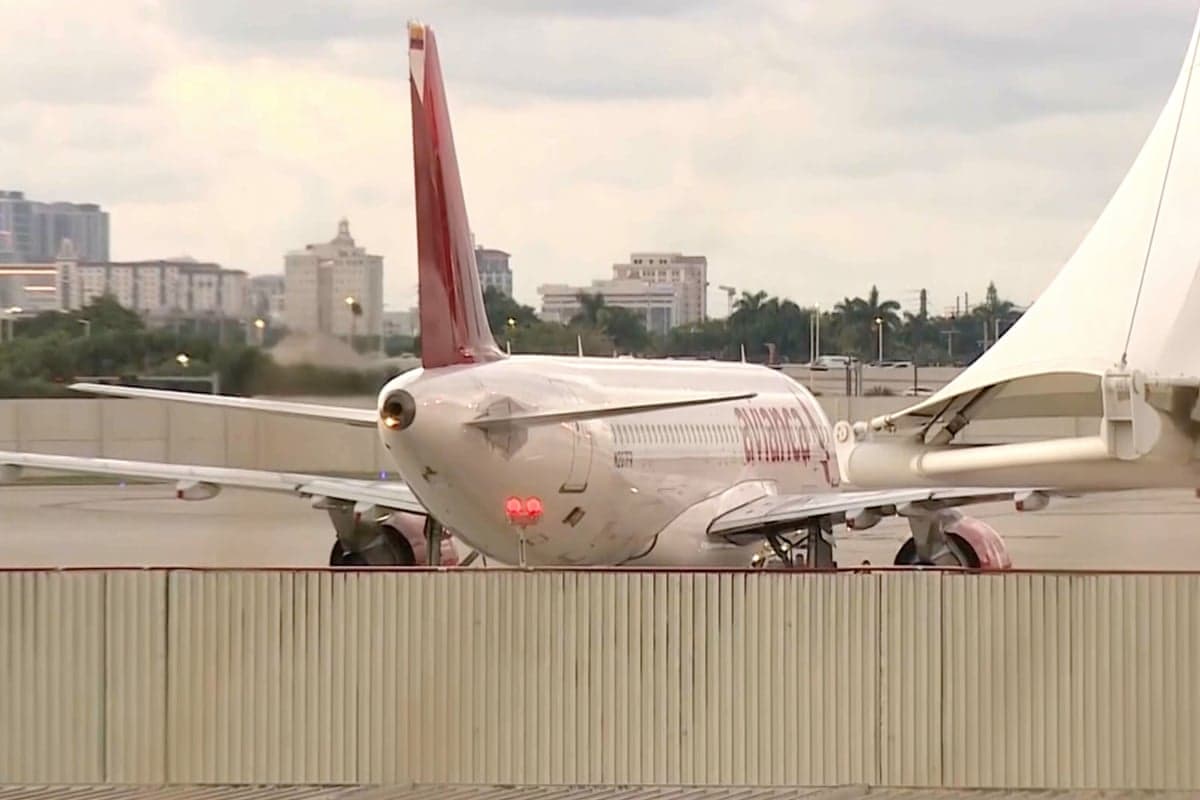
An Avianca aircraft carrying passengers from Colombia to New York encountered severe turbulence on Friday morning and was forced to divert to Miami, resulting in injuries to multiple people aboard. The incident has renewed focus on the growing frequency of turbulence events and their potential link to climate change.
According to reports from the incident, Avianca Flight 042 was traveling from Medellín, Colombia, to John F Kennedy International Airport in New York when the Airbus A320 experienced the turbulent conditions. The aircraft diverted to Miami International Airport, landing safely at approximately 3:30 a.m. Miami-Dade Fire Rescue transported eight people to area hospitals by ambulance, while one passenger was rushed to a trauma center with severe injuries.
The airline reported that nine individuals were affected by the turbulence, comprising three crew members and six passengers, though the precise extent of injuries remained unclear in initial reports. Uninjured passengers were subsequently rebooked on alternative flights to complete their journeys to New York. Avianca stated that
the safety of our customers and employees is, and will remain, the foundation of our operations.
Why is turbulence becoming more frequent?
While serious injuries from in-flight turbulence remain uncommon, scientific research suggests these incidents may be increasing in frequency as climate change alters atmospheric patterns, particularly the jet stream. The International Air Transport Association documented a surge of more than 25% in turbulence incident reports during the previous year, indicating a measurable upward trend in the aviation industry.
What happened in the Delta incident?
A comparable severe turbulence event occurred the previous summer when a Delta Air Lines flight encountered extreme turbulence caused by a thunderstorm over Wyoming, resulting in 24 people being transported to hospitals. The National Transportation Safety Board documented that passengers and flight attendants were thrown forcefully into the ceiling with sufficient impact to crack interior panels before being tossed back to the floor and then upward again. The seatbelt sign had been turned off at the time, leaving some passengers standing and allowing flight attendants to serve beverages when the aircraft struck the turbulence. At least 20 passengers subsequently filed lawsuits against Delta, contending that the airline could have avoided the severe weather.
What safety measures are recommended?
The Federal Aviation Administration recommends that passengers maintain their seatbelts throughout flights whenever possible to protect against unexpected turbulence events. The FAA announced it would investigate the Avianca incident, as part of its ongoing efforts to understand and mitigate turbulence-related injuries.
What happens next?
The Federal Aviation Administration's investigation into the incident represents the next identified step in understanding what occurred during the flight. No scheduled date for the completion of the investigation or further regulatory decisions has been announced at this time.
Key Facts:
- Avianca Flight 042 diverted from New York to Miami after encountering severe turbulence on Friday morning
- Nine people were affected (three crew members and six passengers), with eight transported to hospitals
- The International Air Transport Association reported turbulence incident reports surged more than 25% last year
- A similar Delta Air Lines incident in Wyoming resulted in 24 hospitalizations and subsequent lawsuits
- The FAA recommends passengers remain buckled throughout flights to protect against unexpected turbulence