England's local mayors will gain authority from early 2028 to impose a visitor levy on overnight accommodation, a development that has split political opinion and drawn sharp criticism from the hospitality sector. The tax would function as a percentage of accommodation costs rather than a fixed nightly charge, with hotels, bed-and-breakfasts and platforms such as Airbnb responsible for collection. According to reports on the devolution plans, the government intends to have the levy operational by the end of the current parliamentary session, subject to consultation.
Regional leaders have broadly welcomed the proposal, yet the hospitality industry has expressed outrage, having anticipated far stricter controls on levy rates and revenue allocation. The Daily Mail has estimated that an unrestricted overnight visitor charge could cost holidaymakers approximately £1.6 billion by the end of the decade.
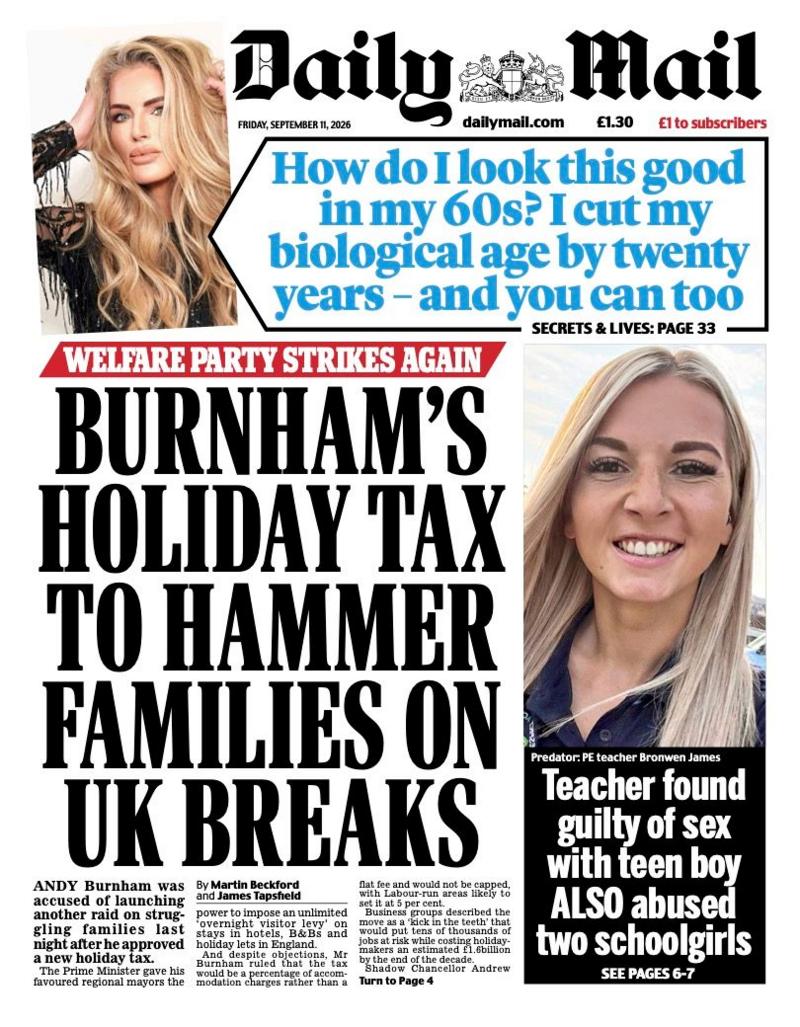
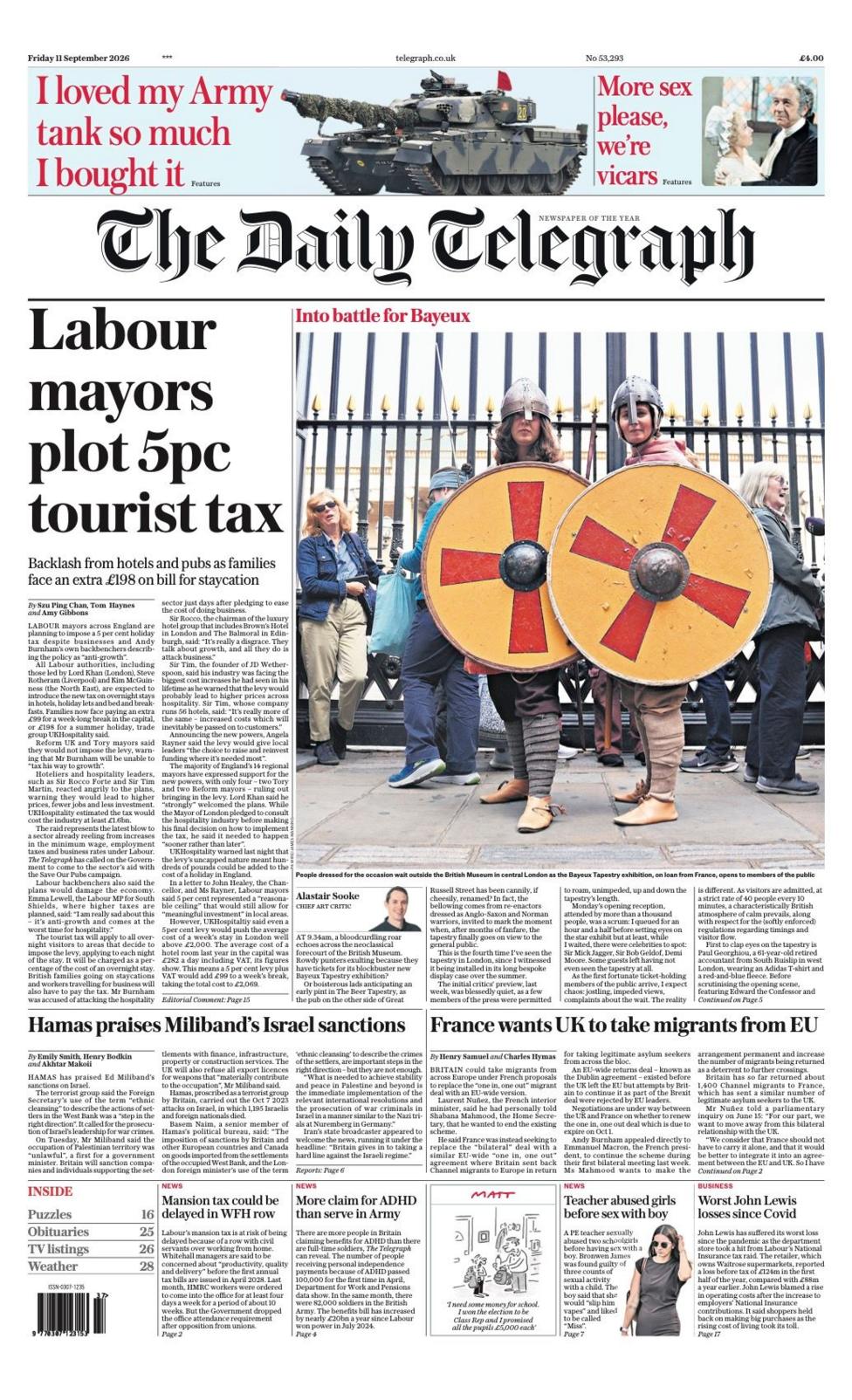
Political responses to the scheme have been sharply divided. Labour-led mayors have publicly committed to keeping any visitor levy between 0% and 5%, while Reform UK and Conservative mayors have pledged to reject the tax entirely. Within Labour's own ranks, backbenchers have warned that the plans risk damaging the economy, characterising the move as anti-growth and poorly timed for an already struggling hospitality sector.
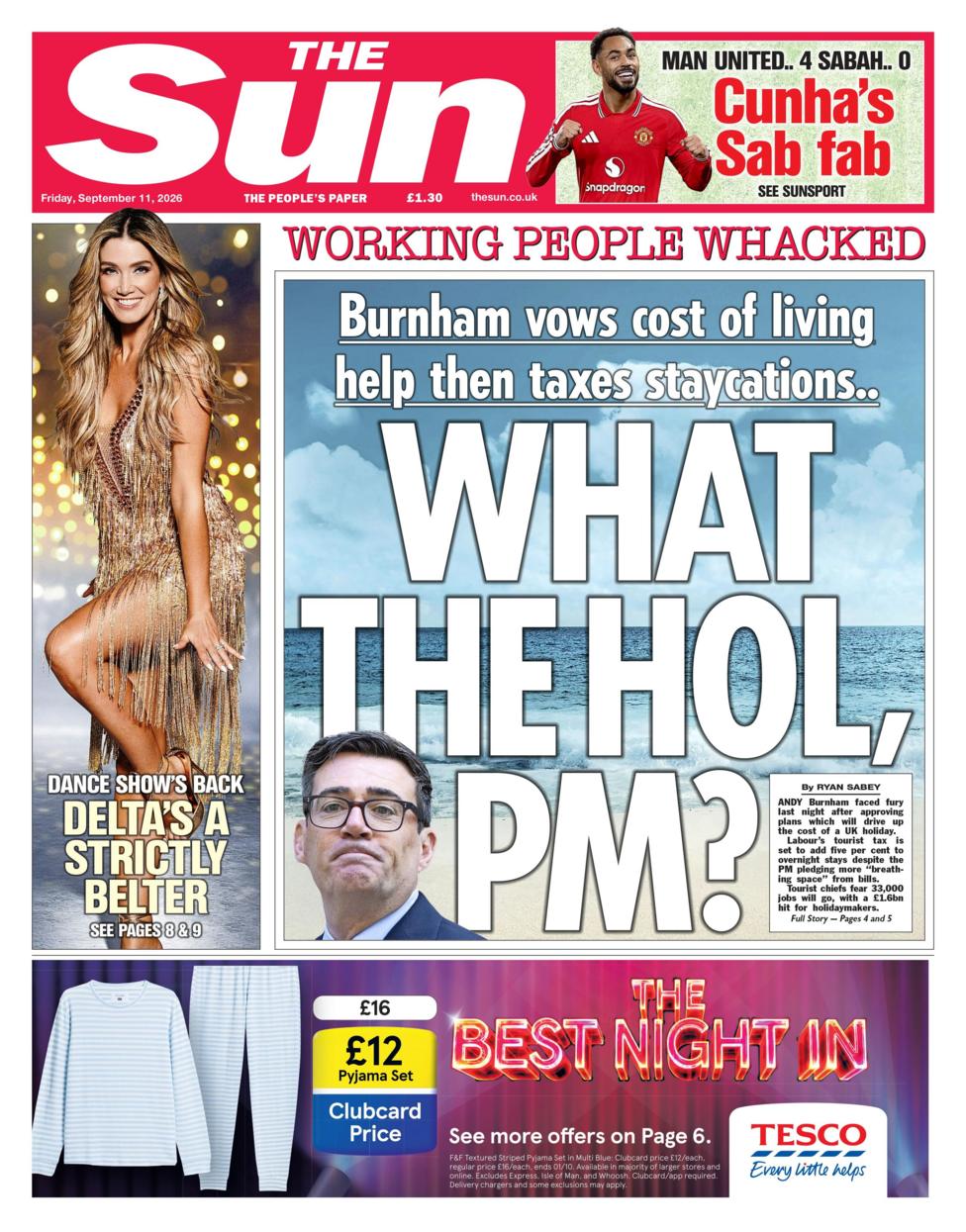
The Sun's front page questioned the policy's alignment with the prime minister's stated commitment to addressing the cost-of-living crisis, running the headline
What the hol, PM?
The proposal follows similar moves in Scotland and Wales, where tourist-tax models are already advancing. Wales intends to charge £1.30 per night, while Scotland is implementing a 5% levy. Research cited by a national broadcaster suggests that a £1 daily levy in London alone could generate £91 million annually.
What happens next with the tourist tax?
The government will consult on the English tourist-tax framework until 18 February 2027, at which point the possibility of imposing a cap on rates will be examined. Should the plan receive approval, local leaders could begin setting out spending plans by March 2028, paving the way for implementation across England's mayoral regions.
What dominated other front pages this week?
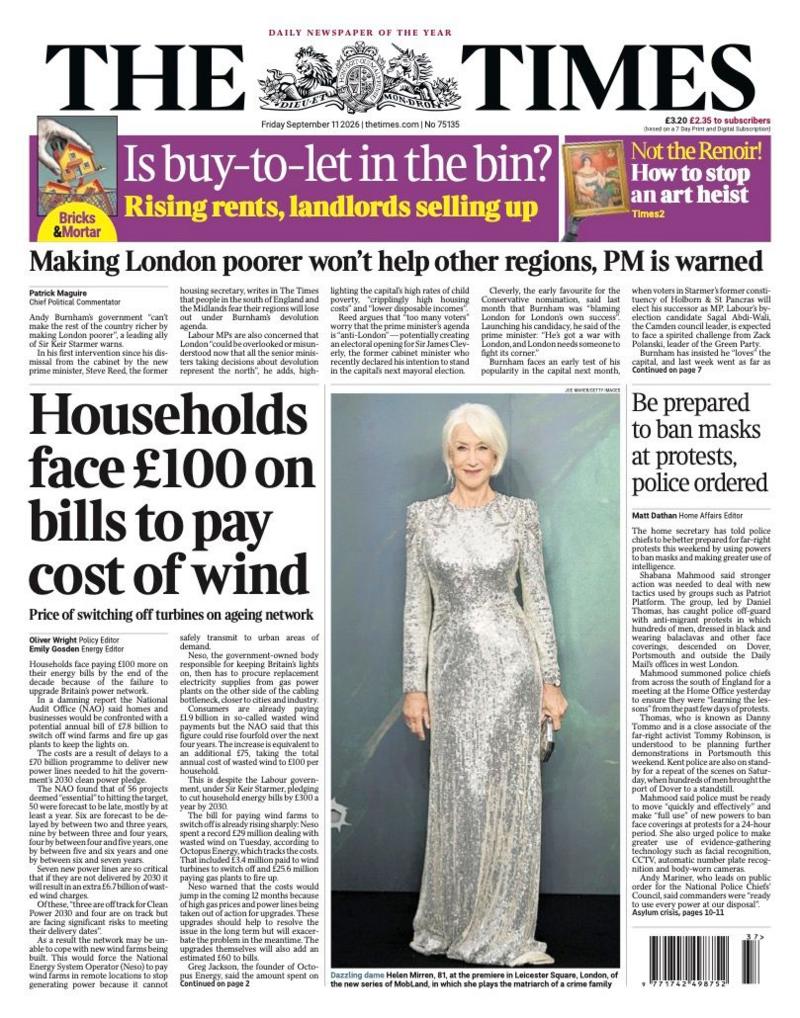
The Times led with a story on energy costs, reporting that households could face a potential £100 increase on bills by the end of the decade due to what it described as a failure to upgrade Britain's power network. The paper's front page also featured actress Helen Mirren, the 81-year-old star who attended the London premiere of the new series of MobLand.

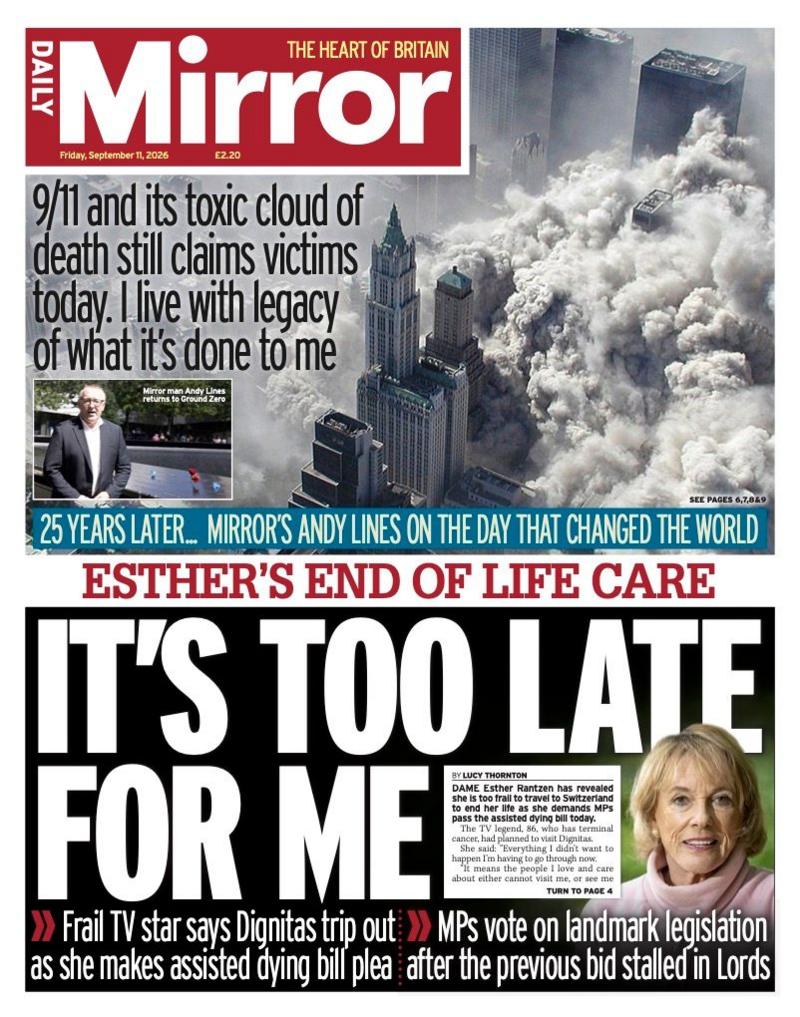
Multiple publications marked the 25th anniversary of the 9/11 attacks, which occurred on 11 September 2001 when hijackers seized US passenger jets and crashed them into the Twin Towers of the World Trade Center in New York City, killing 2,977 people. The i Paper described it as the
day that changed the world, while the Metro characterised the event as a
day of terror that shook the world.
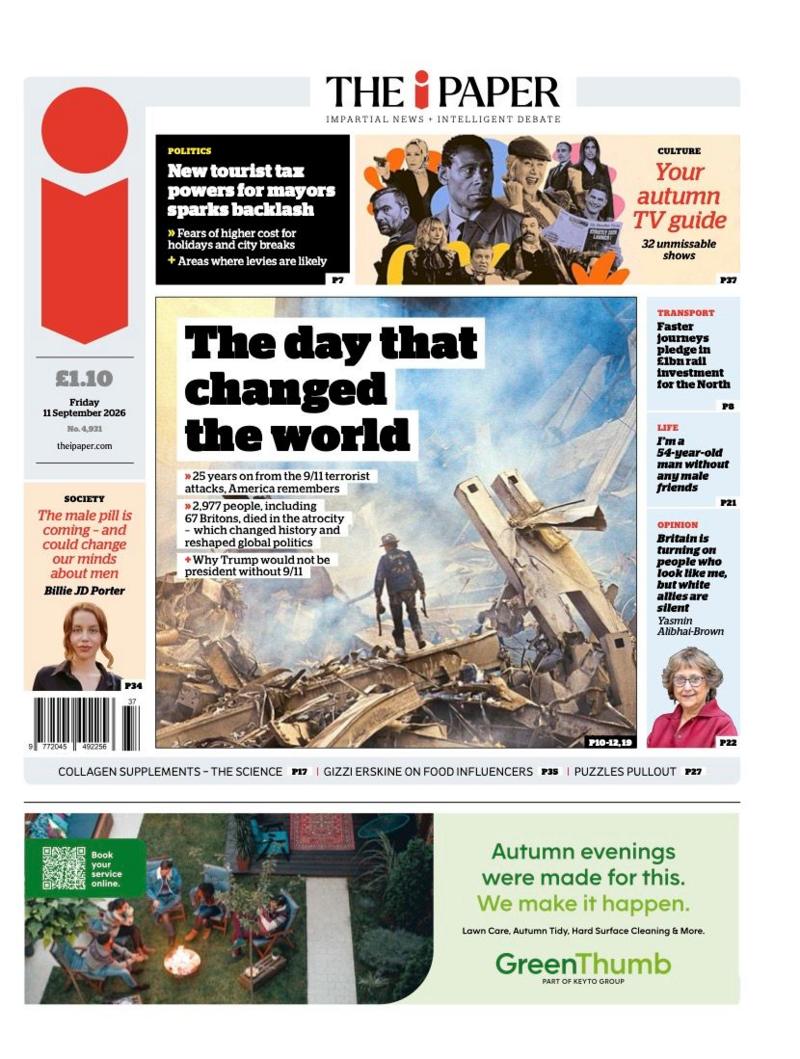
The Metro also reported on what it termed the
deadly legacyof 9/11, noting that thousands of people exposed to toxic dust from the collapsed skyscrapers have since died from cancer-related illnesses. This year's commemoration will include a significant expansion: a seventh moment of silence has been added to the 25th anniversary ceremony to honour those who died from illnesses linked to exposure at or near the World Trade Center site.
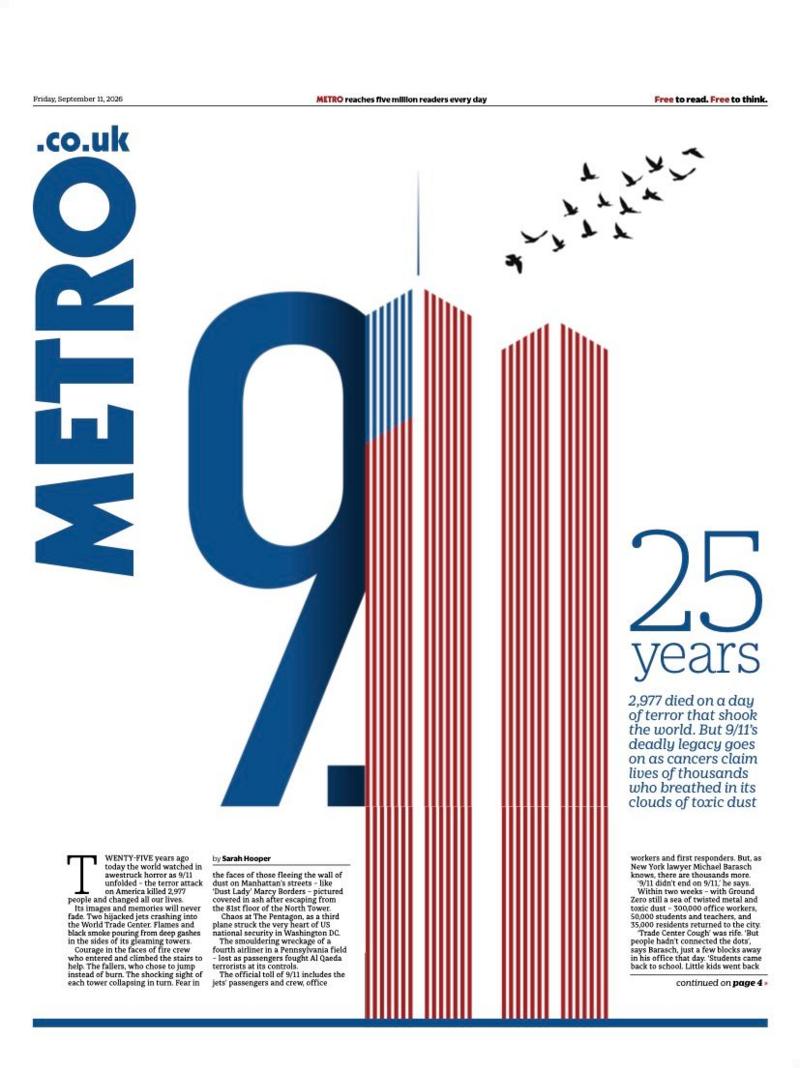
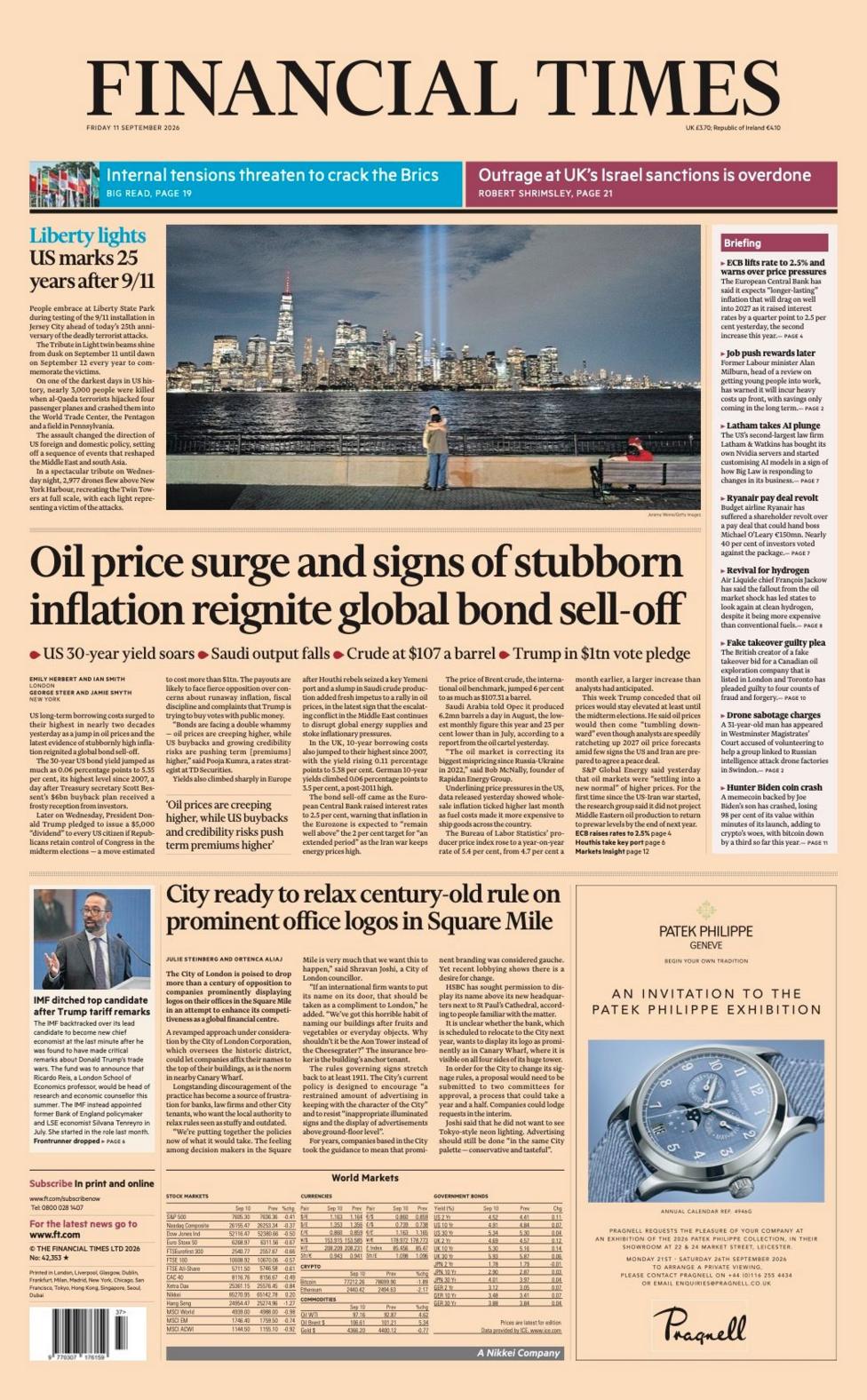
The Financial Times featured the iconic twin light beams that illuminate the night sky each year on 11 September to commemorate the victims. The paper also reported on a surge in US long-term borrowing costs, which have reached their highest levels in nearly two decades.
New York City Mayor Zohran Mamdani is set to designate 11 September as a Day of Remembrance and Service ahead of the anniversary. Meanwhile, Donald Trump has announced he will mark the 25th anniversary at the Pentagon rather than at Ground Zero.
What is the status of the assisted-dying legislation?
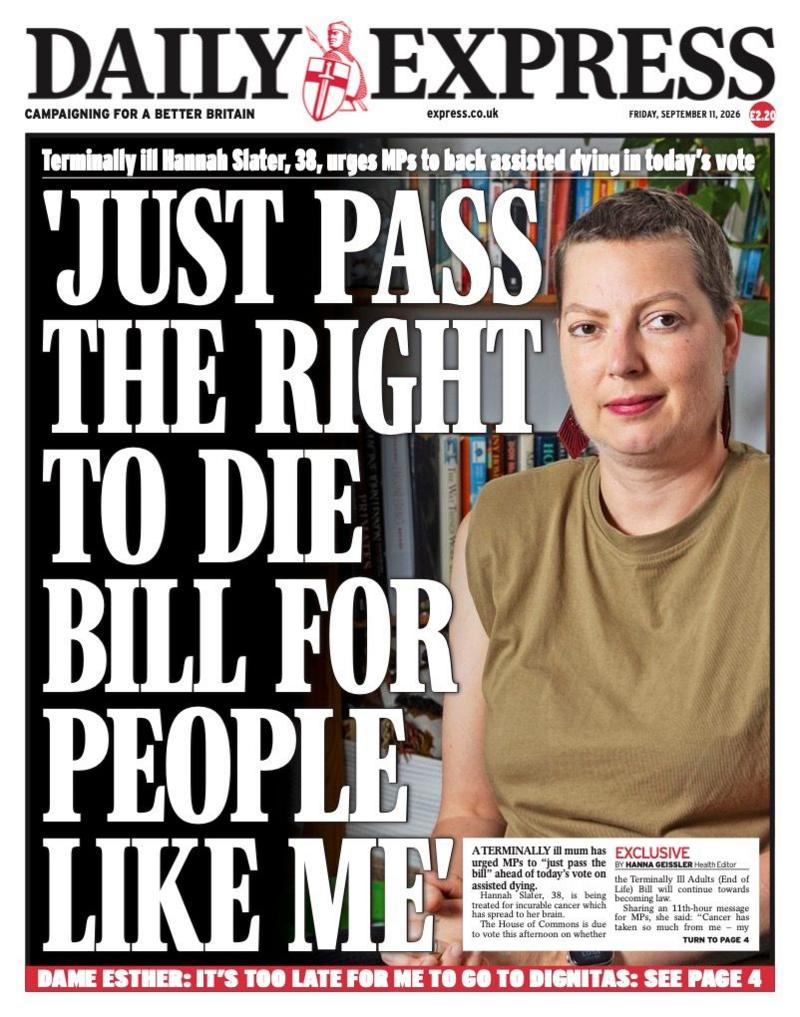
The House of Commons is scheduled to vote on an assisted-dying bill, a development that has prompted personal testimonies from those facing terminal illness. Hannah Slater, a 38-year-old woman with incurable cancer, told the Daily Express that MPs should
just pass the bill.
The Daily Mirror led with the same story, featuring remarks from Dame Esther, an 86-year-old terminally ill with cancer. She revealed that although she had planned to end her life at an assisted suicide clinic in Switzerland, she is now too frail to travel. She demanded that ministers vote in favour of the bill, stating that
everything I didn't want to happen I'm having to go through now.
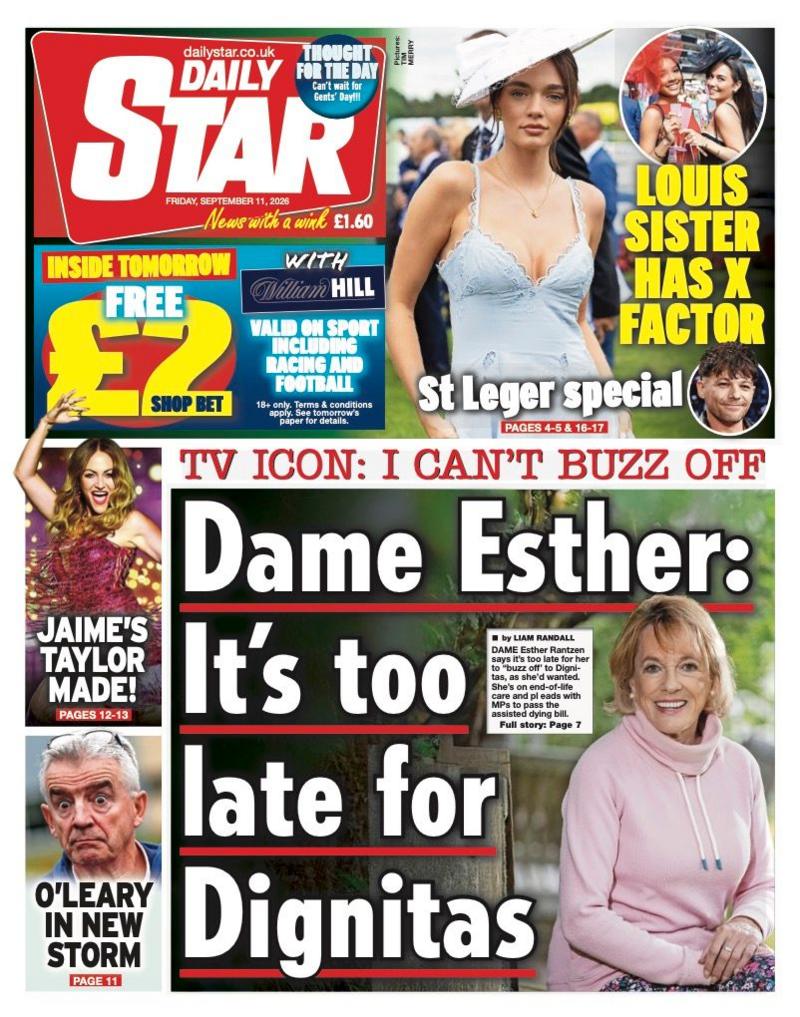
The Daily Star quoted Dame Esther's situation in its headline:
It's too late for Dignitas.
However, the legislative outlook remains uncertain. Analysis of parliamentary scheduling suggests the assisted-dying bill was last scheduled for debate on 24 April 2026 and is expected to run out of time in the current parliamentary session, meaning supporters may need to prepare for another attempt to advance the legislation in a future session.
Key Facts
- England's mayoral tourist tax will be calculated as a percentage of accommodation costs, with collection handled by accommodation providers, and is targeted for implementation by early 2028
- Labour mayors have committed to keeping the levy between 0% and 5%, while Conservative and Reform UK mayors have pledged not to introduce it
- The 25th anniversary of the 9/11 attacks will be commemorated on 11 September 2026, with a new seventh moment of silence added to honour those who died from illnesses linked to exposure at the World Trade Center site
- The assisted-dying bill faces time constraints in Parliament and may not progress in the current session, requiring a fresh attempt in future parliamentary business