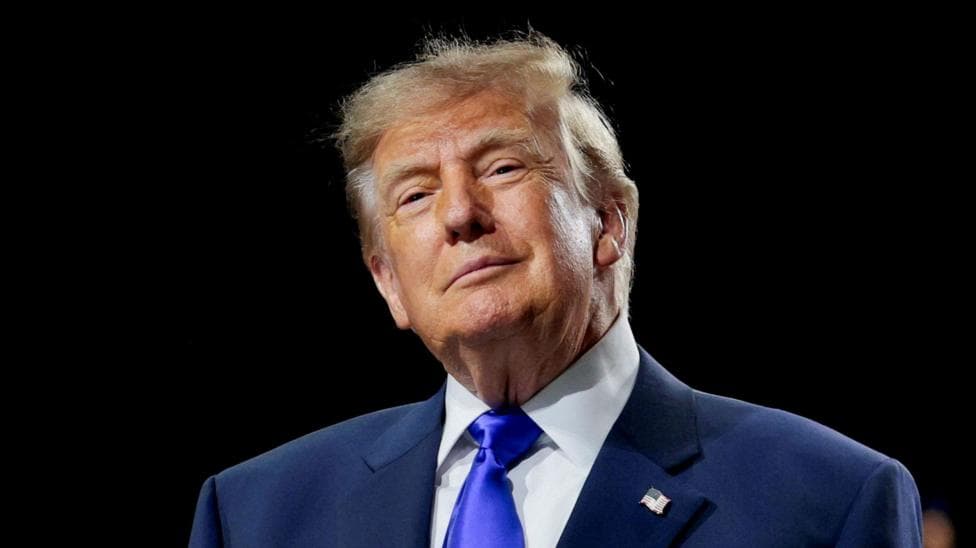
US President Donald Trump landed in Ireland on 2 September 2026 for a two-day visit combining official meetings with Irish leaders and attendance at a major golf championship. During his time in the capital, Trump conducted a courtesy meeting with Irish President Catherine Connolly and held a bilateral discussion with Taoiseach (Irish Prime Minister) Micheál Martin, with discussions touching on the sensitive issue of Irish reunification. Trump departed from Shannon Airport on Sunday evening following the weekend visit.
Following his Dublin engagements, Trump travelled to County Clare to attend the Amgen Irish Open golf tournament at Trump International Golf Links and Hotel Doonbeg, which he owns. The tournament runs from 10 to 13 September 2026, and Trump's visit has been timed to coincide with the tournament's closing stages. His sons Eric and Donald Trump Junior are expected to join him in Doonbeg.
This represents Trump's first visit to the Republic since 2019, when he also spent time at his golf course. The Irish Open was officially awarded to Trump International Golf Links Ireland in Doonbeg for 2026, marking the first occasion the tournament has been hosted at the venue.
What did Trump say about Irish unity?
During his visit, Trump expressed strong support for the reunification of Ireland, stating he would "love to see it unified" and suggesting it "may as well happen now." He predicted that unification "is going to happen eventually" and appeared to cast Micheál Martin as the person capable of making it happen. Trump said: "I'd love to see it unified. I think it would be a great feather in everybody's cap if that happened. It's going to happen eventually. You know what? The way I look at it, it's going to happen eventually. It may as well happen now." He later characterised the prospect as something that "would be cool," though he acknowledged there was "no good answer" to the question.
Trump repeated the sentiment multiple times during his visit, describing a united Ireland as "fantastic," "a great thing," and "a very cool thing." During his meeting with Micheál Martin at Farmleigh House in Phoenix Park, Trump said a united Ireland would be a "fantastic thing" and added: "now the UK would have something to say about it obviously but I think it would be a great thing, I mean, how can it be bad?" He also acknowledged that "the UK would have something to say about it," recognising the constitutional complexity of the issue. The remarks appear to have been discussed during his meetings with Irish leaders rather than being entirely spontaneous, suggesting the topic had been prepared for in advance.
According to a national broadcaster's live coverage, Sinn Féin leader Mary Lou McDonald said Trump's comments mean "the conversation on Irish unity has shifted," suggesting the intervention was more than a spontaneous remark and could serve as a momentum changer for those driving the campaign for Irish unity. However, political analysts noted that Trump's intervention does not bring a border poll any closer, as only the UK government has the power to trigger one under the Good Friday Agreement framework.
His comments drew swift responses from Northern Ireland's unionist parties. DUP leader Gavin Robinson stated that "Northern Ireland's constitutional future will be decided by the people of Northern Ireland, not by commentary in London, Dublin or Washington," emphasising that the region's status reflects "the settled democratic will of its people." TUV leader Jim Allister said Trump "is not the first US president to meddle in the affairs which don't concern him," while Ulster Unionist Party Leader Jon Burrows MLA noted that although Trump was "entitled to express his view," only the people of Northern Ireland could decide their constitutional future under the principle of consent enshrined in the Belfast Agreement.
A spokesperson for Micheál Martin said Trump's comments should "come as a surprise to no one" and the US president has been "consistent in his view that he sees unity in Ireland as the optimal outcome." The Taoiseach's position on the Good Friday Agreement and programme for government commitments remained unchanged. Prime Minister Andy Burnham similarly confirmed his position on Irish unification remained unchanged, stating on Wednesday in the House of Commons that he "will stick to it (the Good Friday Agreement) 100%." Burnham added that "the question of a border poll" was for the Northern Ireland secretary "when there is clear consensus in the country - when public opinion has changed to the point at which the call has to be considered."
What gifts were exchanged?
President Connolly presented Trump with symbolic gifts including a St Brigid's Cross, traditionally associated with peace, along with a collection of poetry that included Michael Longley's sonnet Ceasefire. The symbolism of these gifts was notable given Connolly's previous criticism of Trump. Before winning the Irish presidency—a ceremonial post—last year, Connolly was an independent leftwing member of parliament for Galway who protested against Trump's 2019 visit and more recently criticised him over his positions on Gaza, Iran and other issues.
What did Trump say about Middle East issues?
Trump addressed several international matters during his Dublin visit. He claimed the Houthi group had asked the US not to intervene in maritime routes and said he believed Iran may have been responsible for a recent drone strike on Saudi oil infrastructure. Regarding the conflict in Gaza, Trump stated it was "all but over" after he "put out the fires," and claimed Iran was two weeks away from obtaining a nuclear weapon when the US and Israel began military operations in February. He predicted the war with Iran would end after US midterm elections in November, adding that "oil prices will come tumbling down" once that happens.
Security and public response
Irish authorities prepared for Trump's arrival in what officials describe as one of the largest security operations in the state's history. The state security bill for the visit was estimated at approximately €20 million.
More than 10,000 people marched through Dublin to show their opposition to the US president. Although Trump left the city just as the protest began, organisers said they wanted to send out a message of opposition to him and his policies. When asked about the demonstrations, Trump said: "I didn't know there was a protest. It can't be a very big one because we've been all over Ireland today already, it's early in the morning… but I haven't seen any protest. It's a friendly protest."
On Saturday evening, three women were arrested for trespassing on the golf links at Doonbeg and appeared at a special sitting of Ennis District Court.
During his speech at Deerfield, Trump praised the Irish people, saying: "This country is fantastic, it's just a fantastic place, I love it. I have investments here but that's not why I love it. I like it because of its special people, you have unbelievable people in Ireland." He also offered a characterisation of Irish character, noting: "There's a friendliness. There's also a viciousness and a toughness. Let me tell you, you are some of the most vicious bastards... but when you want to be nice, there is nobody nicer."
Who will compete in the tournament?
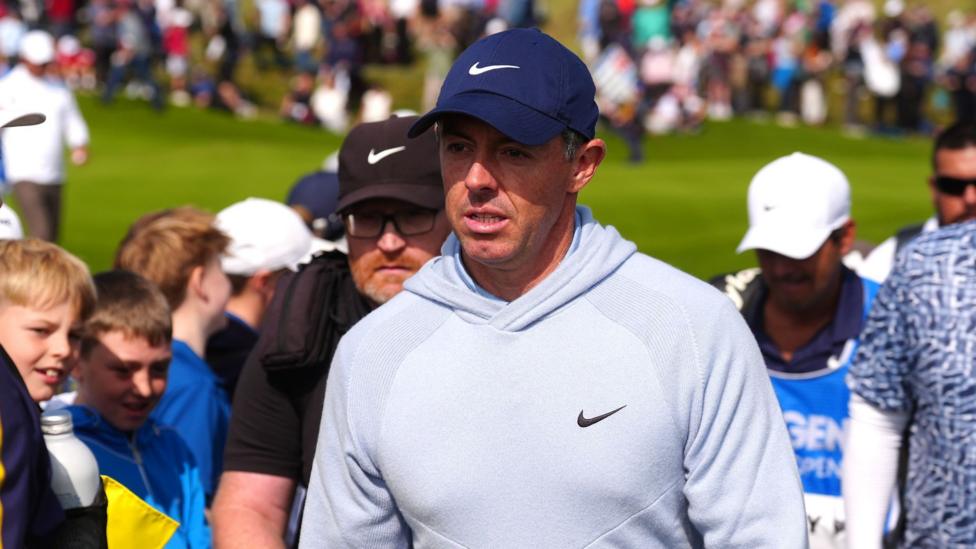
The championship features prominent international players competing for the title. Rory McIlroy and Jon Rahm are among the high-profile competitors set to take part in the tournament. McIlroy, who is defending the title he won last year, played a round of golf with the US president in early 2025. Trump has previously praised the Northern Irishman's accomplishments on the course after winning back-to-back Masters titles. In a video message recorded for the US Embassy's Fourth of July celebration event in July, Trump expressed his enthusiasm for attending the event.
There's nothing better than Irish-American friendship and I have a beautiful place over there - it's one of the best, most beautiful golf courses anywhere in the world. We have a place that's so top and we have the Irish Open going to be there. They call it Trump National, we sometimes use the name of the location, but it's Trump National Golf Club, and we're looking forward to it. We're going to have a tremendous celebration. I think I'm going to come over and I'm going to see it and watch. It'll be something very, very special.
In that same message, Trump indicated his desire to observe Rory McIlroy and other top players competing at the course.
What have Irish leaders said?
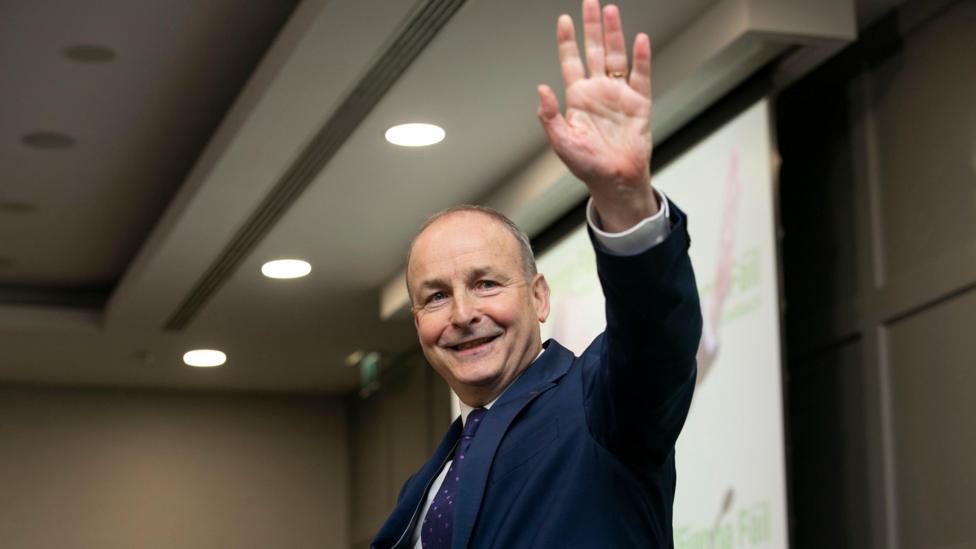
Taoiseach Micheál Martin expressed his welcome for Trump's arrival. In a statement released ahead of the president's touchdown, Martin said:
I look forward to welcoming President Trump to Ireland and to discussing the many issues of mutual interest and reaffirming the strong economic, cultural and people-to-people ties between Ireland and the United States.
Martin further commented on the sporting dimension of the visit:
His visit comes during a remarkable sporting summer for Ireland, and the United States and this weekend's Irish Open at Trump International Doonbeg will be a fitting conclusion to an outstanding season of sport, and I hope we will see an Irish winner lifting the trophy on Sunday.
When speaking to a national broadcaster's podcast earlier in the week, Martin elaborated on the planned itinerary, noting that "We will have discussions with the president and there will be a reception at the American Embassy but I think he's also very anxious to get to Doonbeg and watch the Irish Open."
How does Irish reunification work under the Good Friday Agreement?
The Good Friday Agreement provides a constitutional framework for potential Irish reunification. According to official guidance on the agreement, a border poll can be held if it appears likely that a majority in Northern Ireland would vote for Irish unification. The agreement recognises the right of the people of Ireland to pursue a united Ireland by agreement and requires consent in both parts of the island. There is a seven-year gap rule between referendums on the issue.
According to reporting from 10 September, Micheál Martin had been calling for greater clarity over how a border poll would be triggered. The next key decision point would be any future judgment by the UK secretary of state on whether the statutory threshold for a border poll has been met. No date for a border poll has been announced, and Trump's intervention does not change the legal or political requirements for one to occur.
What happens next?
Trump is expected to stay to watch the final day of action at the Irish Open, which is scheduled to conclude on 13 September 2026 at Doonbeg. The timing of the visit has been arranged to allow Trump to return to the United States for the 25th anniversary commemoration of 9/11.
Trump will be in the spotlight on Sunday as he watches the closing round of the Irish Open. Among those in his party is former DUP MP Ian Paisley, a Trump family friend who attempted to downplay the president's remarks on Irish unity, insisting "everyone was entitled to a personal opinion even if it's wrong." The Taoiseach will also be present in Trump's tent just off the 18th green and will likely face questions from the press on the reunification comments.
Key Facts
- Trump arrived in Dublin on 2 September 2026 for a two-day visit combining official meetings and golf tournament attendance, departing from Shannon Airport on Sunday evening
- The state security operation for the visit was estimated to cost approximately €20 million
- The Irish Open runs from 10 to 13 September 2026 at Trump International Golf Links Ireland in Doonbeg, the first time the tournament has been hosted there
- High-profile golfers including Rory McIlroy and Jon Rahm are competing in the championship
- Trump expressed strong support for Irish reunification, describing it as "fantastic," "a great thing," and "a very cool thing," though he acknowledged the UK would have a say in the matter
- Northern Ireland's unionist parties reaffirmed that only the people of Northern Ireland can decide their constitutional future under the Good Friday Agreement
- More than 10,000 people marched through Dublin to protest Trump's visit