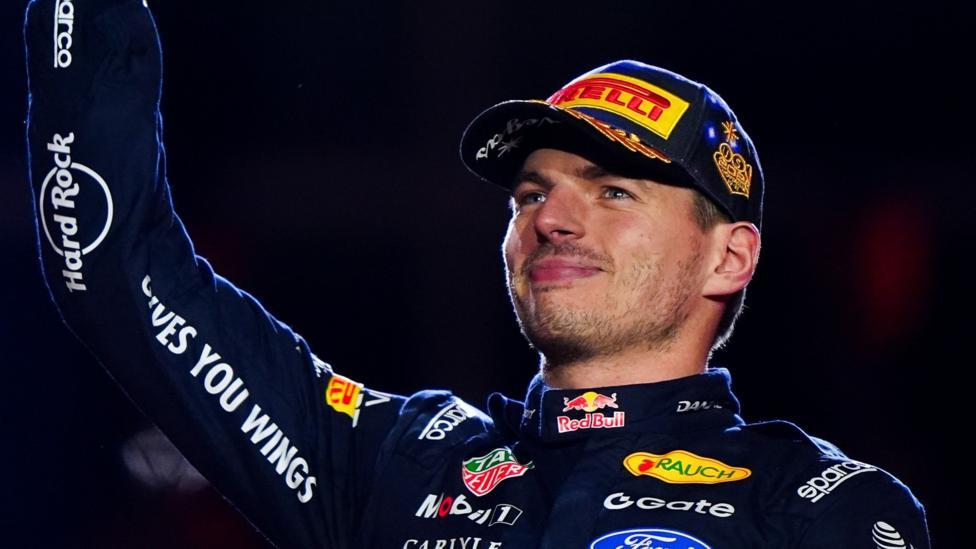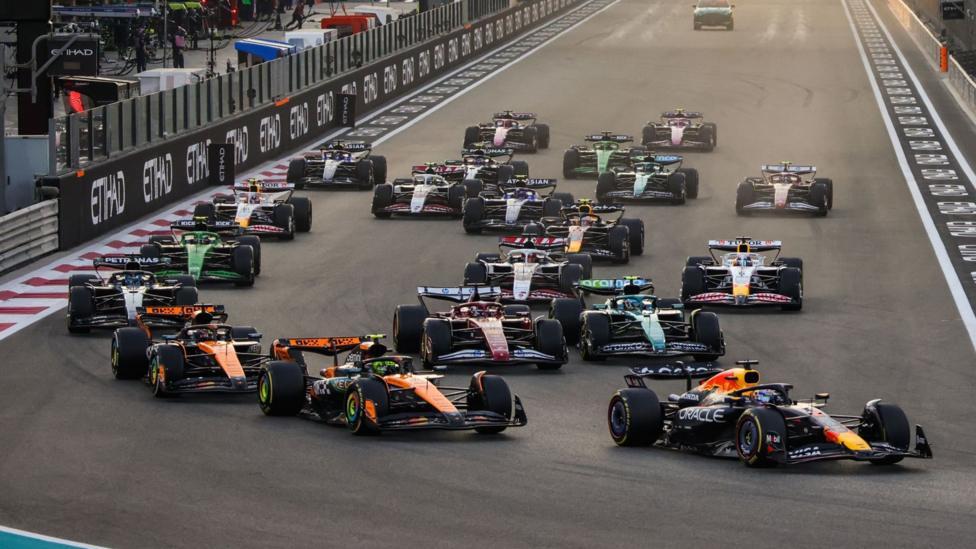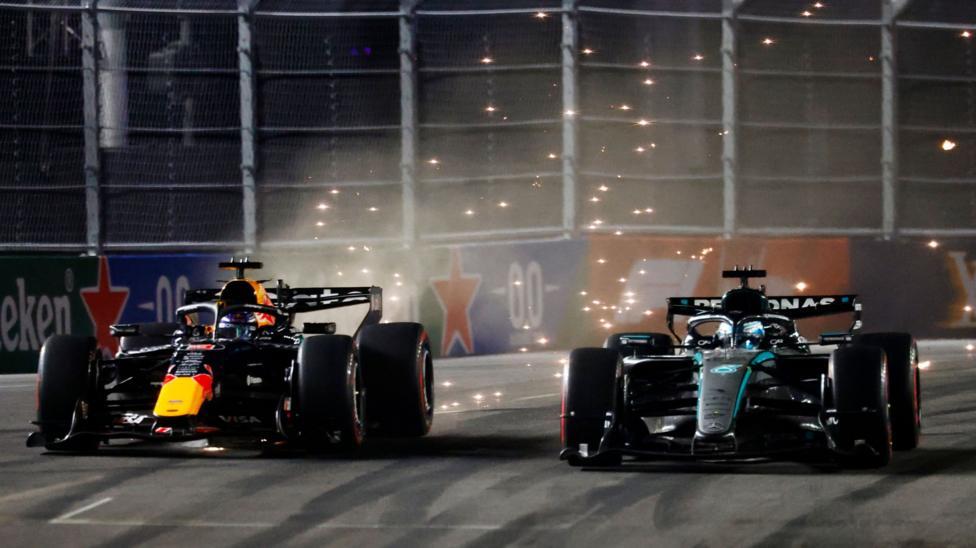
Max Verstappen secured victory at the Las Vegas Grand Prix in a race defined by relentless lead changes and intense competition at the front, winning in 1:27:39.624 ahead of Lando Norris by 0.639 seconds. The extraordinary contest featured 34 lead changes as the leading group of ten cars remained tightly bunched throughout, with the championship leader demonstrating superior racecraft and energy management strategy to outlast his rivals. According to BBC Sport, the race descended into chaos in its final stages when Mercedes' challenge collapsed, Ferrari drivers incurred penalties for collisions, and McLaren's drivers surged forward to claim podium positions.
The contest bore little resemblance to traditional Formula 1 racing, instead echoing the slipstreaming battles of American oval racing and the famous Monza duels of the 1960s and early 1970s. The unique circumstances arose from the Las Vegas circuit's characteristics combined with the energy constraints of the current hybrid engine formula, creating a spectacle that captivated audiences in the entertainment capital of the world.
How did Verstappen maintain control amid constant position changes?
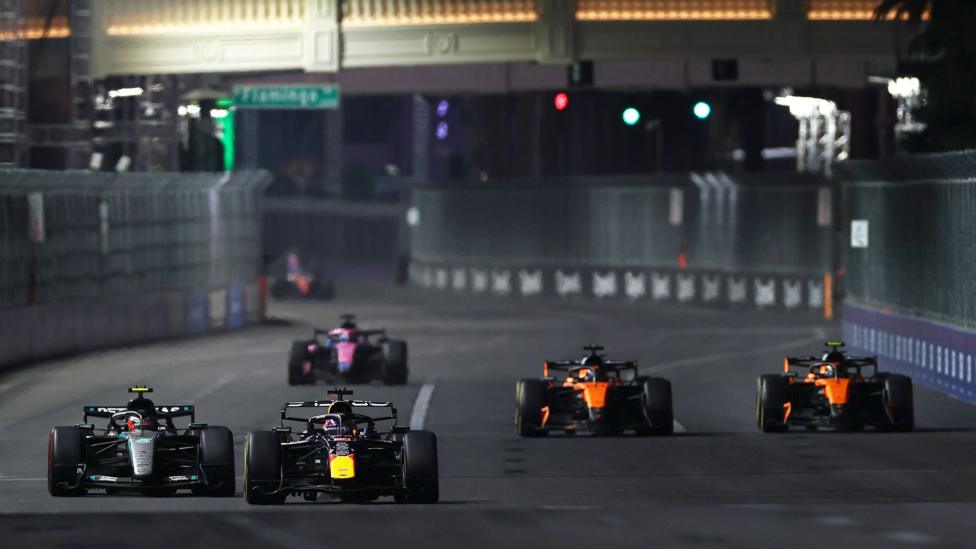
Verstappen's dominance lay not in building a commanding lead but in his ability to reclaim the position whenever rivals passed him. Starting from pole, the Red Bull driver would repeatedly lose the lead to Mercedes' George Russell on the Strip, only to regain it at the final corner by diving around the outside. When Russell passed later in the lap or led across the line, Verstappen executed a trademark move around the outside of Turn Three to return to the front.
Lap after lap, this pattern continued unbroken, punctuated only by a mid-race safety car. As the race progressed, Kimi Antonelli emerged as Verstappen's primary challenger after starting sixth and passing Russell with 12 laps remaining. The Italian driver then engaged in the same position-swapping battle with Verstappen, but the Dutchman consistently had the measure of his Mercedes rival.
At one point, Verstappen questioned his team about their energy deployment strategy for the final lap, believing Mercedes had discovered a superior approach. His engineers responded that he had already identified the optimal strategy.
"How many overtakes did I do?"Verstappen asked his engineer Tom Hart on the slowing down lap, reflecting on a race unprecedented in modern Formula 1. Hart replied:
"Yeah, and not many of them on the straight,"summarizing how Verstappen had secured victory against the Mercedes challenge through superior cornering and positioning rather than straight-line speed.
What mistakes cost Mercedes the race?
Russell's error proved decisive in the final stages. With two laps remaining, the Mercedes driver attempted to pass Verstappen at Turn Five but locked his brakes over the bumps leading into the corner—the same bumps that had earlier damaged Red Bull's Isack Hadjar's front wing and removed him from the lead battle. Russell ran straight into the barrier, managed to reverse out, but could only salvage ninth place.
The incident carried additional significance given Russell's comments after qualifying, when he declared that
"somebody has got to stand up to that guy"in reference to Verstappen's driving. Verstappen had the final word both on track and over the radio, responding to Russell's crash with:
"Hah, hah. Well done. My God."
Antonelli's hopes of challenging Verstappen unravelled on the penultimate lap when both McLarens swept around him at the fast final corner heading into the last lap. Antonelli had lifted off the throttle to remain behind Verstappen and attack him later, but this action triggered an inadvertent battery deployment setting defined by the regulations. According to Mercedes, this deprived Antonelli of battery power for the final lap and prevented him from deploying what team boss Toto Wolff described as a
"secret"deployment strategy that would have kept him ahead through the final corners after passing Verstappen down the Strip. The lost opportunity gave Verstappen the breathing space he needed, and Antonelli could not recover to challenge the leaders.
How did McLaren capitalize on the chaos?
Oscar Piastri delivered an outstanding recovery drive to finish third, 1.529 seconds behind Norris, after starting 17th due to an engine penalty. The Australian driver climbed through the field during the chaotic lead battle, demonstrating the pace advantage that allowed both McLarens to overtake Antonelli in the closing stages. According to The New York Times, Piastri's recovery was noted by stewards who recorded a yellow-flag infringement involving him at Turn 7, though this did not affect his final classification.
Norris, who had dropped out of the top ten during the early stages of the lead battle, summed up the race's character when he said:
"I think that must have been the most chaotic race ever in the history of Formula 1. I didn't know what was happening half the time."
What penalties affected the final results?
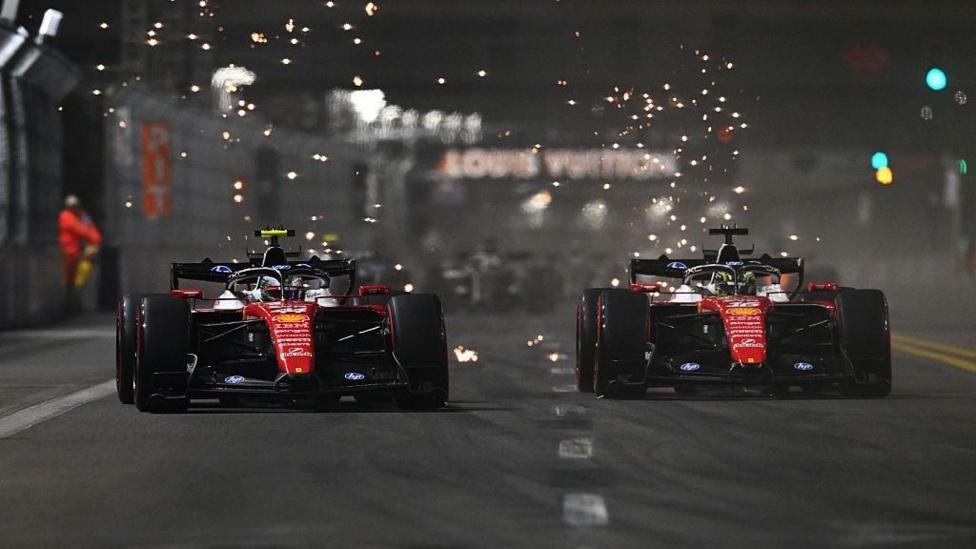
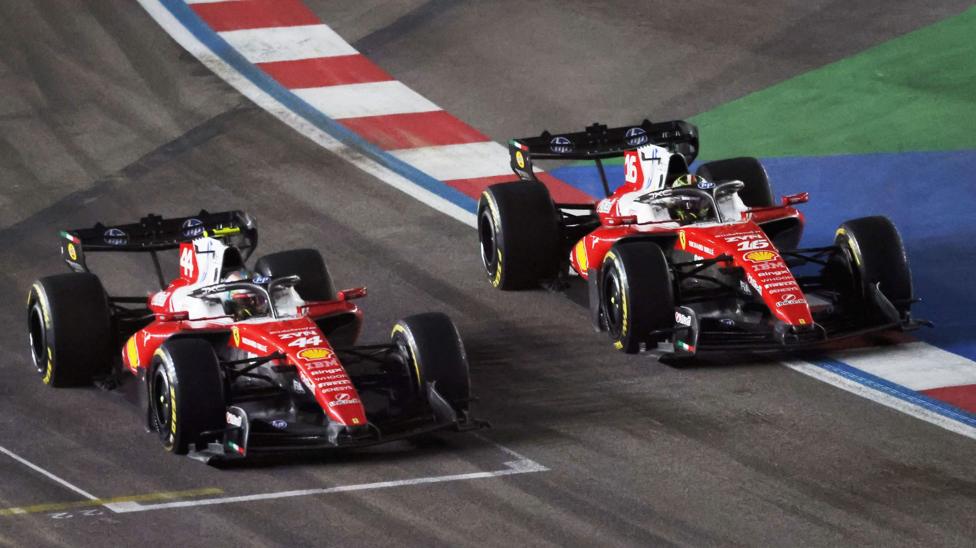
Ferrari's championship hopes suffered further damage when both drivers incurred 10-second penalties for driving infringements. Charles Leclerc received a penalty for colliding with Lewis Hamilton, while Hamilton himself had been penalised earlier for passing Lando Norris off the track in a multi-car battle for position that also involved Leclerc. These infractions dropped Leclerc to tenth place and compounded what has been a difficult season for the Maranello team.
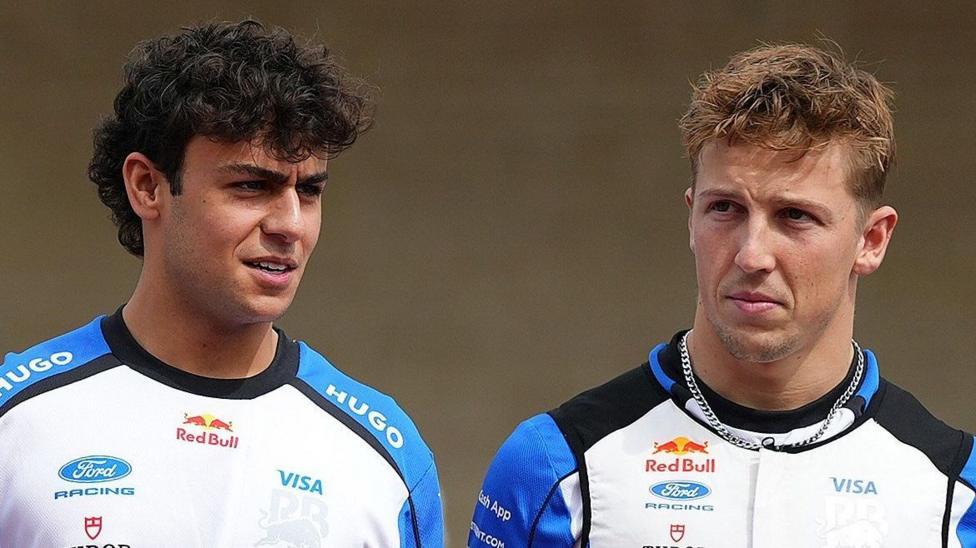
The stewards also summoned Sergio Pérez and Rafael Câmara over their collision, and Isack Hadjar and George Russell over an incident, though the outcomes of those inquiries were not immediately reported. According to Grand Prix, Alexander Albon was listed as a non-starter, while Fernando Alonso, Arvid Lindblad and Pérez retired from the race.
What happens next?
Formula 1 moves to the Middle East for Round 22 of the championship, with the Qatar Grand Prix scheduled for November 27–29 at the Lusail International Circuit. The race will take place on Sunday, November 29, at 19:00 local time. The season concludes with the Abu Dhabi Grand Prix on December 4–6, completing the 23-round calendar.
Key Facts
- Verstappen won by 0.639 seconds from Norris, with Piastri third, 1.529 seconds behind the winner
- The race featured 34 lead changes, the most in modern Formula 1, with Verstappen and Russell exchanging positions repeatedly
- Russell crashed at Turn Five with two laps remaining while attempting to pass Verstappen, finishing ninth
- Antonelli lost battery power on the final lap after an inadvertent deployment, allowing the McLarens to overtake him
- Leclerc and Hamilton both received 10-second penalties for collisions, with Leclerc dropping to tenth place