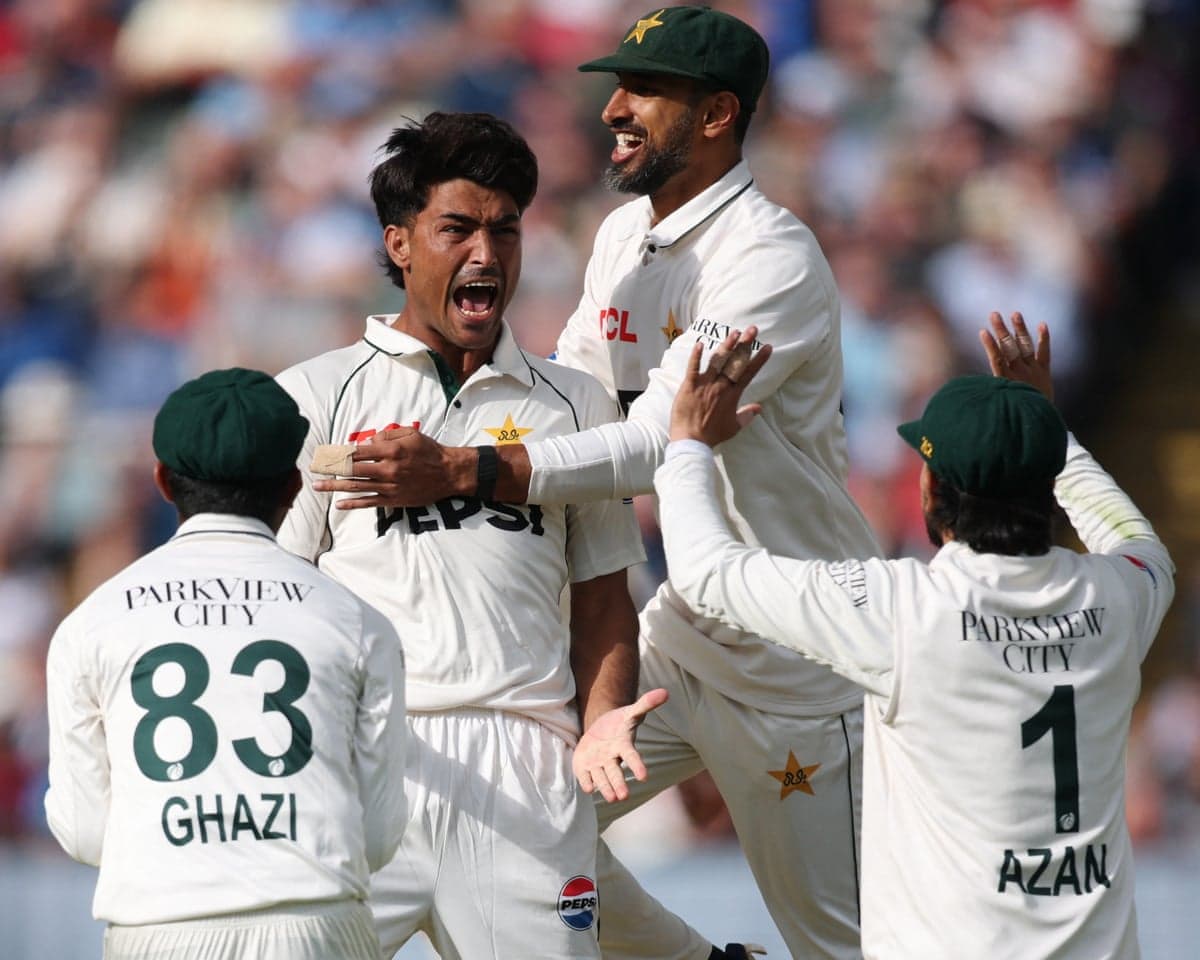
When Babar Azam walked to the crease at Edgbaston on the opening morning of the third Test, the match had barely begun yet the trajectory was already clear. Pakistan had lost three wickets in the first 45 minutes. Dark clouds gathered overhead, rain threatened, and England's attack was formidable: Ollie Robinson operating with five slips in place, Jofra Archer warming into his spell at the other end. It was an unforgiving moment to take guard.
Once, not long ago, Babar stood among the world's finest batters. During 2022 alone, he compiled 196 runs against Australia in Karachi, 119 against Sri Lanka in Galle, and 161 against New Zealand back in Karachi. That year he finished with a Test average of 49, third globally, and claimed the ICC's Men's Cricketer of the Year award. Since then, he has not scored a Test century. Across his last 20 Tests, his highest score stands at 88 and his average has collapsed to 29.
The hope, had you allowed yourself to imagine it, was that he might steer his team through this storm as he had so often done in his prime. Reality proved harsher. Against Robinson's opening delivery, Babar hesitated and withdrew his bat at the last instant. The next ball found the edge of his bat. He clipped the third through square leg for two runs. In the second over, he slashed at a short ball from Archer and missed. Against Gus Atkinson in the third over, he was beaten twice before edging away for four. By the fourth over, Josh Tongue had clean bowled him for seven off 18 balls.
The pattern was grimly familiar. Pakistan have posted totals of 171, 135, 110, 194, and now 133 across this series. Should they be dismissed for under 200 again in their second innings, they will become the first team since the 19th century to fail to reach 200 in every innings of a three-Test series on English soil. The team is fractured. Babar, nominally one of the selectors, revealed he had not even been informed of the management's decision to make seven changes to the squad ahead of this match.
It was news to me,he said.
I found out after.
The seven replacements—Mohammad Rizwan, Imam-ul-Haq, Salman Ali Agha, Ali Usman, Aamir Jamal, Muhammad Awais Zafar and Khurram Shahzad—represented a desperate attempt to inject fresh energy into a struggling outfit. Yet among them was a figure almost no one outside Pakistani domestic cricket circles had heard of. When he came on as first change from the City End later in the day, the question hung in the air: who exactly was this bowler?
Razaullah is 21 years old and from Mardan. His entry into high-level cricket came only last November when he made his debut for Peshawar in the Quaid-e-Azam Trophy, Pakistan's premier first-class competition. Since that debut, he had played seven first-class matches, nine one-day games, and seven Twenty20 encounters. Now, after being hastily flown to England for this single Test, he was about to announce himself on the international stage.
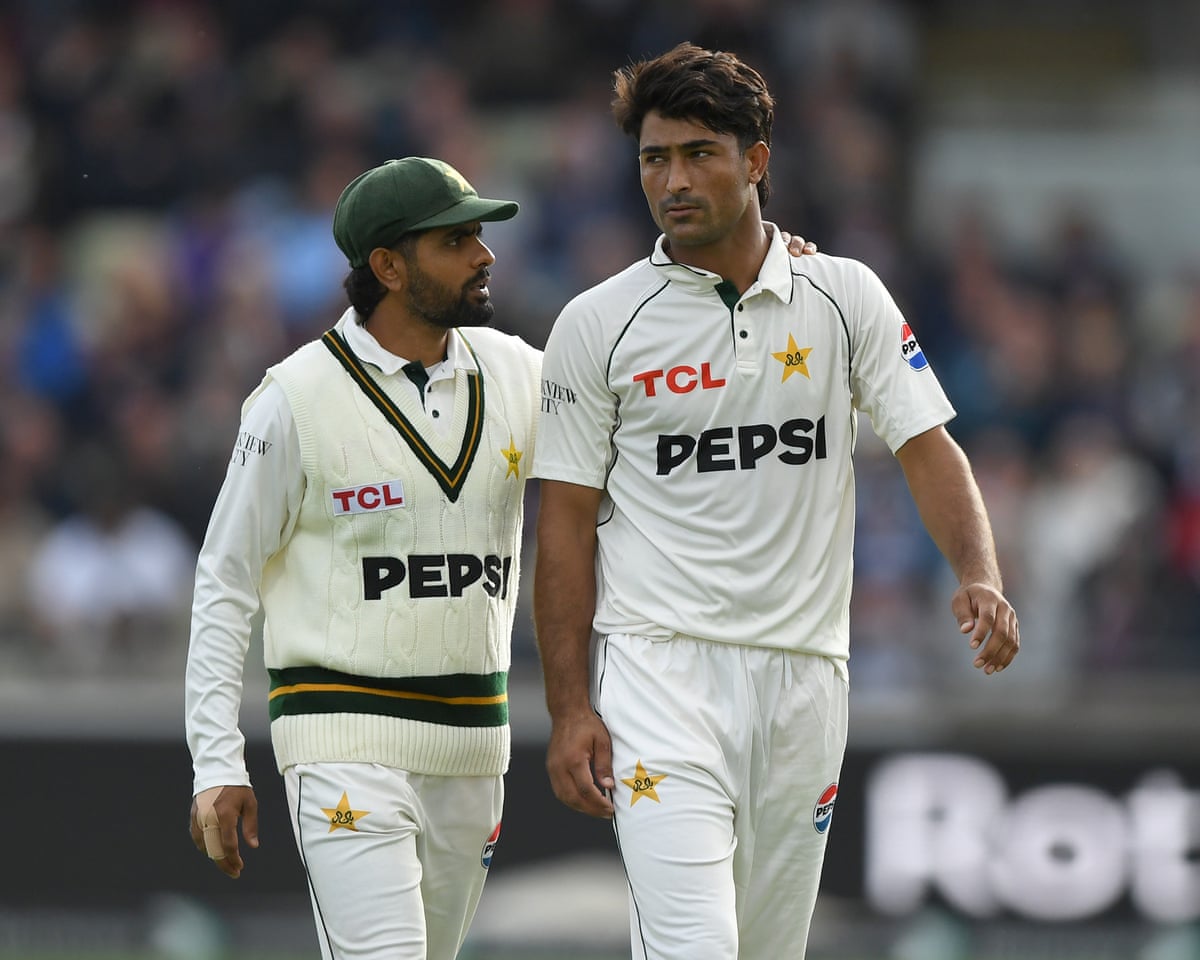
What emerged immediately was a bowler of striking natural gifts. His opening deliveries hurried Joe Root. The fourth ball whistled through and beat the inside of Root's bat as the batter attempted a late defensive block. It struck him flush on the front pad in front of middle stump. Root, caught off guard, requested a review that only confirmed what everyone watching already knew. Razaullah had claimed his first international wicket.

With that dismissal, he offered every cricket enthusiast in the ground a glimpse of what they cherish about Pakistani cricket: raw, explosive pace bowling talent emerging from nowhere. Later, he claimed another victim, Emilio Gay, with a 90mph delivery that flew off the inside edge of Gay's bat as he attempted to drive and crashed into the stumps.
According to ESPN's analysis of Pakistan's replacements, Razaullah has taken 30 wickets in eight first-class matches at an average of 20.86. Remarkably, he has also scored both a century and a half-century, both achieved in the same match against Islamabad Region, demonstrating that his talents extend beyond bowling.
The broader context of Pakistan's crisis
Pakistan's struggles at Edgbaston form part of a deeper institutional malaise. The tour has exposed systemic dysfunction at the PCB, with mid-tour purges, constant coaching changes, and erratic decision-making undermining the team's performance. Former captain Azhar Ali has warned that the crisis extends far beyond this disastrous England tour, requiring structural reform and long-term investment rather than quick fixes.
The contrast between Babar's decline and Razaullah's emergence raises uncomfortable questions. Pakistan has never lacked for natural fast-bowling talent. Yet observers with long memories might recall how Naseem Shah and Shaheen Shah Afridi bowled during their first England tour in 2020, and wonder what has become of the fast-bowling production line over the past decade. The same question applies to Babar's batting trajectory during that same period. The nation has produced extraordinary talent repeatedly, yet something in the system has consistently failed to nurture and sustain it.
England, meanwhile, are targeting a 3-0 series sweep. They have already won by an innings and 103 runs at Headingley and by 194 runs at Lord's. England left Brydon Carse out of their squad for the third Test at Edgbaston, with Sonny Baker retained in the 15-man group.
What lies ahead for Razaullah
The question now is what the future holds for Razaullah. Pakistan has never lacked for natural talent, and even when everything else crumbles, another gifted fast bowler emerges. But the track record offers little comfort. How many promising young bowlers have passed through the Pakistani system only to see their potential squandered by poor management, inconsistent selection, or the grinding wear of international cricket without proper support?
The third and final Test runs from 9 to 13 September 2026 at Edgbaston, with play scheduled to start at 11:00 BST each day. It is the final men's Test of the English season and the first England-Pakistan Test at Edgbaston in a decade. For Razaullah, it represents both an extraordinary opportunity and a test of whether the Pakistani system can finally break its cycle of discovering talent and then failing to develop it.
Key Facts
- Razaullah, 21, took two wickets on his Test debut at Edgbaston, dismissing Joe Root and Emilio Gay
- Pakistan have scored under 200 in four of five innings this series and face becoming the first team since the 19th century to fail to reach 200 in every innings of a three-Test series in England
- Babar Azam has not scored a Test century since 2022 and averages 29 across his last 20 Tests
- Pakistan made seven changes to their squad ahead of Edgbaston, with Babar revealing he was not informed of the decision
- England lead the series 2-0 and are targeting a 3-0 sweep in the final Test