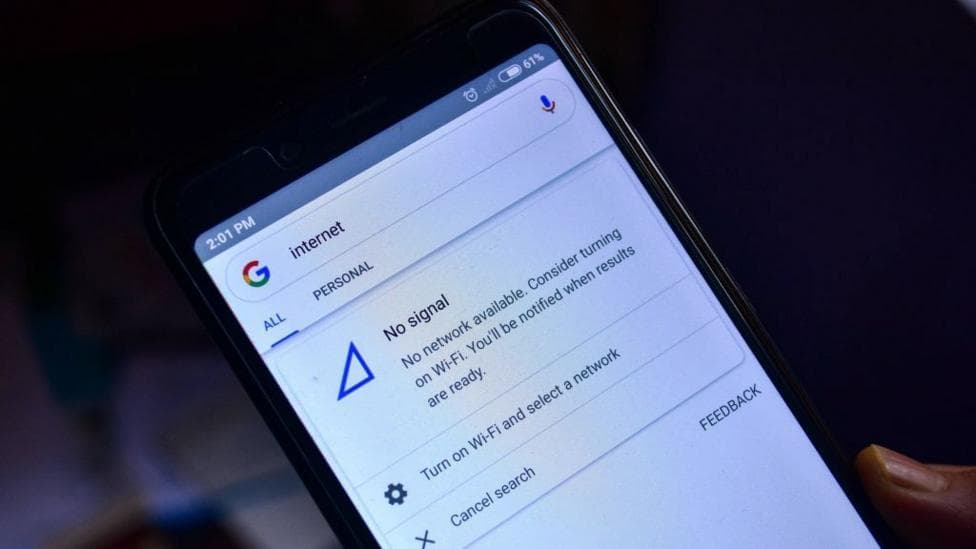
Mobile phone connectivity in London continues to underperform compared to other major international cities, according to industry representatives and independent testing. Data analysed by Which? revealed that more than one-third of UK customers reported experiencing signal problems, while London's standing in global internet speed rankings has deteriorated, falling to 91st place—a drop of five positions in a single month.
The capital's connectivity challenges stem from multiple interconnected factors: the loss of antenna sites due to new building developments, insufficient network capacity during peak hours, and fragmented planning regulations across London's 33 councils. These issues combine to create dead zones and congestion in some of the city's busiest areas, affecting both residents' daily lives and their ability to work reliably.
How do new developments affect mobile coverage?
When a building development receives planning approval, mobile network operators receive a notice-to-quit (NTQ) requiring them to remove their antennas from the site. Operators are given 18 months to locate a replacement antenna site, but the process of securing new locations typically takes an average of two years. This gap leaves coverage gaps in affected areas, and temporary sites must be established to maintain service continuity.
Virgin Media O2 has raised urgent concerns about this issue, stating it has been forced to decommission dozens of mobile sites across London because replacement locations could not be found in time. According to industry analysis, the capital currently has fewer than seven 5G sites per 10,000 people—significantly below what network operators argue is necessary for adequate coverage.
If we can't find a replacement site before we remove that equipment then we can have a coverage hole in that location.This observation came from Robert Joyce, director of mobile access engineering at Virgin Media O2, highlighting how thousands of residents can be affected when a single site is lost without a ready alternative.
Mobile UK, the trade body representing EE, O2, Three and Vodafone, acknowledged the structural challenge:
Delivering world-class coverage is an uphill battle in a high-density city where development constantly reshapes the skyline.
Is the problem coverage or capacity?
Network capacity—the total volume of data a network can process simultaneously—differs fundamentally from signal coverage. Users may see four or five signal bars on their phones yet still experience slow uploads, undelivered messages and failed calls when the network becomes congested.
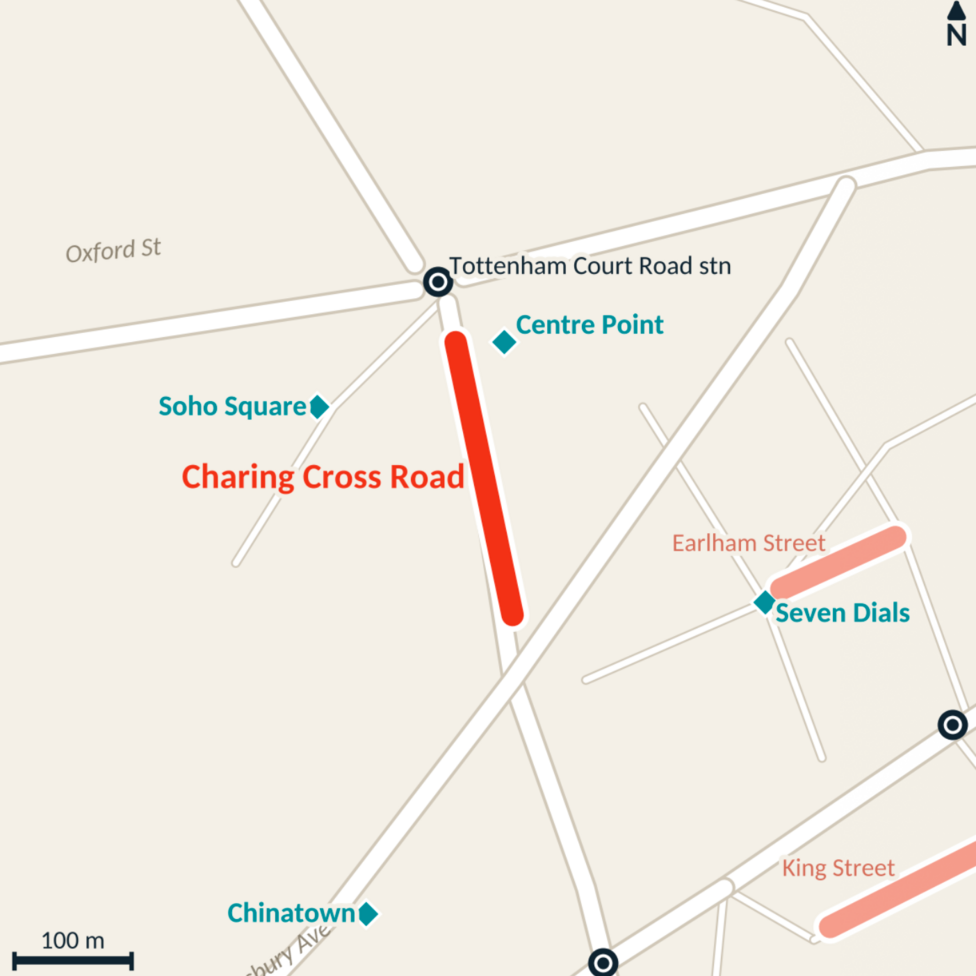
Testing commissioned by the BBC England Data Unit found that in areas like Liverpool Street and Covent Garden, service proved extremely slow and unreliable during commuter rush hours but functioned normally during quieter morning periods. This pattern points to a capacity problem rather than a coverage failure.
Philip Maguire, a network surveyor and founder of Inakalum, explained the distinction:
When the areas are busy very often the networks don't have enough capacity to deal with all the data demands from users, and that's a capacity issue not a signal problem.He noted that most people would have virtually no chance of finding a reliable connection in the evening after leaving work, despite the signal working adequately in the early morning.
When Maguire surveyed three streets within walking distance of Covent Garden on a weekday evening, he found that more than one in four data tests failed completely for all four major networks. Even when connections succeeded, speeds remained unreliable or slow—typically under 15 Mbps—making basic tasks such as loading maps or making video calls difficult for many users in the heart of the West End.
However, identical tests on the same streets during less busy times showed that all four networks performed well, confirming that congestion rather than coverage was the primary culprit.

How does poor signal affect London workers?
The connectivity problems have direct financial and professional consequences for Londoners across various sectors. Adikalie Sumah, who runs CureCleans, a shoe cleaning business based near London Bridge in Southwark, relocated his office to improve customer and delivery driver access. However, he discovered that mobile signal inside the new premises is so weak that he struggles to receive calls.
Although Sumah uses EE, his team members rely on O2 and Three.
When we're trying to contact customers to pick up and drop off their shoe, it's a bit of a struggle trying to get through to them.His business depends on phone calls for scheduling shifts, making orders and organising deliveries, but poor service makes these essential functions difficult.
Currently, Sumah manages the problem by taking calls outside the office and leaving all doors and windows open to improve signal reception. However, this approach has generated complaints from neighbours, and he recognises that as winter approaches, this workaround will no longer be viable. When he contacted his landlord about improving the situation, he was told nothing could be done.

Sumah primarily subcontracts young people across Southwark to gain work experience, and he worries that poor mobile service could limit his ability to continue offering these opportunities.
Joshua Folorunsho, 22, from Peckham, works full-time as a content creator and employee at CureCleans, operating under the social media handle JTA. For him, reliable mobile connectivity is not a convenience but a necessity:
Obviously this is my livelihood so without it I'm not able to eat and put clothes on my back, so it's very important to me.
Folorunsho has been a Three customer since age 15 but frequently encounters problems:
Sometimes when I call people it doesn't even ring, but I have service.He struggles to find reliable signal when travelling across central London unless he is fortunate enough to be in a well-served area. When he contacted a Three store in his local area, staff told him there was nothing they could do and acknowledged that the store itself also experienced poor mobile service.

Victoria Olaofe, 24, from Bermondsey, works as a sales representative near St Paul's Cathedral and faces direct financial loss due to poor connectivity.
There have been occasions where my manager has tried to contact me, but I simply haven't received the calls or messages until much later. It's even affected things like clocking in on my phone.
Olaofe is paid hourly and must clock into work using her phone, but her mobile data becomes unusable once she enters central London. This means she cannot clock in until hours after arriving at work, resulting in lost pay.
I've also tried troubleshooting the issue. My mum even contacted Three after experiencing poor coverage in her area, and although my experience isn't identical to hers, it made me realise there may be a wider issue.
After posting about her experience on social media, Olaofe discovered she was far from alone:
I realised I'm clearly not the only person experiencing this. It was reassuring to see that others are reporting similar issues, although it's concerning that so many people seem to be affected.
What are the underlying causes?
Experts identify capacity shortfalls during peak times, housing development pressures and inconsistent planning regulations as primary contributors to London's connectivity problems. Planning rules vary significantly across the capital's 33 councils, creating additional complexity for network providers attempting to deploy infrastructure.
A spokesperson for London Councils, representing all local authorities in the capital, stated:
The London Growth Plan and London Infrastructure Framework we developed jointly with the mayor highlight the importance of digital infrastructure and mobile connectivity. There is a range of factors behind the current connectivity problems, but boroughs take this issue seriously and are working with network providers and other partners to help resolve them.
Mobile UK has stated that operators have invested billions of pounds upgrading networks across London and remain committed to working with government and local councils to improve service. The organisation has called for urgent policy reform on planning regulations and a
unified framework that treats digital infrastructure as a priority, noting that the Draft London Plan acknowledges the challenge housing development poses for mobile operators.
What improvements are underway?
One significant development is the expansion of mobile coverage on the London Underground. According to industry reports, around 60% of below-ground stations now have live 4G and 5G service, with full network completion still expected by the end of 2026. A September update indicated that more Tube sections had been activated for 4G and 5G coverage, including portions of the Circle, Hammersmith & City, Metropolitan, Northern, Victoria, Jubilee, Bakerloo and Piccadilly lines.
Network operators are also expanding small cell deployment. Virgin Media O2 has stated it now operates more than 2,500 live small cell sites across the UK and was targeting 1,000 Giga Sites in 2026, with 500 reached by July. These smaller, distributed antennas help fill coverage gaps and boost capacity in congested areas.
Performance benchmarking has shown variation across operators. Vodafone UK was named London's best mobile network for 2026, scoring 957.73 out of 1,000 in a comprehensive benchmarking study. Earlier data from January 2026 showed 5G availability varied significantly by operator, with EE at 76.0%, O2 at 77.8% and Vodafone at 63.2%.
What happens next?
Transport for London and Boldyn Networks are continuing their rollout of 4G and 5G coverage across the London Underground, with completion targeted for the end of 2026. The Tube project is expected to continue through the remainder of the year as additional stations and tunnel sections come online.
At the policy level, the outcome of discussions between mobile operators, London Councils, the Mayor's office and central government on planning reform will be critical. Mobile UK has emphasised that a unified digital infrastructure framework treating connectivity as a priority is essential for London to compete with other major international cities.
The Department for Culture, Media and Sport has been approached for comment on the government's position regarding planning reform and mobile infrastructure investment.