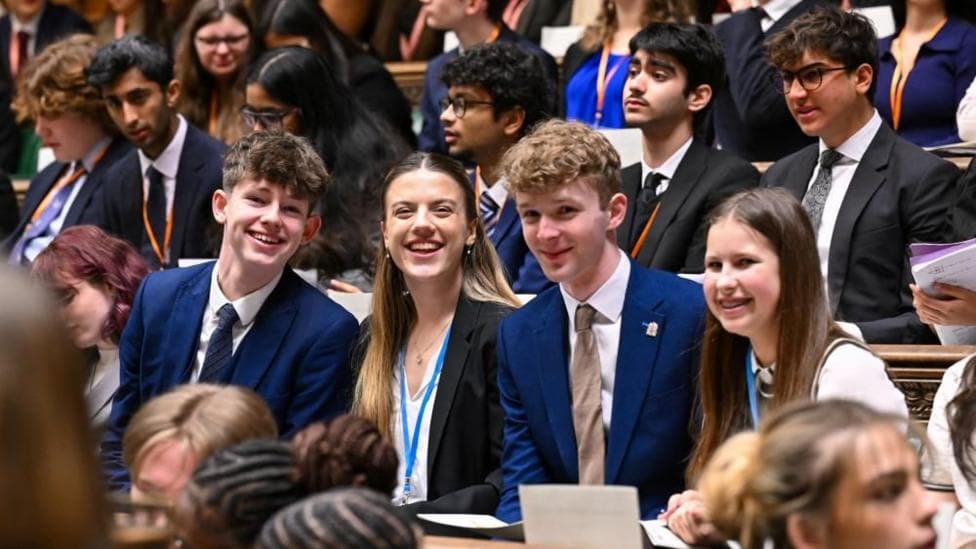
The UK Youth Parliament risks being dismantled within months after the government declined to commit further funding to the scheme, according to information obtained by a national broadcaster.
Established in 2000 to cultivate political engagement among young people, the parliament currently has more than 300 elected members aged 11 to 18. Once annually, these young representatives are permitted to conduct debates in the House of Commons chamber on a day when MPs are not present.
The Department of Culture, Media and Sport (DCMS), which provides annual taxpayer funding for the programme, has not pledged to continue grants beyond March 2027. A DCMS spokesperson acknowledged the youth parliament's "important legacy... giving elected young people a national platform to represent their peers, engage with decision-makers and develop confidence, leadership and skills for life and work", yet the department has not committed to sustaining it in its present form.
The scheme received £453,000 in public funding in the most recent financial year, with approximately £2.4 million in taxpayer money allocated to it and related youth initiatives between 2017 and 2024. According to parliamentary records, DCMS has confirmed funding for the 2026-27 financial year and indicated it will collaborate with the National Youth Agency and young people to deliver the programme, though no commitment extends beyond that point.
The National Youth Agency now operates the parliament after the British Youth Council, which previously ran it, ceased operations in 2024 amid financial difficulties. According to third sector reporting, the existing grant has been redirected to the National Youth Agency until the contract concludes next March.
Insiders at UK Youth Parliament have indicated to the BBC that without government funding, closure is probable. The funding covers the annual conference held in Brighton, travel expenses, communications, and support staff.
What prompted the funding uncertainty?
A government review published in October 2024 found that although the parliament was meeting its stated objectives, only a quarter of young people were aware of its existence. The review also noted that some schools felt "excluded from the process."
The government has stated it is engaging with young people and youth organisations to develop a replacement scheme that would expand their participation in democracy and decision-making. Further details are expected to be announced in autumn 2026.
Any successor programme will emphasise "particular focus on under-represented groups", according to a government source.

Who supports keeping the parliament?
Bobby Forbes, 18, who recently stepped down as chair of the UK Youth Parliament's Youth Select Committee—the body that works alongside Westminster officials—contends that the scheme provides teenagers with "a direct way to scrutinise government and hold decision-makers to account".
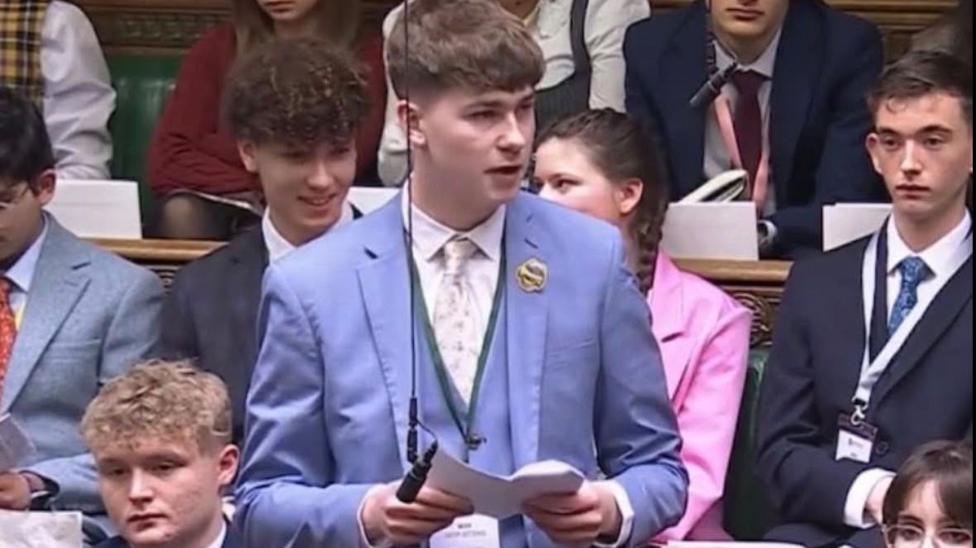
Forbes has warned that terminating the programme "would be a huge mistake and detrimental to youth voice across the UK" and argues it should be permitted to develop within its existing framework.
Peter Swallow, the Labour MP for Bracknell in Berkshire, participated in UK Youth Parliament at age 14 and has defended the organisation's track record. He told the BBC that the scheme has successfully campaigned on matters including lowering the voting age to 16. A Bill to reduce the voting age from 18 to 16 for all UK elections is presently progressing through Parliament.
Swallow characterised defunding as "short-sighted" given these developments.
"As we face a world where trust in politics is low and young people in particular are doubting the value of democratic institutions, I cannot imagine a more important time for young people to be invited into the heart of our democracy through programmes like UK Youth Parliament."
Several politicians launched their careers through the UK Youth Parliament, including Labour minister Keir Mather, who became the youngest MP in 2023—referred to as the "baby of the House"—when elected at age 25.
Who opposes the current funding model?
Jack Rankin, the Conservative MP for Windsor, has argued that the scheme "should not receive taxpayers' money and should not sit in the Chamber of the House of Commons". He has advocated for the programme to be financed through voluntary contributions rather than public funds.
How is the parliament structured?
Members are elected every one to two years by voters aged 11 to 18 who reside, study, or work in local authorities. Comparable schemes operate for the devolved Scottish, Welsh, and Northern Irish parliaments.
According to youth sector analysis, a 2024 tender process indicated a reformed youth engagement grant of up to £750,000 over two years, plus independent evaluation funding and £32,000 annually from the House of Commons for the annual sitting.
What happens next?
The government has pledged to make further announcements regarding a new youth democracy scheme during autumn 2026. The outcome of these consultations will determine whether the UK Youth Parliament continues in any form or is replaced by an alternative model for youth civic participation.