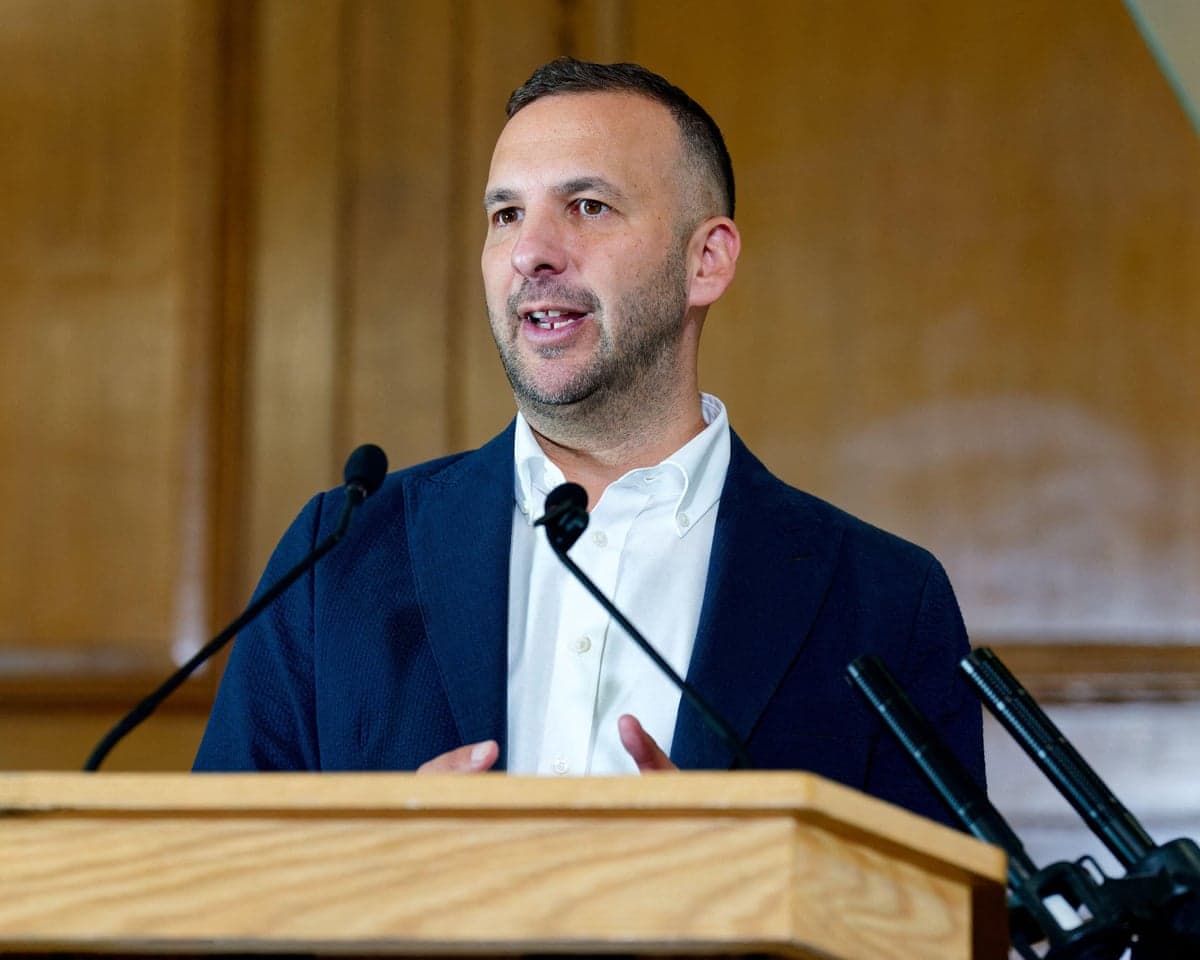
The Green Party is pressing its leader, Zack Polanski, to declare his position on a contentious motion that would establish party policy equating Zionism with racism, amid concerns that endorsement could damage relationships with Jewish supporters and members.
The motion topped a members' ballot for policy proposals to be debated at the party's autumn conference in Brighton in early October, making it virtually certain to reach the floor for discussion. Polanski, who leads the Greens in England and Wales, has declined to comment publicly on the proposal, despite its prominence in the conference agenda.
The Green Party determines policy through member votes at conferences. Should the motion pass, it would classify Zionism—the political movement advocating for a Jewish state—as a form of racism. The proposal also calls for establishment of a single Palestinian state and would expose party members who support Zionism to potential disciplinary action on racism grounds.
Why is Polanski staying silent?
Although Polanski is believed to harbour doubts about the motion, party insiders suggest he has avoided public statements to prevent antagonising the party's growing left-wing membership, many of whom joined under his leadership and hold strong positions regarding Gaza and Israel. However, in a February interview with Times Radio, Polanski indicated conditional support for the motion, stating he would back it if Zionism were defined specifically in relation to the current Israeli government's actions in Gaza.
One senior party figure characterised the tension:
Zack can try to be everything to everyone, and that doesn't always work in politics. But he is in a difficult position. Some of the supporters of the motion can be quite aggressive.
Party observers view the coming weeks and Polanski's response as a test of his leadership—specifically whether he will challenge some of the newer Green members, particularly those who previously belonged to Jeremy Corbyn's Labour Party.
What happened at the spring conference?
A motion with identical wording was submitted to the Green Party's spring conference in March but never reached a vote due to procedural obstacles. Had it been debated then, the party's MPs and Polanski were expected to oppose it. The motion was subsequently prepared again for the autumn conference after a prioritisation ballot in late August confirmed its place on the conference agenda.

What does the motion propose?
The motion calls for
a single democratic Palestinian state in all of historic Palestine with Jerusalem as its capital, equal rights for all, and the right of return for Palestinians and their descendants, and asserts that the Palestinian people possess the full right to
resistance and liberation from Israeli occupation, domination and subjugationwithin international law.
If approved, Zionism
will be treated as any other form of racismby the party, according to the motion's text. The motion has also been reported as seeking an explicitly anti-Zionist party stance and describing Zionism as a racist, settler-colonial ideology.
What amendments have been proposed?
Two amendments designed to soften the motion's language have been submitted. Party sources indicate that Polanski appears to support these modified versions, which could provide a middle path between outright rejection and full endorsement of the original text.
What are the concerns about the motion?
Party sources have raised multiple worries about the proposal's passage. One Green activist stated:
The risk is that if it passes as it is we are alienating ourselves from the Jewish community in the UK, a lot of whom are not big fans of the current Israeli government.
Polanski is understood to have reservations about any motion that could make Jewish members feel unwelcome in the party or be perceived as obstructing peace efforts. Jewish Greens indicated in September that they still had no collective position and were conducting another consultation ahead of the October conference.
Internal divisions have also surfaced, with some Green activists warning in private messaging that Polanski was
struggling to overcome Zionist indoctrination. Party insiders expressed concern about the shift in tone:
In the past, even highly contested policy debates in the Greens have always been conducted in a mature and sensible way, even [a] boring way. Now it's changed.
How might conference attendance affect the outcome?
A Green official noted that many activists aligned with the party leadership may be absent from the autumn conference, which is scheduled a week before voting in a significant election, potentially creating more space for motion supporters to advance their proposal without strong opposition from the leadership's base.
What happens next?
The Green Party's autumn conference is expected to take place in October, when the motion is likely to be debated following completion of the prioritisation process. The outcome will test whether Polanski can navigate the competing pressures within his rapidly expanding party membership.