Senior union officials who contribute financially to Labour met Finance Minister John Healey on Thursday to advance their policy agenda before the government's next Budget, scheduled for next month.
Unite, Britain's second-largest union by membership, has demanded that the government reverse the freeze on income tax thresholds that has pushed lower-paid workers into the tax system. According to reporting from 16 September 2026, without the freeze the personal allowance of roughly £12,500 would have risen to over £16,000 by now. The basic rate of 20% applies to annual earnings between £12,571 and £50,270, while the higher rate of 40% applies to earnings between £50,271 and £125,140. By maintaining the freeze rather than adjusting thresholds for inflation, the government has drawn more lower-income earners into paying tax and pushed higher earners—including senior nurses, police officers and teachers—into the 40% band.
The unions have submitted multiple policy proposals to the chancellor beyond the tax threshold issue, including calls to increase taxation on technology companies. Union leaders view Healey's first Budget as a defining moment that will signal the direction Andy Burnham intends to take as prime minister.
Burnham, who recently returned to Westminster as MP for Makerfield, has said the frozen tax thresholds emerged repeatedly during his election campaign conversations with constituents. Healey, a former trade unionist, faces the challenge of balancing fiscal restraint with economic growth as he prepares what could shape his prime minister's premiership.
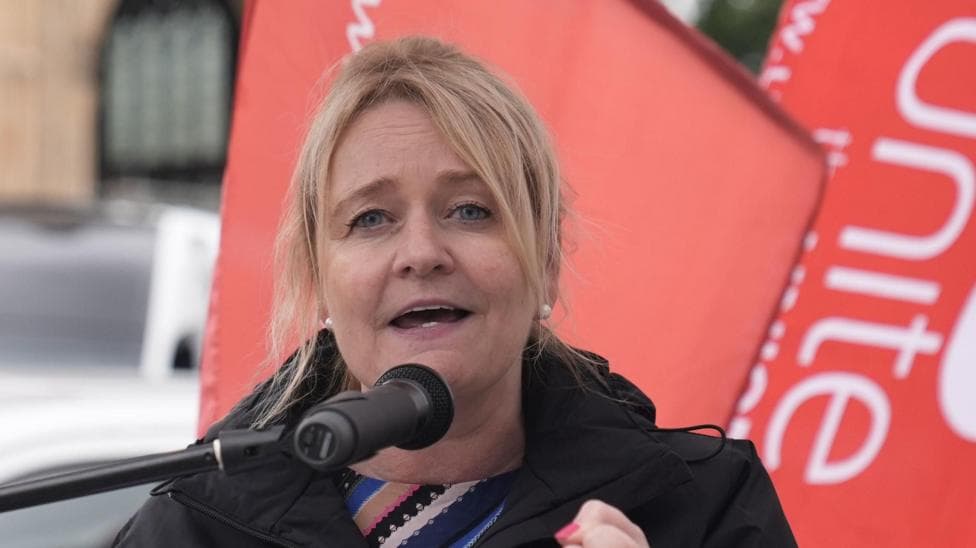
Unite's leader Sharon Graham emphasised the urgency of delivering tangible results for working-class voters.
We must see things happen immediately. I told him [Burnham] that you have to make working class people believe their best days are in front of them. That tax threshold of around £12,500 - if that hadn't been frozen for the past few years it would have moved up to over £16,000 now. People at the lower end are paying eye-watering amounts of tax.
Unison, the country's largest union, is pressing the chancellor to raise revenue from large technology companies to fund public sector investment and the green energy transition. The union is also calling for Treasury-commissioned research into whether the tax system should shift its balance from income towards wealth. General secretary Andrea Egan has tempered expectations for immediate dramatic policy shifts at the Budget, but anticipates Healey will outline a new strategic direction. Unison wants Labour to demonstrate it represents a genuine change of course rather than merely continuing the previous administration's approach under new leadership.

The GMB, Britain's third-largest union and another significant Labour donor, has long championed approving the Rosebank and Jackdaw oil and gas fields in the North Sea as a revenue-raising measure. Leader Gary Smith stated that a decision on these projects appears unlikely before the October by-election in Sir Keir Starmer's former north London seat, though the government maintains the timing lies outside its control as it involves a quasi-judicial process.
The government really needs to get on with this. We are going to need oil and gas for generations to come. Rosebank and Jackdaw are good for jobs, good for the economy, but also good for the environment as we won't have to import so much from abroad as that is carbon intensive.
Smith also wants the Budget to include confidence-building measures for the construction sector. He pointed to the stockpiling of half a million bricks across the country—enough to build two Kidderminsters—and the mothballing of factories as evidence that the house-building programme is stalled.
They have to cut through the red tape.
Following Thursday's meeting, the government is understood to be consulting with industry experts spanning business and trade unions who will be central to reindustrialising the UK. Healey signalled that difficult decisions will be made where necessary, while reiterating his commitment to provide businesses and workers with relief where feasible.
In the coming weeks, officials from the Trades Union Congress and representatives of unions that do not donate to Labour will also meet with Healey. TUC leader Paul Nowak identified his primary demand as reversing the previous government's reduction in the bank surcharge, which would recover approximately £9 billion to subsidise energy bills. Nowak is also seeking changes to the remit of the independent Office for Budget Responsibility so it evaluates the long-term value of investment rather than focusing solely on short-term fiscal accounting.
What Healey has already committed to
Healey has publicly pledged that Labour will honour its manifesto commitment not to raise taxes on working people, according to statements made on 7 September 2026. He has also indicated that he and Burnham are aligned on meeting fiscal rules and will present a "roadmap to fiscal devolution" at the next Budget.
What happens next
The Budget is due next month. Healey has indicated the government will set out a roadmap to fiscal devolution at that time, signalling that further announcements on how powers and resources will be distributed across the country are forthcoming.