An international court has dismissed Argentina's attempt to block oil exploration near the Falkland Islands, ruling that it lacks authority to intervene in the sovereignty dispute. According to BBC News, the International Tribunal for the Law of the Sea rejected Argentina's challenge by a vote of 18 to 3 on Saturday. The tribunal's president Maurice Kamga determined that the court had no basis to exercise jurisdiction over questions of territorial sovereignty.
Argentina's government had sought to prevent the venture, contending that an unresolved dispute over the islands' sovereignty meant the project should not proceed. The UK has consistently rejected Argentina's territorial claims. The tribunal's decision does not settle the underlying sovereignty question but removes a significant legal obstacle to the oil development.
The Sea Lion oilfield, situated approximately 130 miles (209 km) from the Falkland Islands, holds an estimated 1.7 billion barrels of oil. Navitas Petroleum, an Israeli company, operates the project with a 65% stake, while Britain's Rockhopper Exploration holds the remaining 35%. According to Rockhopper's interim-results report, development drilling is expected to commence in early 2027, with first oil targeted for the first quarter of 2028. The project reached its final investment decision in 2025 after an extended development process.
The tribunal's ruling came after public hearings on 10 and 11 November 2026. Argentina had requested provisional measures to halt new development drilling and production infrastructure in the North Malvinas Basin, as well as restrictions on the use of exploration information. The court found these requests fell outside its jurisdiction because they depended on resolving the sovereignty question.
What was Argentina's legal argument?
Argentina claimed that international law protects the marine environment of disputed maritime areas, making the oil project incompatible with its obligations under the UN Convention on the Law of the Sea. The government argued that because sovereignty over the Falklands remains contested, development activities should be suspended pending resolution of the territorial dispute.
What happens with the broader dispute?
Argentina's separate arbitration against the UK, initiated on 28 September 2026 under UNCLOS, continues to proceed. According to Buenos Aires Times, Argentina's provisional-measures request was made while an arbitration tribunal under UNCLOS was being constituted, with ITLOS asked to act in the interim. The tribunal's rejection of provisional measures does not prevent Argentina from pursuing its broader arbitration claim.
How do islanders view the project?
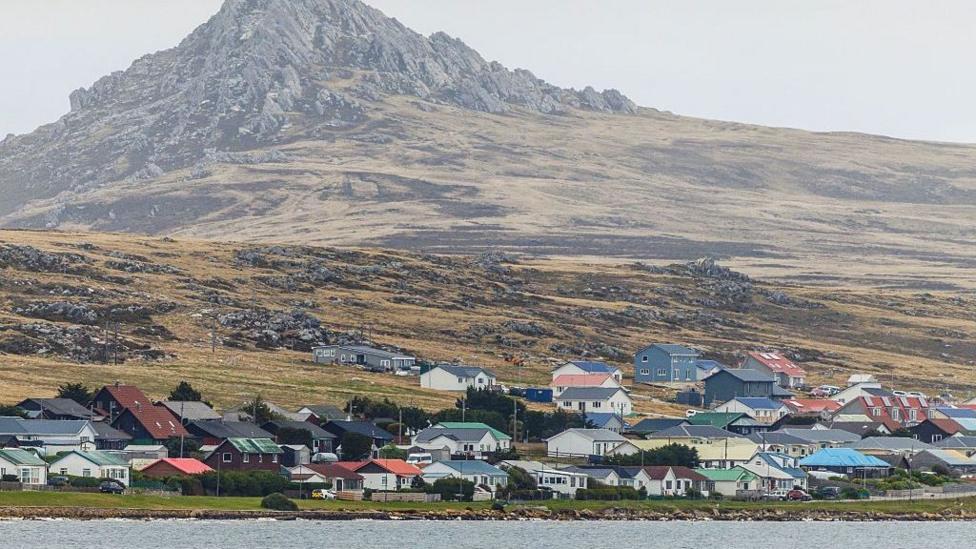
The roughly 3,500 inhabitants of the Falkland Islands stand to benefit substantially from the oil revenues generated by the Sea Lion development. In a 2013 referendum, residents voted overwhelmingly to remain a British overseas territory, with 99.8% voting in favour and just three voting against, demonstrating strong local support for the islands' current political status.
What is the historical context?
Argentine forces invaded the Falklands in 1982 to assert a territorial claim, triggering a 74-day military conflict as a British task force expelled them. The war resulted in 255 British military deaths, three islander deaths and 649 Argentine military deaths. The dispute has remained a sensitive issue in Argentine politics for decades, with successive governments maintaining claims to the territory they call the Malvinas.
What comes next for the oil project?
With the tribunal's decision clearing a major legal hurdle, the Sea Lion project can proceed toward commercial production. Development drilling is scheduled to begin in early 2027, with the first oil expected in the first quarter of 2028. The project represents a significant economic opportunity for the islands, though Argentina's ongoing arbitration case means the broader sovereignty question remains unresolved in international law.
Key Facts
- The International Tribunal for the Law of the Sea rejected Argentina's challenge by 18 votes to 3, finding it lacked jurisdiction over sovereignty matters
- The Sea Lion oilfield contains an estimated 1.7 billion barrels of oil, with Navitas Petroleum holding 65% and Rockhopper Exploration holding 35%
- Development drilling is expected to start in early 2027, with first oil production targeted for the first quarter of 2028
- Argentina's separate arbitration case under UNCLOS continues independently of this tribunal decision
- Falkland Islands residents voted 99.8% in favour of remaining a British overseas territory in a 2013 referendum