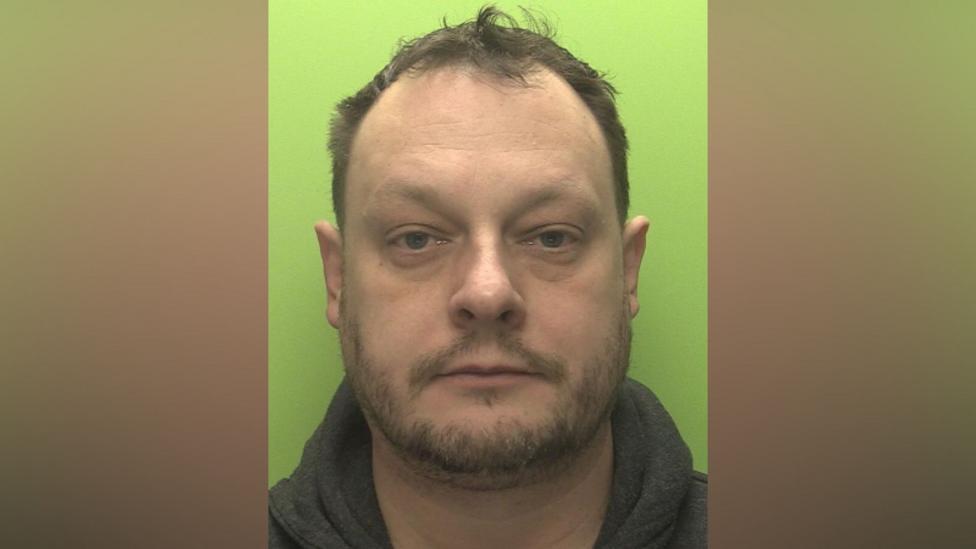
Hamza El-Hay, 31, has been sentenced to 20 months in prison after a campaign of stalking that included relocating his residence to live closer to his victim. El-Hay pleaded guilty to stalking at Cardiff Crown Court on Wednesday and was made subject to a restraining order. According to BBC News, the victim described how El-Hay exploited her initial attempts at friendship, turning her kindness into a tool for harassment.
El-Hay first encountered his victim through social media and was subsequently hired to undertake construction work at her grandmother's residence. His behaviour quickly became inappropriate, with him making unwanted comments including asking whether she was a "virgin". The victim made her lack of romantic interest abundantly clear, yet El-Hay's conduct intensified rather than ceased.
How did the stalking escalate?
Despite the victim's repeated rejection of his advances, El-Hay persisted in contacting her, delivering gifts, appearing at her home unannounced, pursuing her in his vehicle, and ultimately purchasing a property closer to hers. On 25 September of the previous year, the victim observed El-Hay's vehicle while she was at Cardiff Shopping Park. He parked alongside her car, entered the passenger seat without permission, and refused to leave.
The harassment continued with alarming frequency. On 31 December, the victim witnessed El-Hay following her vehicle as she travelled to a friend's house, and later spotted him near her own residence upon her return. The situation escalated further on 12 January when El-Hay pursued her along the M4 and M50 motorways as she drove to Scotland for a holiday, forcing her to pull onto the hard shoulder to escape him.
Eleven days later, on 23 January, El-Hay positioned himself outside the home of one of the victim's friends, pacing back and forth for seven-and-a-half hours while she remained inside. Prosecutor Ben Jones outlined a final incident occurring on 24 January, during which El-Hay pulled up beside the victim's car at speed while she was travelling along Newport Road. Throughout this period, El-Hay had also left letters, images, and flowers on the victim's vehicle.
What impact did this have on the victim?
The psychological toll on the victim was severe and documented in a statement presented to the court. She explained:
I am suffering from anxiety and depression, I haven't been sleeping well and I am suffering with panic attacks. My hands shake so often, my hands shake when I see him and when I tried to ring 999. When he approached me I pretended not to see him and if I saw a white van I panicked. I don't feel like myself anymore or recognise myself in the last year. I don't laugh or have fun anymore. I tried to help him as a friend and he used that against me.
The victim's account revealed the profound damage inflicted by sustained harassment. Her mental health deteriorated markedly, sleep became difficult, and she developed panic responses to triggers associated with El-Hay or his vehicle. The violation of her initial goodwill—her attempt to treat him as a friend—became a weapon used against her, leaving her unable to recognise herself in the aftermath of his campaign.
What was El-Hay's background?
Hannah Friedman, acting in El-Hay's defence, presented information about his personal history to the court. El-Hay was born in Morocco and sent to live with his aunt as a young child, where he was put to work as a labourer. He experienced a difficult childhood and absconded from home at the age of nine. At 13, he travelled to Barcelona, subsequently moving to the United Kingdom in 2011 and to Cardiff in 2016. According to Wales Online, El-Hay had one previous conviction for an unrelated offence, and Recorder Simon Stephenson imposed the sentence.
El-Hay, listed as having no fixed abode at the time of sentencing, was remanded into custody following his guilty plea. The restraining order imposed alongside his prison sentence will restrict his contact with the victim upon his release.
Key Facts
- Hamza El-Hay, 31, was sentenced to 20 months in prison for stalking after pleading guilty at Cardiff Crown Court
- The victim met El-Hay through social media; he was hired to work on her grandmother's house before his behaviour became inappropriate
- El-Hay's harassment included relocating his residence closer to the victim, following her vehicle across motorways, waiting outside her friend's home for seven-and-a-half hours, and leaving letters and flowers on her car
- The victim developed anxiety, depression, panic attacks, and sleep disturbances as a result of the sustained campaign
- A restraining order was imposed to prevent El-Hay from contacting the victim following his release from prison