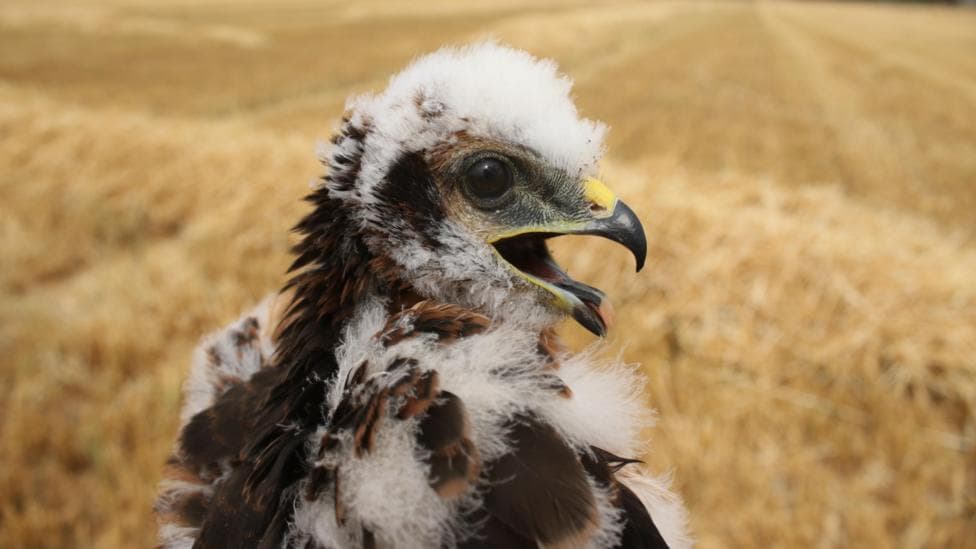
Britain's most endangered breeding raptor has successfully nested for the second consecutive year in a concealed English farmland location, the Royal Society for the Protection of Birds (RSPB) announced. A male Montagu's Harrier identified as "AU" by conservationists bred with two separate females, producing six chicks distributed across two nesting sites.
This breeding success marks a dramatic turnaround for a species teetering on the edge of extinction in the UK. The species was added to the UK's Red List for birds of conservation concern in 2021 because of worsening declines in breeding populations. Breeding numbers have collapsed from nine successful nests in 2011 to complete reproductive failure between 2020 and 2024, with only single pairs of Montagu's Harrier reported in 2019, highlighting how close to extinction the species is in Britain.
An RSPB spokesperson stated:
We are doing our absolute utmost to save this iconic species in the UK and are delighted with six flying juveniles this year.
The previous year's breeding effort at the same location produced four chicks that successfully fledged. The RSPB's intensive conservation strategy involves close collaboration with the farming families whose land hosts the nests. Physical protection measures include fencing designed to prevent ground predators such as foxes from reaching the vulnerable nesting sites on the ground.
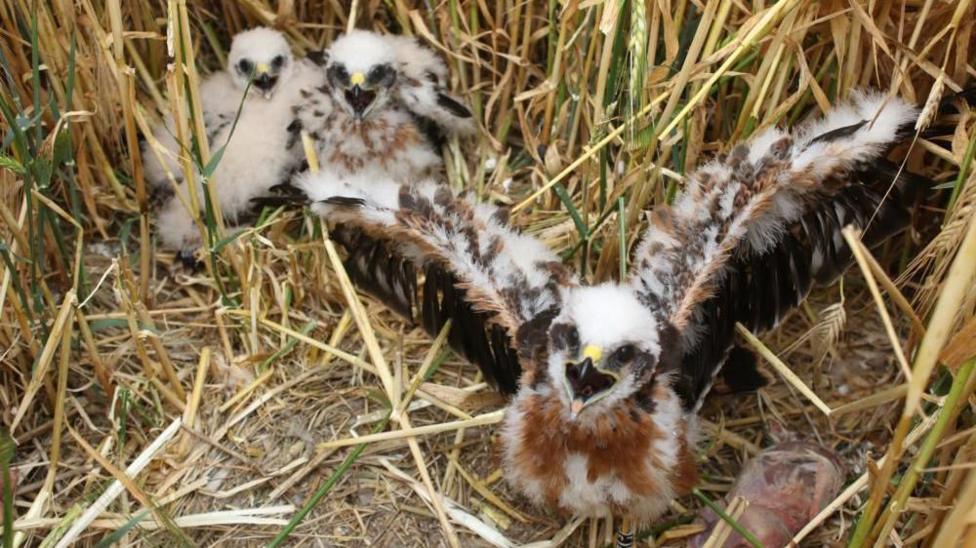
The single male bird has demonstrated remarkable dedication in provisioning two separate broods of demanding chicks throughout the breeding season. Observers documented extraordinary aerial feeding displays in which the male drops captured prey mid-flight, and the female executes an inverted manoeuvre to intercept the food in her talons before it falls to the ground.
What are Montagu's Harriers and where do they live?
These slender, long-winged raptors are increasingly rare summer visitors that arrive from April and breed on farmland, plains and bogs. The species undertakes an epic annual migration to Africa during winter months and returns to Europe each summer to establish breeding territories, frequently selecting agricultural fields as nesting habitat. The RSPB warns the species is now extremely rare in the UK and mainly nests in southern and eastern England.
Why is satellite tagging the chicks important?
Understanding juvenile harrier movements after they leave the nest remains one of the most significant gaps in conservation knowledge. For the first time, the RSPB has equipped two of this year's chicks with satellite tracking devices to monitor their behaviour and survival. Mark Thomas, head of investigations at the RSPB, explained the significance:
It will allow us for the first time ever to work out where they're going, what migration route, how long they'll spend there, and will they come back to the UK in the first year or the second year. All of that information is the bit that's missing from the jigsaw.

The tagging programme also aims to identify threats to juvenile birds during migration and their time in African wintering grounds, information that could inform targeted protection strategies across the species' entire range.
What threats does the species face?
Climate change presents an escalating threat to ground-nesting harriers, particularly through its impact on agricultural timing. Thomas highlighted the immediate danger:
This is a species right on the brink, and climate change is not helping that. The harvest here, for example, this year, was like a month earlier than in previous years. So it almost puts any Montagu's harrier nest at the peril of inadvertently being destroyed by farm machinery.
Earlier harvests increase the risk that nesting sites hidden among crops will be accidentally destroyed by farm equipment before chicks fledge. The RSPB's partnership with farmers aims to mitigate this risk through advance warning and protective measures.
How does this fit into broader raptor conservation?
The Montagu's Harrier recovery represents part of a wider pattern of raptor conservation successes across the UK. A pair of ospreys has successfully hatched three chicks at the RSPB's Campfield Marsh reserve in Cumbria, the first such breeding success at an English reserve for the charity, demonstrating that intensive protection and habitat management can reverse population declines. Similarly, marsh harriers are returning to Caerlaverock nature reserve on the Solway coast after extensive habitat restoration, showing that multiple harrier species can recover when conditions improve.
However, persecution remains a persistent threat to birds of prey across the UK. A rare hen harrier vanished after its harness was deliberately cut in Wales' Ruabon Moor, a hotspot for bird of prey persecution, underscoring the ongoing challenges conservationists face beyond habitat and climate issues.
What happens next?
The RSPB has urged birdwatchers and the public to report any sightings of the young harriers as they disperse from the breeding site. Observers can contact the RSPB's Montagu's hotline at montys@rspb.org.uk with information about juvenile birds. The charity hopes the 2026 adults and their offspring will migrate safely to Africa and that the breeding pair will return to establish nests again in 2027, continuing the recovery trajectory that has begun to emerge after years of complete breeding failure.
Key Facts:
- Six chicks fledged from two nests in 2026, compared to four in 2025, representing the first back-to-back successful breeding seasons since 2011
- Montagu's Harriers were added to the UK Red List in 2021 after breeding numbers collapsed from nine successful nests in 2011 to zero between 2020 and 2024
- Two chicks have been fitted with satellite tags to track migration routes and juvenile survival for the first time in the species' UK conservation history
- The species is an increasingly rare summer visitor that migrates annually between African wintering grounds and European breeding territories
- Climate change is accelerating agricultural harvest dates, increasing the risk of accidental nest destruction by farm machinery