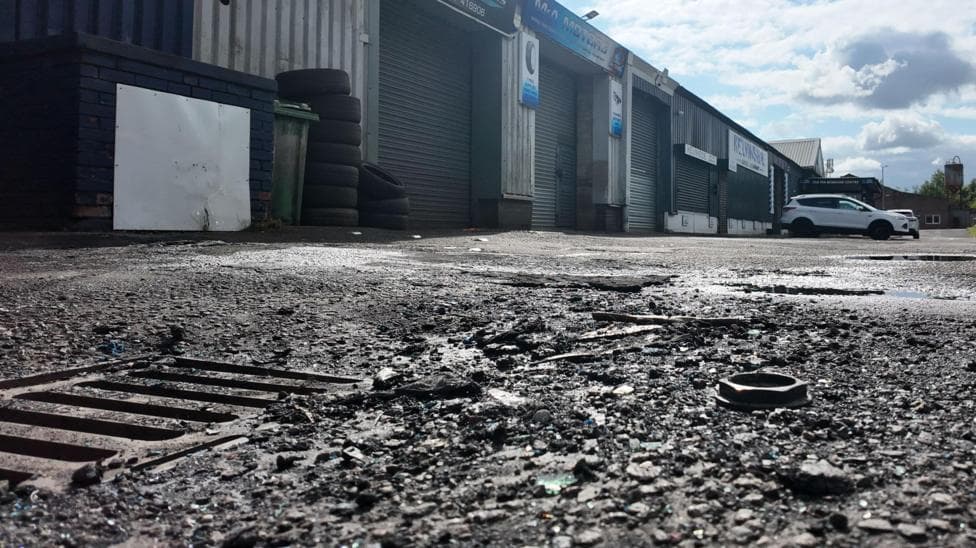
First Minister John Swinney is visiting Inverclyde to assess the scale of an employment crisis affecting one of Scotland's smallest council areas, which has shed around 1,500 jobs across multiple major employers in recent years.
The visit, arranged at the invitation of the local authority, comes as the nationalised Ferguson shipyard prepares to cut staff through a voluntary redundancy programme. According to reports on 18 August 2026, up to 70 positions could be eliminated as the yard enters a transition phase, though the MV Glen Rosa remains on track for delivery in the final quarter of 2026.
Council leader Stephen McCabe argues that a succession of closures has created a desperate employment situation, compounded by decades of industrial decline and population loss. The cumulative impact is particularly acute because Inverclyde's population stands at just 78,000, having fallen by a fifth over the past 50 years.
"We've now lost 1,500 to 1,800 jobs," McCabe told BBC Scotland News. "For an area the size of Inverclyde that's the equivalent of 15,000 in Glasgow."
During his tour, Swinney will meet local elected representatives, visit community organisations, and speak with managers at Ferguson Marine. He will also encounter business leaders from other firms that have downsized operations in the region.
Which employers have cut jobs in Inverclyde?
The region has experienced job losses across a wide range of sectors over the past two decades. IBM scaled back operations before closing its main Spango Valley facility in 2016. Amazon opened a fulfilment centre at nearby Gourock in the early 2000s but shut it down three years ago. More recently, employers including BPI Berry, EE, Cigna International Health, RBS and Kindryl have all reduced their workforces. According to reports from May 2026, Cigna alone placed 129 Greenock positions at risk.
McCabe contends that the piecemeal nature of these closures has not generated the same level of political response as other high-profile industrial shutdowns elsewhere in Scotland. He is calling on the Scottish government to treat Inverclyde as a special case and provide enhanced incentives to attract new employers to the area.
"It's time for the Scottish government to recognise that Inverclyde is a priority. We've seen how they responded to other jobs crises in the likes of Grangemouth and Alexander Dennis at Falkirk. They need to recognise the jobs that we've lost is so significant that there needs to be special support."
What is the historical context of Inverclyde's decline?
The two largest towns, Greenock and Port Glasgow, were once central to Scotland's economic strength. Initially, the region thrived through herring fishing and transatlantic commerce. Later, shipbuilding and engineering became dominant, with an almost unbroken line of slipways, cranes and workshops stretching for miles along the south bank of the lower Clyde and employing thousands of workers.
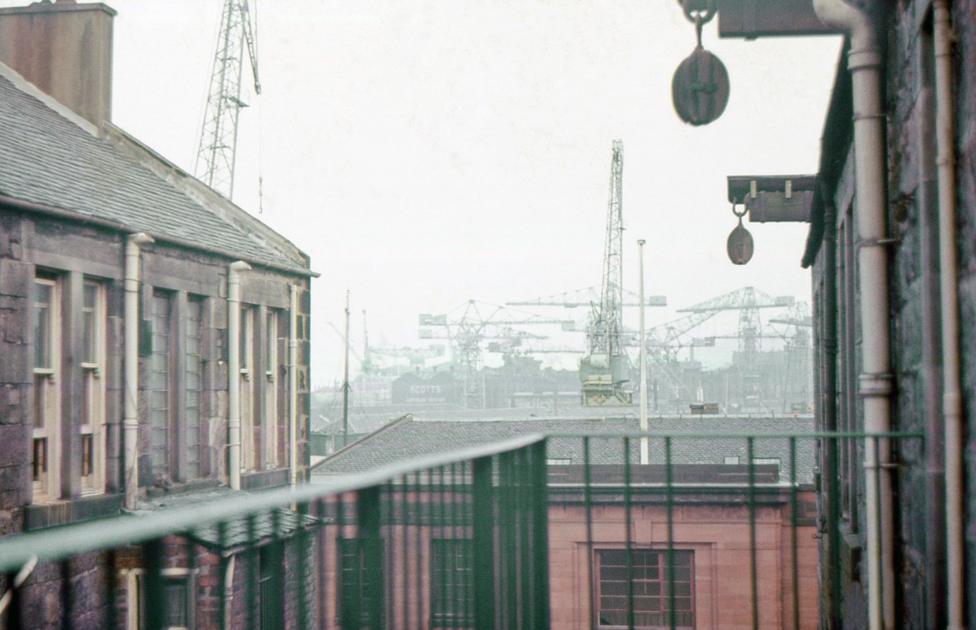
Greenock earned the nickname Sugaropolis because of its sugar refining industry, which at its peak included 15 refineries. Nearby Gourock developed as a fashionable Victorian seaside destination.

The shipbuilding sector collapsed rapidly during the 1970s and 1980s. Tate & Lyle closed Greenock's final sugar refinery in 1997. The subsequent hope that electronics companies would replace traditional industries—a period known as the "Silicon Glen" dream—largely failed to materialise. The closure of IBM's Spango Valley site in 2016 marked a symbolic end to that era.
What regeneration efforts are currently under way?
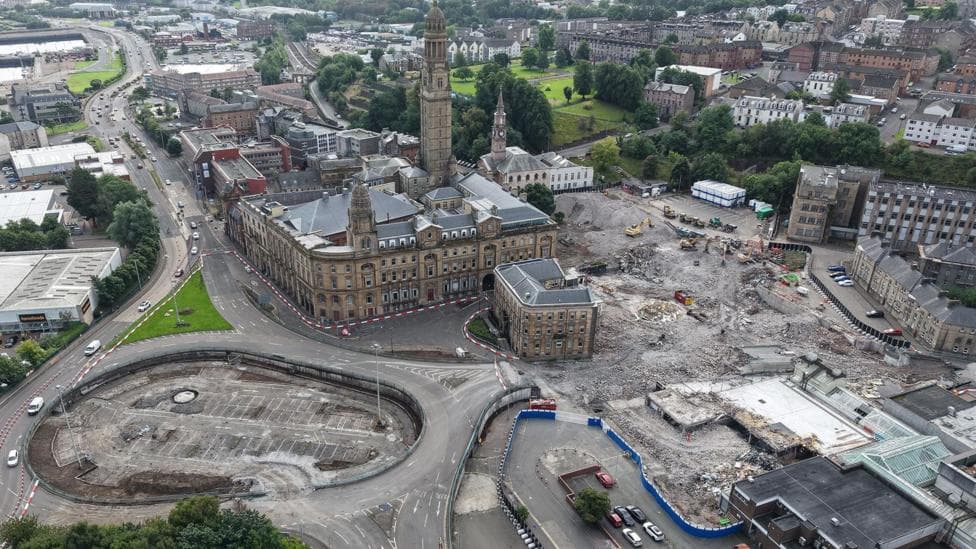
A socio-economic taskforce established four years ago developed regeneration proposals valued at £70 million, with funding beginning to flow into the region. A £24 million redevelopment of central Greenock, primarily financed through UK Levelling Up money, is currently in progress to enhance the town's appearance and street layout.
About £11 million of public funds has been invested in upgrading facilities at the Inchgreen Marine Park, a joint venture between the council and Peel Ports. However, campaigners have expressed frustration that the facility has yet to generate significant employment.
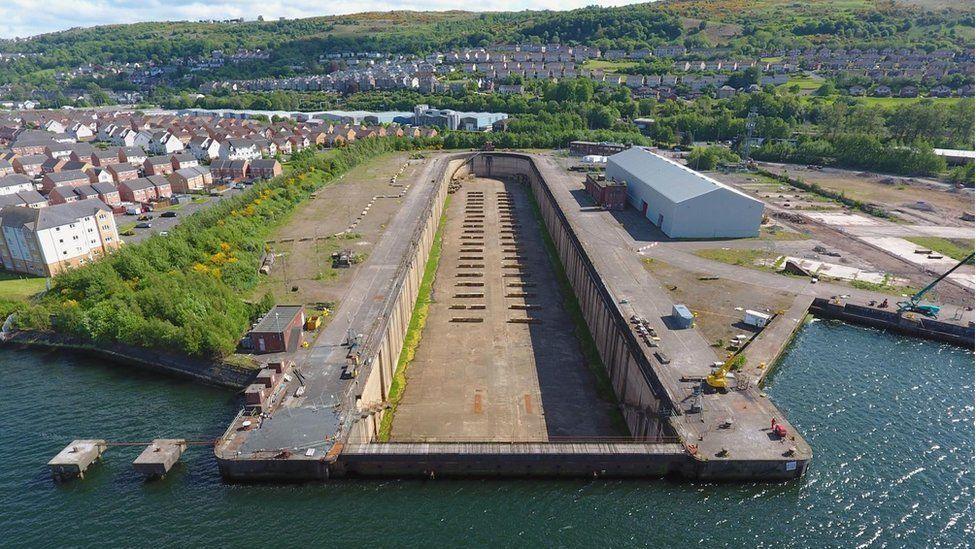
A further £20 million was recently allocated from the UK's Growth Mission Fund to restore the Inchgreen dry dock—a massive ship repair facility that has sat largely unused for two decades—and to establish a maritime training centre. According to reports from March 2026, the Scottish government also planned to award direct contracts for four new vessels to Ferguson Marine, which could provide crucial workload for the yard.
The state-owned Ferguson shipyard currently employs 283 staff, including 34 apprentices. The yard has stated that the planned redundancies are intended to maintain the business as "competitive, efficient, and financially sustainable" during its transitional period. However, union figures reported on 15 July 2026 that the yard had no new contracts confirmed and was losing key personnel, with only seven platers and 11 welders directly employed, intensifying concerns about its long-term viability.
What do local community leaders say about the crisis?
Kevin Green, a community activist who runs the PG25 regeneration group in Port Glasgow, endorses the call for special government support but emphasises the need for better coordination across different political parties and agencies.
"Don't work in silos. We've got different politicians from different parties all saying the same thing, but it takes leadership."
A year ago, Green successfully campaigned to end Port Glasgow's participation in the annual "most dismal town" Carbuncle awards. He persuaded the architectural magazine Urban Realm to retire the "Plook on the Plinth" trophy and instead present the town with a "Heart on Your Sleeve" award in recognition of its community resilience in the face of adversity.
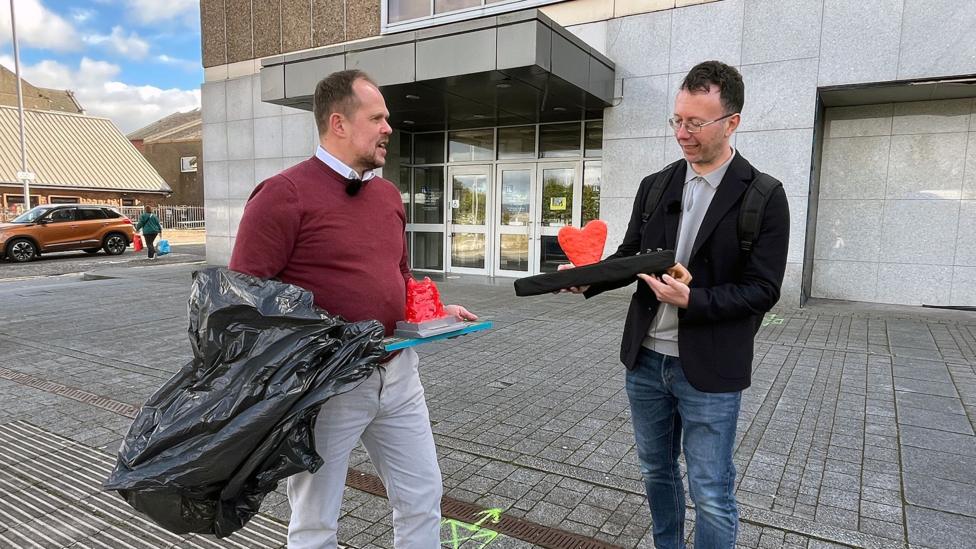
Green believes the area possesses significant untapped potential as a destination for regional hospitality and tourism. He points to the town's unrestricted access to the River Clyde, 100 square miles of regional parkland, and a thriving retail park. The area attracts 120,000 cruise ship passengers annually, yet has not capitalised on this visitor flow.
"We get 120,000 [cruise ship] passengers in every year - how do we create an economy that secures 20 quid off each of them?"
PG25 is based on John Wood Street, where retail units were donated to the community decades ago by the owners of Lithgows shipbuilders. Many of these spaces now stand empty and cannot be leased because they require repairs. Green argues that these vacant premises represent an opportunity for community-led enterprise if resources can be secured to restore them.
"The community is going to have to support each other - and these are ideal spaces to do that, currently sitting derelict. We need to put them to use. The biggest message to John Swinney and everybody who's taking part in this is that we need some co-ordination that's not political. We're needing a plan."
The broader context of public-sector pressure in Inverclyde was underscored in March 2026, when the council approved a two-year budget that included a 7.9 per cent council tax rise and the elimination of 26 full-time equivalent posts.
What happens next for Ferguson Marine and Inverclyde?
The MV Glen Rosa is scheduled for delivery in the fourth quarter of 2026, providing a near-term milestone for the shipyard. The Scottish government's promised equipment investment remains contingent on due diligence and commercial checks, with remaining funding to be released once that process concludes. The government's decision to award four vessels directly to Ferguson Marine represents the most significant upcoming opportunity for the yard to secure sustained workload and protect employment.