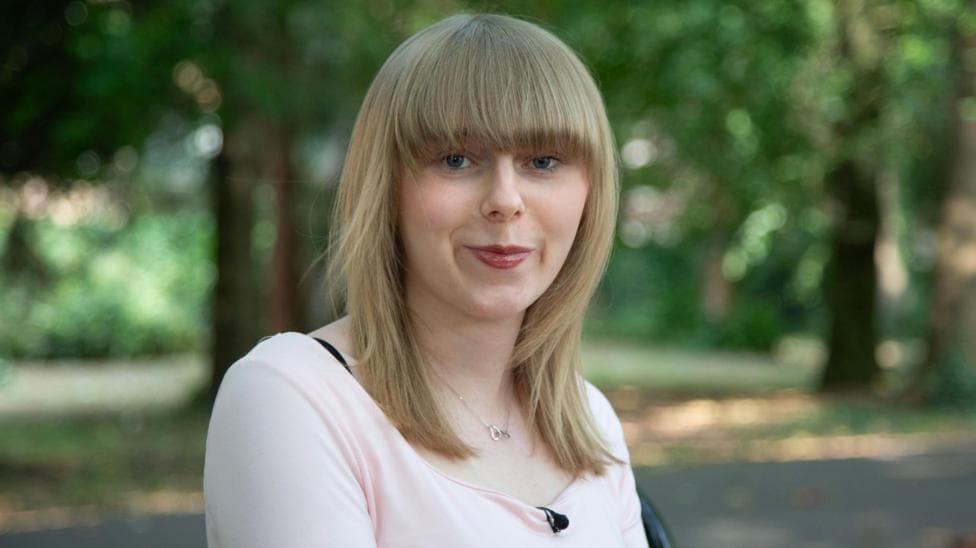
A routine school survey transformed Emily Mapley's life when she was 13 and living in hidden homelessness with her family. The questionnaire, part of an early-intervention programme called Upstream Cymru, identified her as at risk and connected her with support services before her situation could deteriorate further. Six years later, Emily has completed college, come out as transgender, met the Prince of Wales, and is now pursuing a career in politics and LGBTQ+ advocacy.
Emily's teenage years coincided with multiple crises. When her family was evicted from their home, she was simultaneously navigating her gender identity and experiencing severe bullying at school. For 18 months, seven people—her parents, herself, and her young niece—shared just two rooms in temporary accommodation. She kept this reality hidden from almost everyone around her.
I don't even know if the school knew. I don't want to say embarrassed, but I didn't want anyone to know because I was already getting bullied.
When Emily enrolled at St Illtyd's Catholic High School in Cardiff, she completed a short survey developed by Llamau in partnership with Cardiff University. The questionnaire asked about relationships, mental health, and living circumstances. An algorithm then analysed the responses to identify students at risk of homelessness—particularly those who might not yet have come to the attention of official support services. In Australia, where the original Geelong project operated, nearly two-thirds of identified young people had previously been unknown to authorities.

How did the survey lead to practical help?
Once Emily's responses flagged her as high-risk, project workers approached her family to offer intervention. Support took many forms: mediation between family members, parenting guidance, and financial assistance. Emily was assigned a support worker named Russell, who helped her gradually rebuild her confidence and social connections.
I probably just ticked all the boxes of what Llamau could help with and what Upstream could help with.
At the time, Emily was struggling with severe depression and reluctant to leave her room or attend school. Russell encouraged her to engage in activities outside the home, starting with outings once or twice a week.
We would just do fun stuff and he helped me get out of my shell.
Russell is one of several project workers embedded in schools across Cardiff. By maintaining a consistent presence in the same schools, these workers build trust with pupils and their families, allowing them to intervene early rather than waiting for crises to escalate.
What makes Upstream Cymru different from traditional support?
Upstream Cymru operates on a prevention model rather than crisis response. The programme targets young people before homelessness occurs or worsens, addressing root causes such as family breakdown. This approach proved effective in Australia, where the Geelong project achieved a 40% reduction in youth homelessness.
Certain survey responses automatically trigger a high-risk rating—for example, whether a young person worries they might run away or be asked to leave home within the next year. When pupils meet these criteria, workers offer support designed to keep families together and young people in school.
The whole premise of Upstream is fabulous as far as I'm concerned. Getting to these young people before they get to the stage where it's too late.
Russell has witnessed a dramatic transformation in Emily's life over three years. Although she was already experiencing homelessness when identified, the intervention ensured she remained engaged with education and her family.

How has Emily's life changed since receiving support?
Emily credits Upstream Cymru with fundamentally altering her trajectory. She completed college, something she doubts would have happened without intervention. She also felt supported enough to come out as transgender—a step she might not have taken in her previous isolation.
Without Upstream, I would probably be a completely different person. I definitely wouldn't have finished college and I might not even have come out.
Her progress has been recognised at the highest level. In 2025, Emily met the Prince of Wales to discuss her experiences with homelessness and the support that changed her life. She has also begun releasing original music and is now focused on building a career in politics and campaigning for LGBTQ+ rights.
How is the programme expanding across Wales?
Upstream Cymru began in a single school six years ago. It now operates in 12 schools across south Wales and the valleys. Llamau, the charity running the programme, has also helped establish Upstream in England, Scotland, and Northern Ireland, and leads the UK steering group, which won a Homelessness Excellence Award earlier this year.
In 2025, the UK government included Upstream England pilot projects in its national plan to end homelessness, signalling official recognition of the model's effectiveness. However, Llamau has warned that without sustained long-term government funding, Wales risks falling behind other parts of the UK despite having pioneered the approach.
What the danger here is that without that long-term funding commitment Wales could get left behind, despite Wales creating this.
Yvonne Connolly, operational director at Llamau, emphasised the scale of the problem the programme addresses. More than half of homeless adults experienced homelessness before turning 21, meaning early intervention could have generational impact. According to Llamau's analysis of May 2026 homelessness figures, 2,219 under-16s were in temporary accommodation in Wales alone.
What is the financial case for early intervention?
Upstream Cymru operates as a spend-to-save model. Early intervention through mediation and family support is substantially cheaper than responding to homelessness crises after they occur. Mediation alone can prevent family breakdown—a leading cause of youth homelessness—saving more than £27,000 per person in specialist accommodation costs.
What we really want to do is help families not get to the point where relationships break down beyond repair.
The Welsh Government has committed resources to homelessness prevention. It is providing more than £3.7 million this year through the youth support grant to identify and support young people at risk of homelessness at the earliest stage. An additional £3.5 million is being invested in innovative youth homelessness projects, including Housing First for Youth, to help vulnerable young people avoid or move on from homelessness.
These investments come against a backdrop of significant need. According to Welsh Government data for January 2026, 10,627 people were in temporary accommodation and an estimated 128 rough sleepers were recorded in Wales.
What happens next for Upstream Cymru?
Work is underway toward potential Wales-wide implementation of Upstream Cymru. Cardiff University's research team is developing plans to link homelessness and schools data across all Welsh local authorities, which would enable the programme to scale beyond its current footprint in south Wales and the valleys.
The success of cases like Emily's demonstrates the potential of identifying and supporting young people before they reach crisis point. Her journey from hidden homelessness and isolation to education, self-acceptance, and advocacy illustrates how early intervention can reshape lives and create pathways to opportunity.
Key Facts
- Upstream Cymru identifies young people at risk of homelessness through school-based surveys, reaching those not yet known to support services
- The programme is based on Australia's Geelong project, which achieved a 40% reduction in youth homelessness
- Mediation and early support can save more than £27,000 per person compared to crisis-response accommodation costs
- The scheme now operates in 12 schools across south Wales and the valleys, up from a single school six years ago
- More than half of homeless adults experienced homelessness before turning 21, highlighting the importance of early intervention