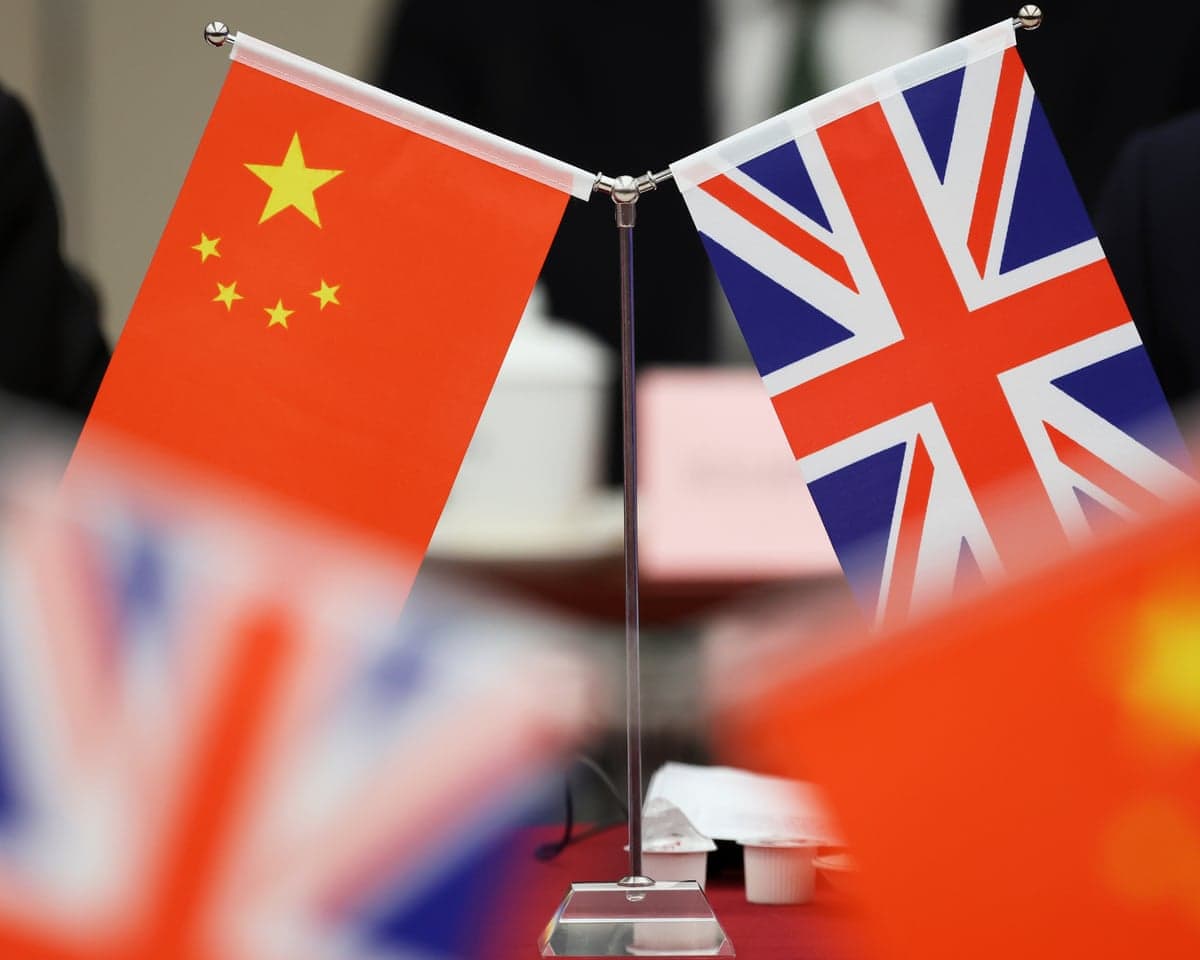
An international alliance of China-sceptic legislators has published a damning assessment of Britain's approach to Beijing, warning that policy incoherence and a shortage of senior-level expertise have left the country vulnerable to interference while squandering potential benefits from engagement.
The Inter-Parliamentary Alliance on China (Ipac), a cross-party grouping of lawmakers from multiple nations, released its audit on Wednesday, concluding that past British engagement with the People's Republic has repeatedly exposed the UK to risks without delivering promised opportunities. The report arrives as the UK government navigates increasingly complex trade dynamics with China, including discussions over tariffs on electric vehicles and broader economic coordination.
What does the report identify as the core problem?
The audit describes Britain's China policy as "beset by incoherence" and undermined by weak institutional capability. A key finding highlights that senior government officials engaging with Beijing often lack Mandarin language skills or substantial experience living in China—a gap noted by visiting Chinese delegations themselves. While Britain possesses relevant expertise, the report states this knowledge remains "siloed" and fails to translate into actionable policy capability.
The relationship is further strained by what Ipac describes as a fundamental power imbalance with the world's second-largest economy, compounded by "muddled policy and weak engagement." The report emphasises that
successful UK engagement with China must always be framed by an understanding that the PRC is an inherently hostile authoritarian state that does not share our values, underscoring the security-first lens through which Britain should approach the relationship.
What safeguards does the report recommend?
Rather than advocating disengagement—which the report acknowledges is not viable—Ipac proposes clearly defined red lines around critical infrastructure, frontier technologies and human rights. The recommendations include strengthened institutional coordination across government, enhanced use of national security tools, and deliberate diversification of supply chains to reduce dependency.
Emerging technologies such as artificial intelligence present particular concerns, the audit warns, given their potential to enable disinformation and advanced surveillance capabilities. The report identifies climate change as a lower-risk area for cooperation, though it notes a sobering reality:
climate targets as set will not be met without cooperation with China, and accepting medium-term dependence. This means accepting supply chains tainted by forced labour and unfair trade practices.
How has the government responded to these concerns?
The UK government and Chinese embassy in London have been approached for comment on the report's findings. However, recent diplomatic activity suggests some movement on economic engagement. On 8 October, the UK Chancellor spoke with China's Vice Premier He Lifeng, with both sides agreeing to maintain dialogue on economic and financial priorities. The Chancellor indicated he looked forward to welcoming He to London for the next Economic and Financial Dialogue, signalling a commitment to sustained high-level engagement on trade, investment, financial services and macroeconomic issues.
The call also covered global financial stability and Russia's war in Ukraine, reflecting Britain's effort to compartmentalise cooperation on specific issues while maintaining security vigilance elsewhere. This diplomatic outreach occurs against a backdrop of broader European-Chinese trade negotiations, with EU-China talks concluding on 9 October with a 16-point consensus list that includes an understanding to moderate Chinese hybrid and plug-in hybrid vehicle exports to the EU.
What is the status of UK tariffs on Chinese electric vehicles?
Britain's existing tariff on Chinese electric vehicles stands at 10%, but officials are reportedly drafting options to match EU tariffs of up to 45%. China has warned it would respond to any discriminatory measures, raising the prospect of retaliatory action. This trade tension underscores the stakes involved in Britain's China strategy and the need for coherent policy coordination with European partners.
What do experts say about the expertise gap?
Kerry Brown, a former diplomat and director of the Lau China Institute at King's College London, welcomed the report's emphasis on language skills but stressed that lived experience in China is equally critical. He cautioned that some Ipac members promote a security-oriented narrative that discourages officials from spending time in China, fearing exposure to interference.
You can't teach really important things in a classroom; you can only go and learn them through daily life … and that is the thing that is very difficult to do now, and it's also the thing that doesn't seem to be supported, Brown said, highlighting the tension between security concerns and the practical need for deep familiarity with Chinese society and governance.
Who backs the report's findings?
Tom Tugendhat, the former security minister, endorsed the audit as
a clear-eyed and realistic take on the defining foreign policy problem of this century, filling a gap left by years of policy neglect. His support signals cross-party recognition that Britain's China policy requires urgent reform and greater institutional investment.
What happens next in UK-China relations?
EU leaders are scheduled to review trade relations with China at the following week's European Council meeting. EU and Chinese ministers are due to meet by video in January, with a third negotiation round planned for March 2027. These forums will shape the broader context in which Britain must develop its own coherent approach, particularly as the UK seeks to balance security concerns with economic engagement and coordinate with European partners on trade and technology issues.
Key Facts
- Ipac's audit identifies lack of Mandarin speakers and China experience among senior UK officials as a critical vulnerability
- The report recommends red lines on critical infrastructure, frontier technologies and human rights rather than wholesale disengagement
- The UK Chancellor and China's Vice Premier agreed on 8 October to maintain dialogue on economic and financial priorities
- Britain's current 10% tariff on Chinese electric vehicles may be raised to match EU levels of up to 45%, risking Chinese retaliation
- EU-China negotiations concluded on 9 October with a 16-point consensus, including limits on Chinese vehicle exports to Europe