A major prisoner release scheme launched on Thursday dominates coverage across the UK press, with newspapers examining the implications of freeing inmates early and the broader political landscape shaping the nation's agenda.
What happened with the prison releases?
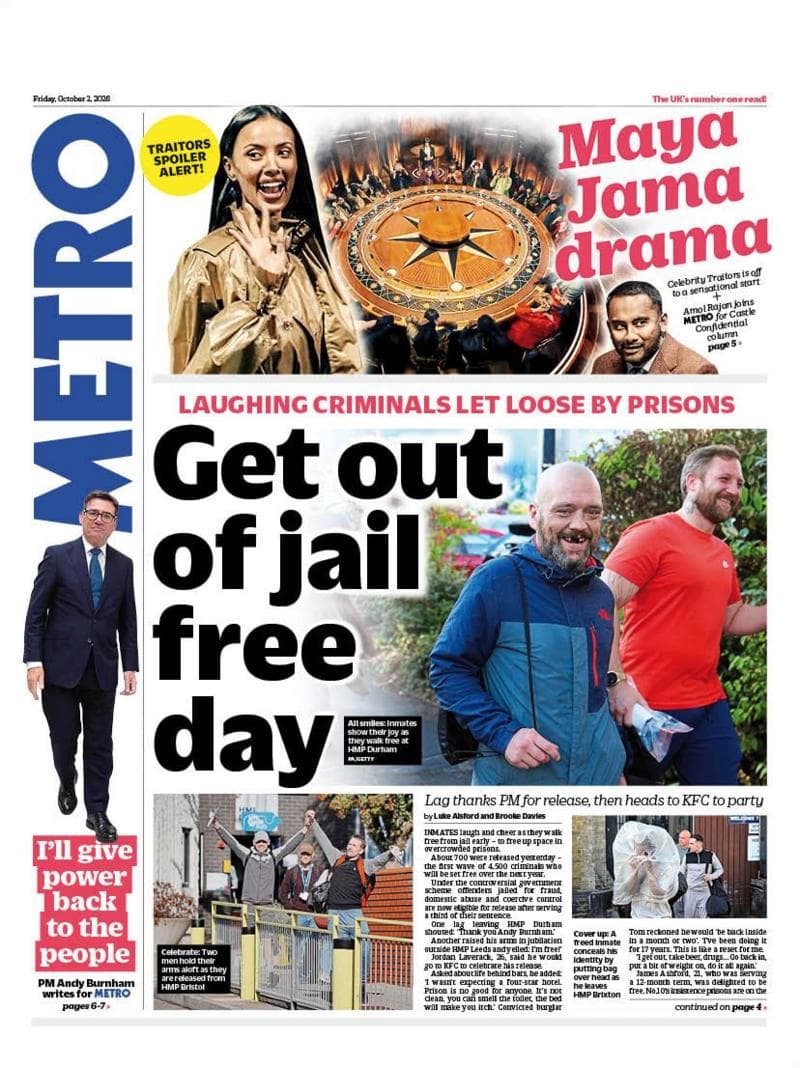
The first 700 of approximately 4,500 eligible inmates were released from prisons across England and Wales on Thursday under the government's early release initiative. The Metro characterised the day as Get out of jail free day
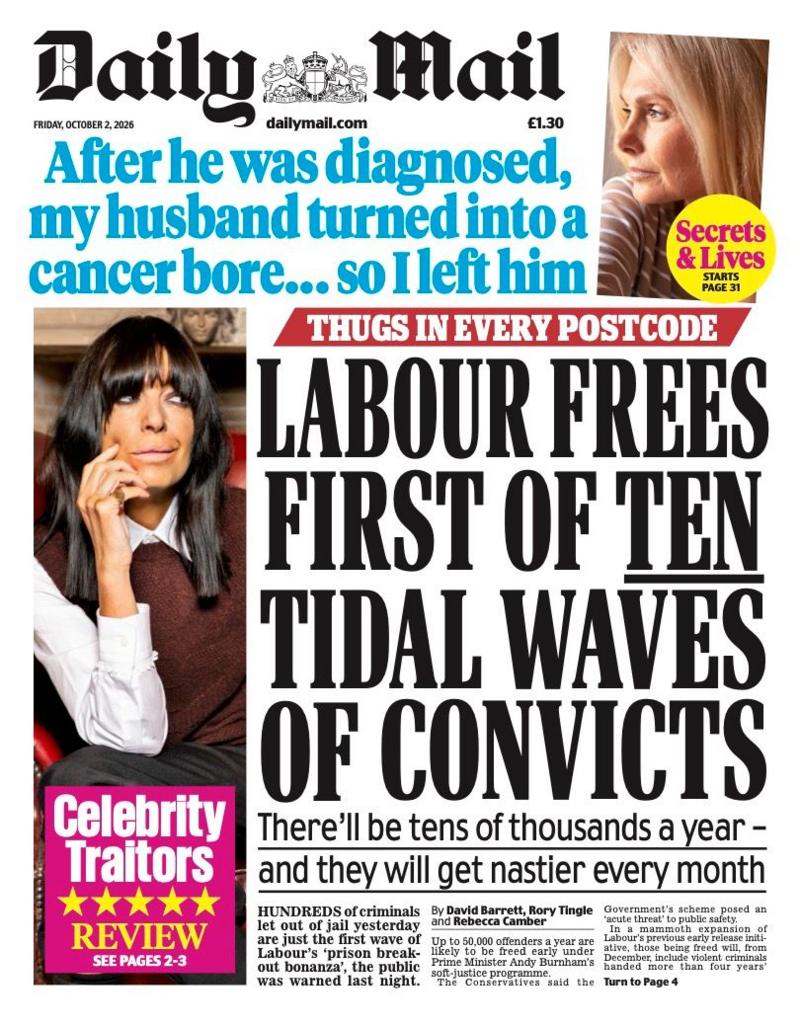
, while the Daily Mail framed Thursday's release as the opening phase of 10 scheduled tranches, with the final group expected to leave custody by June 2027. According to the national broadcaster, the scheme applies to roughly 70,000 offenders in total, though approximately 18,000 are excluded—those convicted of murder, manslaughter, sexual offences or fatal driving offences.
The early release mechanism moves eligible prisoners who would normally serve half their sentence in custody to release after one-third, with the remainder served on licence in the community. The first cohort consists of individuals serving sentences of up to 19 months. A second tranche of 650 prisoners is scheduled for release from 13 October.
The Daily Mail suggested that up to 50,000 offenders annually could be freed early under Labour's justice programme
, and warned that they will get nastier every month
.
What welfare changes are being planned?
Ministers are developing comprehensive welfare reform proposals that extend far beyond what was previously disclosed, according to reporting from a national newspaper. The package under consideration includes scrapping a key disability benefit for under-25s and replacing it with a multibillion-pound support scheme designed to facilitate entry into employment. The proposals encompass subsidised jobs, targeted back-to-work initiatives and mental-health support for young people, with officials also examining a replacement system for Personal Independence Payment (PIP).
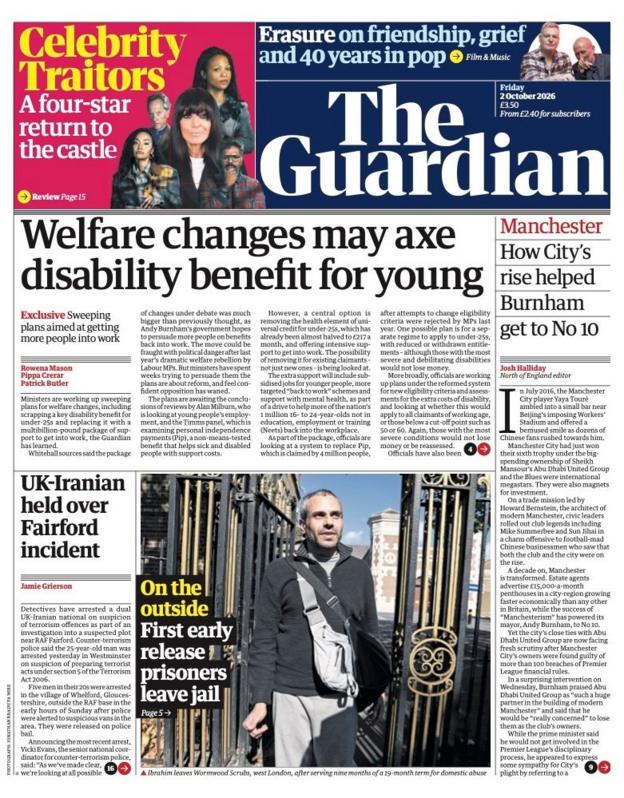
Approximately 184,000 people aged 16 to 24 currently receive the Universal Credit health element, and the proposed changes remain subject to the Milburn and Timms reviews. The coverage warns that such reforms carry fraught with political danger
potential, particularly following last year's dramatic welfare rebellion
from Labour MPs who opposed earlier welfare measures.
How serious is the diesel supply threat?
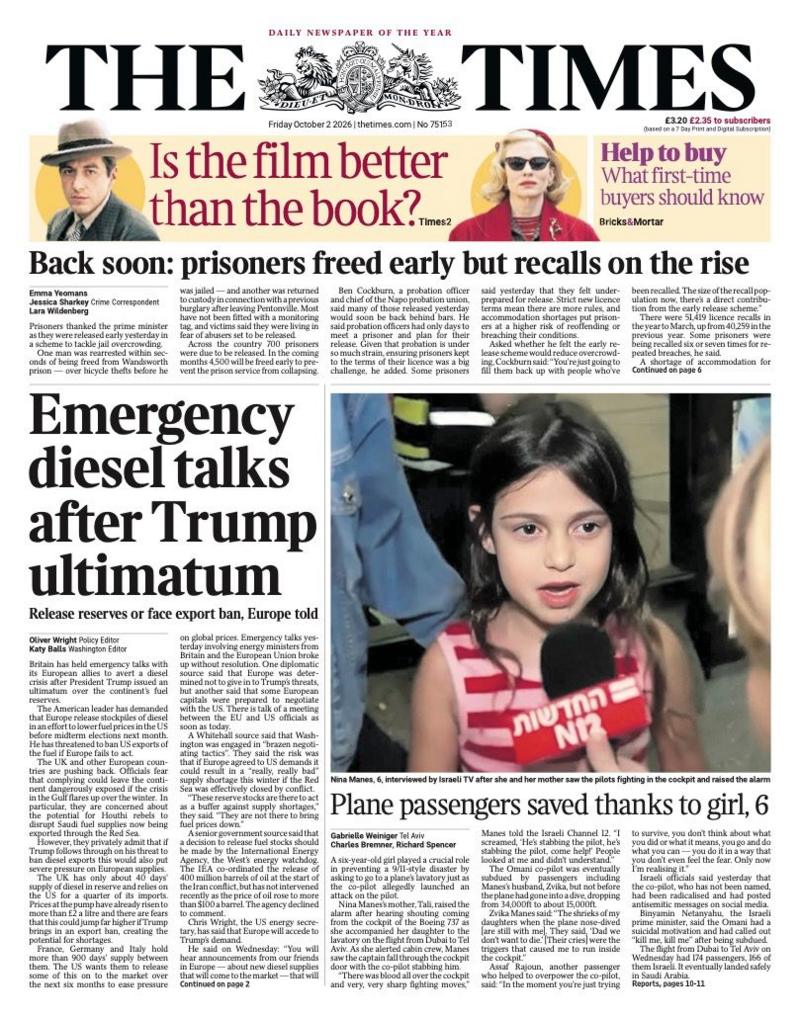
Energy security has emerged as a critical concern following threats from the United States to restrict diesel exports. The Times reported that the UK has convened emergency discussions to prevent a potential crisis should the US follow through on export restrictions. The US administration has demanded that Europe release diesel stockpiles in an effort to reduce fuel prices domestically ahead of midterm elections scheduled for next month. Officials have expressed concern that complying with such demands could leave the European continent dangerously exposed
should Middle Eastern tensions escalate during winter months.
The Telegraph highlighted that the UK would face particular vulnerability, importing approximately 55% of its diesel supply. While it remains unclear whether the UK would be directly subject to any threatened US export ban, the country is understood to have coordinated with European counterparts to present a unified diplomatic response. Ministers held calls with the European Commission, Germany, France, Italy and Ireland regarding whether to release emergency diesel reserves.
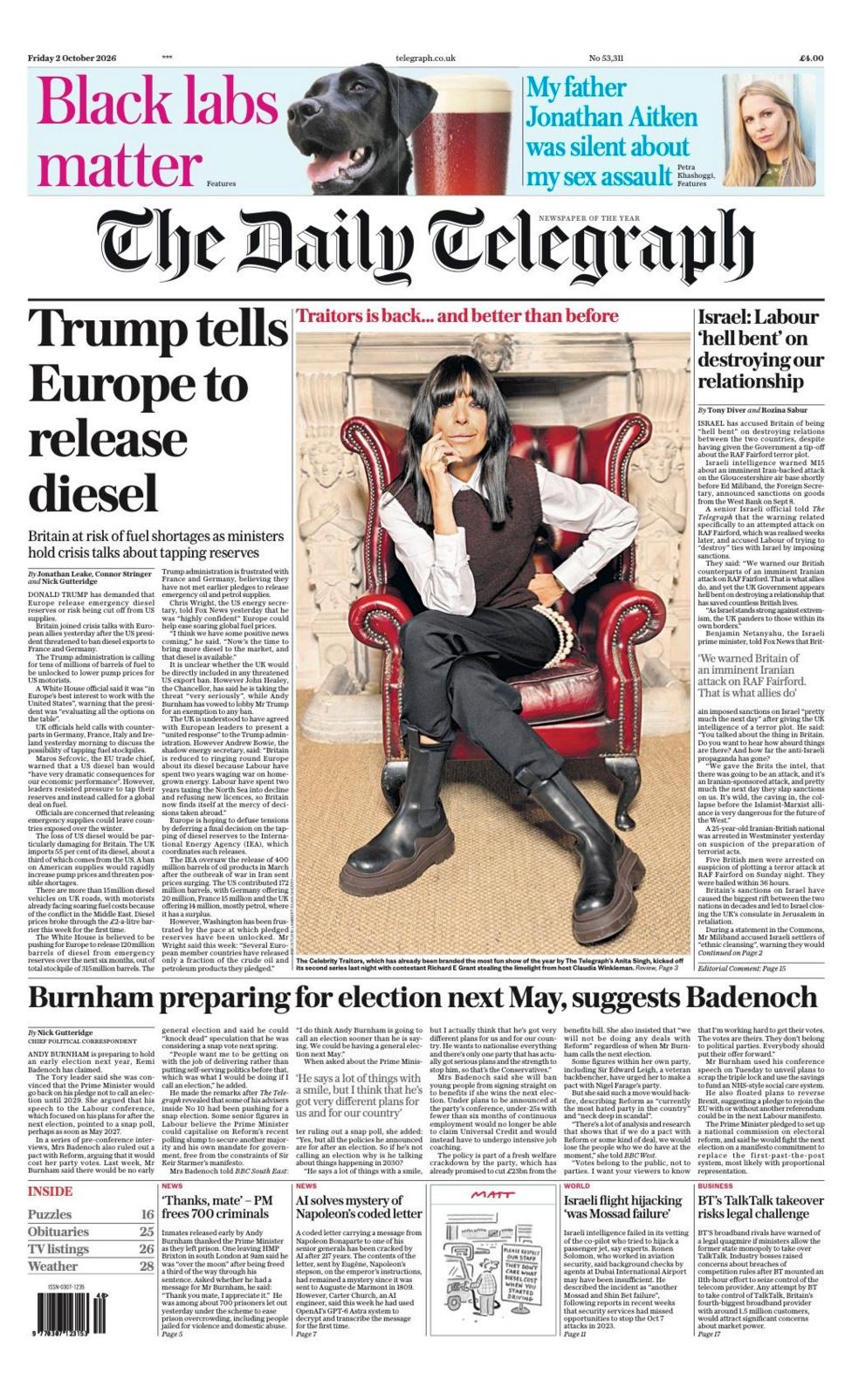
Context on European energy production is relevant here: Europe produces approximately 70% of the diesel it consumes and maintains fuel reserves. The Telegraph's cartoon commentary on the crisis joked that petrol station staff don't care what diesel cost when you started driving
.
What other economic stories are emerging?
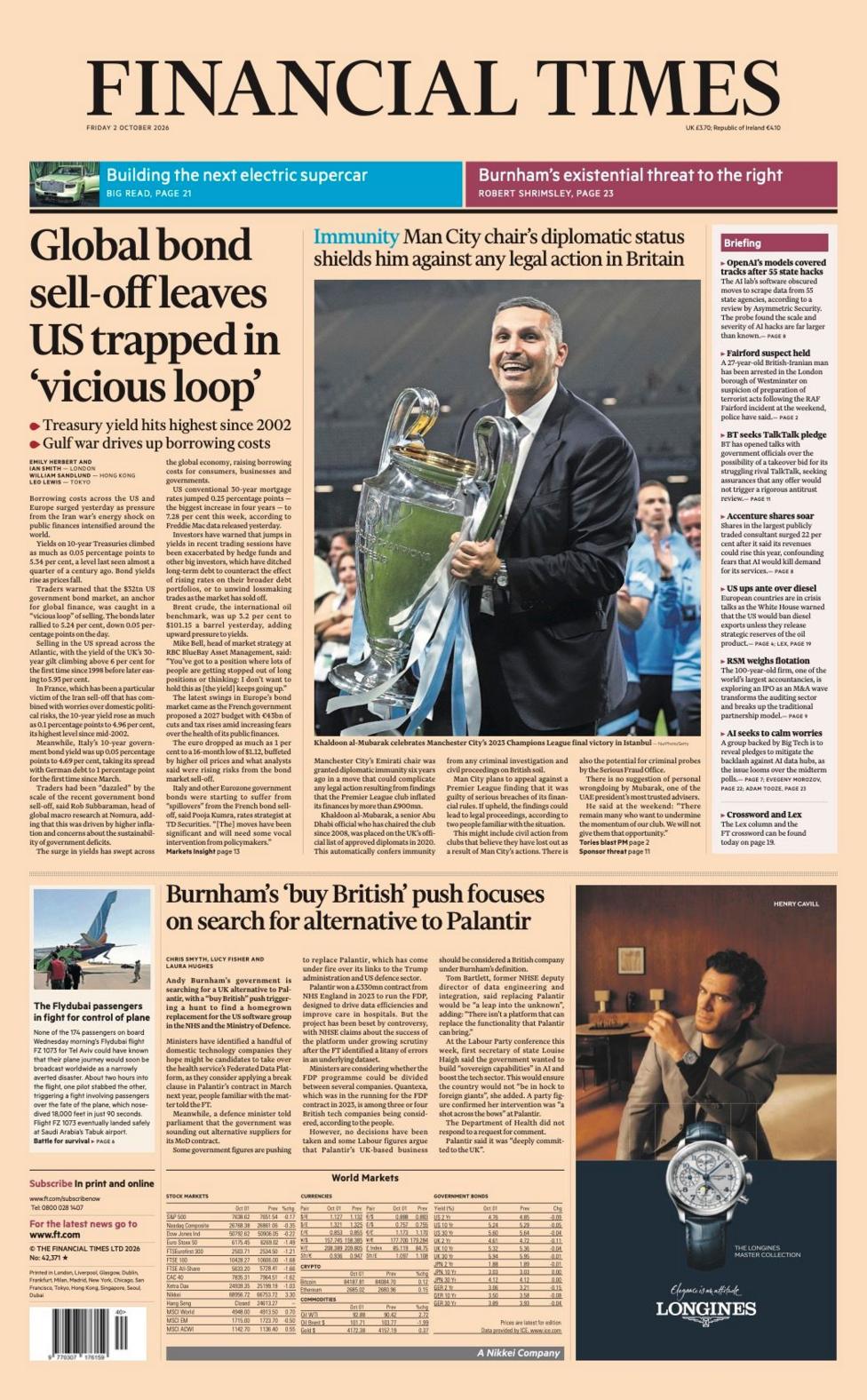
The Financial Times led with coverage of a global bond market downturn, reporting that Global bond sell-off leaves US trapped in 'vicious loop'
following a surge in global borrowing costs on Thursday.
What are the political developments?
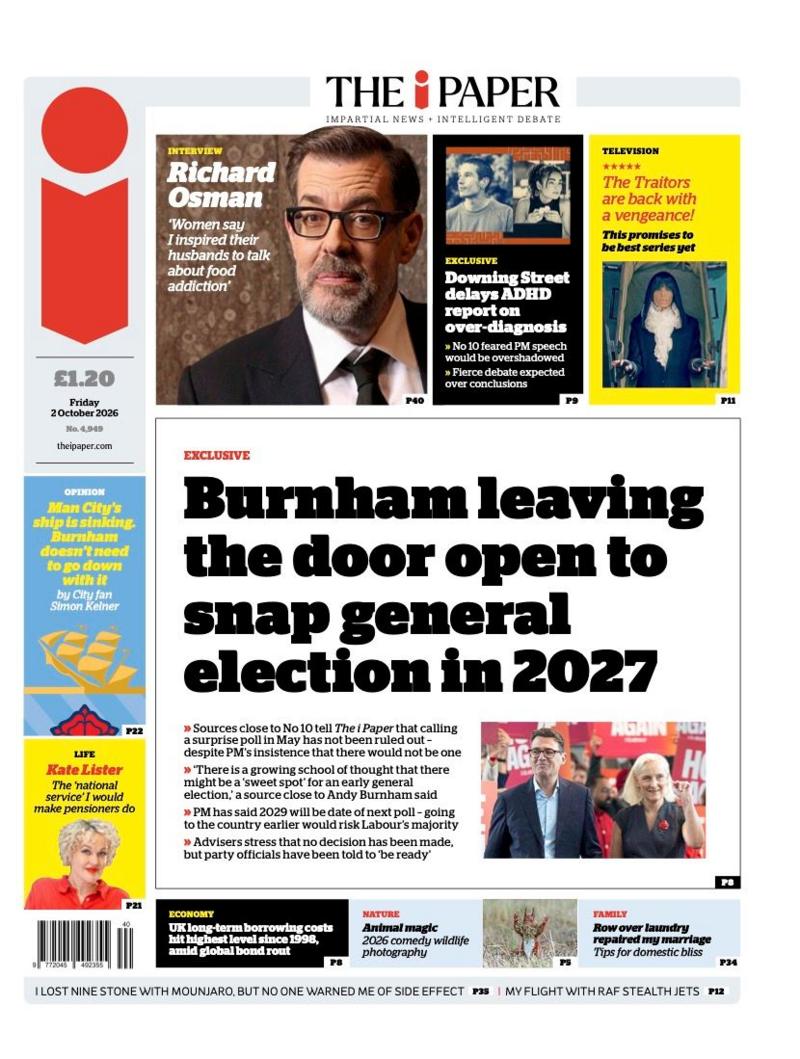
The i Paper reported that sources close to Prime Minister Andy Burnham indicate he is leaving the door open
for a snap general election in May 2027. According to the paper, an insider described a growing school of thought
that a 2027 election could represent a sweet spot
for the government. Publicly, Burnham has maintained that the next scheduled election will occur in 2029.
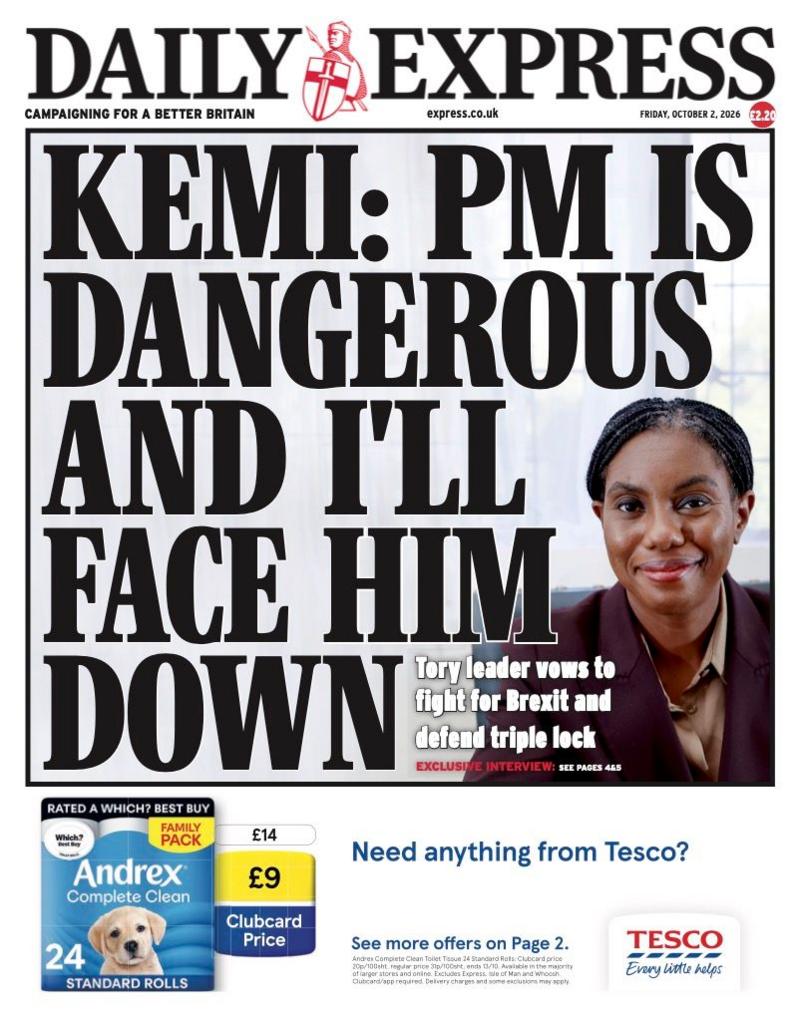
The Daily Express devoted its front page to an exclusive interview with Conservative leader Kemi Badenoch, who pledged to fight for Brexit and defend the triple lock
.
How did the Prime Minister respond to the Manchester City controversy?
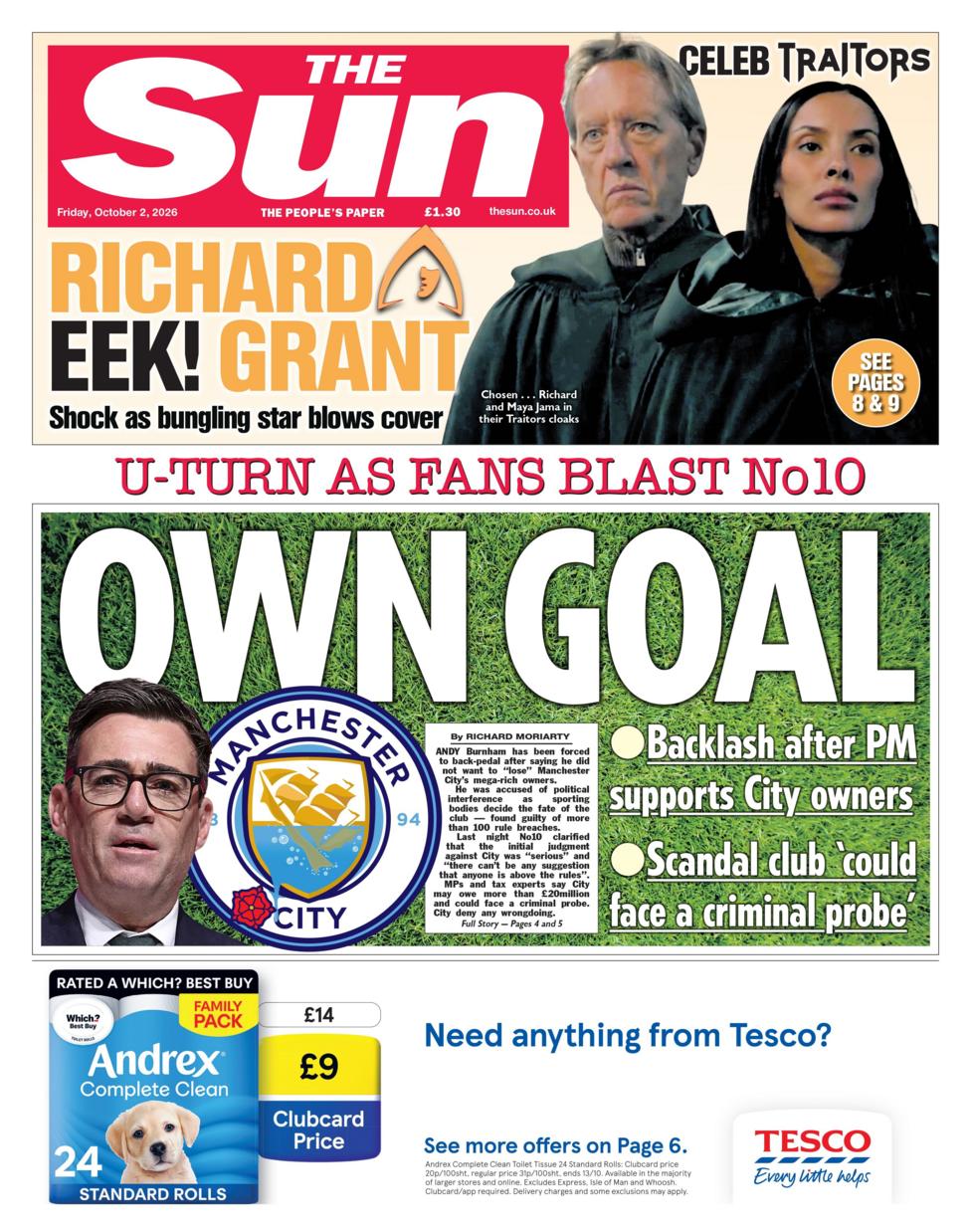
Prime Minister Burnham was compelled to revise his initial response to the Manchester City financial rules breach scandal. The Sun reported that Burnham faced accusations of political interference
after stating he would be really concerned
should the club's owners decide to divest following the Premier League's finding that the club had breached financial regulations. Downing Street subsequently issued a clarification, releasing a statement emphasising that the initial judgement was serious
and that there cannot be any suggestion that anyone is above the rules
.
What other stories captured newspaper attention?
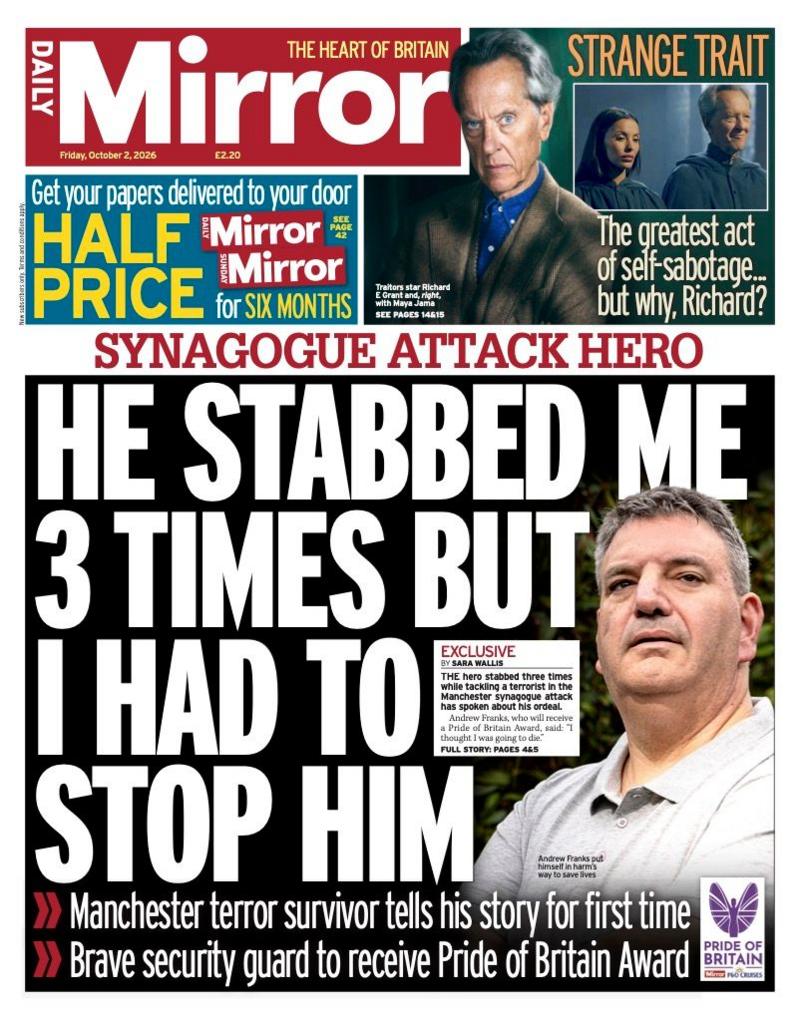
Andrew Franks, a security guard who was stabbed three times during a Manchester synagogue attack in the previous year, shared his account of the incident with the Daily Mirror. Franks, who is set to receive a Pride of Britain Award, disclosed that he believed he would not survive the assault.
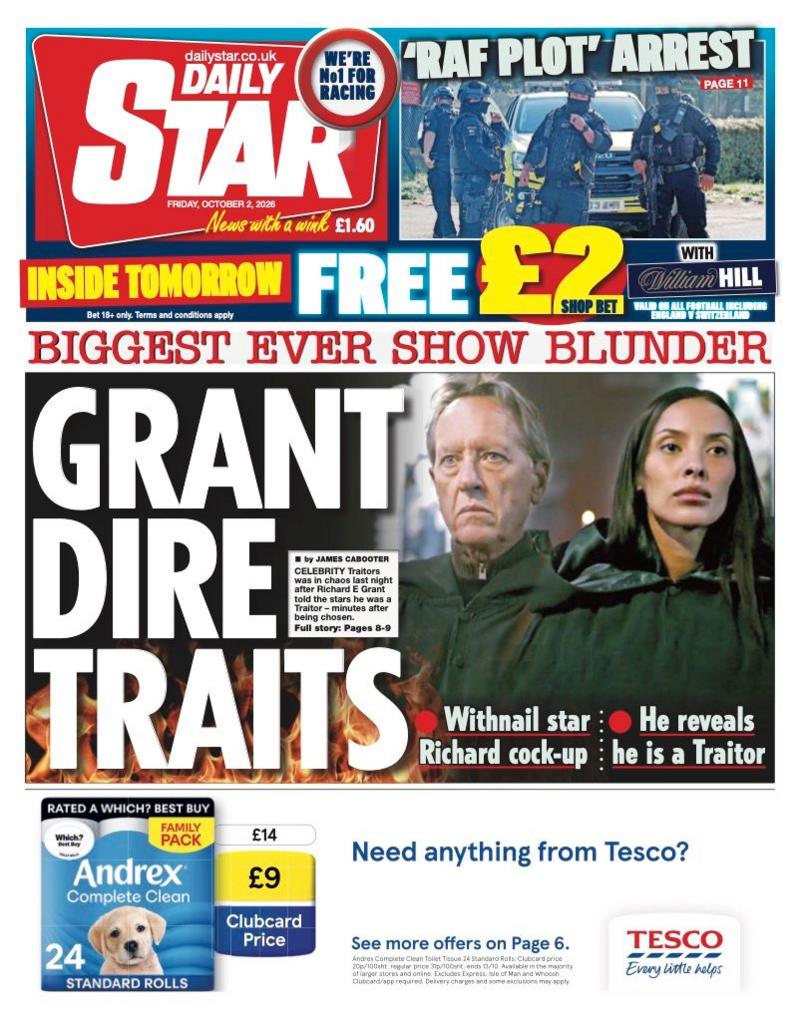
The Daily Star's front page featured multiple spoilers from the opening episode of the second series of The Celebrity Traitors, announcing the episode contained the biggest ever show blunder
. A national newspaper's coverage gave the series premiere a four-star rating, describing it as a return to the castle
.