The Conservative party is claiming a significant political win after the government announced on the morning of the party's annual conference that it would abandon most of its plans to restrict jury trials in crown courts. The move represents a major reversal for the Keir Starmer administration, which had introduced the proposals as part of efforts to address the backlog of cases in the criminal justice system. The announcement came as the Tory conference began in Birmingham and the Green party prepared to debate a controversial motion on its final conference day.
Alex Norris, the justice secretary, confirmed that the government has dropped the plan to send cases likely to result in sentences of three years or less to judge-only Crown Court trials, though it will retain judge-only trials for some complex fraud and financial cases, according to reporting on the government's reversal. The U-turn follows sustained opposition from Conservative MPs, legal professionals, and civil liberties campaigners who argued that removing jury trials would undermine a fundamental principle of the British justice system.
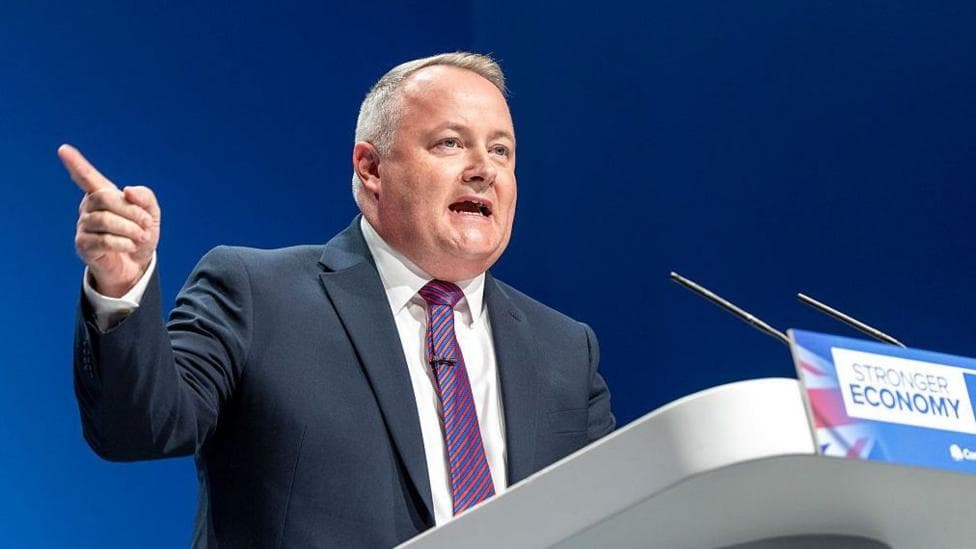
Nick Timothy, the shadow justice secretary, declared the reversal a triumph for those who had campaigned to preserve jury rights.
This is a major victory for everyone who fought to defend trial by jury, and Conservatives led that fight from day one. Labour has been forced to abandon its central attack on jury trials in the crown court.However, Timothy argued that the government's revised approach still fell short of fully protecting jury trials, claiming that
Labour are restricting juries by the back door, scrapping the right to elect one and dumping those cases on magistrates whose backlog is at a record high.
The government's decision to retain judge-only trials for complex fraud and financial cases means the Courts and Tribunals Bill will return to Parliament in a significantly altered form. The bill is scheduled for report stage and third reading in the Commons on 13 October, where MPs will debate the revised proposals.
Why did the government abandon the jury trial restrictions?
The original proposal to remove jury trials for certain cases was designed to tackle a severe backlog in the crown court system, where nearly 81,000 cases are currently stuck awaiting trial. However, the plan encountered fierce resistance from multiple quarters, including legal organisations, human rights groups, and opposition politicians who contended that jury trials represent a cornerstone of English common law and should not be dismantled to address administrative problems.
Timothy pointed out that the government has made no commitment to increase the frequency of court sittings, which would address the underlying cause of the backlog. He also highlighted that while the administration found time to write into law a review of how its reforms treat people of different backgrounds, it has not provided additional resources to the magistrates' courts, which would receive the cases removed from jury trial eligibility.
What is Kemi Badenoch's strategy for the Conservative conference?
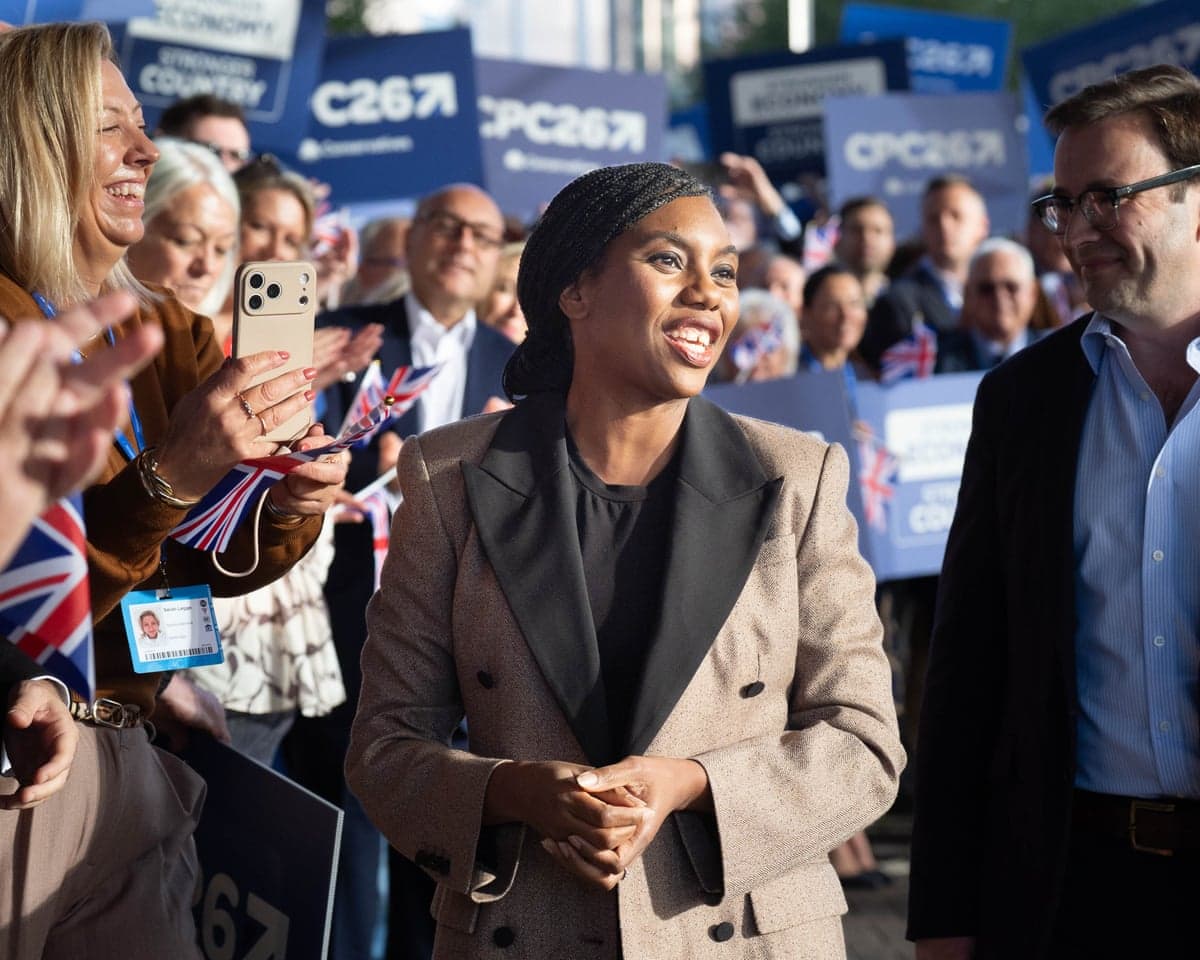
Kemi Badenoch, the Conservative leader, is using the party's annual gathering to present a renewed vision of the party to the country. In explaining her approach, she stated:
Last year was about telling the party who I was. Now the party is going to be showing the country who we are: a strong team of people who actually like each other.The conference, running from 4 to 7 October in Birmingham, will feature policy announcements and speeches designed to demonstrate that the Conservatives have moved beyond the divisions and infighting that characterised the final years of the previous Conservative government.
Badenoch's position as party leader has strengthened considerably since she took office. When she first assumed the role, there were widespread doubts about whether she would remain in post until the next election. However, a well-received party conference speech last year, a widely praised response to the recent budget, and rising personal approval ratings among Conservative members and right-leaning voters have consolidated her authority. According to recent analysis, even if the Conservatives were to lose the next general election, it is conceivable that Badenoch could retain the leadership, partly because potential challengers who favour radically different policy approaches lack significant support within the party.
Despite these improvements in her personal standing, Badenoch faces significant challenges. At the last election, the Conservative party secured 24.4% of the GB vote. According to polling aggregates, the party has consistently polled below that threshold since the end of 2024 and continues to lag behind Labour in most surveys. The conference will provide an opportunity for Badenoch to attempt to narrow that gap and demonstrate that the party remains a credible alternative government.
The timing of Labour's jury trial announcement on the morning of the Conservative conference opening is notable. In previous decades, an informal understanding existed that governments would avoid making major policy announcements during opposition party conferences. That convention has now largely disappeared, and Justice Secretary Alex Norris has successfully ensured that the government's announcement has dominated the morning news cycle, potentially limiting the media attention available to Badenoch's opening remarks.
What is happening at the Green party conference?
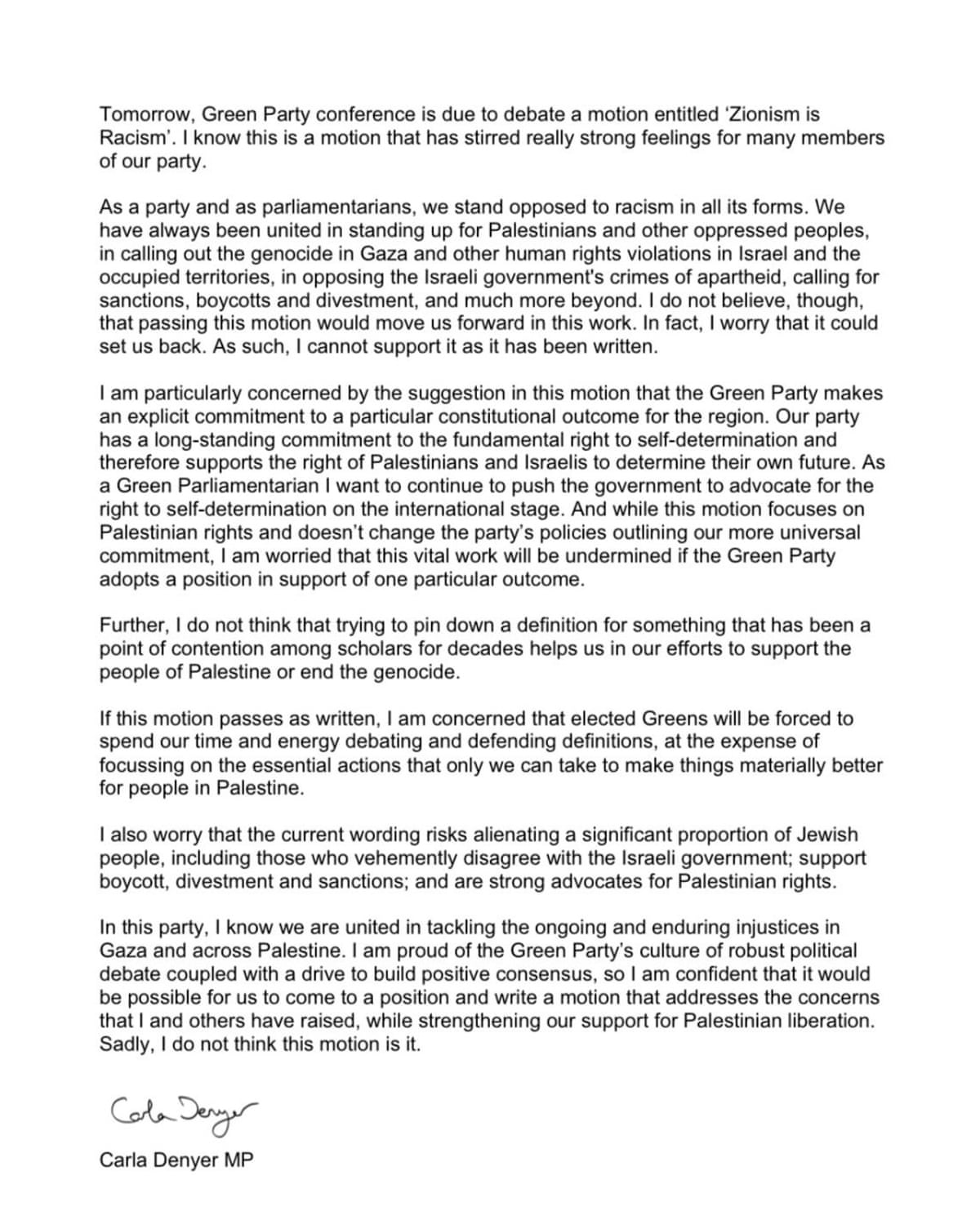
The Green party is concluding its annual conference in Brighton with a debate on a controversial motion that has divided the party. Carla Denyer, the former Green co-leader, has urged activists to reject the proposal, which characterises Zionism as a racist ideology and proposes replacing Israel with a single democratic Palestinian state in all of historic Palestine.
Denyer expressed concern that if the motion passes in its current form, elected Green representatives would be forced to expend significant time and energy defending definitions rather than focusing on concrete actions to improve conditions for Palestinians. She also warned that
the current wording risks alienating a significant proportion of Jewish people, including those who vehemently disagree with the Israeli government; support boycott, divestment and sanctions; and are strong advocates for Palestinian rights.
The motion has generated substantial internal debate within the party. Adrian Ramsay, another former Green co-leader, has also stated he will vote against the motion. The proposal had previously been delayed after the party's March online conference was disrupted by a platform crash that prevented the agenda from being completed.
What is the schedule for today?
The morning will feature several high-profile media appearances. Alex Norris, the justice secretary, is scheduled to be interviewed on a national broadcaster's Sunday programme at 8:30am. Separately, another senior government figure will appear on the BBC's Sunday programme at 9am, with the interview having been pre-recorded. Norris will also participate in that appearance.
At the Green party conference in Brighton, activists will debate the Zionism motion during the morning session. At the Conservative conference in Birmingham, proceedings will open at 2pm with a session on the theme of resisting separatism, featuring speeches from senior party figures including Alex Burghart, the deputy leader and shadow Northern Ireland secretary; Mims Davies, shadow Welsh secretary; Harriet Cross, shadow Scottish secretary; Darren Millar, leader of the Welsh Conservatives in the Senedd; and Russell Findlay, the Scottish Conservative leader.
Badenoch will deliver her opening speech to the conference in the mid-afternoon. Later, a senior Conservative figure who is seeking to become the party's candidate for London mayor in 2028 will speak at a fringe event.
What happens next?
The Conservative conference will continue through 7 October, with further policy announcements and speeches scheduled throughout the four-day event. The Courts and Tribunals Bill, now substantially revised following the government's decision to abandon most jury trial restrictions, will return to Parliament for its next stages. Report stage and third reading in the Commons are scheduled for 13 October, where MPs will scrutinise the revised proposals and debate the government's new approach to addressing the crown court backlog.