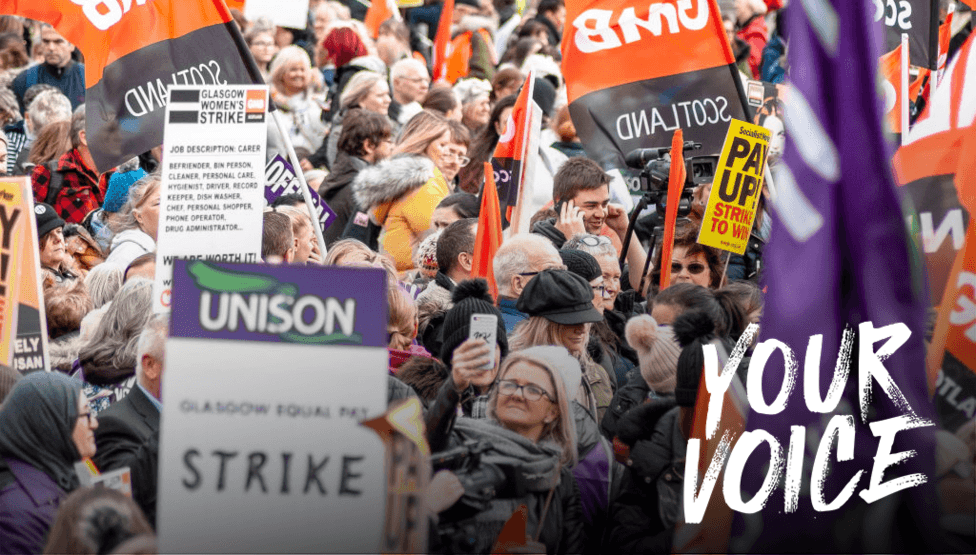
Thousands of Glasgow City Council employees remain uncertain about their future earnings under a new pay structure that the local authority is rolling out following a protracted equal pay dispute. The council announced plans last week to dismiss and rehire all non-teaching staff after negotiations with unions over revised pay grades collapsed, only to suspend the scheme the next day. Despite this pause, numerous workers have reported to local media that they have not yet undergone job evaluation, leaving them facing the prospect of signing new contracts without knowing their salary levels.
The uncertainty affects a substantial portion of the workforce. According to union estimates, approximately 20% of the council's roughly 23,000 staff—around 4,600 employees—are still awaiting evaluation of their roles. These workers fall into two categories: those in secondary benchmark roles, where groups of similar jobs are evaluated together, and those in unique roles where fewer than five people perform that job within the council or related bodies such as City Property or Glasgow Life.
A council spokesperson explained the phased approach:
Committee decided, some time ago, to implement the new pay and grading scheme on a phased basis – so those in unique jobs, for example, have always known their evaluation would come after primary roles. The council is committed to moving on with that process as soon as possible.
One anonymous worker described the anxiety created by this uncertainty:
My worry last week was that I would be forced to sign a contract while still being unsure of where my role would land on the new grading structure. I am still in a place of anxiety. I believe the whole process has been handled very poorly. Why tell some staff where they are in the new structure and leave others on tenterhooks?

Another employee highlighted the financial stakes involved. They explained that colleagues directly above and below them in their team have already been evaluated, creating a situation where they could end up on the same pay band as their line managers or the same grade as staff they currently supervise.
The difference between those two bandings is several thousands of pounds a year. I'm struggling to understand how figures can already be quoted by the council about the proportion of the workforce who will be better or worse off under the new structure, when so many haven't actually been evaluated yet.
Why is the council changing its pay system?
Glasgow City Council is replacing its pay structure, which has been in place since 2006, after it was found to discriminate against female workers. The old Workforce Pay and Benefits Review system resulted in the council spending hundreds of millions of pounds to settle equal pay discrimination claims—a financial burden the authority cannot sustain indefinitely.

Under the new system, jobs are evaluated against 13 factors, including physical effort, mental skills, concentration and physical co-ordination, and then placed into one of 12 pay grades. The council previously stated that approximately 63% of workers will receive pay increases and 11% will face pay cuts, though it acknowledges these figures may shift once secondary and unique roles are fully evaluated.
The changes will have a significant impact on some of the most vulnerable workers. Staff with domestic abuse advocacy service Assist will see wages reduced by around £11,000, raising concerns about service quality and staff retention in a critical support function.
What triggered the fire-and-rehire announcement?
Negotiations between Glasgow City Council and the GMB, Unite and Unison unions over the new pay structure broke down, leading the council to announce on 24 September that it intended to dismiss all staff and issue new contracts effective from 1 January 2027. However, on 25 September the council agreed to pause the dismissal-and-rehire process after discussions with the Scottish Government and unions, with negotiations due to resume the following week.
As part of the pause, the council offered extra funding for back pay and extended pay protection from six to 12 months, attempting to address union concerns about the restructure.

How will unevaluated staff be treated during the transition?
According to the council's staff guidance, workers whose posts have not been fully evaluated will receive any applicable allowance changes from April 2027, while their core pay position will be determined after their evaluation is completed. This means some employees will move to the new pay structure before their individual salary level is established, creating ongoing uncertainty about their financial position.
The phased evaluation approach was adopted to allow the council to assess primary benchmark roles—the council's most common jobs—more quickly. However, many staff involved in evaluating the first phase remain engaged in discussions, which has delayed progress toward evaluating secondary and unique roles.
What happens next?
The council's approved implementation date for the new pay and grading structure is 4 April 2027. Talks between the council and unions are continuing to resolve outstanding issues before this deadline. The outcome of these negotiations will determine whether the fire-and-rehire process proceeds and how the remaining staff evaluations are conducted.
Key Facts
- Approximately 4,600 Glasgow City Council staff (20% of the non-teaching workforce) are still awaiting job evaluation with no confirmed timescale
- The new pay structure replaces a 2006 system found to discriminate against female workers, costing the council hundreds of millions in equal pay settlements
- Around 11% of evaluated staff face pay cuts, with domestic abuse workers losing up to £11,000 annually
- The council paused its fire-and-rehire plan on 25 September after intervention by the Scottish Government, with negotiations resuming the following week
- The new pay system is scheduled to take effect on 4 April 2027