Across the United Kingdom, millions of residents and business owners face a persistent problem: mobile phone signal that ranges from patchy to non-existent. From emergency calls that cannot connect to card payments that fail mid-transaction, the consequences of poor connectivity are reshaping how people work and live in affected communities.
A consumer analysis published in July 2026 revealed the scale of the challenge. According to research by Which?, the UK ranks 57th globally for mobile network performance and has worse coverage than every European Union country and other G7 nations. More than a third of mobile customers surveyed reported problems with poor signal, highlighting how widespread the issue has become.
Despite government targets and billions invested by network operators, the gap between coverage statistics and real-world experience remains stark. Official figures suggest most of the country is connected, yet in dozens of towns and villages, people struggle daily with unreliable service.
When emergency calls cannot get through
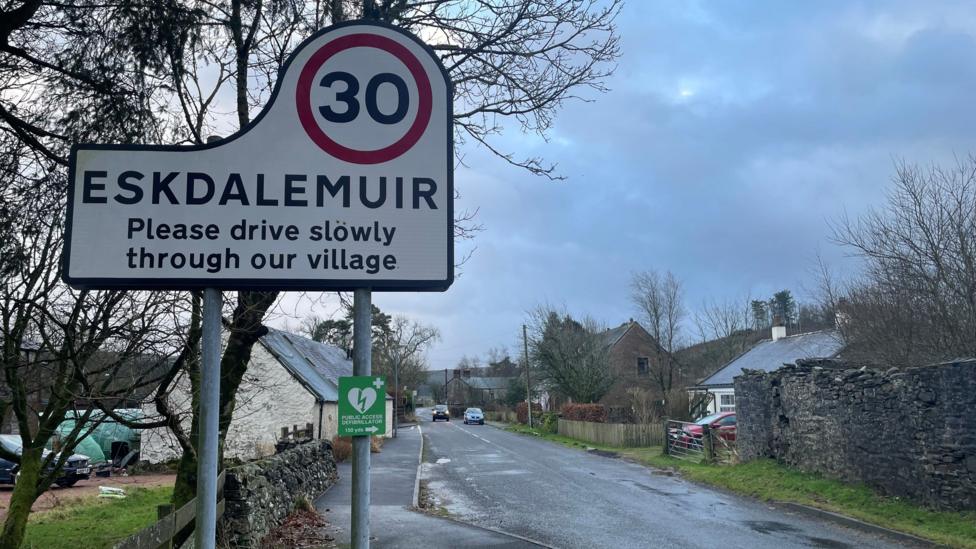
In Eskdalemuir, a remote village of approximately 250 residents in southern Scotland, mobile signal is virtually absent. Trudi King-Gunn, who works at the Eskdalemuir Community Hub, describes the situation as critical.
The concern is when we need to call the emergency services,she said.
The village's residents depend on Wi-Fi and landlines to stay connected, but this arrangement becomes dangerous during power cuts—which are not uncommon in the area. As telecommunications infrastructure shifts from copper landlines to internet-based phone services, residents face a growing risk of being unable to reach help during emergencies.
Trudi explained that
in the actual centre of Eskdalemuir, it is a blackspot.Back-up batteries exist to keep landlines operational during outages, but they provide only two or three hours of power. The situation is particularly frustrating because good signal exists just miles away.
I live four miles down the road and I have perfect mobile signal but in [Eskdalemuir] there is just nothing,Trudi said.
There is no talk of any sort of change or mast going up or anything like that.
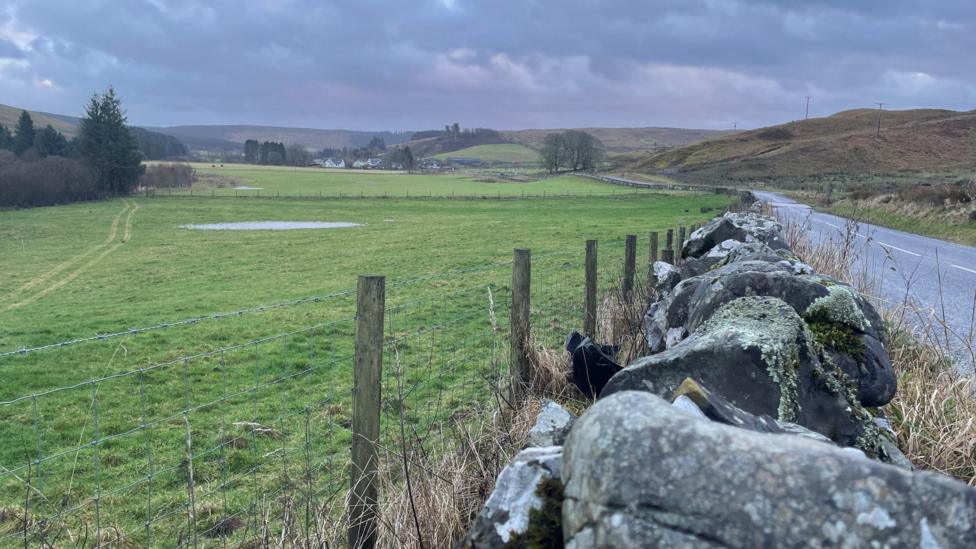
In December 2025, Eskdalemuir residents formally raised concerns about the transition to digital phone services and the risk it posed during power cuts. BT responded by offering hybrid phones and in-home support for people with specific needs, though residents remain anxious about long-term resilience. The company also stated it was adding back-up power generators to more sites.
How does poor signal affect businesses?
In coastal towns and city centres, weak connectivity is costing traders real money. Card payment systems fail, suppliers cannot be reached, and customers abandon purchases when transactions stall.
Llandudno, a seaside town in north Wales that attracts millions of visitors annually, exemplifies this problem. Paul Williams, general manager of Llandudno Pier, said the issue
affects us massively, especially with the number of businesses we have. They all rely on the 5G signal to try and get the card transactions processed.
Bella McBride, who runs a kiosk selling hats and accessories on the pier, described the unpredictability of her payment systems.
My card machine, for example, some days it can go down completely and not everybody carries cash,she said.

Alan Heseldine, who operates a seafood kiosk nearby, characterised the signal as ranging
from atrocious to completely useless.He explained:
It's a major problem because I can't use the card machines to best effect. I can't make phone calls to suppliers, I have to wait until I go home or I can get Wi-Fi somewhere else. It's really difficult. It makes the job a lot harder than it needs to be.
Visitors to Llandudno also suffer. Tilly Adams-Mears, who was visiting to surprise her grandmother, found herself unable to contact her.
I've been trying to contact my nan and you can't get hold of her at all. Honestly - there's no phone bars.

Local councillors approved new phone masts for the town last year, but construction has not yet begun. The delay reflects a broader challenge: Llandudno's Victorian seafront is a conservation area, and concerns about the visual impact of new infrastructure have slowed progress.

Similar problems plague Ely, Cambridgeshire, 230 miles away on the opposite side of the UK. Tasnime Rotherham, 42, who runs a mobile catering business, said poor signal in the city centre was directly harming her revenue.
Fifty percent of our payments are on card, so we need a decent signal,she explained.
I've lost a few sales because people have walked off and not realised their payment didn't go through. We now have trader Wi-Fi because the signal in the marketplace is like a black zone.

Ely has no phone masts in its city centre; instead, they are positioned around the outskirts. Telecommunications consultant Bob Driver noted that the size of Ely Cathedral also reduced connectivity.
Because it's a historic town you don't want to see lots of base stations everywhere and people object to them, so planning permission is a problem,he said.
Interestingly, Tasnime receives much better reception in her home village a couple of miles outside Ely, which she described as
the middle of nowhere.The inconsistency highlights how signal strength depends on multiple factors beyond population density.
Why is coverage so uneven?
According to the latest Ofcom data cited in the July 2026 Which? analysis, 84% of the UK has good 4G coverage from all mobile network operators, while 96% has 4G coverage from at least one operator. However, these statistics mask a critical flaw: they measure whether a connection is available, not whether it is consistently useful in practice. Which? explains that coverage obligations focus on availability rather than real-world service quality, meaning a postcode can be counted as covered despite poor actual performance.
This distinction is stark in places like Tenby, Wales. Tenby, a popular Welsh seaside town, faced severe mobile signal issues after a mast was decommissioned, frustrating both locals and tourists. According to Which?'s 2025 postcode analysis, Tenby's SA70 postcode had the UK's weakest mobile network quality: users had a good connection only 54.3% of the time overall, and just 38% for Three customers.
The roll-out of mobile services and infrastructure in the UK is led by private mobile network operators. Mobile UK, which represents these providers, acknowledged the frustration.
We fully recognise the daily frustration poor signal causes for residents, high street traders, and rural communities trying to take card payments or stay connected.The organisation argued that if governments wanted
world-class, reliable mobile connectivitythen planning systems needed to be
modernised,adding that
cutting this red tape is vital if operators are to deploy new sites.
Mobile UK stated that network operators were investing billions across every UK nation to improve connectivity. However, the delivery of mobile infrastructure projects often overlaps with devolved powers such as planning, creating bureaucratic friction. Telecommunications itself is not devolved, meaning the UK government has primary responsibility for setting targets and policy.
What is the government doing?
The UK government said:
Fast, reliable digital infrastructure is fundamental to a growing economy. That's why we are working closely with industry to deliver our ambition of achieving 5G coverage across all populated areas of the UK by 2030. Through the Shared Rural Network, more than 95% of the UK's landmass is now within range of a 4G signal, one year ahead of the schedule, with the programme providing rural coverage to an area equivalent to almost 800,000 football pitches. Demand on mobile networks continues to grow, so we are looking at what more can be done to support investment and improve network performance over the long term through the Mobile Market Review.
Ely is exploring an alternative approach: installing small booster cells on lamp-posts. These devices cost less than traditional masts and do not interfere with the city's historic landscape. However, they have significant limitations. Mobile network operators cover the cost of these cells, but they only boost signal for approximately 150 metres. Mobile UK stated that the cells were designed to complement masts, not replace them.
Signs of progress in some areas
In County Tyrone, Northern Ireland, where locals have previously described
complete blackspotsof phone signal, there are signs of improvement. The expansion of mobile network infrastructure has faced challenges including strict planning laws and, in recent years, frequent arson attacks linked to online conspiracy theories.
The Northern Ireland Executive launched a Mobile Action Plan in 2020 with the aim of working with mobile network operators to identify issues and
support rollout and expansion.Catháir Brady, who works at a theatre in the town of Coalisland, said 5G coverage had subsequently improved and was now
reliable enough,whereas previously it could
get worse by moving even a few feet.However, he noted that 5G coverage in the neighbouring town of Clonoe, where he lives, remained
awful.
A few miles away in Stewartstown, Joanne Sinclair reported that recent improvements to 4G and 5G coverage had been hugely beneficial to her family's hardware store.
Many different networks work,she said, whereas previously only a very small number of networks received 5G coverage in the area, and these were often patchy. She explained that the improvements had come in the last five years and the enhanced connectivity was useful for processing payments and making calls.

I make a lot of business phone calls off my mobile,Joanne added, noting that before the improvements, staff would have to stand in a specific part of the office just to make a call.
These pockets of progress demonstrate that investment and planning coordination can yield results. Yet across much of the UK, residents and traders continue to face the daily consequences of inadequate infrastructure—consequences that official coverage maps do not capture.