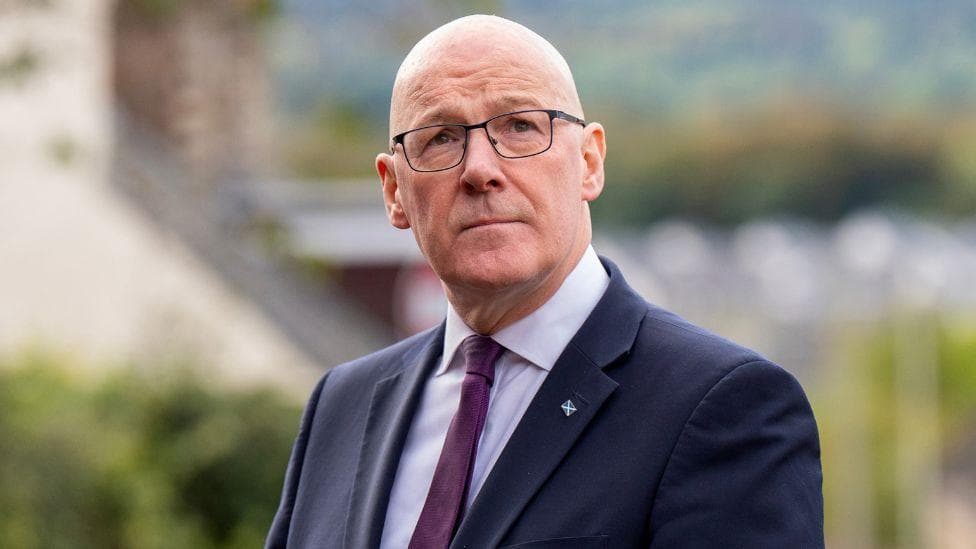
John Swinney has defended his assertion that Scottish pensioners would "lose" their pensions under proposed UK government reforms, insisting his comments to parliament were accurate despite criticism from opposition leaders who say the language was misleading.
The first minister's remarks came after Andy Burnham outlined plans to modify the state pension "triple lock" from April 2030. Swinney told members of the Scottish Parliament that "we are now going to lose our pensions", framing the issue as evidence for Scottish independence. Scottish Conservative leader Russell Findlay condemned this as an "inaccurate and irresponsible" statement likely to alarm pensioners, while Scottish Labour leader Michael Marra accused Swinney of "misrepresenting" the UK government's position on social care reform.
In response, Swinney has referred the dispute to independent advisers who oversee the ministerial code and can investigate potential breaches. According to reporting from a Scottish news outlet, Swinney maintained that no correction to the parliamentary record was necessary. On 6 October, he stated he had "nothing to explain to parliament" over his comments.
What is the triple lock and what would change?
The triple lock, introduced in 2011, guarantees that the UK state pension rises annually in line with whichever is highest: inflation, average wage growth, or 2.5%. Burnham's proposal would adjust this mechanism from April 2030, after the next general election, replacing the wage-growth element with a fixed 2.5% floor while introducing a new link to keep the pension's value aligned with earnings over time.
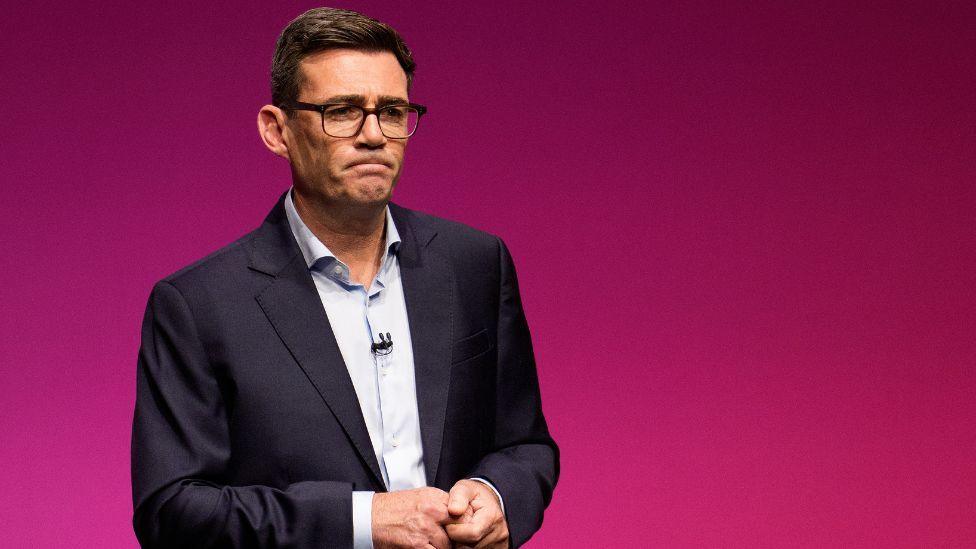
The UK government projects this change would reduce pension spending by £15 billion annually by the end of the 2030s, rising to £50 billion per year by 2050. Burnham has said the savings would fund a new National Care Service in England beginning in 2030. The government also notes that the adjusted system would include a new link to keep the state pension's value in line with earnings over time, even though it removes the automatic annual earnings link. Additionally, Burnham confirmed the triple lock would remain unchanged throughout the current Parliament, in line with Labour's 2024 manifesto pledge.
How would Scotland be affected?
Scotland's state pension operates under the same UK-wide system, with approximately 1.1 million people currently receiving it—a figure projected to reach 1.4 million by 2047. However, social care is devolved to the Scottish Parliament, and Scotland introduced a system of free personal care in 2002, meaning Scottish pensioners would face the pension changes without benefiting from England's proposed care service expansion.
Swinney has calculated that the changes would "take up to £4 billion from Scotland's pensioners" by 2050, translating to roughly £2,000 less per pensioner in real terms by that year. The Scottish Government's estimate puts the projected shortfall at about £1.3 billion annually by 2039–40, rising to about £4 billion by 2049–50, compared with retaining the current triple lock. The UK government disputes these figures, which are derived by calculating Scotland's share of the pension-age population against the projected savings from the changes.
What does the language dispute centre on?
The core disagreement hinges on whether pensions would be "lost" or merely grow more slowly. One interpretation emphasises that pensions would continue to increase under the new system, just potentially at a slower rate than under the triple lock. Under this reading, no pensioner would lose their pension entirely—the word "lose" refers to foregone increases rather than actual reductions from current levels.
Swinney's initial phrasing—"we are now going to lose our pensions"—prompted Findlay to demand a correction. However, when Swinney addressed parliament again on Tuesday, he offered a more carefully worded version, stating that any loss was "compared with the current triple lock being maintained". Should the independent advisers investigate, Swinney may cite this clarification as his attempt to correct the record at the earliest opportunity, as required by the ministerial code. The ministerial code requires ministers to provide "accurate and truthful information" to Parliament; knowingly misleading it is grounds to be expected to offer their resignation to the first minister.
Could Scotland receive additional funding?
A significant but overlooked aspect of this debate concerns how devolution funding works. When Westminster spends money on devolved matters—including health, education, justice, and social care—the Scottish Parliament receives a population-adjusted share of that spending through the block grant, which MSPs can allocate as they choose.
If extra funding raised from pension changes is spent on social care in England as Burnham proposes, this should trigger an increase in Holyrood's block grant. The Scottish government could then use that additional money to support pensioners, as it already does through pension-age winter fuel payments and has the power to top up benefits or create new ones. This mechanism differs from spending on reserved matters like defence, which would not increase Holyrood's funding.
Swinney has insisted that "none of us can foresee what the implications of these changes would be for the block grant", citing the difficulty of forecasting conditions in 2039 or 2050. Predicting future earnings, inflation, pension levels, and the state of devolved finances remains inherently uncertain, particularly given Swinney's stated hope that Scotland will be independent by then.
What happens with the ministerial code review?
Independent advisers who oversee the ministerial code can decide whether to investigate potential breaches. According to reporting on the referral, the independent advisers can review the correspondence and initiate an investigation if they consider one merited; no investigation or decision date has been reported. Should they proceed, they could recommend action such as a statement to parliament. Swinney would retain the final say on whether a breach occurred and what action, if any, was required.
Precedent exists for such reviews. Nicola Sturgeon and Alex Salmond were both cleared of misleading parliament by independent advisers. Earlier this year, Angela Constance was found to have breached the code but received only a formal warning after advisers concluded the breach was inadvertent.
Key Facts
- The triple lock guarantees state pensions rise annually by the highest of inflation, wage growth, or 2.5%; Burnham's plan would replace the wage element with a fixed 2.5% floor from April 2030
- Scotland's 1.1 million state pensioners would face the changes but gain no benefit from England's proposed National Care Service expansion, as social care is devolved
- Swinney's claim that pensioners would "lose" their pensions refers to foregone increases compared to the triple lock, not actual pension cuts from current levels
- If Westminster spending on social care increases, Scotland's block grant should rise proportionally, allowing the Scottish government to support pensioners if it chooses
- Independent advisers are reviewing whether Swinney's parliamentary comments breached the ministerial code, which requires ministers to provide accurate and truthful information