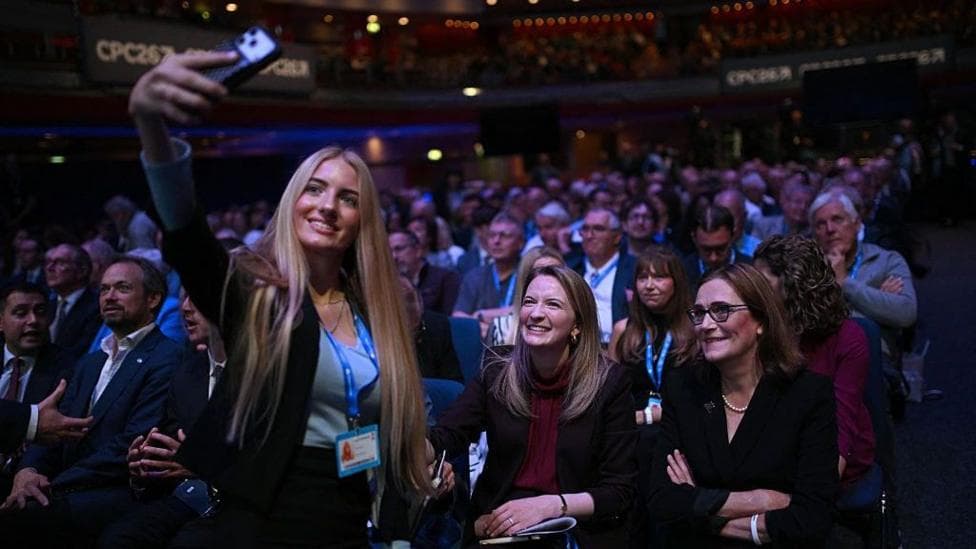
The Conservative Party is displaying newfound confidence at its annual conference in Birmingham, with senior figures including leader Kemi Badenoch discussing prospects for winning the next general election outright. This upbeat atmosphere stands in sharp contrast to the party's electoral position, which remains substantially weaker than when voters rejected it decisively in 2024.
Party conferences often create environments where positive thinking can flourish among like-minded supporters. Extended socialising and networking in such settings can make ambitious goals feel achievable, even when external evidence suggests otherwise. The current Tory gathering reflects this dynamic, with delegates expressing confidence despite polling that suggests the party would perform worse than its 2024 result if an election were held immediately.
What has changed since last year's conference?
The party has successfully neutralised, at least temporarily, the existential threat posed by Reform UK. Last year's conference was overshadowed by defection rumours and speculation about potential deals with Nigel Farage. That threat has receded considerably. Additionally, Reform UK has faced scrutiny over a donations row involving leader Nigel Farage, which is contributing to a decline in the party's support. However, Reform deputy leader Richard Tice has stated the party intends to win Badenoch's seat at the next election.
The most significant shift concerns Badenoch herself. Her approval ratings have climbed substantially in recent months, making her one of only two party leaders with a net positive rating—the other being Prime Minister Andy Burnham, according to polling firm More In Common. Focus groups describe her as a
"breath of fresh air", with voters on the right characterising her as someone unafraid to
"say it as it is". Her sharp exchanges at Prime Minister's Questions have earned particular praise, with observers noting her
"intelligent", "professional"and
"principled"approach.
Why hasn't Badenoch's popularity helped the party?
Badenoch's personal standing has not yet translated into improved fortunes for the Conservative Party as a whole. Voters continue to view the organisation as
"outdated" and "divided", according to More In Common's analysis. The party trails Reform UK by four to five percentage points in polling and lags Labour by as much as nine points. This disconnect between leader approval and party support reflects a deeper credibility problem.
Conservatives acknowledge this challenge openly. Party chairman Kevin Hollinrake stated the issue plainly:
"Because people do trust Kemi and they don't trust us, that's how I would put it in a nutshell."The underlying problem is voter scepticism about whether the party can deliver on its promises, given that it had 14 years in government to address the very issues it now emphasises as urgent priorities.
How is Badenoch attempting to rebuild trust?
Badenoch's strategy centres on positioning the party under new management with different priorities. She has moved away from culture war rhetoric and is concentrating on economic policy and articulating core Conservative principles. She has published *The Right Way*, a nearly 100-page statement of Conservative principles, drawing a deliberate parallel with Margaret Thatcher's 1976 *The Right Approach*.
On the question of whether the party could win an election immediately, Badenoch takes a measured position. She argues that no party could win outright if an election were held now. However, she has been explicit about her unwillingness to govern in a hung parliament arrangement with Reform UK, stating she would prefer to hold another election instead.
What specific policies are the Conservatives proposing?
The party has announced several policy commitments at the conference. The Conservatives pledged to end the £100,000 childcare eligibility threshold and create 50,000 prison places, with the latter funded by cutting overseas aid to £1bn a year. Shadow chancellor Andrew Griffith was due to outline a deregulation initiative described as
"the most ambitious deregulation project in a generation". The party has also committed to cutting at least one tax in every Conservative budget.
How prepared is the party for an early election?
Conservative leadership is divided on the timing question. Hollinrake sounded a cautious note, stating:
"We are not where we need to be right now. We don't want an election right now, ideally. Ideally, it would come way down the track."Deputy leader Alex Burghart, however, emphasised the party's readiness, declaring:
"We are preparing for an election now. We are convinced we can win the election outright."Burghart claimed the Tories were more united than at any point in recent history, with the possible exception of the period following Boris Johnson's 2019 victory.
The party has begun weekly election-planning meetings following Andy Burnham's succession of Keir Starmer, and Badenoch's team has been preparing for the conference as if it might be the last before a general election.
What role could tactical voting play?
Former Scottish Conservative leader Dame Ruth Davidson identified a potential pathway to recovery. She argued that once the Conservatives establish themselves as one of the top two parties in polling, voters seeking to remove Labour from power would begin switching to the Tories in significant numbers. Tactical voting—where electors vote to keep parties out rather than for their preferred option—could prove decisive at the next election.
Hollinrake highlighted what he sees as a strategic advantage, declaring to applause:
"For the first time in history, the Conservative Party is now the least hated political party in the country. When it comes to tactical voting, that's really important."While not the most inspiring message, this assessment reflects the party's calculation that it can benefit from anti-Labour sentiment even without widespread enthusiasm for Conservative policies.
What happens next?
Badenoch is scheduled to deliver her conference keynote speech on Wednesday, 7 October 2026. The Conservative Party conference runs in Birmingham from 4 to 7 October 2026. Her address is expected to set out the party's vision and reinforce the themes of renewal and economic focus that have dominated the gathering.