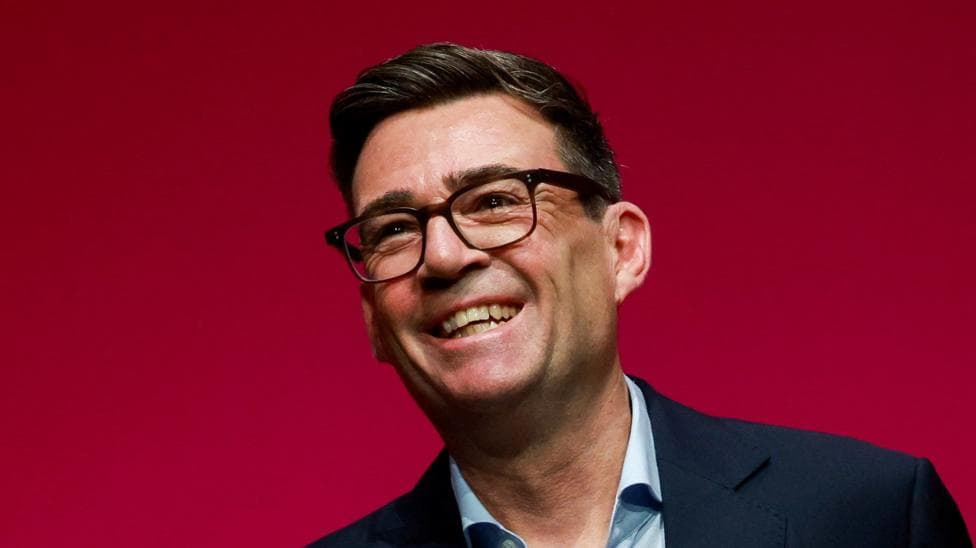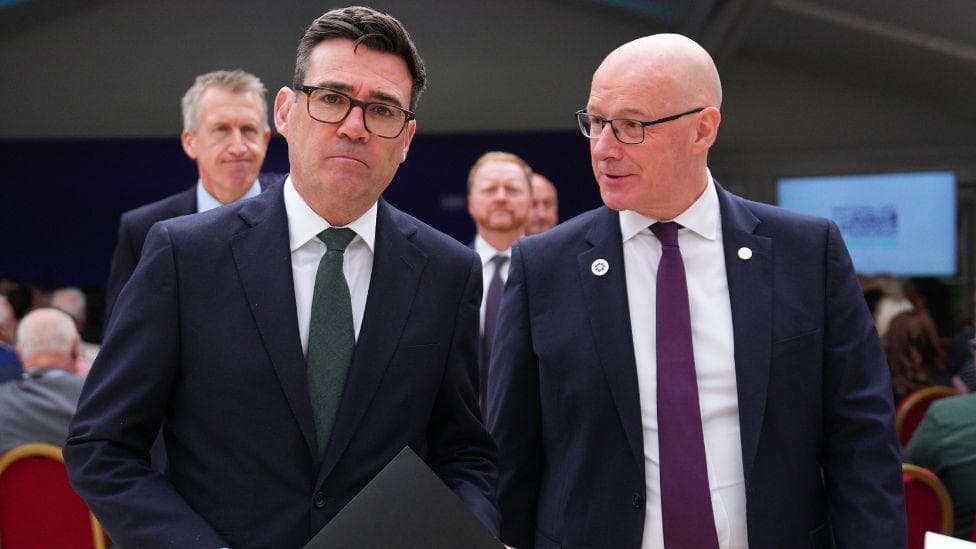
Prime Minister Andy Burnham and Scottish First Minister John Swinney have clashed sharply over a proposal to end the state pension triple lock, with Swinney branding the move a "bad idea" and accusing Burnham of repeating mistakes made by his predecessor.
The triple lock mechanism guarantees that state pensions rise annually by whichever is highest: inflation, average wage growth, or a fixed 2.5%. At Labour's conference, Burnham announced that from April 2030, the earnings component would be removed, leaving pensions to increase only in line with inflation or 2.5%. According to political analysis, the government would later suggest the rate could rise above this threshold in some years to preserve pensions' value relative to earnings.
Burnham stressed that the triple lock would remain unchanged for the remainder of the current parliament, honouring Labour's election manifesto commitment. According to , the proposed adjustment would only take effect after the next general election, due by mid-2029.
The pension changes form part of a broader package: pensioners would face no charges for care services, while the savings generated would fund a new National Care Service across England. Burnham also pledged that low-income pensioners would not be pushed into paying income tax before the decade's end. According to official estimates, the pension adjustment could save approximately £15 billion annually by 2040.
The triple lock has been a cornerstone of welfare policy for about 15 years, introduced by the coalition government and defended by both major parties as a commitment to pensioners.
Why is Swinney opposed to the change?
Reacting at Holyrood, Swinney argued that Scotland had delivered free personal care for elderly citizens without penalising pensioners. He drew a parallel between Burnham's proposal and the previous government's decision to withdraw winter fuel payments from pensioners.
We have provided free personal care for the elderly here in Scotland without punishing pensioners and what the prime minister was doing was repeating the mistakes of Keir Starmer. The first act of Keir Starmer was to take away winter fuel payments from pensioners, and now the first act of Andy Burnham was to take away the triple lock from pensioners.
Swinney's criticism reflects a broader pattern of tension between the two leaders. Earlier in the year, Burnham told Swinney they would have to "agree to disagree" on Scottish independence during their first conversation since Burnham became prime minister.

What sparked the personal exchange between the leaders?
During his conference speech, Burnham referenced comments Swinney had made at a summit of nationalist leaders in Cardiff earlier in September. At a press conference alongside the first ministers of Wales and Northern Ireland, Swinney had predicted that Burnham would be the UK's last prime minister.
Burnham responded by recounting the timing of Swinney's remark:
On the day my dad died, the Scottish first minister said I would be the last prime minister of the United Kingdom. I quote that not to seek sympathy nor to criticise John Swinney – I don't think he knew the news at the time, and anyway my dad Roy would have been the first to defend his right to say it. I relay it because I want you to know how it made me feel: utterly determined to prove him wrong.
Swinney subsequently clarified that he had offered Burnham his condolences immediately upon learning of his bereavement.
How has Swinney responded to Burnham's remarks?
In reply, Swinney suggested that Burnham should permit Scotland to hold an independence referendum to settle the question of the UK's future.
Maybe he should let us have a referendum and see who's right.
The Scottish government is targeting a referendum by 2031, though it requires Westminster's approval to proceed. Burnham has previously stated that such a vote would be considered only when there is clear consensus in favour, a threshold he said had not yet been reached. He subsequently described a referendum as "off limits" under current circumstances.
What other announcements did Burnham make?
Beyond the pension and care service proposals, Burnham outlined several additional initiatives. He announced plans for a national commission on electoral reform, a government body tasked with investing in Britain's electricity grid, and a summit to examine different options for the UK's long-term relationship with Europe.
What has the reaction been to the triple lock proposal?
The pension announcement has divided opinion within the Labour movement. Unite general secretary Sharon Graham condemned the move as "electoral suicide" and "morally wrong", reflecting union concerns about breaking a manifesto pledge. By contrast, Deputy Prime Minister Angela Rayner praised Burnham as "brave" for initiating the conversation about pension reform.
The government is expected to begin preparatory work on the National Care Service, with its formal introduction scheduled for the parliament following the next general election.
Key Facts
- The triple lock guarantees pensions rise by inflation, wage growth, or 2.5% — whichever is highest — and has been policy for approximately 15 years.
- Burnham's proposal would remove the earnings component from 2030, leaving only inflation and 2.5% as the minimum increase.
- The change would only take effect after the next general election and would not affect current pensioners during this parliament.
- Officials estimate the adjustment could save £15 billion annually by 2040, funding a new National Care Service with no charges for pensioners.
- Swinney has called for a Scottish independence referendum to be held, arguing Scotland's approach to care demonstrates an alternative model.