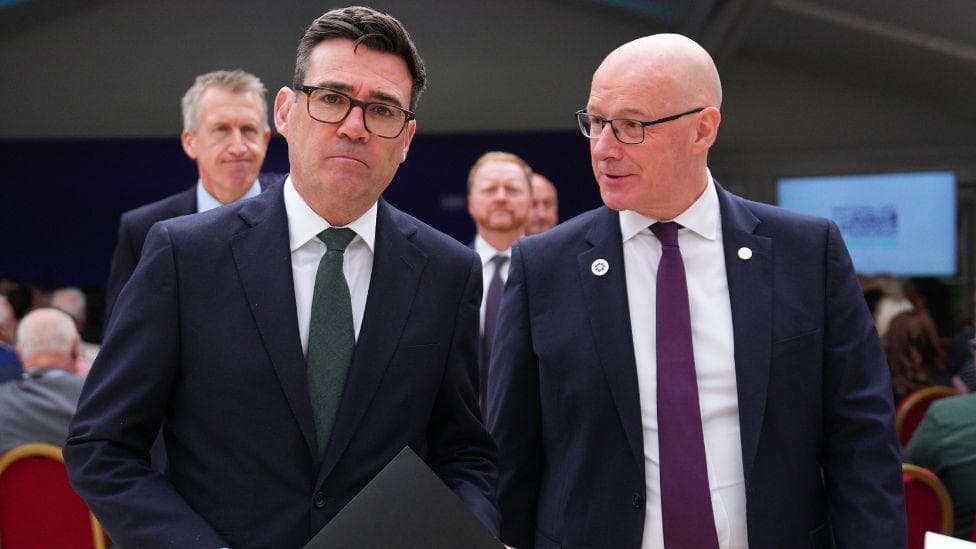
Prime Minister Andy Burnham has announced a significant overhaul of the state pension triple lock, marking a bold political move that extends far beyond pension policy itself. The decision to restructure how state pensions are uprated represents one of the most consequential welfare reforms in recent years, and its implications will be felt across government finances, electoral politics, and the bond markets for decades to come.
Speculation about Burnham's intentions toward the triple lock has circulated for months. Senior figures within government had suggested privately that the mechanism, in its current form, was unsustainable. However, rather than pursuing a cautious approach—seeking cross-party consensus on this contentious issue—Burnham has chosen to act decisively. His strategy involves linking the pension change directly to funding a new national social care service, an attempt to reframe the decision as part of a broader social policy agenda rather than a simple cost-cutting exercise.
The government has branded the new arrangement an "adjusted triple lock," language designed to provide reassurance to pensioners. In substance, however, the mechanism represents a more fundamental shift—effectively a double lock plus arrangement. The political sensitivity surrounding this gamble is evident in the careful framing and the government's emphasis on pensioner protection.
How will the new pension arrangement work?
Under Burnham's proposals, the state pension will increase annually by whichever is higher: the rate of inflation or 2.5 per cent. This ensures pensions will continue to keep pace with price rises and receive an annual uplift. The critical change involves the earnings link, currently the third element of the triple lock. Rather than being applied on an annual basis, earnings growth will be reflected over time, with the government's stated policy being to maintain the state pension as a share of earnings at the record level it is projected to reach in 2030.
This represents a sharper departure from current practice than many observers anticipated. The government has not pursued a review or consultation process; instead, it has moved directly to implementation. Ministers and MPs will face the task of defending the plans publicly, and Parliament will ultimately vote on removing the historic annual earnings link to state pensions—a change of constitutional significance in pension policy.
What are the financial implications?
The fiscal savings from this restructuring are substantial, though they accumulate gradually. According to analysis from the Institute for Fiscal Studies, had this adjustment been in place since 2011, it would have reduced the annual £16 billion cost of the triple lock by more than half, delivering approximately £9 billion in savings each year. Government sources have indicated that implementing the change now will generate around £15 billion annually in savings by 2040. The IFS has also estimated that maintaining the triple lock through to 2050 could cost between £5 billion and £40 billion per year, depending on economic conditions.
The savings are weighted toward the future rather than the immediate term, which may explain why Burnham has chosen to delay implementation. According to reporting, the change will take effect from April 2030, after the next general election, with the current triple lock remaining in place for the remainder of this Parliament. This timing allows the government to avoid immediate electoral consequences while securing long-term fiscal benefits.

What protections are being offered to pensioners?
Burnham has sought to cushion the impact of the pension change through complementary measures. According to , the Prime Minister has pledged that low-income pensioners will not pay income tax during the current Parliament, a commitment intended to protect vulnerable retirees from the effects of fiscal tightening elsewhere in the budget.
The state pension itself will continue to rise in cash terms each year, maintaining protection against inflation. The state pension is set to increase by 3.9 per cent from April 2027, potentially lifting the full new state pension above £13,000 annually, providing pensioners with substantial increases in the near term before the new arrangement takes effect.
How does this connect to the National Care Service?
Burnham has deliberately framed the pension change as part of a broader social policy agenda centred on establishing a National Care Service. By linking the two initiatives, the government appears to be arguing that the savings from pension restructuring will help fund this new service. However, reporting indicates that the government has not ruled out tax rises to help pay for the National Care Service in addition to the pension savings. The government says it will begin preparing for the National Care Service before introducing it in the next Parliament.
This dual-track approach—combining welfare reform with new social provision—reflects a broader political strategy. Burnham appears to be attempting to reshape the terms of debate around pension policy, moving it from a discussion of cost-cutting to one of social investment and long-term care provision.
What is the political and economic context?
Burnham has been repeatedly advised that financial markets would respond positively to a UK government demonstrating the capacity to make difficult long-term decisions. Former Chancellor Rachel Reeves may have harboured similar expectations when she scrapped the winter fuel allowance early in her tenure—a decision that was subsequently reversed following public and political backlash. The Prime Minister and Chancellor appear to be betting that demonstrating fiscal discipline on pensions will strengthen the UK's standing in bond markets and signal serious intent on fiscal sustainability.
The broader context involves a perception among international investors that UK politics has struggled to sustain long-term policy debates. The triple lock represents just one of several significant policy shifts Burnham is expected to announce, with substantial further moves on energy policy and post-Brexit arrangements anticipated. The government appears to be seeking market and public support for a comprehensive agenda of structural reform.
The decision to act without a review or consultation process, and to move directly to parliamentary votes on changing historic pension arrangements, signals a willingness to accept political risk in pursuit of fiscal objectives. This represents a notably different approach from the cautious consensus-building that might have been expected on such a sensitive issue.
What happens next?
The government will need to secure parliamentary approval for changes to the state pension earnings link, a process that will require sustained political effort. The implementation date of April 2030 provides a window for further debate and potential adjustment before the new arrangement takes effect. The government's broader agenda on energy, care provision, and post-Brexit policy will unfold in parallel, with each element requiring separate political and parliamentary attention.