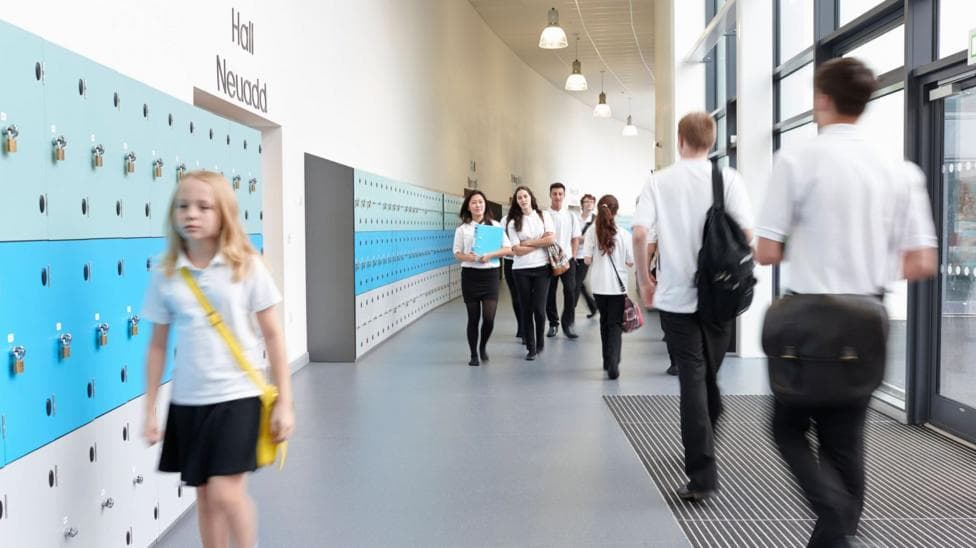
Swansea faces a significant challenge to the long-term viability of its schools as demographic projections show pupil numbers will contract sharply over the next six years. Education officers estimate the city will have 26,678 primary and secondary pupils in 2032, down from the current 32,028—a decline of 5,350 pupils or 17 percent. This shrinkage reflects a wider pattern of falling birth rates across Wales and threatens to leave many schools operating below sustainable levels.
The council's forecasting model combines national demographic trends with Swansea-specific data to arrive at these figures. Robert Smith, the council's cabinet member for education and learning, acknowledged that forecasting carries inherent uncertainty but stated the projections "are as robust as they can be."
What defines a school as unsustainably small?
The council classifies primary schools with fewer than 90 pupils and secondary schools with fewer than 600 pupils as "very small," placing them under particular strain. Schools operating below these thresholds face limited economies of scale and reduced pupil-led funding. A primary school that falls below 90 pupils loses its entitlement to funding for a deputy head teacher position. Several Swansea primaries currently operate at or near the 90-pupil threshold, while one secondary school approaches the 600-pupil mark. Knelston Primary School on Gower came closest to breaching the 90-pupil floor but has since recovered some enrolment.
The projected decline breaks down into an estimated 3,968-pupil reduction at primary level and a 1,382-pupil reduction at secondary level, though Welsh-language schools are expected to experience a lower proportion of losses. According to recent reporting on Welsh-medium provision, growth in Welsh-medium pupils is actually driving a separate proposal: Ysgol Gymraeg Ystalyfera Bro Dur, which currently serves 1,591 pupils across two campuses, is being considered for division into two independent schools to accommodate projected growth in secondary enrolment from 522 pupils in 2026 to approximately 708 by 2031.
How does this compare to other Welsh councils?
Swansea is not alone in confronting this challenge. Experts have warned that a projected 15 percent reduction in Welsh pupils between 2025 and 2041 may result in more school closures or mergers, with some councils facing a quarter of school places sitting empty by 2024. Blaenau Gwent has already acted on similar pressures: councillors voted to close Roseheyworth Primary School campus over the summer as part of the Abertillery Learning Community restructuring, citing budget constraints and declining rolls. Pembrokeshire Council reported an ageing population with pupil numbers falling by more than 2,000 since 1996, including significant declines in the Preseli and Tenby areas.
Swansea's school population had already been declining over the preceding decade, though the trend was uneven across different parts of the city, with some areas losing pupils while others experienced growth.
What solutions are being considered?
The council report identified several potential responses to the demographic shift. According to council analysis, options include greater community use of school buildings, smaller class sizes, and targeted investment toward sustainable provision. Mike Day, a council education manager, noted that during a previous school reorganisation period in Swansea, it would have been cheaper to send pupils from a particularly small school to Eton College than to maintain the school locally.
Lyndon Jones, who heads the education scrutiny panel, has requested a detailed breakdown of the estimated pupil decline on a school-by-school basis to inform future planning. Smith cautioned that schools considered small in Swansea might be classified as medium-sized in more rural council areas, where different challenges apply. He recalled visiting a rural school with only five or six pupils, observing that older children taught younger ones social skills during lunch.
"Take away the sentiment of that, there were all sorts of issues about not just the cost which was immense but also what kind of experience were you able to offer children in a school that small. We are not facing that issue in Swansea."
What role will community engagement play?
Day emphasised that meaningful engagement with parents, staff, governors, and other stakeholders would be essential if further school reorganisation proceeds. He recalled a previous consultation in which parents overwhelmingly supported the removal of surplus places in principle, but noted the political reality:
"you can imagine what happened then when a proposal was put forward to close a particular school."Smith acknowledged that schools viewed as small in Swansea might be perceived differently in rural areas, where community identity and limited alternatives create distinct pressures.
What happens next?
Swansea Council's cabinet is scheduled to decide on 21 October 2026 whether to proceed with a consultation on the proposal to split Ysgol Gymraeg Ystalyfera Bro Dur. According to scrutiny committee discussions held on 1 October 2026, if approved, the two schools are expected to operate independently from September 2028. This proposal stands apart from the broader contraction affecting English-medium provision, instead reflecting concentrated growth in Welsh-medium demand.
Key Facts
- Swansea's primary and secondary pupil population is forecast to fall by 5,350 (17%) between now and 2032, from 32,028 to 26,678
- Primary schools with fewer than 90 pupils and secondary schools with fewer than 600 pupils face particular financial and operational pressures
- A primary school falling below 90 pupils loses funding for a deputy head teacher position
- Welsh-language schools are expected to experience lower proportional losses, with one school proposal driven by growth rather than decline
- Similar demographic pressures are affecting other Welsh councils, with some already implementing school closures and mergers