

Suffolk Fire and Rescue Service has stood down the major incident status for the wildfire that scorched 150 hectares of heathland at Dunwich, nearly two weeks after flames first took hold on 29 July 2026. The decision followed a fresh fire risk assessment of Dunwich Heath and RSPB Minsmere, though officials stressed the emergency response is scaling back rather than ending entirely. Crews remain on site to dampen down remaining hotspots and watch for any fresh flare-ups.
The fire service said the change in status took effect from 17:00 BST, with firefighting resources gradually reducing after nearly 12 days of intensive work. Fire crews had been drafted in from across the country during the height of the crisis under the national resilience programme, supplementing local teams.
Why is the incident status changing now?
Jon Lacey, Suffolk's chief fire officer, said the move reflected the headway made by everyone involved in tackling the blaze.
"Significant progress made by our crews and everyone who has supported this response."
Even so, Lacey was careful to note that the underlying danger has not disappeared, warning that peat and heathland can smoulder unseen beneath the surface long after visible flames are gone.
"I want to be absolutely clear that this incident is not over."
"The nature of this landscape means fire can remain hidden underground for some considerable time, which is why we continue to ask people to stay away from the heath itself and allow our crews to work safely."
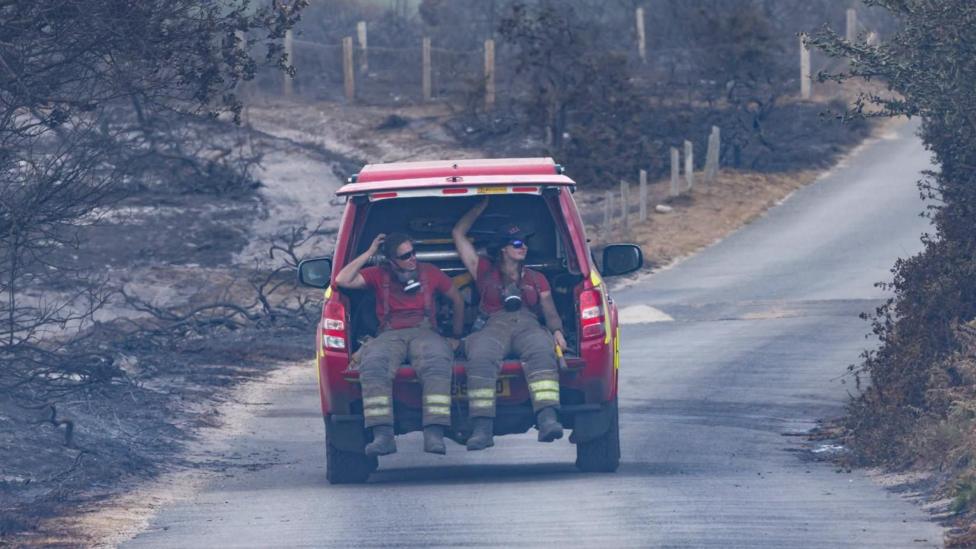
How big was the firefighting operation?
All 35 of Suffolk's fire stations sent personnel to the scene, with around 600 firefighters involved in bringing the blaze under control at various points, a scale Lacey previously described as "unprecedented" for the county. He also expressed his "enormous gratitude" for the extra support drafted in from other areas during the operation's most intense phase.
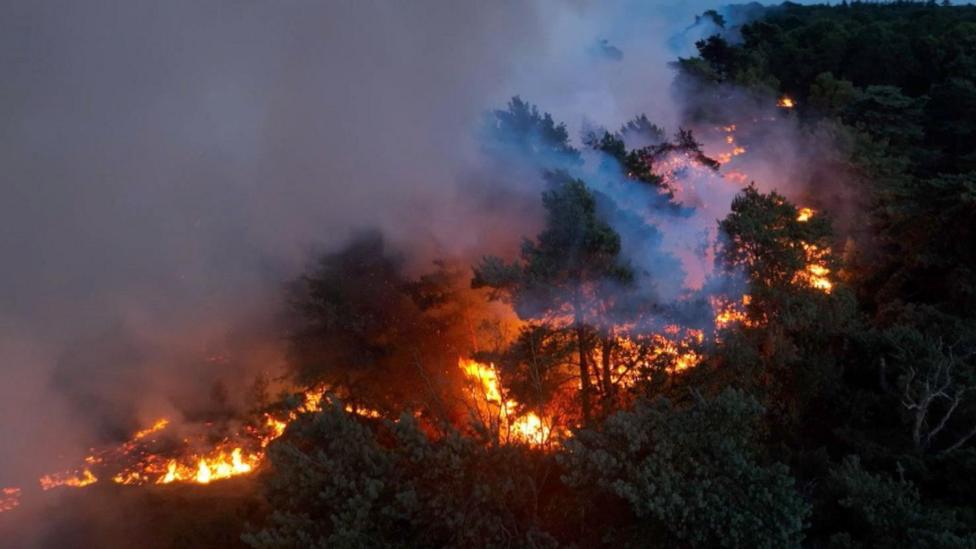

What caused the fire and how did it spread?
The exact cause of the blaze remains unconfirmed. According to a newspaper report, Suffolk Fire and Rescue Service said the cause was still unknown, with hot weather, parched ground and shifting winds all complicating efforts to contain the fire. A regional broadcaster's coverage indicated the fire began at RSPB Minsmere nature reserve before it spread onto the adjoining Dunwich Heath, according to a regional news report. The blaze broke out amid a wider heatwave and drought affecting much of England, according to a background summary of the incident.
The fire's proximity to Sizewell B nuclear power station drew particular attention nationally, although a international news agency report said officials confirmed there was no direct threat to the nuclear site. Homes and a holiday caravan park near the heath were evacuated as a precaution while the fire spread, a measure also noted by a international newspaper's coverage of the incident.
What happens to the area now?
Dunwich village and the surrounding communities have remained open throughout the incident, and Dunwich Road between Westleton and Dunwich was due to reopen at 17:00 on the day the major incident status was lifted. Tristan Gale, Suffolk County Council's cabinet member for planning, devolution and the fire service, said lifting the major incident marked the "beginning of a coordinated recovery phase" that will now be led by East Suffolk Council.
Our earlier coverage traced the fire's progression: a major incident was first declared as roughly 90 firefighters battled the rapidly spreading blaze, and days later the situation was reported to have stabilised, with the National Trust launching a fundraising appeal to support recovery. Suffolk County Council confirmed the response had entered a coordinated recovery phase once major-incident arrangements ended, according to the county council's own update, which also noted the incident had still carried major-incident classification as recently as 5 August despite stable conditions, with crews on scene around the clock.
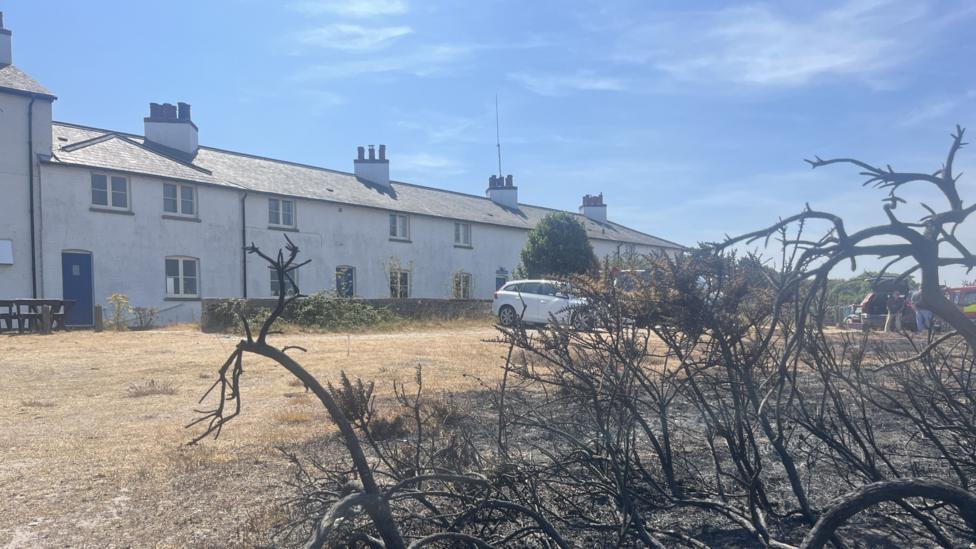
What is being done to protect the landscape and wildlife?
The National Trust, which owns Dunwich Heath, an area of outstanding natural beauty, said it has raised £350,000 so far towards restoring the site. The charity's fundraising appeal, launched after it warned the reserve had suffered severe environmental damage, is intended to fund recovery work following the fire, according to the National Trust's own appeal announcement. There had been widespread concern for rare birds and other wildlife on the heath and at nearby RSPB Minsmere as the fire took hold.
What happens next?
Fire crews are expected to remain at Dunwich for as long as needed, continuing round-the-clock monitoring and damping-down work until the site is judged fully secure, according to the county council's update. Lacey said recovery efforts can now begin in earnest, with firefighters staying in place to guard against the fire's smouldering embers re-igniting. The fire service also renewed its warning that continued hot weather keeps the risk of further open-land fires high, urging the public to remain cautious about any activity that could spark another blaze.
Key Facts
- The wildfire began on 29 July 2026 and burned through approximately 371 acres (150 hectares) of heathland.
- Around 600 firefighters and all 35 of Suffolk's fire stations were involved in the response.
- Major incident status was stood down from 17:00, though crews remain on site to prevent re-ignition.
- The National Trust has raised £350,000 towards restoring Dunwich Heath and RSPB Minsmere.
- Dunwich Road between Westleton and Dunwich reopened alongside the status change.


