

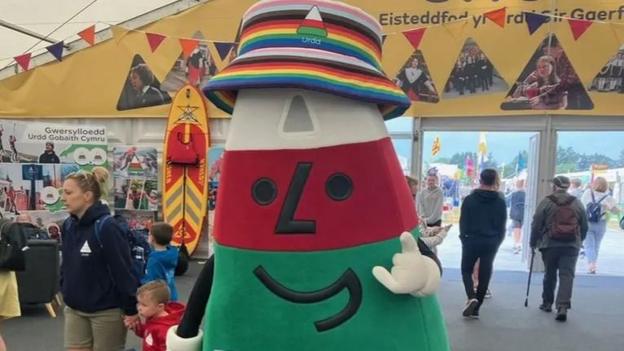
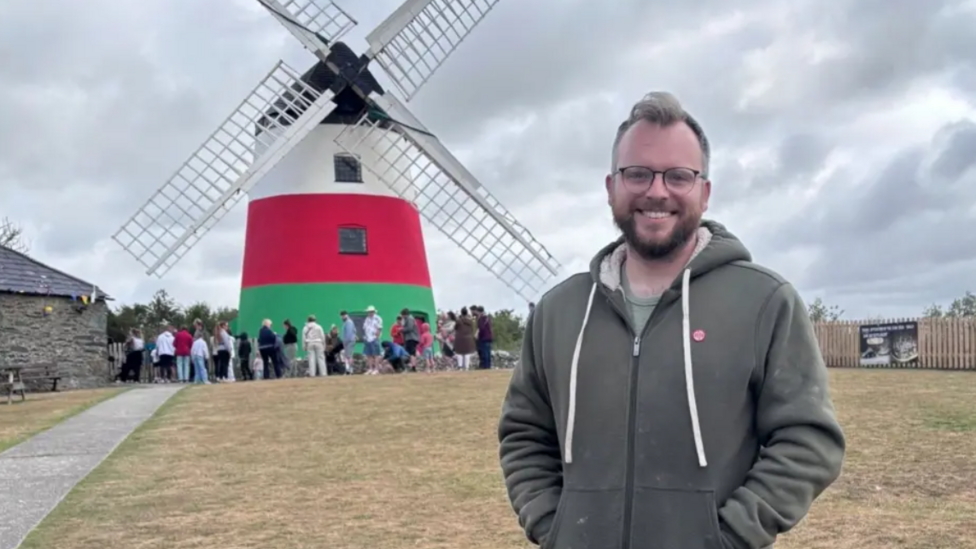
The owner of Wales' only working windmill has been told by Anglesey council to restore the Grade II-listed structure to its original white after painting it red, white and green without permission. Richard Holt repainted Melin Llynon in Llanddeusant to mark the island hosting the Urdd Gobaith Cymru Eisteddfod and to resemble the youth movement's mascot, Mistar Urdd. He has apologised to the council but says he intends to make a case for keeping the new colours after visitors responded positively.
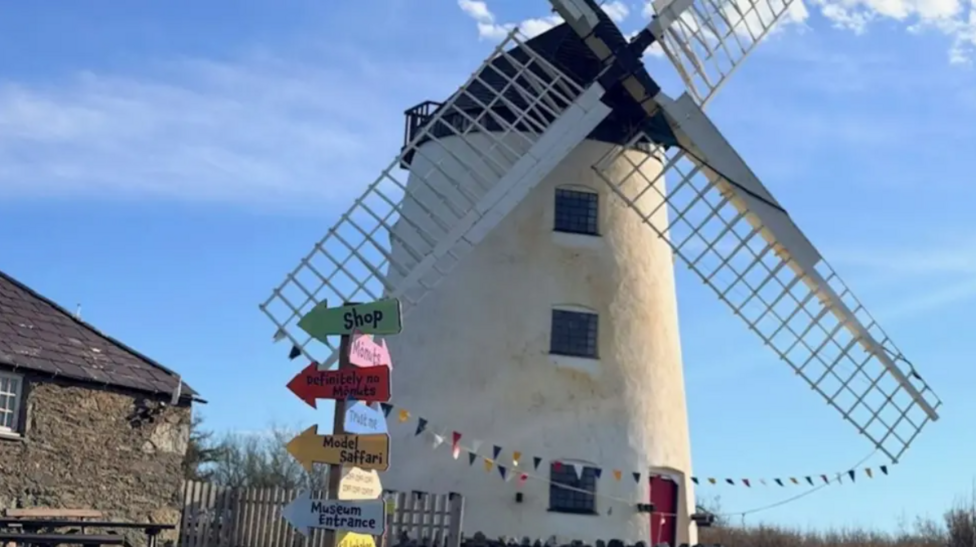
Melin Llynon was historically a gristmill, used to grind cereal grain into flour, and dates back to 1776. Holt said he had not realised that changing the exterior colour of a listed building required formal consent.
What happened to the windmill?
Holt gave the mill its colourful makeover to coincide with the Urdd Eisteddfod being held on Anglesey for the first time since 2004. He had originally planned for the change to be temporary, reverting the mill to white once the week-long festival of music, dance and literature had ended.
The original intention was to paint it back white, and I was willing to do that straight after the Eisteddfod.
But I was amazed by the positive response to the new colours - hundreds said they liked it.
Why did the owner repaint it?
Holt said the decision was inspired by a long-standing custom of decorating mills to mark notable occasions. Like many islanders caught up in the excitement of hosting the festival, he put up decorations in the Urdd's signature red, white and green.
Traditionally mills over the centuries are decorated to mark important occasions.
He also pointed to the practical difficulties of running the attraction, noting that Melin Llynon is not easily accessible from the A55 and that visitor numbers typically fall away in winter. The new colour scheme, he said, has drawn noticeably more people to the site this summer.
I have a duty to ensure the future of the mill for the next generation.
I'm struggling and the winter is hard, but painting the mill has attracted more visitors here and helped me pay the bills.
What has the response been?
Reaction has been mixed. Holt says hundreds of visitors have told him they like the tricolour look, and he is now collecting feedback from summer visitors to support a formal application to the council to keep the colours permanently.

Dr Eiddwen Jones, 85, disagrees strongly. She is the great-great-great-great-great-granddaughter of Thomas Jones, who she says was the mill's first miller from 1776 until his death in his nineties. She argues the building should be returned to whitewash, describing that as the traditional finish for mills, and disputes the idea that painting it was originally meant as an Eisteddfod tribute.
It's been made fun of now rather than kept the fact that it was a historical building and that people have been working there for a couple of centuries.
Jones, whose family left Anglesey for Flintshire some 150 years ago, said she believed her ancestor "would have turned in his grave" had he seen the mill's current colours, adding that it looked far more striking in white when approached by road.
What do heritage rules say about listed buildings?
Under heritage protections covering listed buildings across the UK, external repainting that changes a structure's appearance or character can require listed building consent before work begins, and unauthorised alterations can amount to a criminal offence, with owners potentially required to reverse the work, according to Historic England. Separate planning guidance from local heritage bodies similarly warns that even a seemingly minor exterior colour change can trigger the need for consent if it alters how a listed building is perceived, according to guidance from the Yorkshire Dales National Park Authority. A separate planning guide aimed at owners of Grade II-listed properties makes the same point specifically about repainting exteriors, noting that consent can be required whenever such work changes a building's appearance or character, according to planning guidance for listed building owners.
Holt has argued that the paint he used allows the stonework to breathe and therefore poses less risk to the fabric of the building than some alternatives.
The second issue is - have I changed the character of the mill?
I argue that I have not done that because there was a great tradition over the centuries of decorating mills to mark special occasions, and I am sure that the first miller here back in 1776 would have painted the mill red, white and green if such paint had been available.
Disputes over unauthorised changes to landmarks tied to local heritage are not unique to Anglesey. Elsewhere in Wales, a mural of the engineer Isambard Kingdom Brunel in Briton Ferry was painted over after the property owner said they had not been consulted before the artwork went up, illustrating how quickly disagreements over consent for changes to buildings can escalate. The Urdd Eisteddfod that prompted Holt's repainting is separate from the larger National Eisteddfod, which is due to be held in Llantwd, Pembrokeshire from 1 to 8 August 2026 and draws tens of thousands of visitors each year.
What happens next?
Anglesey council has formally asked Holt to restore the mill to its original white "as soon as possible." In a statement, the authority said any future application relating to work on a listed building would be assessed according to relevant legislation, planning policy and its duty to protect the historic environment, and that public comments would be taken into account as part of that process.
However, the council stressed that because Melin Llynon is a listed building, heritage considerations would carry significant weight in any decision, and that public support for the new colours alone would not be enough to determine the outcome of a future application. Holt has acknowledged the council is "only doing their job" and said he accepts he broke the rules, even as he prepares to make a formal case for keeping the tricolour design.
[I] realises that they [the council] are only doing their job and I know that I have broken the rules.
Key Facts
- Melin Llynon in Llanddeusant, Anglesey, is Wales' only working windmill and a Grade II-listed structure dating to 1776.
- Owner Richard Holt painted it red, white and green to mark the Urdd Gobaith Cymru Eisteddfod, resembling mascot Mistar Urdd.
- Anglesey council has ordered the mill be returned to its original white finish and says heritage considerations will outweigh public support in any future decision.
- Dr Eiddwen Jones, descendant of the mill's first miller Thomas Jones, wants the original whitewash restored.
- Unauthorised changes to listed buildings can be a criminal offence under UK heritage rules, according to Historic England.


