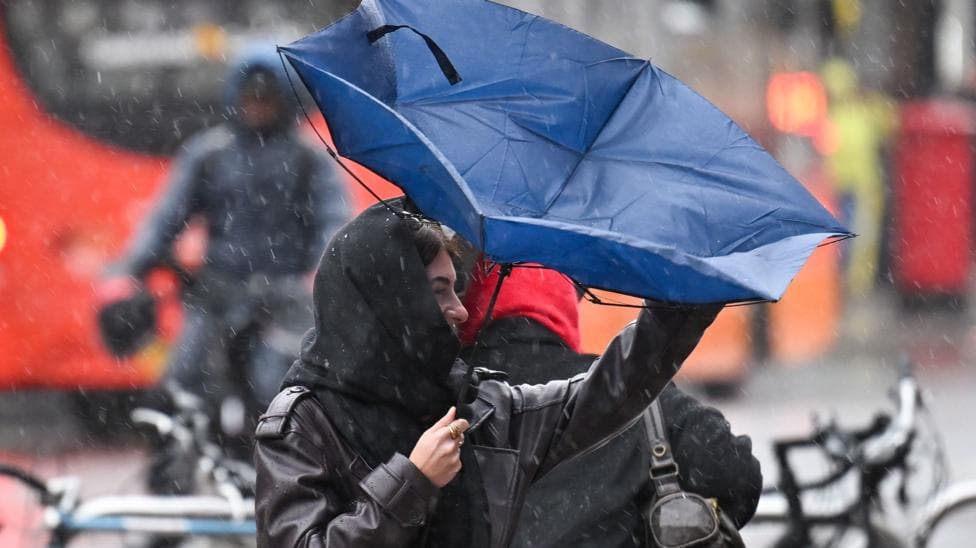
Restoration efforts are progressing across Scotland and northern England following Storm Boelo's assault on the weekend, though approximately 90,000 properties remained without electricity as of Monday. The severe weather system caused widespread flooding, structural damage, and claimed at least one life, with cleanup operations hampered by continuing adverse conditions. According to BBC News, the Energy Networks Association (ENA) confirmed the scale of the power disruption affecting the region. BBC News also reported that Scottish and Southern Energy Networks (SSEN) said work was ongoing to reconnect supplies to about 29,000 homes in the north of Scotland, while Scottish Power Energy Networks (Spen) said about 4,500 homes in southern and central Scotland were still without power.
The storm struck as the second major weather event in rapid succession, following Storm Austen which had delivered comparable levels of disruption days earlier. Sustained winds of 50-85mph battered parts of Scotland and northern England throughout the weekend, with SSEN reporting that by 11am it had restored power to more than 19,500 customers, while Machrihanish recorded gusts of 85mph. Almost 100,000 homes had power restored across both SSEN and Spen areas over the weekend.
What caused the fatalities?
At least one man lost his life when a falling tree struck him during the storm on Sunday. A 60-year-old man in Dumfries and Galloway, in western Scotland, was killed after being struck by a falling tree at Mid Kelton, near Castle Douglas. Additionally, a man in his 20s was pronounced dead in north London after a tree fell onto the car he was driving. Two women were also injured by a falling tree near Aberfeldy Footbridge in Perth and Kinross and were taken to hospital for treatment.
Why are restoration efforts being delayed?
Leo Slade, Chief Executive of the ENA, explained that engineers cannot safely access affected areas while dangerous wind speeds persist.
Until that weather system passes, we can't safely get engineers out to replace poles, to get wires back up, so today is going to be a hive of activity in getting engineers out into the field,he told BBC Radio 4's Today programme. Slade acknowledged that the weekend had been challenging but stressed that the UK's power infrastructure had been designed with resilience in mind, though he suggested further investment would be needed to address risks posed by climate-driven storms. Nik Wheeler, SSEN head of customer operations, told BBC Radio Scotland Breakfast that work to reconnect homes before the impact of Storm Chloe on Tuesday was ongoing, but said he could not guarantee that would happen in time.
How has the storm affected businesses and schools?
Homeowners and commercial enterprises have suffered significant disruption. Marcus Reed, operations director at Wax Lyrical, a home fragrance manufacturer based in Lindal, Cumbria, reported that his factory and retail premises would remain without power until Tuesday evening. He was forced to turn away both employees and customers during what he described as the company's busiest trading period before Christmas.
To lose two days manufacturing and distribution is going to be really disruptive,Reed said, adding that
This is probably the worst situation I've experienced in my time here; we've had ad hoc issues over weekends where we've lost power, but it's been contained within a 12-hour period. It's the first time anything like this has happened, it's very serious.
Educational facilities across Scotland were significantly affected. Five primary schools in Aberdeenshire remained closed on Monday due to power loss, while Ellon Academy shut its doors as a result of storm-related damage. Fraserburgh Academy was only open for pupils in S4 to S6 due to travel disruption for staff. Twelve primary schools and nine nurseries across the Highlands were also subject to full or partial closures.
What flooding and infrastructure damage occurred?
Scotland's government reported flooding at properties in Largs and Saltcoats, damage to transport routes, and roads blocked by fallen trees. The environmental watchdog issued 29 flood warnings and 11 flood alerts across the country. A care home in Saltcoats, North Ayrshire was evacuated on Sunday evening due to flooding. Several roads were closed including the A78 Inverkip Road in Greenock, the A77 at Lendalfoot in Ayrshire, and several routes in Dumfries and Galloway. In South Ayrshire, police evacuated dangerous buildings in Ayr and helped 15 people stuck at a flooded caravan park in Ballantrae.
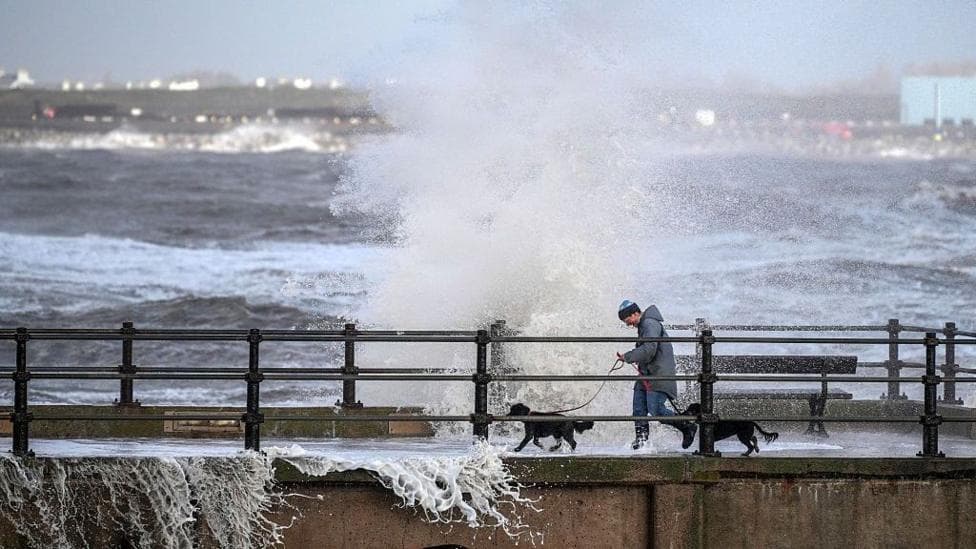
Residents in coastal areas experienced particularly severe flooding. Ann Wiseman, from the Aberdeenshire coastal village of Crovie, described the situation as "pretty scary", saying that sandbags were unable to keep the water out as giant waves crashed against the roofs of properties. "There was not a window in the house that did not leak. There was just so much water," she told Radio Scotland Breakfast, adding that "It hasn't been this bad for well over 20 years." Shona Thorne, director of Thorne Travel in the North Ayrshire seaside town of Largs, said the storm was a "wake up call" for everyone. Her business was totally flooded and she is counting the cost of the damage, from carpets to computers. "The storm surge was more than anyone has ever seen. We have never had that," Thorne added.
Transport networks experienced severe disruption. LNER cancelled nearly all services to and from Aberdeen and reduced services through Northallerton, Newcastle and Edinburgh to one train per hour in each direction. Network Rail said the Crianlarich to Oban and Inverness to Wick and Thurso lines remained closed, but work to restore them was ongoing. ScotRail said the "vast majority" of its services were running as normal. Despite widespread travel disruption across the weekend, Network Rail said most services had been restored to full operation after an amber weather warning ended at 21:00 on Sunday. West coast ferry operator CalMac said some of its services would continue to be affected by the weather until Monday and could face cancellation at short notice. Passengers on NorthLink Ferries were advised that there was the "possibility of disruption" to services until Thursday because of the weather.
What happens next?
The immediate threat from Storm Boelo is expected to diminish, but fresh challenges loom. Scotland's government warned that adverse weather could return early in the week, with a yellow wind warning forecast for Tuesday across Scotland and Northern Ireland's north coast. The Met Office yellow warning of wind covers much of Scotland, as well as parts of northern England and Northern Ireland from 03:00 to 21:00 on Tuesday. The amber warning for Northern Ireland's north coast was lifted around lunchtime on Monday, though warnings remained in force elsewhere as the system moved across the region. Police Scotland Assistant Chief Constable Mark Sutherland said that although the amber weather warning was no longer in place, disruption was "likely well beyond that due to further poor weather, fallen trees and other damage caused by the storm", and urged people to "remain focused and vigilant" and consider whether journeys are "really necessary". The Scottish Environment Protection Agency said 10 flood warnings in the north east and the Highlands would remain in place.