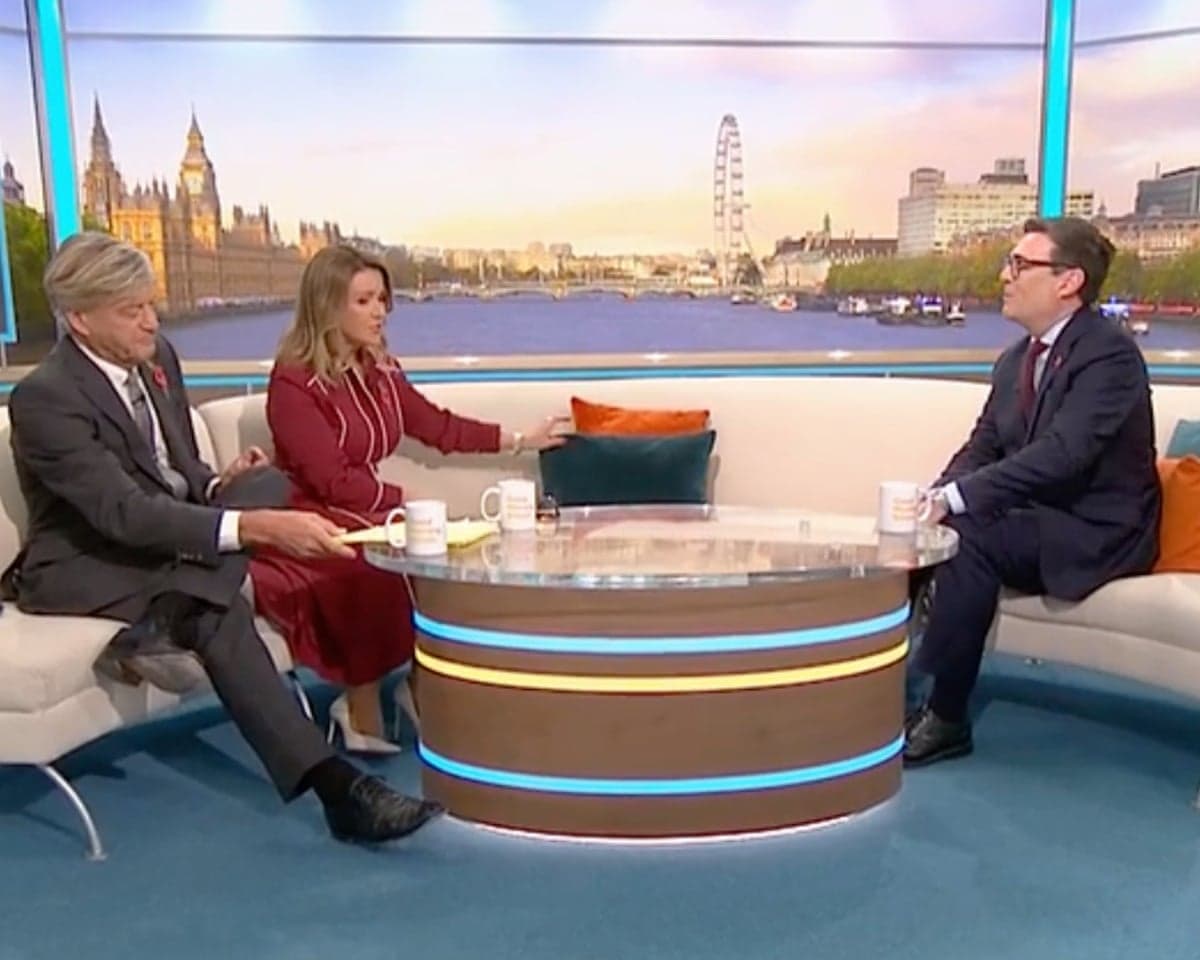
Prime Minister Andy Burnham has insisted that any decision to rejoin the European Union would rest with the British public, not with him personally, while defending his government's approach to welfare reform ahead of the autumn budget. In a wide-ranging interview on ITV's Good Morning Britain, Burnham addressed speculation about an early election, migration policy, and his willingness to renegotiate Britain's relationship with the EU. According to The Guardian, Burnham's comments came as two new polls showed Labour with an eight-point lead over the opposition.
Welfare reform and the Milburn review
Burnham has characterised his government's welfare strategy as fundamentally different from the approach advocated by the Conservative Party and Reform UK, both of which have called for substantial reductions in benefit spending. The Conservatives identified potential welfare cuts of £36 billion annually at their recent conference, while Reform UK has proposed cutting welfare spending by £40 billion per year. Burnham rejected these proposals as counterproductive.
The government is preparing to release recommendations from the Alan Milburn review into young people not in education, employment or training (Neets). Burnham has previously pledged major welfare system reforms to tackle the youth employment crisis, with the Milburn review expected to recommend increased spending on support services to help young people enter the workforce, offset by targeted reductions in certain benefits. Milburn has indicated that this approach would require higher spending initially but would generate savings over time.
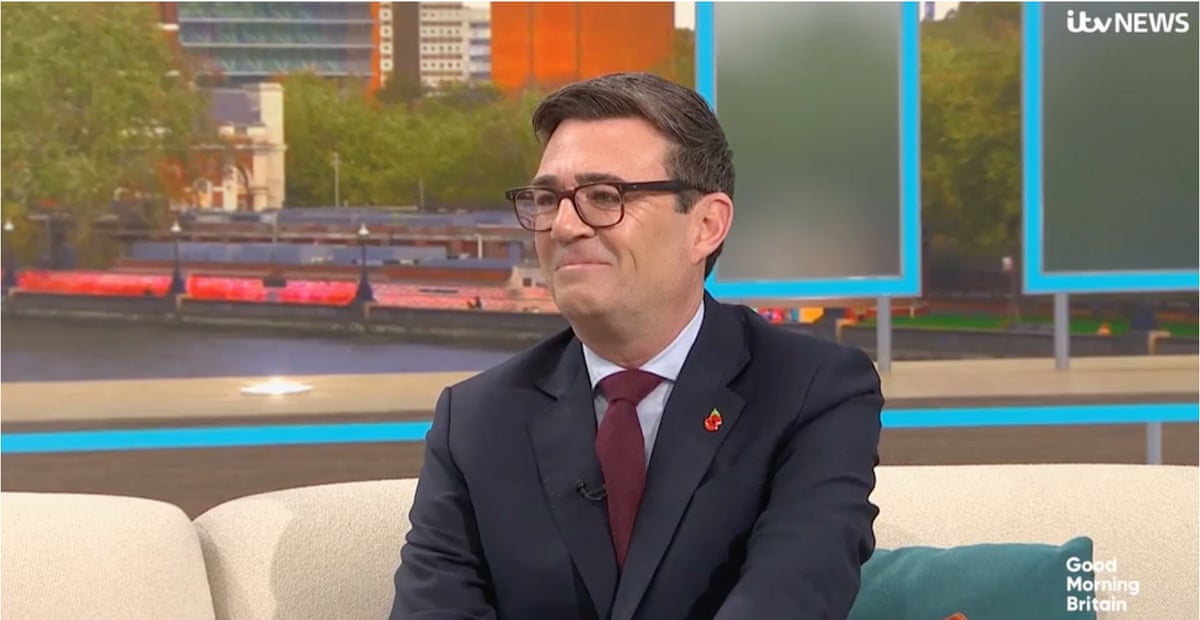
During his interview, Burnham articulated his vision for welfare spending:
I think a big change is needed here where we move to a situation where the spending is not to sustain people on benefits, but we give people the right support when they need it as they are growing up, coming through their teenage years.When pressed on potential savings, he stated:
A significant amount of money, and that's what the Milburn review is all about.
Burnham characterised the opposition's position as misguided, arguing that simple reductions in welfare budgets would prove ineffective and harmful. He explained:
The opposition parties are out there today saying just make crude cuts to the welfare budget. I personally think that won't work, and it isn't right to do that anyway, because it just leads to more and more failure and crisis and spending that isn't helpful for anybody.Burnham faces significant budget pressures ahead of the autumn fiscal event on 28 October 2026, with welfare reform representing one of seven major fiscal constraints his government must navigate.
Migration policy and the settlement debate
Burnham expressed broad support for Home Secretary Shabana Mahmood's approach to migration, particularly her proposal to extend the waiting period for indefinite leave to remain (ILR) in the UK. Under Mahmood's proposals, migrant workers would typically wait ten years for ILR instead of the current five years, while care workers would face a fifteen-year waiting period. Some cabinet ministers have privately expressed concern that the fifteen-year requirement for care workers is excessive.
Burnham defended Mahmood's underlying principle while remaining noncommittal on specific timelines. He attributed the current migration pressures to decisions made in the early 2020s, stating:
Why has this problem arisen? It's arisen because if you look back to the early 2020s, people call it the Boriswave, a huge number of people came in seeking permanent settlement on longer-term visas … And the home secretary is right, in my view, to bring forward changes that are based on the principle that settlement is a right to be earned, not just something that is granted automatically.
When asked directly whether he would maintain the fifteen-year requirement for care workers, Burnham declined to commit to the specific figure, instead stating that he stood by the broader principle Mahmood was advancing. He indicated that the government would consider feedback from its consultation process before finalising the plans. Burnham himself has been among ministers who have signalled privately that singling out care workers for particularly stringent treatment may warrant reconsideration, and Mahmood has already suggested that certain elements of the previously announced plan will be revised in response to ministerial concerns.
Early election speculation and polling
Burnham firmly rejected suggestions that he was preparing the ground for an early general election, despite two recent polls showing Labour with significantly larger leads than most other recent surveys. When interviewer Susanna Reid asked whether he was softening public opinion for an early election, Burnham replied:
No, I've ruled that out.When pressed on whether this was definitive, he confirmed it was, noting that he had made his position clear before the Labour conference.
Burnham elaborated on his reasoning, stating:
I just don't think people want another backward-looking squabble. I think they want me to get on with the job.When Reid raised the topic again later in the interview, Burnham was equally emphatic:
My mind is not on that [an early election]. I don't know if that is coming over here, but it genuinely is not on that. There is no election coming anytime soon. People may as well just put that out of their mind.
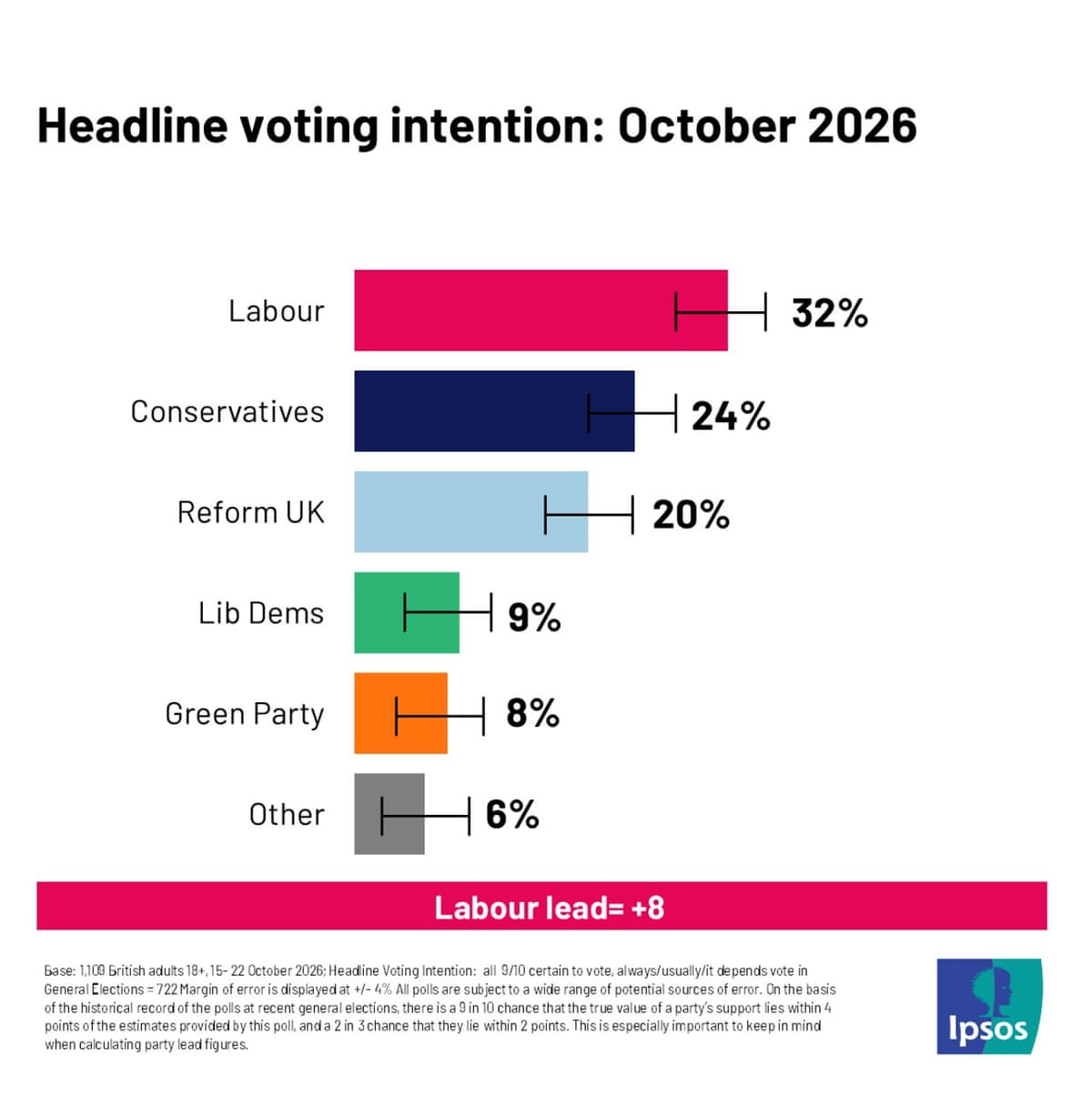
Two polls released over the weekend have reignited speculation about the timing of the next election. An Ipsos survey showed Labour on 32 per cent with an eight-point lead—the largest Labour lead Ipsos has recorded during the current parliament. The same poll showed the Conservatives in second place for the first time since June 2025, with Reform UK down three points and the Greens down five points. An Opinium poll conducted for The Observer similarly showed Labour leading by eight points, with Reform UK in second place.
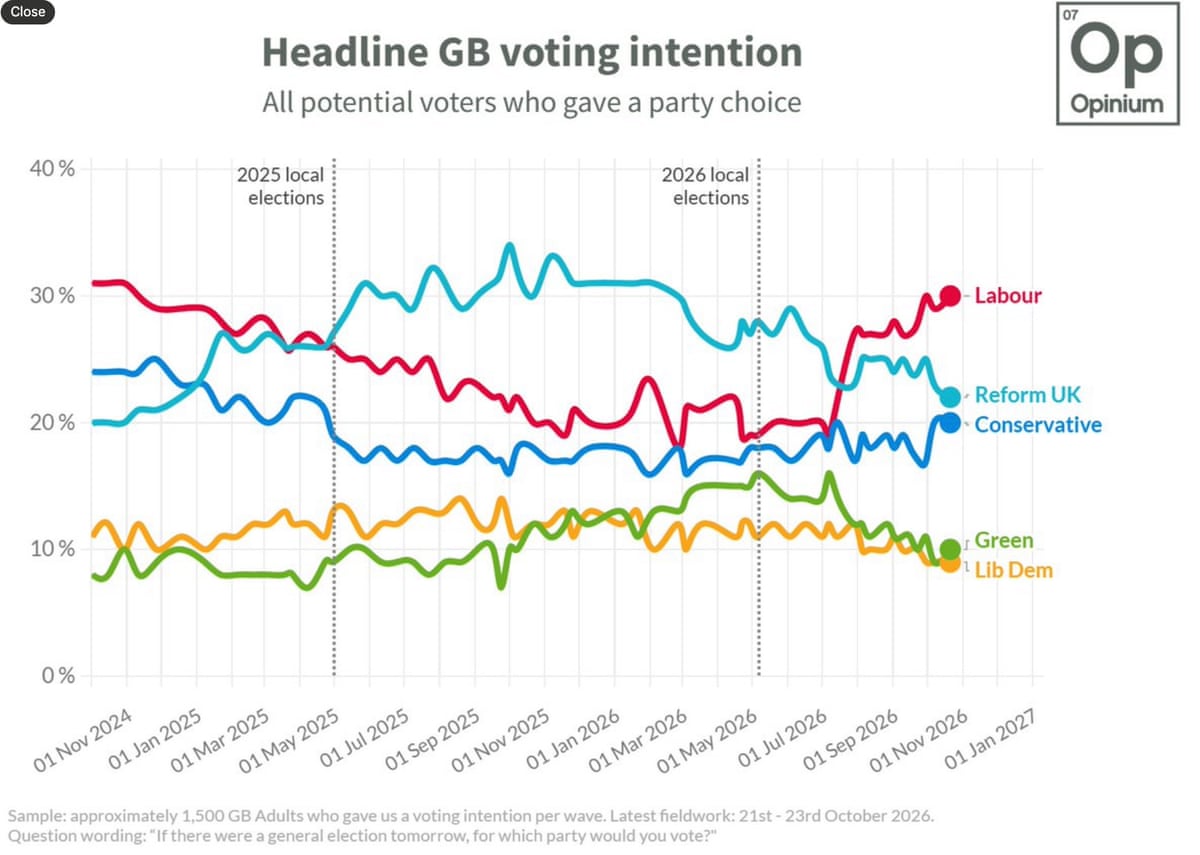
These results have attracted significant attention partly because they exceed the margins shown in most other recent polling. The Politico poll tracker, which aggregates results across all surveys, currently shows Labour ahead of Reform UK by four points, though this average has not yet been updated to incorporate the latest Ipsos and Opinium figures. At Westminster, no one expects an election before the end of the year, but the weekend polling has revived discussion about whether Burnham might be tempted to call one in May 2027, particularly given that the rightwing vote is currently split almost evenly between the Conservatives and Reform UK—a configuration that would favour Labour significantly.
Brexit renegotiation and EU membership
Burnham's most striking comments centred on his willingness to revisit Britain's relationship with the European Union. Opposition parties and even some Conservative figures criticised the Prime Minister after he indicated in a Sunday Times interview that he would consider proposing acceptance of EU free movement rules in the next election campaign. However, Burnham had already signalled at the Labour conference that rejoining the EU could emerge as the optimal outcome from his proposed renegotiation of the post-Brexit settlement, a process that would necessarily involve accepting free movement of people.
When asked by interviewer Richard Madeley whether he saw himself as destined to be the Prime Minister who would take Britain back into the EU, Burnham rejected the characterisation:
Honestly, I don't. I see it as my job to be pragmatic about the whole situation. Can I make it work better? Can I add growth to the British economy?When Reid pressed him directly on whether he personally wanted the UK to rejoin, Burnham gave a more candid response:
I've said – I'm going to be honest – in my lifetime I would like to see that happen, but I am not going to move ahead of the public. I am not going to dictate in terms of my own opinions here. You have to make sure that the British public are the bosses here.
When confronted with the suggestion that he had broken a promise made during the Makerfield byelection campaign not to reopen the Brexit referendum debate, Burnham denied that this was his intention. Instead, he reiterated arguments he had made in his Labour conference speech—that revising the relationship with the EU was justified because the current post-Brexit settlement was not delivering for Britain.
Burnham argued that reopening the Brexit discussion need not be divisive and could instead serve as a unifying force. He stated:
And [to] go back to Brexit, by just talking about it in a more practical way, by being honest about it … that can start to bring people together who voted in different ways. The divides that we've lived through in the last decade really do need to end, and we need to pull people together … I'm trying to give the country a direction and there is no way I can do that without coming back to the relationship with Europe and saying, 'Look, here are some options as to how we got this right.'Burnham categorically ruled out attempting to rejoin the EU before the next election, emphasising that any such move would require public consent and would not be pursued unilaterally by his government.
What happens next
The government is expected to publish final recommendations from the Milburn review into youth employment in the coming days. Mahmood will take questions in the House of Commons at 2.30pm on the day of this interview. Reform UK leader Nigel Farage and Treasury spokesperson Robert Jenrick are scheduled to present their party's economic rescue plan at a press conference at 2pm. The government will release detailed migration policy proposals following consultation on Mahmood's earlier announcements.