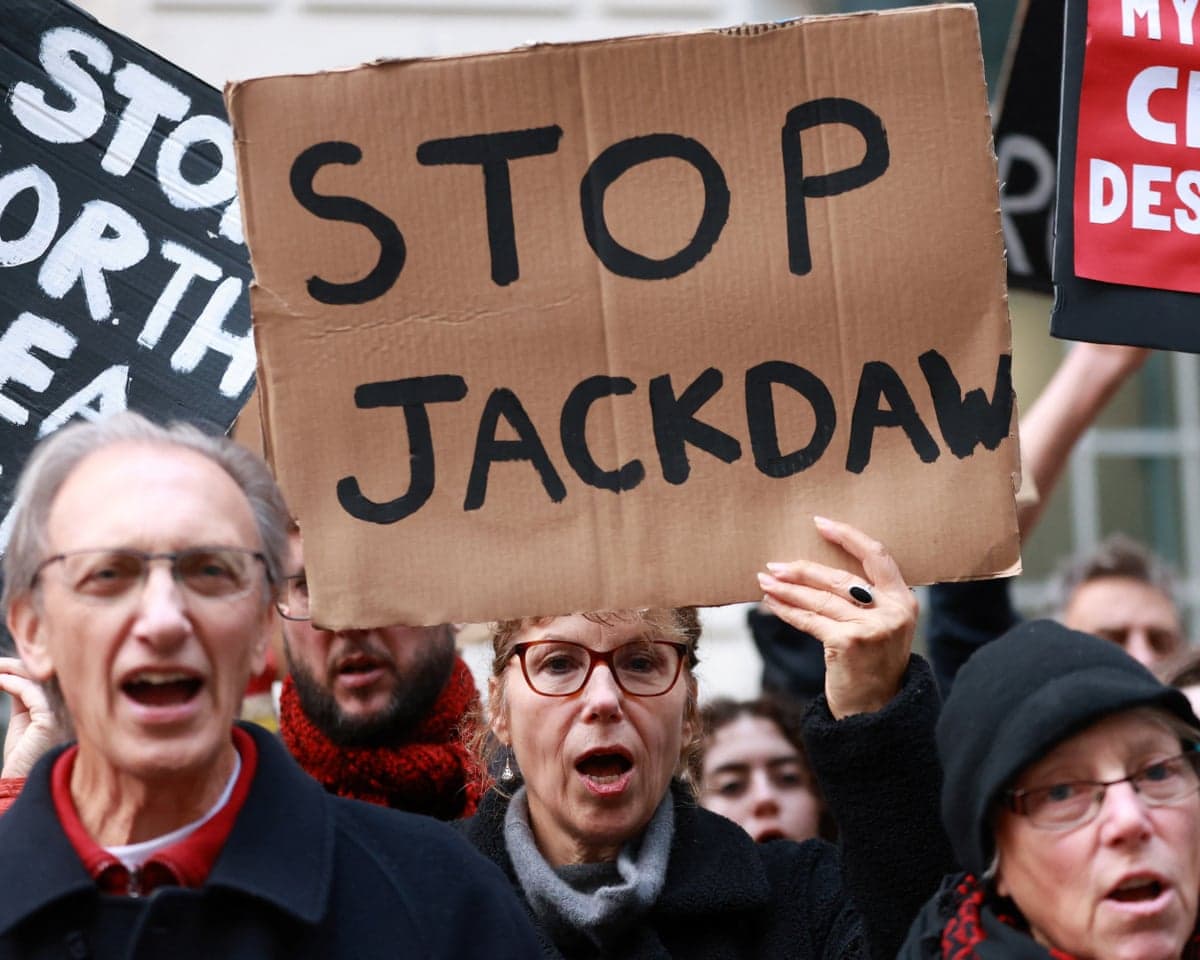
The father of Alice Ruggles, a woman murdered by her stalking ex-boyfriend, has warned that lives remain at risk unless the government urgently publishes and implements recommendations from a comprehensive review of stalking legislation. Alice Ruggles was killed in her Gateshead flat in October 2016 by Trimaan Dhillon, who had been systematically stalking her. According to BBC News, the review of current law by Richard Wright KC was submitted to ministers six months ago, yet remains unpublished.
Clive Ruggles expressed frustration at the delay, stating that government action is essential. He emphasised the urgency of the situation, noting that stalking continues to harm and kill people while the review sits with officials. The Alice Ruggles Trust, established by the family in her memory, has campaigned relentlessly since her death for improved education and legal protections around stalking.

Clive Ruggles articulated the family's determination in stark terms:
Our whole mission in life at the moment is to try and stop what happened to Alice happening to others. It's tremendously frustrating. We've got to move on this. People are still suffering from stalking, people are still dying. We've got to do something about this and that involves just the government acting. Get this report out. We can look at it and get it moving into law.
Why current laws are failing victims
Claire Waxman, Victims Commissioner for England and Wales, has long campaigned for stalking law reform and described existing legislation as leaving victims in
further risk of harm. She criticised the government's handling of the Wright review, saying that six months is an unacceptable delay if the administration is serious about its commitment to halving violence against women and girls over the next decade.
Waxman explained that the laws are
complexand
very difficultfor police to apply in practice, causing victims to
fell through the gaps. She highlighted a pattern of misidentification that has plagued stalking cases for years:
I've seen too many cases where stalking victims, when they've reported to the police, are being treated as harassment or as a malicious communication or low-level stalking offence. And it was being misidentified or not being identified at all that was leaving them at further risk of harm.
Waxman praised Wright's work on the review, noting that he had
worked exceptionally hardto understand why the laws were unfit for purpose and how they need to be
radically changed.

What happened to Alice Ruggles
Dhillon's behaviour during and after his brief relationship with Alice demonstrated the escalating pattern typical of dangerous stalking cases. While they were together, he exercised controlling behaviour. When Alice ended the relationship, he began appearing at her home uninvited, sending constant messages, and leaving unwanted gifts. When she reported his conduct to police, officers misclassified it as harassment rather than stalking—a critical error that left her unprotected. She was murdered ten days later.
Wright, who served as the prosecuting barrister in Dhillon's trial, saw firsthand how the legal system had failed to protect Alice. Dhillon was convicted of her murder and sentenced to 22 years in prison. The case became a catalyst for the family's campaign and for the government's decision to commission the independent review.
The scale of stalking in Britain
Stalking is far more prevalent than many realise. Police recorded 141,645 stalking offences in the year ending September 2025, up 6.7% from 132,747 the previous year, according to government data. The Crime Survey for England and Wales estimated that 2.9% of adults experienced stalking in the year ending March 2025. The Crown Prosecution Service reported a record 7,168 stalking offences charged in 2024–25, compared with 2,512 in 2020–21, indicating both rising awareness and increasing prosecution activity.
What reforms are being sought
Campaigners have identified several key areas they hope the Wright review will address. The first is the absence of a clear legal definition of stalking, which has allowed inconsistent application across police forces and courts. Second, they want the two different grades of stalking offences in current legislation to be streamlined into a single offence, removing the burden on victims to prove they experienced fear or distress. Third, they seek to simplify the process for obtaining stalking protection orders, which currently requires separate applications and can be cumbersome for vulnerable people.
Government response and recent developments
The government acknowledged the need for action in a statement, saying:
We must use every lever available to tackle violence against women and girls, moving further and faster to stop harm before it happens. We are strengthening the use of stalking protection orders, investing over £13m to establish specialist protection order teams, and last year we appointed Richard Wright KC, who prosecuted Alice's case, to conduct an independent review to ensure the law is fit for purpose.
Recent legislative changes have begun to address some concerns. The Crime and Policing Act 2026 expands when courts can impose Stalking Protection Orders, including at the end of criminal proceedings without a separate police application. Additionally, the CPS launched its first Stalking Action Plan for 2026–2030, which includes a new case flag to track stalking prosecutions and encouragement to charge breaches of protection orders.
Targeting young people at highest risk
The Alice Ruggles Trust has identified young adults as particularly vulnerable. The trust's October 2026 "This is STALKING" campaign specifically targets 16–24-year-olds, the age group it identifies as most at risk of stalking. This educational initiative aims to help young people recognise stalking behaviour and understand that it is not a normal part of relationships.
What happens next
The government stated that the review would be completed by March 2026, though it was later reported as submitted in April. No date has yet been announced for the publication of Wright's findings or the government's formal response. Campaigners and the Victims Commissioner are pressing for immediate release and swift legislative action based on the recommendations.